We’ve all been there. You pull out your phone to capture a perfect moment—a child’s first steps, a stunning sunset, a reunion with old friends—only to discover later that the photo is disappointingly blurry. Maybe your hand shook, the lighting was poor, or the camera simply failed to focus properly. For decades, these images were considered lost causes, relegated to the digital trash bin or buried in forgotten folders. But the landscape has fundamentally changed. Today, artificial intelligence has unlocked the ability to resurrect these failed photographs, transforming unclear, pixelated disasters into sharp, vibrant memories worth cherishing.
The transformation isn’t magic, though it certainly feels that way. It’s sophisticated machine learning technology that has been trained on millions of high-quality images, learning the intricate patterns of how details should appear. When you use a Free AI Photo Enhancer like AIEnhancer.ai, you’re tapping into this vast reservoir of visual knowledge, allowing algorithms to intelligently reconstruct what your camera missed or what time has degraded.
Understanding the Problem: Why Photos Become Blurry
Before diving into solutions, it helps to understand what you’re actually fixing. Blurriness isn’t one problem but several different issues that can plague your images:
Motion Blur occurs when either the camera or the subject moves during the exposure. This creates streaking and loss of edge definition, making faces unrecognizable and details unreadable.
Out-of-Focus Blur happens when the camera focuses on the wrong part of the scene, leaving your intended subject soft and undefined. This is especially common in phone photography where autofocus systems can be easily confused.
Compression Artifacts appear when images are saved or shared repeatedly through social media or messaging apps. Each time a photo is compressed, it loses information, creating blocky patterns and reducing overall clarity.
Low Resolution becomes apparent when you try to enlarge or print a small image. What looked acceptable on a phone screen becomes a pixelated mess at larger sizes.
The beauty of modern AI enhancement technology is that it addresses all these issues simultaneously, using different techniques for different types of degradation.
The Technology That Makes It Work
When you upload a blurry image to an AI-powered enhancement tool, you’re initiating a complex process that happens in seconds. The artificial intelligence doesn’t simply apply generic sharpening filters like traditional photo editors. Instead, it analyzes the specific characteristics of your image and makes intelligent predictions about what details should exist.
The AI has been trained on countless pairs of degraded and pristine images, learning to recognize patterns. When it encounters a blurry edge in your photo, it references this training to understand how that edge should actually appear. For facial features, the system recognizes anatomical structures and ensures proportions remain natural while adding clarity. For textures like fabric, foliage, or architectural details, it reconstructs the patterns that blur has obscured.
This is fundamentally different from traditional sharpening, which often creates harsh, artificial-looking results with visible halos around edges. AI enhancement produces results that look naturally crisp because the algorithm understands the underlying content, not just the pixels.
How to Actually Use AI to Clear Up Your Photos
The practical process of transforming blurry photos into clear ones has become remarkably straightforward. Here’s what actually happens when you use modern enhancement tools:
You begin by accessing a tool designed for this purpose. Platforms like AIEnhancer.ai offer a Free AI Photo Enhancer that requires no installation, no technical knowledge, and no professional photography background. You simply visit the website through any browser on your phone, tablet, or computer.
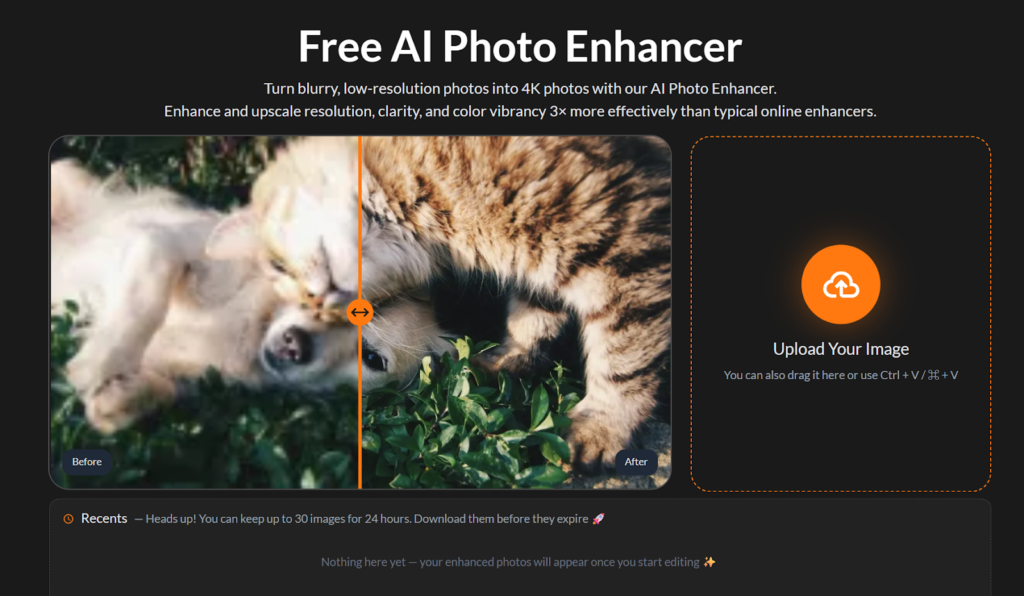
The upload process accepts images in common formats—JPEG, PNG, or even screenshots. You can drag and drop the file directly onto the webpage, or use the standard file selection dialog. The system immediately begins analyzing your image, detecting what type of enhancement will produce optimal results.
Here’s where the technology becomes particularly impressive: the tool offers different enhancement modes tailored to specific problems. If you’re working with an old family photograph that’s faded and scratched, there’s a restoration mode specifically designed to address age-related damage. For AI-generated artwork that has distortions or unnatural features, there’s a specialized correction mode. Most users will select the balanced or strong enhancement options, which apply comprehensive improvements to clarity, sharpness, and color.
Within moments, you’re presented with a side-by-side comparison. The original blurry image appears next to its enhanced version, allowing you to evaluate the improvement. This preview is crucial because it lets you verify that the AI has made appropriate changes without introducing artifacts or unnatural elements.
If you’re satisfied with the result—and most users are impressed on their first attempt—you download the enhanced image in high resolution. The tool can upscale images to 4K quality, meaning even photos that were originally quite small can be enlarged for printing or professional use.
The Unexpected Benefits Beyond Clarity
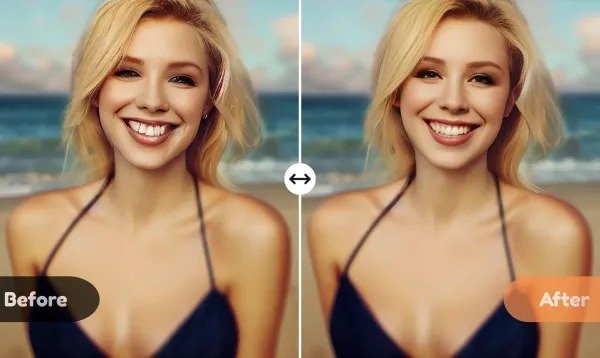
While the primary goal is obviously to unblur image files and restore clarity, users quickly discover that AI enhancement provides additional improvements they hadn’t anticipated.
Color correction happens automatically. Photos taken in poor lighting often have muddy, washed-out colors that make the entire scene look flat and unappealing. The AI recognizes these color deficiencies and restores vibrancy naturally, bringing back the visual richness that was present in the actual scene but failed to translate to the photograph.
Noise reduction is another significant benefit. Images taken in low light or with older cameras often have visible grain or digital noise that degrades the overall quality. AI enhancement systems identify and eliminate this noise while preserving legitimate detail, creating cleaner, more professional-looking results.
Lighting balance also improves. Photos with harsh shadows or overexposed highlights receive subtle corrections that bring out detail in both dark and bright areas, creating a more evenly exposed image that’s easier on the eyes and more visually appealing.
These cumulative improvements mean that the enhanced version isn’t just sharper—it’s a fundamentally better photograph that more accurately represents what you actually saw when you captured the moment.
The Future Is Already Here
The remarkable thing about this technology is that it’s not experimental or expensive—it’s available right now, for free, to anyone with an internet connection. The barriers that once separated professional photo restoration from ordinary users have completely dissolved.
This democratization of image enhancement represents a broader shift in how we interact with visual content. We’re no longer limited by the technical capabilities of our cameras or our own photography skills. The memories we capture are no longer permanently compromised by technical failures. Instead, we have the power to rescue, restore, and perfect images that previously would have been considered beyond saving.
As you explore what’s possible with AI-powered photo enhancement, you’ll likely find yourself going through old photo libraries, rediscovering images you’d written off as failures. That blurry shot from your grandmother’s birthday party, the out-of-focus vacation photo, the compressed image you received in a text message years ago—all of these can potentially be transformed into clear, vibrant photographs worthy of display and preservation.
The technology continues to advance, but even in its current form, it’s powerful enough to fundamentally change your relationship with photography. You can now shoot freely, knowing that technical imperfections can be corrected later. You can preserve family history by rescuing damaged photographs. You can present yourself and your work professionally, even if you don’t own expensive camera equipment.
This is the promise of AI-powered enhancement: not replacing human creativity or the value of a well-captured moment, but ensuring that technical limitations never stand between you and the memories you want to preserve.