Introduction
Operative dentistry is the fundamental component of the day-to-day clinical practice of dentists. Preserving a maximum amount of structure while diagnosing, preventing and treating dental caries, defects and minor structural damage to teeth. Among clinical dental practitioners, it is fundamental to understand this area as it can have a significant impact on treatment outcomes, patient comfort, and maintenance of overall oral health over time.
Essentially, operative dentistry is not just about filling cavities, but also comprehending the nature of the disease, informed clinical decisions, and techniques that prioritize function, aesthetics, and biological conservative outcomes. Today dentistry has changed dramatically from the conventional “extension for prevention” philosophy to conservative measures that are focused on conservation and early intervention.
The operative dentistry principles are the foundation of this discipline and are essential to making various clinical decisions from diagnosis to final restoration. If you want a more scholarly, academic reference source on these ideas, you could try out this source:
Core Principles of Operative Dentistry
In this article, young professionals will learn about these concepts and how it relates to caring for their patient.
What is Operative Dentistry?
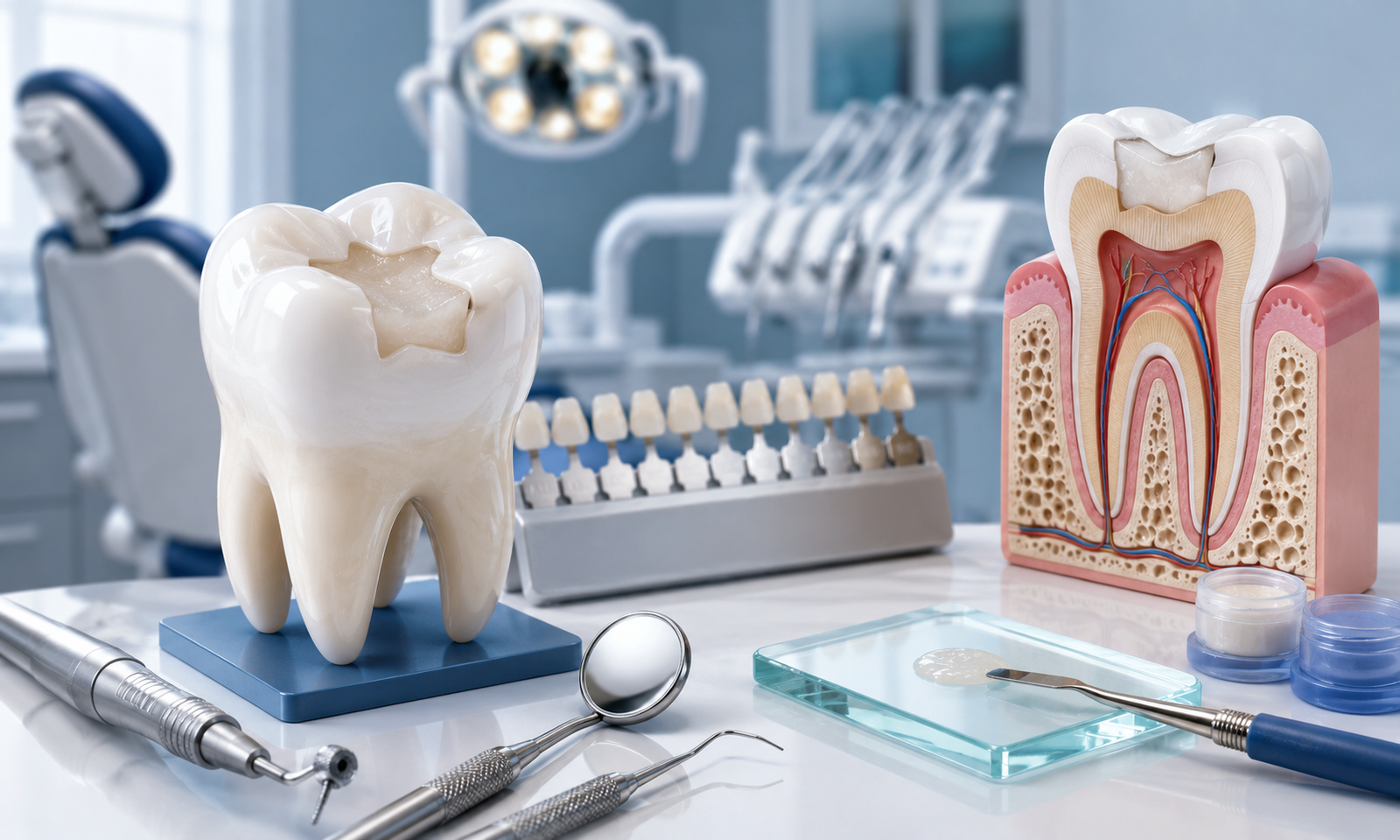
Operative dentistry is the department of restorative dentistry that deals with the art and science of restoring teeth structurally compromised as a result of decay, trauma, wear or developmental anomalies. It emphasizes the maintenance of integrity of the tooth, and the restoration of its form, function and esthetics.
Operative dentistry addresses the defect to teeth and more limited areas as compared to more extensive, “full mouth rehabilitation dentistry or surgical dentistry. But what about its significance, why shouldn’t it be underestimated? A single occlusionally improperly restored tooth can cause problems in the occlusion and/or cause secondary caries or have a negative effect on the condition of the periodontium.
Operative dentistry encompasses:
- Dental Caries and non-carious lesions diagnosis.
- Cavity preparation and design.
- Restorative materials – Selection & Placement
- Finishes and polishing of restorations
- Disease/Risk prevention interventions to stop the spread of disease.
For young practitioners, this area is the link between the theoretical dental sciences and working with patients.
Key principles governing operative dentistry.
It is important to grasp the principles of operative dentistry so as to make rational clinical decisions. These principles act as a guideline that treatment is biologically sound, effective and long-lasting. This is where a careful diagnosis and clinical evaluation is necessary.
The first and most important step in operative dentistry is diagnosis. If we don’t understand what causes the disease the treatment won’t work or may be unnecessary.
Diagnosis involves:
- Using proper lighting and magnification, visual examination will be done.
- Periodic evaluation by X-rays (bitewings and periapicals).
- Palpable examination with Dental explorers
- A caries risk assessment provided by patient history is performed.
Today conservative dentistry is based on the philosophy of early detection in order to intervene before lesions make their way into irreversible damage. This method means that a lot of natural tooth structure is not lost in restoration.
It is also essential for the young professional to understand the difference between active and arrested caries, enamel lesions versus dentin lesions, and reversible vs irreversible conditions. Misdiagnosis typically results in overtreatment or undertreatment, either of which could adversely affect long-term results.
Decisions regarding treatment plan
Treatment planning is the link between diagnosis and execution in clinical services. This is choosing the right choice of intervention for the right patient at the right time in the right context and context of the longer term patient outcome.
In order to commit to effective treatment planning it’s important to keep in mind:
- Outcomes related to patient´s oral hygiene and caries risk
- Occlusal relationships
- Esthetic expectations
- Financial constraints
- The Life Cycle of RBCM Materials
Conservation issues are always top of the agenda in a well-designed plan. Rather than operative intervention, for instance, re-mineralisation is recommended for early enamel lesions. Likewise, adhesive restorations can be used in preference to full coverage crowns if appropriate.
Another hallmark of a superb clinician is to know what may happen and make a plan accordingly, ensuring restorations will be maintained and repaired.
Minimally Invasive Dentistry
A momentous change in the modern operation that has occurred is the shift to a minimally invasive approach. The philosophy is to treat the diseased tissue and maintain the healthy tooth surface.
Key principles include:
- Early identification and prevention of caries
- Decayed tissue will be removed selectively if necessary.
- Use of adhesive restorative materials
- To prevent disease recurrence
Minimally invasive dentistry is a new approach that has taken the place of aggressive cavity preparations. Clinicians no longer try to remove extensive amounts of dental hard materials that lack infected dentine; the efforts are now directed on removing only the infected dentine while keeping the infected yet remineralizable dentine.
In this way, its longevity and survival of the tooth in the long term will increase, along with the reduction in future complex dental treatments.
Recycling and use of alternative materials and technologies
It is essential for the first time in an operationally trained dentist that he/she knows the principle of using restorative materials. The material selected has an important impact on the durability, aesthetics, and function of the educated sandals.The material selected is important to how durable the sandals will be, how they look, and how they function.
Typical restorative materials are:
- Composite resins
- A mixture containing mercury.Less widely used today, a mixture including mercury.
- Glass ionomer cement
- Indirect restorations and Ceramic restoration.
The properties of each material are different. For instance, composite resins have excellent esthetic and bonding properties, and glass ionomer cements are able to release fluoride and are effective for high caries risk patients.
Cavity Preparation Principles
Cavity prep is an essential skill which demands accuracy and knowledge of the anatomy of the tooth. Some important rules have remained the same and some have changed:
- Removal of carious tissue
- The preservation of good but not optimal structure.
- Development of proper access and visibility.Developing sufficient access and visibility.
- Retention & resistance form (as required)
- Smooth and clean margins for restoration adaptation of lands
Modern adhesive dentistry has minimised the need for mechanical retention forms and therefore mUse of clinical workflow in operative dentistry. A clinical workflow framework guarantees uniformity and a quality product. Systematic approach will help minimize errors and improve efficiency if the learner is a beginner.
Step 1: Patient Examination
This is done including medical and dental history, clinical examination, and radiography.
Step 2: Diagnosis
Diagnose the type, severity and activity of lesions.
Step 3: Treatment Planning
Select prevention or restorative practices that are suitable.
When necessary, prepare the cavity, as described above, by using Step 4: Cavity preparation.
Remove diseased tissue, condition the tooth for restoration.
Step 5: Restoration Placement
Correctly use restorative material and working methods.
Step 6: Finishing & polishing
Provide smooth surfaces, excellent occlusion and esthetic considerations.
Step 7: Follow-Up
Track performance of oral health restoration and maintenance.
The task is carried out in detail and is performed in accordance with the guidelines for carrying out clinical aspects.
Relevance of Operative Dentistry for the present-day practice
Operative dentistry is an important component of the oral health of individuals as well as population. This shift towards expansive disease control and preservation of the dentition has influenced the role of operative dentistry with its increasing awareness of preventive dentistry of the day.As more and more people become aware of the preventive dentistry of the day, the role of operative dentistry has changed from extensive reconstruction to expansive disease control and preservation.
Key contributions include:
- Promoting prevention of dental caries.
- Exhibiting improved function and appearance
- Maintaining occlusal harmony
- To assist in overall plans for oral rehabilitation
These aspects are combined with digital dentistry, adhesive dentistry, biomimetic dentistry, new professions in the context of operative dentistry in today’s dental practice. All of these advancements make it more precise, less invasive and are good for patient satisfaction. The challenges for young job holders can start to occur during the shift from preclinical training to clinical work. There are often common mistakes made including:
Overpreparation of Teeth
First, the more tooth structure that is removed, the weaker and less durable the tooth will be.
Poor Diagnosis
Incorrect diagnosis/diagnostic stages may result in unnecessary restorations.
Inadequate Isolation
One of the major, if not primary, factors for restoration failure is moisture contamination.
Improper Material Selection
Materials that are not suitable for particular clinical conditions have an impact on clinical outcome.
Ignoring Occlusion
If not taken into account, bite relationships can cause discomfort or failure of restoration. Ongoing clinical experience, supervision and learning are essential to avoid such errors.
To Master the art of Operative Dentistry.
Enhancing the anatomical understanding of teeth.Displaying stronger knowledge of the anatomy of teeth. Operative Dentistry requires time, practice and reflection for the development of skills. Young pros need to concentrate on:
- Preparations of cavity on typodonts.
- Observing experienced clinicians
- Understanding material science
- To form fine hand movements
In the early training period, it is more important to be consistent than fast. Precision and efficiency will come as natural skills as years go by. Another aspect that is important is “always knowing” what is happening in the field, not just in a professional sense, but also in terms of minimally invasive procedures.
Conclusion
Operative dentistry is one of the basic branches of dentistry that is a pre-requisite for achieving excellence in clinical practice by every young dental fraternity. Fuses science, clinic and decision making skills to effectively maintain and restore oral function without the removal of the natural teeth.
Familiarizing oneself with the fundamental skills of operative dentistry, such as a proper diagnosis, a systematic approach to treatment planning, and minimal intervention, will provide a solid clinical foundation for the novices. These concepts help to create a more conservative and biologically appropriate dentistry practice, while enhancing patient care.
Operative dentistry still plays an important role in modern dental practice, in between the prevention and rehabilitation, as science progresses, it is the foundation of the restorative dentistry field. This is not only a professional mandate to know but a professional responsibility; knowledge in this domain affects the quality of care given to patients.More conservative designs can be used.