Maintaining a clean home in a dusty urban environment like Dhaka is a constant challenge, especially for those with tiled floors.
Tiles often act as a skating rink for dust, allowing particles to swirl and settle in hard-to-reach corners. While many turn to synthetic carpets to solve this, these materials often trap heat and generate static electricity, making dust cling even more stubbornly.
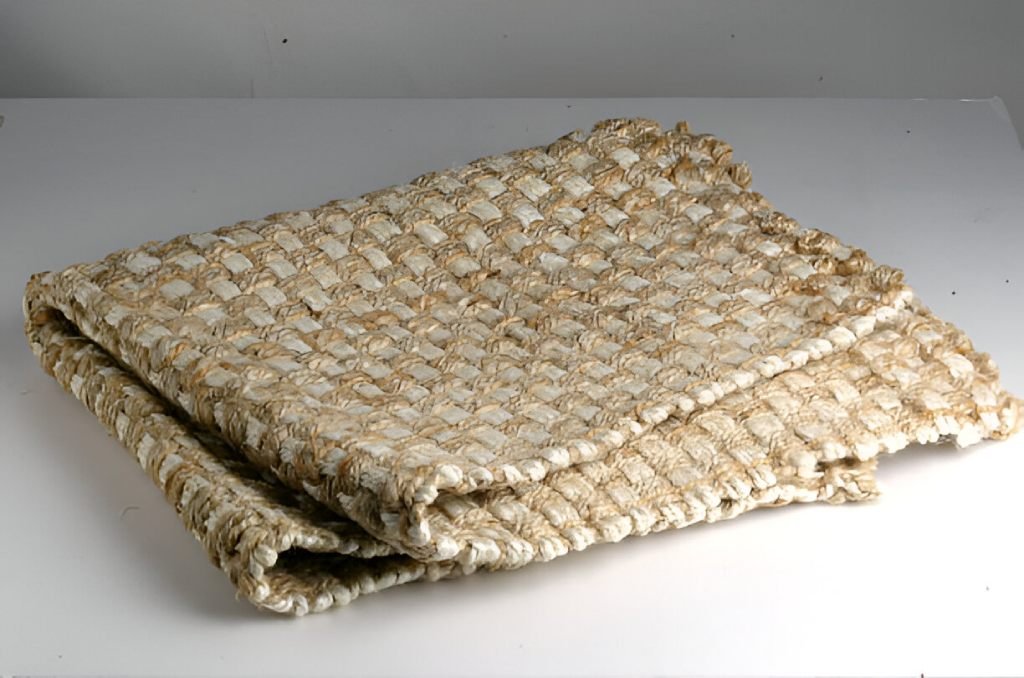
The most effective solution for urban dwellers is the transition to natural fiber floor coverings. Natural fibers like jute act as a physical filter for your home, trapping dust within their breathable weave until it can be easily removed.
This guide focuses on the specific maintenance needs of durable jute rugs on tiled surfaces. It covers essential techniques such as the beater bar vacuuming method, the benefits of traditional outdoor shaking, and the necessity of anti-slip padding to ensure safety on slick floors.
By choosing natural materials, you improve your indoor air quality and bring a cooling, earthy texture to your living space. This guide provides a comprehensive roadmap for keeping your natural rugs fresh, vibrant, and dust-free for years to come.
What Makes Tiled Floors a Dust Trap?
Tiled floors are problematic for dust control because their smooth, non-porous surfaces allow dust to travel freely with every breeze or footstep.
Think about it.
On a smooth tile surface, there is nothing to stop a dust bunny from sliding from one end of the room to the other. In urban areas with high air pollution, this dust accumulates rapidly.
Without a textured surface to anchor these particles, they remain airborne or settle in thick layers under your furniture.
This is why a well-placed rug is not just a style choice; it is a functional filter for your living space.
Why Choose Natural Fibers Over Synthetic Options?
Natural fibers like jute are superior to synthetics because they are breathable, do not create static, and provide an organic texture that traps dust safely until you choose to clean it.
When you walk across a synthetic rug, you often create a small amount of static electricity. This static attracts dust and holds it tight against the plastic fibers. Jute is different.
It is a plant-based material that stays cool. Because it breathes, it does not trap the humid air that causes the musty smell we all dread.
Choosing durable jute rugs means you are opting for a material that works with the environment, not against it.
The Best Rugs for Tiled Floors: A Comparison
| Feature | Jute Rugs | Synthetic Carpets |
| Heat Retention | Very Low (Cooling) | High (Trap Heat) |
| Static Build-up | Zero | High |
| Dust Control | Traps and Releases | Traps and Glues |
| Durability | High for Foot Traffic | Moderate |
| Eco-Friendliness | Biodegradable | Plastic Based |
Maintenance 101: The Secret to a Dust-Free Rug
To keep a natural rug clean, you must focus on frequent, gentle suction and regular outdoor shaking to remove the fine silt that tiles tend to accumulate.
Urban dust is fine. It is almost like a powder. Over time, this powder settles deep into the rug’s weave.
If you leave it there, it acts like sandpaper, slowly grinding away at the fibers from the inside out. This is why maintenance is key to getting the most value from your purchase.
Tip 1: The “Suction Only” Vacuum Method
When vacuuming jute, always turn off the beater bar or brush roll to prevent the rotating bristles from fraying the natural fibers.
A beater bar is excellent for digging dirt out of thick synthetic carpets, but it is too aggressive for jute. It can pull on the loops, making your rug look fuzzy or worn before its time.
Use the highest suction setting and move slowly. This pulls fine dust from the bottom of the rug’s weave without damaging the top layer.
Tip 2: The Power of the Traditional Shake
Take your rug outside at least once a month for a vigorous shake or a gentle tap with a stick to release the deep-seated dust that vacuums might miss.
There is a reason our grandparents did this. Shaking a rug is the most effective way to clear the “silt” that settles at the base of the fibers.
Since jute is a flat weave, the dust falls through easily. Once you have shaken it out, you will notice the colors look brighter, and the rug feels lighter.
It is the most satisfying part of the cleaning process.
Safety First: Preventing Slips on Urban Tiles
Using an anti-slip rug pad is essential when placing any rug on a tiled floor to prevent accidents and protect the rug’s underside from friction.
Tiles are slippery. A jute rug without a pad is essentially a surfboard. Beyond safety, a rug pad provides a layer of cushioning that protects the rug from being crushed between your feet and the hard floor.
It also allows air to circulate underneath, which is crucial for preventing any moisture from getting trapped against the tile.
Spot Cleaning: Defeating Stains on Urban Jute
For liquid spills on jute, blot the area immediately with a clean, dry towel and avoid using large amounts of water, as this can cause browning or mildew.
Natural fibers are like sponges. They love to soak up liquid. If you spill your morning tea or coffee, do not panic. Grab a stack of paper towels and press down hard.
Do not rub. If you rub, you spread the stain. Once the liquid is absorbed, you can use a tiny bit of mild soap and a damp cloth to dab the spot.
Use a hair dryer or a fan to dry the area as quickly as possible.