Washington has always been ahead of the curve when it comes to environmental responsibility. From our strong recycling programs to strict environmental regulations, people here genuinely care about protecting the natural beauty that surrounds us. So it makes sense that when buildings come down, we want to do it in a way that doesn’t just pile everything into a landfill and call it a day.
The demolition industry has changed dramatically over the past decade. What used to be a straightforward process of tearing everything down and hauling it away has evolved into something much more thoughtful. Today’s best contractors approach demolition as an opportunity to recover valuable materials, reduce waste, and minimize environmental impact.
If you’re planning a demolition project in Washington, whether it’s a commercial building in Seattle, a residential teardown in Tacoma, or anything in between, understanding how eco-friendly demolition works can help you make better decisions. Let me walk you through what sustainable demolition actually looks like and why it matters more than you might think.
Why Environmental Demolition Practices Matter in Washington
Washington State has some of the most progressive environmental laws in the country. Our Department of Ecology sets clear standards for construction and demolition waste management, and local jurisdictions add their own requirements on top of that. Seattle, for example, requires contractors to divert at least 65% of demolition debris from landfills through recycling and salvage. That’s not a suggestion. It’s the law, and there are real consequences for not meeting those targets.
But beyond just following regulations, there’s a practical reason to care about sustainable demolition. Construction and demolition waste makes up a massive portion of what ends up in our landfills. When you tear down a typical house, you’re generating anywhere from 50 to 150 tons of material. Multiply that across all the demolition projects happening throughout Washington, and you’re looking at an enormous amount of waste.
The good news is that most demolition materials can be recovered, recycled, or reused if handled properly. Wood can be chipped for landscaping or processed into engineered lumber. Concrete gets crushed and used as aggregate for roads and new construction. Metal has significant scrap value and gets melted down for reuse. Even old fixtures, doors, and windows can find new life through salvage organizations.
When contractors take the time to separate and process these materials instead of mixing everything together and dumping it, the environmental impact drops significantly. You’re keeping reusable resources in circulation, reducing the energy needed to produce new materials, and minimizing what goes into already overtaxed landfills.
Deconstruction and Salvage: Giving Materials a Second Life
Before we even get to recycling, there’s an even better option for certain projects: deconstruction and salvage. This approach involves carefully dismantling buildings to preserve materials that still have useful life left in them.
Think about older homes built with old-growth timber. Those beams and joists are often higher quality than anything you can buy new today. Architectural elements like vintage fixtures, hardwood floors, custom millwork, and period-appropriate doors have real value to people renovating historic properties or just looking for unique character pieces.
Deconstruction takes longer than traditional demolition because you’re removing things carefully rather than just smashing everything apart. Workers unbolt fixtures, pull nails instead of ripping through materials, and stack salvageable items for donation or resale. It’s more labor-intensive, but the payoff comes in multiple forms.
First, there’s the environmental benefit. Materials that get salvaged avoid the landfill entirely and get used again without requiring the energy and resources needed to manufacture something new. Second, there’s often a financial benefit through tax deductions. When you donate salvaged materials to qualified nonprofit organizations, you can claim a charitable deduction for their fair market value. For larger projects, this can add up to significant savings. Third, you’re supporting organizations that provide job training, affordable building materials to low-income families, and other community benefits.
Organizations like Seattle’s Re-Store and Tacoma’s Habitat for Humanity ReStore accept salvaged building materials. They sell donated items at reduced prices, using the proceeds to fund housing programs and other community initiatives. When demolition contractors work with these organizations, everybody wins.
Prime Demolition has established relationships with salvage organizations throughout the Seattle area. When projects involve buildings with salvageable materials, they coordinate deconstruction efforts to recover what makes sense before moving forward with full demolition. Not every project is a good candidate for extensive deconstruction, but when it is, they know how to capture that value.
Recycling Demolition Materials: Breaking Things Down the Right Way
For most demolition projects, recycling is where the biggest environmental impact happens. The key is separating materials on site so they can be processed appropriately rather than mixing everything together into one contaminated mess.
Metal recycling is probably the most straightforward part. Steel, aluminum, copper, and other metals have significant scrap value, which creates a financial incentive to recover them. Contractors pull out metal framing, plumbing pipes, electrical wiring, HVAC systems, and any other metal components. These get sorted by type and sold to metal recycling facilities that melt them down for reuse. The recycling rate for metal from demolition projects in Washington is extremely high, often approaching 100%.
Wood recycling is more complex but still valuable. Clean dimensional lumber that’s in good condition gets salvaged for reuse. Wood that’s not suitable for reuse gets processed in different ways depending on its condition. Untreated wood can be chipped for landscaping mulch or ground up for use in engineered wood products. Wood contaminated with paint or other finishes typically gets sent to biomass facilities where it’s burned for energy production, which is better than landfilling but not as ideal as direct reuse.
Concrete and masonry recycling has become standard practice in Washington. Old concrete gets crushed into various sizes of aggregate that’s used as road base, fill material, or even as aggregate in new concrete. This keeps enormous amounts of heavy material out of landfills and reduces the need to quarry new stone. The crushing process can happen on-site for large projects or materials get hauled to processing facilities.
Asphalt from parking lots and driveways is almost universally recycled. It gets ground up and mixed into new asphalt paving. The recycling loop for asphalt is remarkably efficient, and recycled asphalt often performs just as well as material made from virgin resources.
Drywall recycling is gaining traction too. The gypsum in drywall can be recovered and used in new drywall manufacturing or as a soil amendment in agriculture. Not all recycling facilities accept drywall yet, but the infrastructure is expanding as demand for sustainable practices increases.
The challenge comes with composite materials, treated wood, and items contaminated with hazardous substances. These materials are harder to recycle and often have to go to landfills or special disposal facilities. This is why separating materials carefully during demolition matters so much. When everything gets mixed together, it becomes much harder to recover the recyclable components.
How Sustainable Demolition Actually Works on the Ground
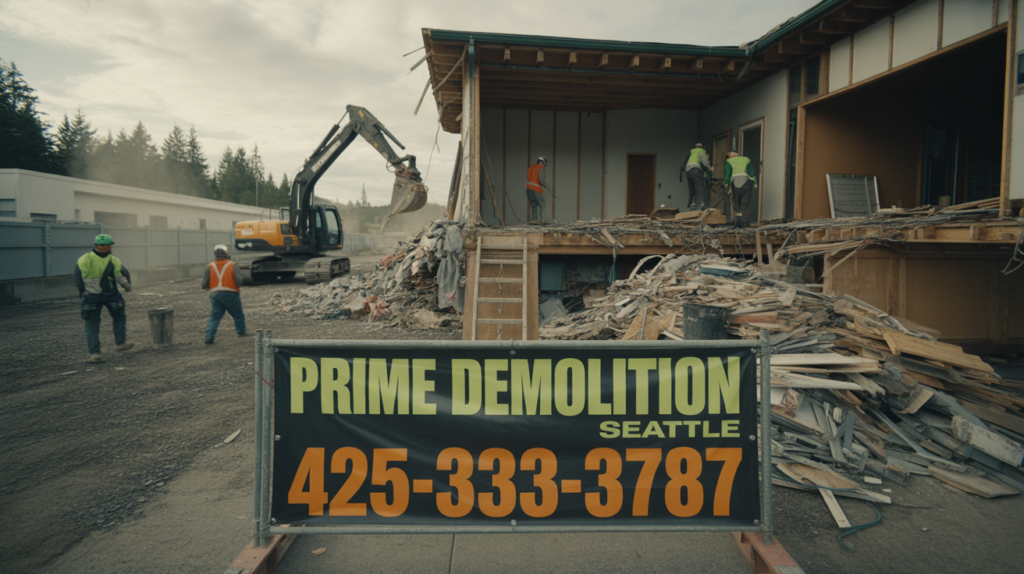
Let me paint a picture of what eco-friendly demolition looks like in practice. When Prime Demolition takes on a project with sustainability in mind, the process starts before any equipment shows up on site.
First comes the assessment. The crew walks through the building identifying what materials are present, what can be salvaged, what can be recycled, and what has to be disposed of as waste. They’re looking for valuable metal, salvageable fixtures, recyclable concrete, and potential hazardous materials that need special handling.
Next, they develop a plan for the order of operations. Salvageable items come out first, removed carefully to preserve their value. Then comes the systematic removal of materials that need to be kept separate for recycling. Metal gets pulled and sorted. Clean wood gets stacked separately from painted or treated lumber. Concrete and masonry get broken up and set aside for crushing.
On site, you’ll see multiple roll-off containers or designated areas for different material streams. One for metal, another for clean wood, one for concrete, maybe another for general construction debris. This sorting happens as the demolition progresses rather than trying to separate everything afterward, which would be far less efficient.
Heavy equipment operators trained in sustainable practices know how to work in ways that facilitate material separation. Instead of just smashing everything together, they use attachments and techniques that keep materials as clean and separate as possible.
Throughout the process, contractors track what gets diverted from landfills. They maintain records showing tonnage of recycled materials, documentation of salvaged items, and disposal receipts. This documentation is often required to demonstrate compliance with local waste diversion requirements.
The final step involves working with the right downstream partners. Materials get hauled to appropriate recycling facilities rather than just the nearest dump. This sometimes means more logistics and coordination, but it’s necessary to ensure materials actually get recycled rather than just ending up in a different landfill.
The Economics of Sustainable Demolition
One question that comes up constantly is cost. Does eco-friendly demolition cost more than traditional methods? The answer is more nuanced than you might expect.
Some aspects of sustainable demolition do increase costs. Deconstruction takes more time and labor than mechanical demolition. Sorting materials on site requires more attention and sometimes additional equipment. Hauling materials to multiple specialized facilities instead of one landfill creates extra logistics.
However, other factors work in the opposite direction. Recovered metal has scrap value that offsets some disposal costs. Diverting materials from landfills avoids tipping fees that can be substantial, especially in urban areas where landfill costs are high. Tax deductions for donated materials provide financial benefits for property owners.
In many cases, the costs balance out more than people expect. For projects where materials have significant salvage or scrap value, sustainable demolition can actually cost less than traditional approaches.
Beyond direct costs, there’s value in doing business with contractors who prioritize environmental responsibility. Many property owners, particularly those developing commercial projects, care about sustainability as part of their brand and values. Being able to say that your project diverted 80% of demolition waste from landfills has real meaning to stakeholders and the community.
Finding Contractors Who Actually Walk the Talk
Here’s the thing about environmental claims in the demolition industry: they’re easy to make and hard to verify. Plenty of contractors say they recycle, but what does that actually mean? Are they just pulling out the obvious metal and dumping everything else? Or are they genuinely committed to maximizing material recovery?
When you’re choosing a demolition contractor in Washington, ask specific questions. What’s their typical waste diversion rate? Do they track and document recycling tonnage? What salvage organizations do they work with? Where do specific materials like concrete, wood, and drywall get sent after leaving your site?
Prime Demolition takes environmental responsibility seriously because it’s both the right thing to do and what Washington’s regulations require. They’ve built relationships with recycling facilities and salvage organizations throughout the region, and they approach each project with material recovery as a core priority rather than an afterthought.
The demolition industry in Washington has come a long way, and it’s still evolving. As recycling infrastructure improves and regulations tighten, sustainable practices will only become more standard. Property owners who choose contractors committed to these practices are not just following the law. They’re contributing to a building industry that works with our environment instead of against it.
If you’re planning a demolition project and want to ensure it’s handled in an environmentally responsible way, start by talking with contractors who have a proven track record. Ask the hard questions, request documentation of their waste diversion practices, and choose partners who share your values. The buildings we tear down today don’t have to become tomorrow’s landfill problem.