
The age of Reason, or the enlightenment, was a revolutionary intellectual movement in 17 th and 18 th century Europe. In its essence, it praised the cause of reason, science, and individual rights as the three truths of progress. The thinkers of the Enlightenment era were interested in the traditional authorities, dogmas, and tried to cognize the world with the help of facts and logical thinking. The most significant writings of the Enlightenment period were at the heart of this movement that influenced the thoughts of today not only but provided the basis of modern democracies as well. Among these, key Enlightenment writings stand out as essential sources that shaped political and social thought.
The Enlightenment Intellectual Situation
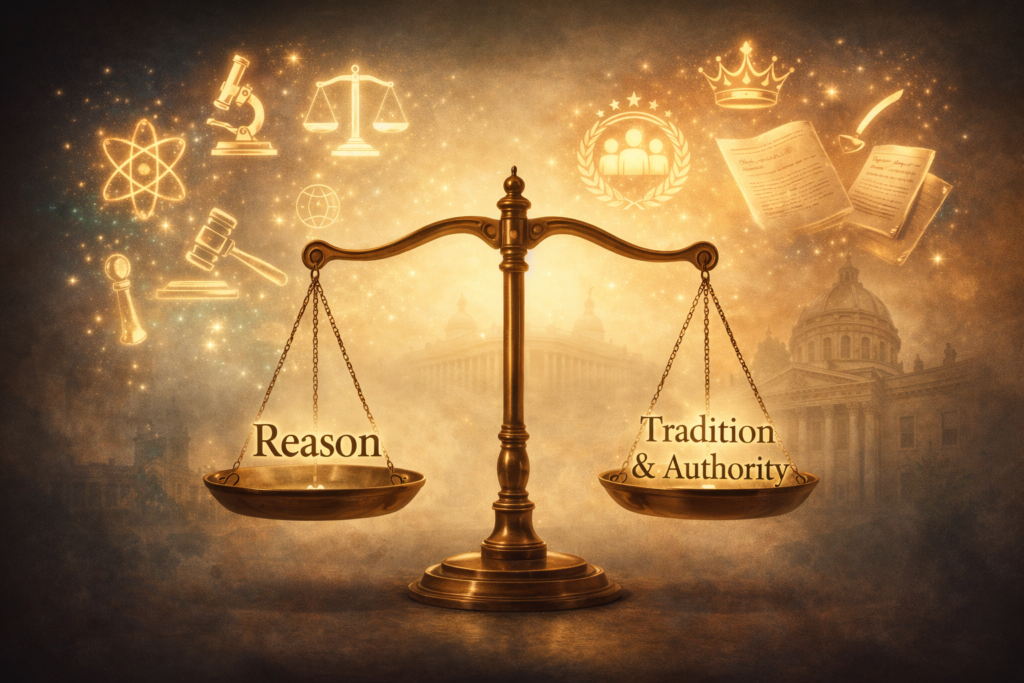
The enlightenment was founded in a Europe that was on the mend of religious wars, economic turmoil and kingship absolutism. The previous Renaissance had rekindled the study of classical knowledge with the scientific revolution bringing about empirical ways of knowledge about nature. Philosophers started to think that the use of reason could help discover the universal truth, make human life better, and rule society fairer. The Enlightenment was characterized by critical thinking and self-judging, which is in contrast to the past where tradition and authority controlled what was known.
The philosophers and authors of this era were very much troubled with the issue of human freedom, the rules of nature and the moral duty of the rulers. Their texts presented theoretical and practical guidelines to the redesign of political and social systems. Challenging established institutions, including the monarchy and the Church, they stimulated a cultural change to doubt, debate and change.
Main Themes in Enlightenment Texts
There are three general themes that can be used to classify enlightenment works, and these include reason and rationality, scientific inquiry, and personal rights.
Reason and Rational Thought
The Enlightenment thought was characterized by reason. The philosophers made the argument that the human being could gain knowledge and moral clarity by using logic and not tradition or superstition. In his masterpiece essay What is Enlightenment? Immanuel Kant stated: (1784) urged famously people to think independently and dare to know. Intellectual freedom was the key to the personal and social advancement, and Kant urged people to use reason as the means to be released of ignorance and totalitarian oppression.
Satire had also been used in other works like the Candide by Voltaire, which attempted to comment on irrational beliefs, blind obedience and social wrongs. Such texts emphasized the strength of reason in revealing the hypocrisy, superstition, and corruption, and taught the readers to be critical of the existing norms.
Empirical Knowledge and Scientific Inquiry
The Enlightenment was also the glorification of the use of scientific approaches to the interpretation of nature and the society of man. Such philosophers as John Locke and Francis Bacon focused on observation, experimentation, and reasoning-based on evidence. The argument of Essay Concerning Human Understanding (1690) by Locke was that human knowledge is based on experience and not on innate ideas and thus disputed the established philosophical belief.
To illustrate the fact that the world is theoretically predictable and law-abiding, scientific advancements, which were encouraged by publications like the Principia Mathematica of Newton, were in place. The enlightenment thinkers felt that through the knowledge of these natural laws, a society could as well create rational government, social structures and legal structures that would portray order and justice.
Personal Rights and Political Philosophy
Among the most revolutionary works by Enlightenment texts, one can highlight the subject of human rights and political reform. Jean-Jacques Rousseau in The Social Contract (1762) proposed a view that valid political power is based on the approval of the ruled. Rousseau stressed on freedom, equality, and political involvement and he wanted a society in which people willingly follow laws that they have participated in the process of making them.
In a similar manner, Lockean natural rights, that is life, liberty and property, were theories that questioned the absolutist authority and laid a philosophical basis in the way of contemporary democracy. His conceptions led to revolutions, such as the American Revolution and subsequent reforms in Europe, by claiming that the government is established to secure the rights of the citizens and that it can be removed in case it does not do so.
Skepticism of Authority
Enlightenment works promoted the idea of critical attitude to the existing powers, especially the Church and the monarch. Such writers as Denis Diderot, in his works, such as the Encyclopedie, collected human knowledge in a systematic way, with the encouragement of secular learning and intellectual dialogue. These writings compromised the belief in tradition as the only determiner of the truth, and to encourage the reader to judge statements on the basis of reason and evidence.
This focus on skepticism never supported anarchy but encouraged knowledgeable conversation and critical discussion. Through the rebellion against hierarchical systems, the enlightenment philosophers managed to establish a culture where ideas could freely flow, and eventually led to the constitutional government and democracy.
Significant Key Enlightenment Works

The most significant works of enlightenment include:
Two Treatises of Government (1689): Natural rights were articulated and the principles of social contract were developed by John Locke, which inspired much of liberal political thought.
Voltaire, Letters on the English (1733): The writer preached religious tolerance and denounced dictatorship.
The Social contract of Jean-Jacques Rousseau (1762): The offered concepts of popular sovereignty and civic freedom.
The Encyclopedie (1751–1772): Generalized knowledge and stimulated critical thinking in the sciences by Denis Diderot.
Montesquieu The Spirit of the Laws (1748): Suggestion of dividing of power in government that forms modern constitutions.
All these works were focused on the rational thinking and empirical reasoning, along with the natural dignity and rights of people. They were radical because of their capacity to upset centuries old hierarchies and also inspire new political, social and scientific paradigms.
Impact on Contemporary Democratic Depending Society
The democratic institutions of today are the most evident results of the Enlightenment writing. The idea of powers separation, of checks and balances, and civil liberties protection are all the direct results of the Enlightenment thought. These historic texts are the basis of a philosophical foundation of constitutions, parliamentary systems, and universal human rights frameworks.
Moreover, enlightenment gave rise to an educational, intellectual and communal culture. Ideas could be discussed and spread in the public spheres such as salons, coffeehouses, learned societies that produced the informed citizenry who were able to play a part in governance. The prominence of reason and the use of evidence-based decision-making is still the foundation of scientific, political, and legal systems all over the world.
Critical Thinking as a Social Progress Tool
The core of Enlightenment was also the excessive confidence in human reason as a mode of social betterment. These texts promoted critical thinking, in which people should question assumptions, evaluate evidence, and conduct a rational argument. This method of intellect was not only educated political revolutions, but also influenced the ethical standards, the scientific research and social reform movements.
The concepts of enlightenment can remind the contemporary civilizations that development is a cycle and that the process requires critical examination. They emphasize the essence of the responsible questioning of authority and the application of rational discourse in overcoming difficult moral, social, and political issues.
Conclusion
The Enlightenment was a turning point in the world history when reason, science, and individual rights became the leading forces of the development of ideas and institutions. Using some of the landmark Enlightenment publications, philosophers such as Locke, Rousseau, Voltaire, Montesquieu, and Diderot encouraged the questioning of authority, the quest of knowledge and the promotion of individual freedom. Their intellectual work did not just revolutionize Europe in the 18 th century but also provided the philosophical background of today democratic societies. These pieces of writing still shape the education, administration and the ideals of justice, as they encourage us to think rationally and to question our ideas and actions, as these are the directions leading humans to many advances.