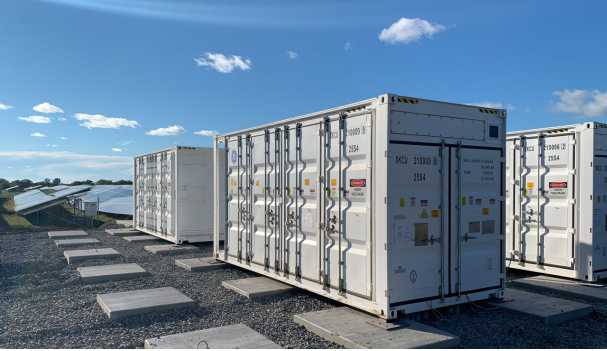
Industrial parks are messy in a useful way: multiple factories, warehouses, offices and shared services all draw different power shapes. That diversity is an opportunity for battery storage — when sized and controlled sensibly, a single system can shave peaks, provide short-term backup, smooth PV output, and participate in demand-response programs. The hard part is translating those goals into numbers and operational rules that actually work on the shop floor. Below I walk through the main capacity planning trade-offs and propose an operational strategy you can implement today, with a concrete worked example using a 2000 kWh energy storage system as a practical baseline.
Start with the real question: what problem are you solving?
Too many projects begin with “we need X kWh” as a target. Better first ask: which business outcome matters most? Typical priorities in industrial parks are:
· Reduce billed demand (kW) to lower demand charges.
· Bridge short outages and avoid production interruptions.
· Smooth variable on-site generation (PV) to maximize self-consumption.
Provide ancillary services or participate in DR programs for revenue.
Your chosen priority sets the sizing rules. Peak shaving is power-driven (kW), backup is energy-driven (kWh). PV shifting is hybrid.
Power vs energy — the essential sizing split
Always size power (inverter kW) and energy (battery kWh) separately. A few simple relations help:
· Energy requirement (kWh) ≈ Peak reduction (kW) × Duration (h).
· Accounting for round-trip efficiency (η), required installed energy = Energy requirement / η.
· Reserve margin: add 10–20% to preserve emergency headroom.
Example: the park wants to cut a 500 kW billed peak for 4 hours. Naïve energy = 500 kW × 4 h = 2,000 kWh. With 90% round-trip efficiency, installed kWh ≈ 2000 / 0.9 ≈ 2,222 kWh. Add 15% reserve for contingencies → ~2,556 kWh installed. That’s why a 2000 kWh energy storage system often appears as a sensible single-block option: it sits near the boundary where peak-shave durations and modest backup hours intersect without forcing complex multi-container designs.
Duration and inverter sizing: match the true load shape
Industrial loads are rarely flat. Motor starts create inrush; compressors cycle; lunch breaks change HVAC demand. For a given energy bank, choosing the inverter rating matters:
· High kW / short duration use: choose larger inverter (high power, lower nominal hours).
· Lower kW / long duration use: choose more kWh energy (longer duration, smaller inverter).
A pragmatic rule: pick inverter power equal to the typical peak you want to shave plus a margin for motor inrush (e.g., 10–25% depending on the load profile). If you plan both peak shaving and backup, make sure the inverter supports overloads for short durations (e.g., 150% for motor starts).
Operational strategy: control rules that balance resilience and revenue
Operation is where value is made or lost. A simple, robust strategy for industrial parks:
1.Define service priorities. Rank emergency backup, peak shaving, PV shifting and DR. Emergency backup should be top priority.
2.SOC bands: Hold a resilience reserve (10–20% SOC) that is not used for economic dispatch. Use a working band for daily services (e.g., 20–90%).
3.Predictive peak shaving: Use rolling-window forecasts (15–60 min) for demand-charge shaving, with pre-positioning of SOC ahead of expected peaks.
4.PV-first charging: If the park has PV, charge from surplus PV first; only use grid charging if low tariff windows are available.
5.Dynamic derating: If ambient temperature, cell impedance or a fault reduces capability, derate gracefully; avoid abrupt trips.
6.Revenue stacking discipline: Only allow aggregator or market dispatch when SOC policy guarantees the park’s resilience and contractual peak-shave targets.
These rules should be embedded in the EMS and stressed during commissioning.
Reliability, safety and lifecycle realities
Don’t forget the non-financial constraints: thermal management, fire zoning, and maintenance logistics. Modular systems make O&M easier in parks where in-house technicians can swap racks. Plan for degradation: include expected capacity fade in year-by-year energy forecasts and schedule mid-life module replacements if you intend heavy cycling.
A quick lifecycle check: compute expected annual throughput (cycles × capacity) and compare to vendor cycle-life curves. If aggressive cycling reduces usable capacity below resilience thresholds before warranty expiry, either increase installed kWh or lower cycle depth.
Deployment checklist (practical)
· Collect at least 3 months of 15-minute load data.
· Model tariffs: demand charges, ratchets, time-of-use and any export limits.
· Run simple E = P × t calculations (with η and reserve) for candidate durations.
· Choose inverter rating for peak-shave kW plus inrush headroom.
· Define SOC policy and EMS priorities in the contract.
· Require FAT/SAT logs and local O&M capability.
· Start with a pilot (single 2000 kWh block or smaller) and iterate.
Final thought
Industrial parks are uniquely suited for storage because they aggregate diverse loads and can exploit both energy and power value streams. The design question is not “how big?” but “which mix of kW and kWh delivers the required outcome reliably.” For many parks the 2000 kWh energy storage system represents a pragmatic building block: large enough to cover multi-hour backup and meaningful peak shaving, yet small enough to avoid heavy infrastructure redesign. With clear priorities, conservative SOC rules and a disciplined EMS, storage becomes a predictable operational asset rather than a capital experiment.