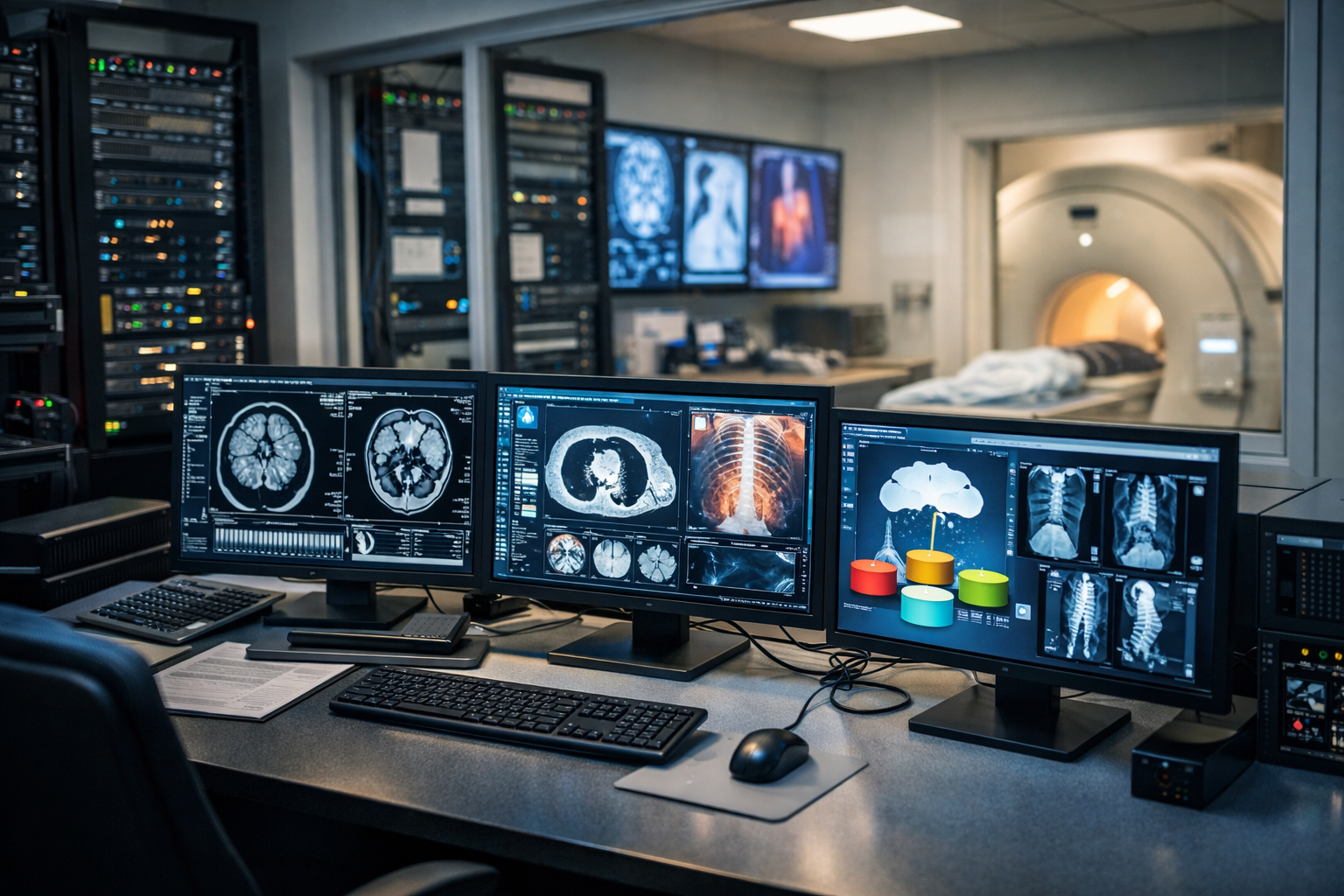
The imaging systems are significantly important in medical diagnosis as well as in remote sensing and telemedicine. As imaging technologies get improved rapidly, the amount of data that it produces has been increasing at a very high rate. Large datasets with high-resolution scans, 3D and real-time video capture pose a challenge to storage, compression, and transmission due to enormous data volumes. The effective control of this data and ensuring image quality simultaneously has become a acute issue of interest among healthcare providers, and research institutions and cloud-based imaging services.
This article examines the methods and issues of storage, compression and transmission of imaging data with special interest on medical imaging and remote systems. We are going to investigate the management of large image datasets, the significance of preserving image quality, and the new trends of data management.
Knowing Imaging Data and Imaging Data Problems
Imaging data, be it taken by MRI scanners, CT, digital cameras or satellite imaging sensors is complex and large in nature in general and has a lot of information. This data is hard to manage properly because of a number of reasons:
- High Storage Demands: The contemporary imageries produce huge files, typically classified as in hundreds of megabytes to multiple gigabytes of files per scan. An example is that a large high-resolution MRI scan can take up to 500 MB and in large hospitals, imaging data grows to terabytes of data every year.
- Bandwidth Limitations: This is because transmission of large images or any file using networks, especially in telemedicine or cloud-based systems, may overwhelm network bandwidth and creates delays, which is essential in time-sensitive applications.
- Data Integrity and Quality: Diagnostic or scientific fidelity must be maintained upon any compression or transmission. Simple objects may confuse the medical examination or interpretation of satellite images.
- Security and Regulatory Compliance: Sensitive imaging data, including medical imaging of patients, should be in compliance with various laws including the HIPAA. This demands protection of storage, transmission and access.
- Scalability: Imaging systems need to be able to support the continuous increase in the volumes of data without deteriorating.
These issues need high-level techniques of storing, compressing and transmitting imaging data in an effective way.
How Imaging Data is Stored
The imaging data is kept in the form of physical storage media, and logical data management strategies. Storage plans are usually graded on the basis of access rate and urgency:
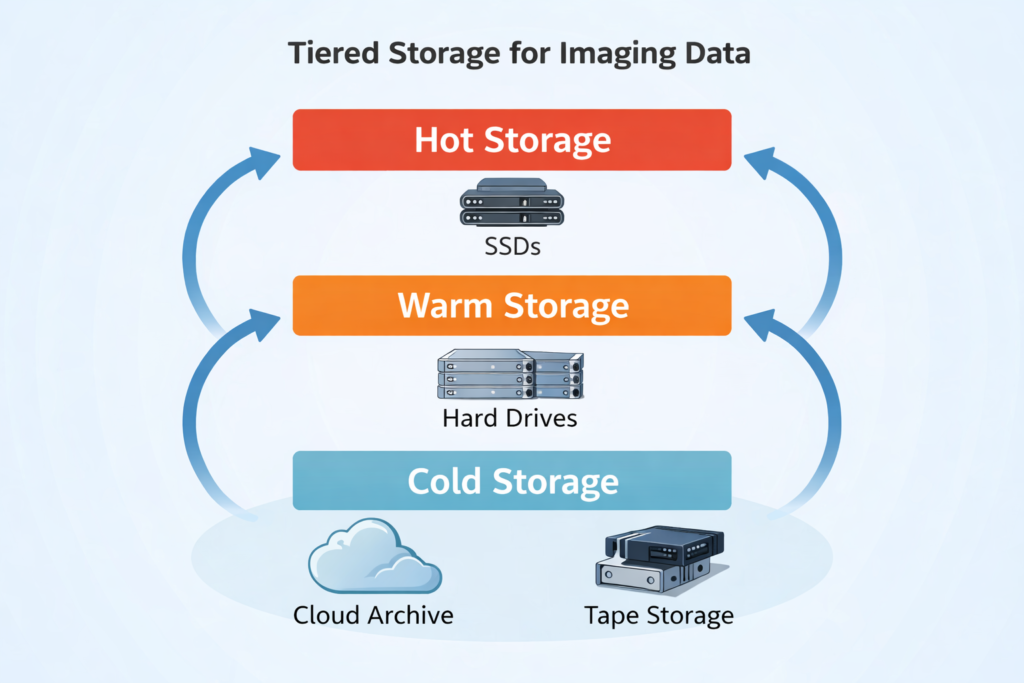
- Hot Storage: It is the data that is being accessed frequently and is stored in high-speed storage devices such as SSDs. Perfect to have active patient records or to have imaging studies that are underway.
- Warm Storage: Data that is accessed less is stored on high capacity hard drives; it is a compromise between price and performance.
- Cold Storage: Information that is seldom utilized, and is stored on tapes or cloud storage archives, is cost-efficient, but not fast.
It is imperative to understand the way in which imaging data is stored to effectively manage large amounts of data but still be accessible.
Imaging Data file Formats
File format determines storage efficiency, compatibility and image quality. Common formats include:
- DICOM (Digital Imaging and Communications in Medicine): The standard of medical imaging, including both data of the image and a rich metadata in terms of patient information, acquisition parameters, and timestamps.
- TIFF and PNG: Lossless formats, common in scientific imaging to achieve peak fidelity.
- JPEG2000: It supports lossy and lossless compression and is used in medical imaging and satellite systems.
- RAW Formats: RAW formats are frequently used in photography and in other areas of specialised imaging (e.g. scientific imaging) where raw sensor data is stored to be used after post-processing to maintain high quality.
Each format has a tradeoff based on file size, quality and compatibility, depending on application.
Imaging Systems Compression Techniques
Since imaging datasets are very huge, compression plays a very important role in storage and transmission. Compression decreases the size of files and still maintains the important image characteristics. They are broadly categorized as techniques of losslessness and those of lossy.
Lossless Compression
Lossless compression does not lose any original data of the image so that no quality is lost. Techniques include:
- Run-Length Encoding (RLE): Well suited with high uniform regions of an image, such as black-and-white and X-rays.
- Huffman Coding: An extension of the Arithmetic Coding algorithm which encodes common values of pixels using variable length codings.
- Lempel-Ziv-Welch (LZW): This is used in such formats as TIFF in general-purpose lossless compression.
- Deflate (ZIP-based): This is used in certain DICOM applications to compress images and they are not lost in quality.
Lossless compression is critical in medical imaging and scientific science because even slight artifacts may cause wrong interpretation.
Lossy Compression
Lossy compression can be used to shrink files by removing data that is considered to be of low perceptual significance. Common techniques include:
- JPEG Compression: Discrete Cosine Transform (DCT) is used to approximate the image and is very common in the general-purpose imaging.
- Wavelet-Based Compression (JPEG2000): This has superior compression ratios of high quality medical and satellite images that retain essential information.
- Fractal Compression: This employs image patterns to compress images, which is appropriate in repetitive structures in remote sensing.
- Predictive Coding: Tells where to set the value of each pixel, using the values of the pixels near it, which eliminates redundant information.
Although lossy compression will reduce file size more, in medical imaging, it must be done carefully because the compression process may cause specific diagnostic characteristics to be lost.
Effective Transfer of Imaging Information
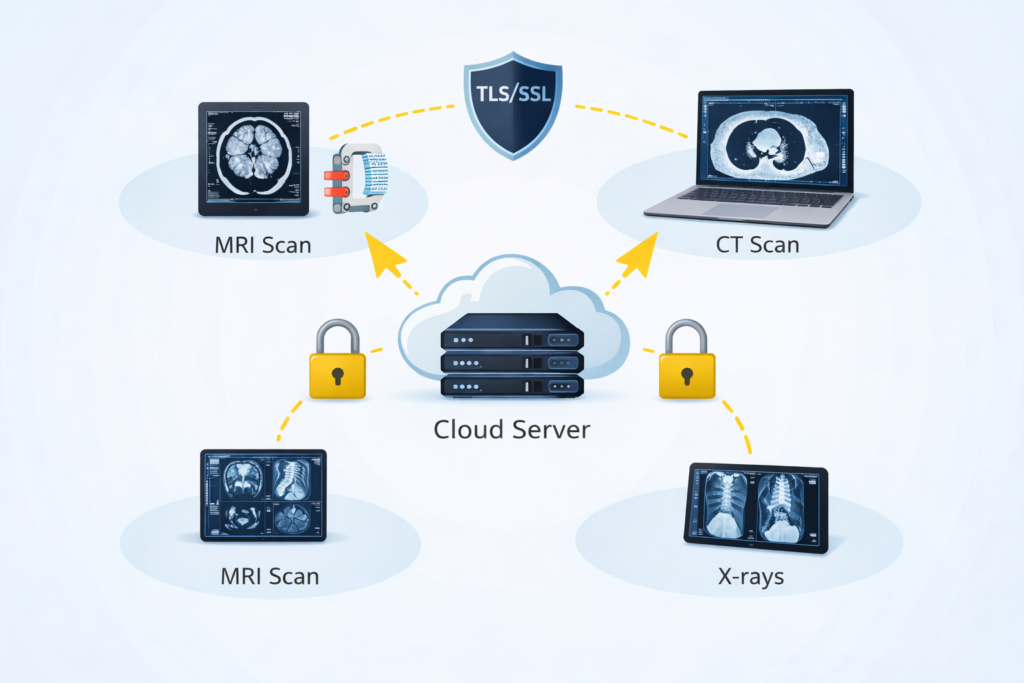
Data transmission in imaging is critical in cloud-based imaging, teleradiology, and telemedicine. It aims at providing a quality image in a low duration of time on networks that might be bandwidth constrained.
Difficulties with Image Transmission
- Bulky Files: The process of imaging, which is high-resolution, may cripple the network.
- Network Latency: The connection may be slow or unreliable which could slow the diagnoses.
- Data Security: The transmission will have to be in accordance with privacy laws such as HIPAA.
- Interoperability: It has to transmit images in standard formats that are compatible with a wide range of platforms and devices.
Methods of Efficient Transmission
- Gradual Incremental Reporting: The pictures are sent in bits, starting with a low-resolution picture, and this gives an option of the initial preview to be viewed.
- Streaming Protocols: The protocols such as RTSP (Real-Time Streaming Protocol) and adaptive bitrate streaming are protocols that optimize the delivery of the data according to the conditions of the network.
- Data Deduplication: Data that represents redundant parts of images are sent once and thus data traffic is minimized.
- Edge Computing: Data compression and processing are done nearer to the point of capture which minimizes the data sent to the central servers.
- Secure Transmission: TLS/SSL and VPNs will guarantee privacy and regulatory measures.
Case Study: Telemedicine Medical Imaging
Telemedicine depends on the high level of access to images via remote access. The transfer of MRI scans, CT images, and X-rays should be an efficient transmission of data to experts in remote sites.
- Acquisition of data: The images obtained are high-resolution.
- Compression: Lossless compression is done to maintain diagnostic integrity.
- Safe transmission: Encrypted networks have their data sent to distant specialists.
- Cloud storage: The images are stored in a tiered cloud storage, where the hot storage is used to store cases that are still open and the cold storage is used to store archived information.
- Access and Retrieval: Specialists access images in a short period of time to be diagnosed even over geographical boundaries.
The given workflow shows how the strategies of storage, compression, and transmission come together in order to facilitate timely and correct remote healthcare.
Satellite Imaging and Remote Sensing
Satellite imaging and remote sensing provide huge data sources to use in areas such as environmental monitoring, agriculture and disaster management.
Techniques Applied
- Onboard Compression: Images are compressed in satellites and then they are sent to ground stations.
- Region-of-Interest (ROI) Transmission: Image transmission is only performed to the relevant parts as this minimizes unwanted data transfer.
- Cloud-Based Analysis: Analysized and stored within the cloud platforms, allows distributed analysis and is accessible faster.
- Multispectral and Hyperspectral Data Management: Multispectral and hyperspectral images have many spectral bands, which makes them more data and complexity-intensive and necessitate special compression algorithms.
Such strategies make sure that the required information is delivered at the right time and the bandwidth and storage resources are utilized efficiently.
Imaging Data Management Standards and Protocols
Imaging systems are efficient and based on standards and protocols to make them compatible, secure, and performer:
- DICOM Standards: These are popular standards used in the storage, retrieval, and transmission of images in the medical imaging field.
- HL7 Protocols: Support the integration of the imaging data into the electronic health records (EHRs).
- FTP / SFTP and HTTPS: It is applied in the transmission of large files across networks using secure means.
- IaaS and SaaS Cloud Standards: Cloud platforms normally have APIs and security measures in place, which allow managing imaging data at scale.
Security Considerations
Security of data is the most important in the imaging systems especially in the health care industry. Key strategies include:
- Encryption at Rest and in Transit: Provides protection to the data stored and the data being transferred.
- Access Control and Audit Trails: Tracks the users that access imaging data and at what time.
- Regulation Adherence: Compliance to the HIPAA, GDPR, and other privacy regulations.
- Redundancy and Disaster Recovery: Safeguards loss of data in case of a hardware malfunction or cyberattack on the system.
New Trends in Imaging Data Management
- Compression in Artificial Intelligence (AI): AI algorithms are able to compress images to highlight the important clinically significant areas and retain detail at a lower overall size.
- Hybrid Storage Solutions: Hybrid storage using on-premises and cloud storage to combine efficiency and scaling.
- Blockchain in Data Integrity: The data integrity is offered as a tamper-resistant and auditable storage of sensitive medical imaging.
- Edge AI and IoT Integration: Edge devices will compress and pre-process imaging data in real-time, which will reduce the transmission requirements.
These solutions improve the scalability aspect, security, and efficiency of managing large imaging data.
Conclusion
The modern imaging systems require efficient storage, compression and transmission of imaging data. Resting on tiered storage, sophisticated compression algorithms, safe transmission schemes, and new AI-based applications, huge datasets may be handled efficiently without deterioration of the image quality. The strategies are especially important in the medical imaging, telemedicine and remote sensing where the availability of high-quality images in time may directly influence the decision and the outcome.
With the ongoing development of the imaging technologies, the usage of the hybrid cloud-edge architecture, compression based on AI, and blockchain based secure storage, the imaging systems will become quicker, more dependable, and able to deliver images at the speed of the needs of the future.