What Daily Learning Looks Like Inside Online Schools in Arizona
In Arizona, online school programs have transformed how students learn each day. Instead of sitting in a traditional classroom, students log in from home and engage in a full day of education through virtual platforms. Attending an Arizona online school means a student’s daily routine looks different from that of a typical brick-and-mortar student. There are live class sessions, self-paced learning modules, and frequent interactions with teachers (all accessible through a computer). This flexible approach to learning still meets the state’s academic standards while offering families more control over the school day. Below, we explore key aspects of what daily learning looks like inside Arizona’s online schools, from the structure of the day to social activities.
TL;DR
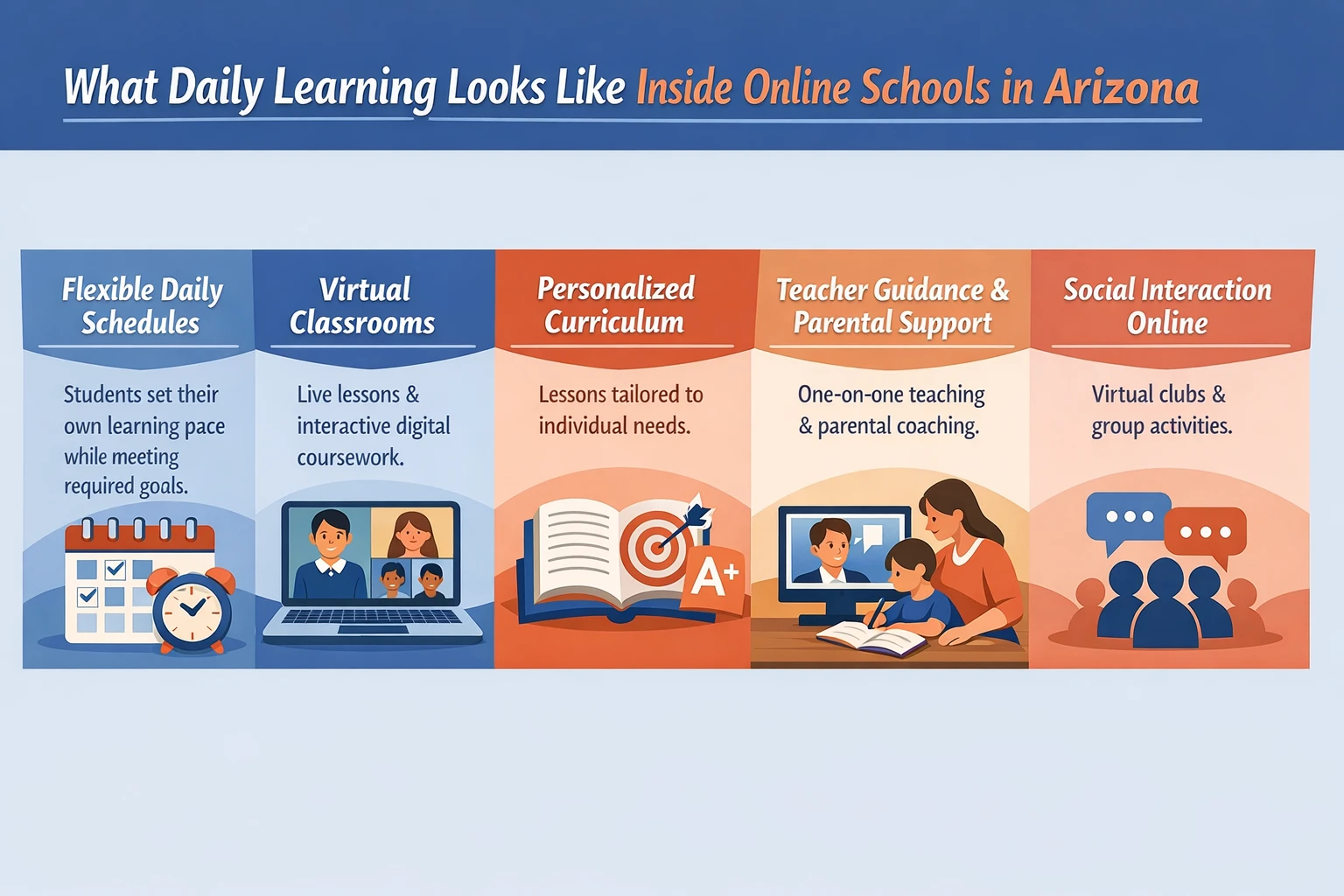
- Flexible daily schedules: Students have flexibility to set their own learning pace while meeting required goals.
- Virtual classrooms: Live online lessons and interactive digital coursework replace in-person class time.
- Personalized curriculum: Lessons are tailored to individual needs, letting students accelerate in strong subjects and spend extra time on challenging ones.
- Teacher guidance & parental support: Certified teachers guide students remotely with one-on-one support, and parents often act as learning coaches at home.
- Social interaction online: Students join group discussions, virtual clubs, and collaborative projects to stay socially engaged.
Flexible Scheduling and Daily Routine
Online schools in Arizona give students the advantage of a flexible daily schedule. Rather than following a strict bell schedule, students can often plan their day around personal peaks in productivity or family needs. Many programs start with a brief virtual homeroom where the teacher outlines the day’s plan, and then students work on lessons for each subject in an order and at times they choose. In fact, students can access their assignments and coursework 24/7, enabling families to arrange learning at convenient times while still meeting academic expectations.
Virtual Classrooms and Interactive Lessons
Much of the daily instruction in an online school takes place in a virtual classroom environment. Students attend live online lessons led by Arizona-certified teachers and participate through their computer screens, asking questions via microphone or chat and sometimes working with classmates in breakout groups. Classes are designed to be engaging: teachers often incorporate multimedia presentations, interactive polls or quizzes, and even virtual lab simulations to illustrate concepts. Self-paced work complements the live sessions as well. A student might watch an interactive math lesson or play an educational game to practice skills on their own. In short, learning is far from passive. Many live lessons are also recorded, so students can replay them later for review.
Personalized Curriculum and Learning Pace
Online schools in Arizona emphasize individualized learning. Students are not locked into a one-size-fits-all pace. If they grasp a concept quickly, they can forge ahead to more advanced material; if a topic is challenging, they have the freedom to take extra time and review until it clicks. The curriculum is comprehensive and aligned with state standards. Families often receive a mix of digital and physical learning resources – for example, online lessons and quizzes paired with textbooks or workbooks for offline study. Some programs even use adaptive learning software that provides extra practice or advanced challenges based on a student’s performance, further personalizing the education experience.
Teacher Guidance and Parental Involvement
Even in a virtual setting, students in Arizona’s online schools are never without guidance. Arizona-certified teachers, specially trained in online instruction, lead classes, grade assignments, and provide feedback to each student. They also hold virtual office hours or small-group sessions for extra help, monitor student progress and adjust learning plans if a student struggles. Parents play a pivotal role in daily online schooling as well. Especially for younger students, a parent or guardian acts as a “Learning Coach,” helping organize the day’s schedule, keeping the student on task, and communicating with teachers. As students grow more independent, parents step back but remain involved as needed, partnering with teachers to support student success.
Social Interaction and Extracurricular Activities
One concern about online schooling is whether students get enough social interaction. Arizona’s online schools integrate collaboration into the daily routine. During live classes, teachers engage students in real-time discussions (via audio or chat) and group activities that allow classmates to interact. Outside class, moderated discussion boards and messaging tools let students chat about coursework and build friendships online. These schools also offer extracurricular activities. Students can join virtual clubs (chess, coding, debate, etc.) that meet online under teacher supervision. These clubs allow kids to pursue hobbies and socialize beyond academics. Some programs even organize occasional in-person field trips or meetups for local students, so classmates can meet and bond face-to-face.
Online vs. Traditional School: Daily Learning Comparison
To illustrate the differences, the table below compares key aspects of a typical online school day with a traditional school day:
| Aspect | Online School Day | Traditional School Day |
| Daily Schedule | Flexible scheduling; student often chooses when to work on each subject (outside required live sessions). | Fixed schedule dictated by bells; every class at a set time. |
| Learning Pace & Curriculum | Mostly self-paced learning; can accelerate or slow down as needed. Curriculum delivered via online platform (digital lessons + some offline materials). | Pace is set by the teacher for the entire class. Curriculum delivered via face-to-face lessons, textbooks, and in-class assignments. |
| Classroom Environment | Virtual classes (video conferencing and online tools); learning from home with fewer peer distractions. | Physical classroom with teacher and classmates; face-to-face interaction along with typical classroom noise. |
| Teacher/Parent Roles | Teachers instruct and support remotely (provide feedback online). Parents act as Learning Coaches for young students, guiding daily learning at home. | Teacher is present in class to directly manage and assist students. Parents have minimal involvement during school hours. |
| Social Opportunities | Peer interaction through live online discussions, group projects, and virtual clubs; some programs host occasional meetups or field trips. | Daily in-person interaction with peers (classes, hallways, lunch, etc.). Many on-campus clubs, sports, and social events are available. |
Why the Online School Routine Works for Arizona Students
The day-to-day learning experience in Arizona’s online schools demonstrates that education can be both flexible and rigorous outside a traditional classroom. Students benefit from personalized pacing and the comfort of a home environment while still engaging with certified teachers and peers through modern technology. Key elements like structured virtual lessons, accessible teacher support, and active parent involvement ensure these online school days are productive and accountable. The success of these virtual school days shows that learning can happen anywhere as long as students are engaged and supported. Ultimately, daily learning in an Arizona online school is an adaptive blend of independence and support.