Introduction
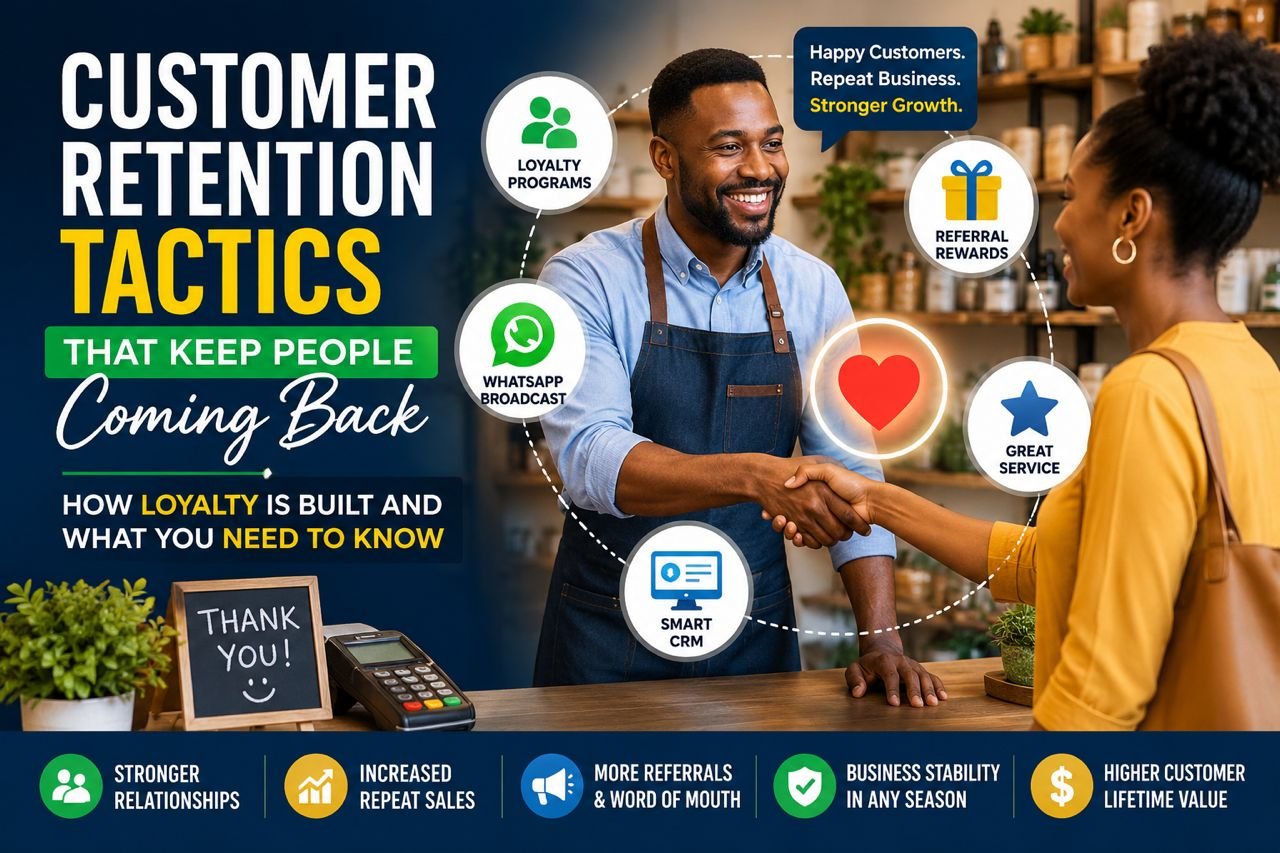
Growing businesses is an exciting venture but many small business owners do it the hard way. They put in the majority of their time and money into getting new customers which they pay little attention to once the sale is made. While it is true that finding new customers is a priority, what often is over looked is the value in keeping the ones you have. Businesses which put forth the effort into developing strong relationships with their customers see in themselves repeat business, better referrals, and a more stable income which extends into slow times.
Understanding which customers to keep is what separates the successful entrepreneurs from the rest. Instead of always going after new clients we see companies do better who pay attention to their repeat customers. Each time a customer comes back you build their trust and also increase their lifetime value to the business which in turn decreases the need for large scale ad spends. No matter if you run a local grocery store, fashion store, restaurant, pharmacy, point of sale business, beauty salon, or online shop customer retention is what will set you apart.
This paper we present to you our take on what we believe to be five practical customer retention strategies which see businesses grow their base of loyal customers. Also we look at basic customer relationship management (CRM) tools, feedback mechanisms, and the issue of customer lifetime value which we present in a very approachable way for even the new to the game to understand.
Why Customer Retention Matters More Than Constant Customer Acquisition
Many business owners think growth is a result of constantly acquiring new customers which is a daily goal. While customer acquisition does bring in more attention to the business it also brings in great expense. Advertising, promotions, social media campaigns and discounts all are a cost. Also if the customers who are acquired are not returnable, the business is left to constantly put out more money to get in new customers. This creates a never ending cycle which in turn reduces profitability and puts more financial stress.
Customer retention changes all that. We have present customers which already are familiar with our products, which have a good grasp of what we do for service, and which trust us enough to come back in for more. We usually don’t have to sell as hard to them as we do to first time buyers and also they tend to spend more each time they visit because they have grown to trust our brand. Also repeat customers become your best advocates who put in a word for your business to family, friends, co-workers and neighbors thus doing away with the need for extra advertising. What they say brings in high quality customers because personal recommendations from people we are known to do business with carry more weight than any ad we run.
For small scale businesses which work with tight budgets, retention is the key. Instead of each month having to go out and get hundreds of new customers they can put that energy into what they are doing for current customers. This creates a stable revenue stream, which in turn improves cash flow and allows for better financial planning. Over time what you build is a loyal customer base which is one of a business’ greatest assets because that trust is hard for competitors to replicate.
Grasping Customer Lifetime Value and What It Does To Everything.
Customer Lifetime Value what we also refer to as CLV, is the total amount of money which a customer is predicted to spend with us over the full course of your interaction. As opposed to looking at a customer’s single transaction, CLV makes it a point to look at the big picture. A customer that may have only made a little purchase from you today may in fact turn out to be a very valued client in the future if they end up shopping with you consistently over many years.
In a small electronics store we see two which at first look to be the same customer. The first purchases a single accessory and that is the end of his interaction with the business. The second customer also at first puts out the same amount of money but what he does is return every three months to buy more products. Also this customer ends up recommending the shop to family and friends and in the end ends up buying more expensive items. Although at their first visit these customers looked the same, in the long term their value to the business is very different. What we see is that companies which pay attention to the lifetime value of their customers put in more effort into building those relationships because they realize today’s small time purchase may in fact grow into a large scale revenue stream for the business in the future.
Thinking in terms of lifetime value also has a daily impact. Rather of putting all attention on short term gain, companies report to do better at offering great service, resolving issues fairly, and putting into play relationship based activities. While at the time these may look like large costs, in the long run we see that they pay off in the form of repeat business, positive word of mouth, and more devoted customers.
Customer Retention Tactic 1: Follow up on every sale.
Many companies think that their job is done at the point of receipt of payment. In fact it is at the time right after a purchase which we see the best chance to improve customer relationships. A simple follow up note which shows we care about customer care and which reminds them that they are more than just a transaction is all it takes.
After all it doesn’t have to be a complex or costly affair. A clothing store may send out a note of thanks which inquiries into how the customer liked their purchase. A pharmacy may call to see how the customer did with the products we recommended. A restaurant could approach guests that came in to eat and also let them know about coming up special deals. Also a simple WhatsApp note of appreciation goes a long way in creating that positive feel which customers will recall well after the purchase was made.
Consistent follow up also puts issues out in the open before they blow up into full scale customer complaints. Customers that have issues value when you reach out to them first which in turn they see the business as very approachable. We attend to issues right away which in turn stop negative reviews, build trust, and shows we are professional. Over time what we find is customers associate us with dependability and great service which in turn makes them loyal and less likely to go to a competitor.

Customer Retention Tactic 2: Develop a basic loyalty program.
Loyalty programs are still the best customer retention tool which is due to the fact they reward repeat purchase behavior. What we see is that people value recognition and by presenting rewards for that which customers do which in turn is what causes them to choose the same business over and over instead of going out to look at what the competition has. Also against what is popularly thought of, loyalty programs do not require expensive technology or complex software. Even the very small local shops can run an effective program with printed cards, stamps or very basic digital tracking.
For instance a coffee shop may present a free drink after the 10th purchase. Supermarkets we see which give out breaks once the customer has spent a certain amount. Salons may give away a free service or a product discount for every fifth appointment. What we see is that these rewards get the customer back in the door because with each purchase they are one step closer to that something free. As a business model instead of looking at the reward as an expense which it is, we should see it as an investment in our long term customer base.
Successful loyalty programs are best when they are simple, transparent, and easy to understand. Members should at once see what is expected of them to earn the rewards and what benefits they may look forward to as a result of their loyalty. Also we see that very complex rules turn customers off which in turn reduces participation as customers do not wish to deal with confusion. What we do see is that when the value is very much put forth clearly customers’ loyalty programs in turn pay great dividends by way of repeat business and also in terms of positive brand feeling.
Customer Retention Tactic 3: Use WhatsApp for keeping in touch.
One present in the small business arena is WhatsApp which is very affordable and effective. We see that since almost all customers are already on the platform daily, it provides an easy solution to keep in touch without breaking the bank on advertising. As opposed to individual messages, WhatsApp Broadcast allows businesses to send out to many at the same time in a private setting which in turn makes each recipient think they are the focus of the message. This in turn creates a greater connection between business and customer while also saving time. But do note that businesses should always get permission from the customer before adding them to a broadcast list, we see that sending out unsolicited promotional material damages trust and cause customers to block the business. Permission based communication shows that the business values its customers’ privacy which in turn has a high chance of getting the message read and responded to.
This is shared via WhatsApp should at all times have value to the customer as opposed to only pushing sales. Companies may report new in stock items, seasonal promotions, holiday hours, how to get the most out of products, maintenance tips, or exclusive deals for our best customers. For instance a grocery store may alert customers of the arrival of fresh produce, a fashion boutique can put out word on new collections before the rest of the world. Also including some educational content with your sales pitches will keep customers involved without at the same time overdoing it with ads. As customers see they are getting useful and relevant updates from you they will stay connected to your business, think of you more often and are very much more likely to come back to you the next time they are in the market for what you sell.
Customer Retention Tactic 4: Rewrite Customer Referrals.
Happy customers are going to pass your business along to others when they have had a great experience with you but many business owners don’t put out the call for that or put in the reward structure for it. Referral programs what do they do? They turn satisfied customers into very enthusiastic promoters by putting in a system which encourages that action. Also instead of breaking the bank on advertising which may or may not work you can use referral rewards which in turn will grow your business through real word of mouth which is also usually much more in depth than what you would get from a paid ad. Also what we see is that people are more likely to take a recommendation from a friend or family member before they will buy into a marketing message which may or may not be true.
Referral programs don’t have to break the bank to see results. We’ve seen that a 10% off next purchase, complimentary item, loyalty points, or special gifts do in fact prompt our customers to bring in new business. Also important is the simplicity of the process. Consumers should be able to easily understand your referral program; what is expected of them and in turn, what will be given out. With every single step also include a clear explanation of what is a successful referral and how the referrer is to benefit from it. Also, we also ask for personal thank you’s from our end which if given before even the referral has paid out, will go far in growing a relationship and thus emotional brand loyalty. Also over time these programs play a large role in a snowball effect with regards to having our loyal patrons get other people in the door, who then become our fans also. That which may have at first cost little, will see high returns over time and at the same time our reach as a brand will grow organically as opposed to with big aggressive ad campaigns.
Customer Retention Tactic 5: Provide the same level of service each time.
Exceptional service is a result of consistent performance not just a few great interactions; it is what customers come to expect. Businesses which see repeat custom do so because they deliver the same high quality experience each time a customer walks in. What we see is that customers look for products which perform as they should, staff that are polite and pay attention to them, prices that are what they seem, and issues that are handled well. Very little can remedy a broken service delivery system which a great welcome at the door cannot fix. That single bad experience may nullify the impact of all the positive ones if the customer starts to question the business’ reliability.
Consistency is a result of having clear standards which we as employees buy into and follow. We should greet customers with a smile, answer their questions honestly, solve their issues right away, and maintain our professional demeanor at all times which in turn may not always be easy as business gets busier. Products should live up to the same high standards each and every day, also we must do what we say in terms of delivery times, pricing and communication. What we put out there is what we fulfill because over time that is what builds trust with our customers. It is the small consistent improvements which may go by unnoticed that in fact leave a bigger impression than the odd great effort. When customers know what to expect from us they in turn feel at ease to return again and again, to tell others about us and to choose us over the competition.
Easy CRM Tactics for Small Businesses to Try Out
Customer Relationship Management what we often see as a big ticket item for larger companies is actually easier for a small business to get into then you may think. At it’s core CRM is the practice of us as a business putting our customer info in one place which in turn allows us to better serve that customer and grow the relationship out. A small shop does not require expensive software at the start. Even a paper based system or a very basic mobile app can serve as a great CRM tool if it is used well and updated regularly.
A practical CRM (Customer Relationship Management) system may include anything from a customer’s name, phone number, purchase history, date of birth, favorite products, and notes on past interactions. We see how businesses that use these tools are able to tailor their approach rather than treat all customers the same. For example, greet the customer by name, bring up that which they have a known affinity for, or alert them that we have what they asked for in the past. Such personal touches make customers feel as though they are known and valued. As a business grows out they can transition to the more complex CRM software solutions but by starting out with just basic record keeping they are at the same time forming good practices that improve customer satisfaction from the start.
Develop Feedback Systems which Improve Service.
Customer feedback is a very important resource for any business which reports what customers really think instead of what business owners assume. Also many companies only turn to customer input when something goes out of order. By setting up regular feedback systems which is a two way street we encourage customers to bring forward both their praises and issues which in turn support continuous improvement. Feedback must not be taken personally as criticism but as a chance to identify issues before they grow into larger problems.
Businesses may collect feedback through to which customers respond to with a few short WhatsApp messages, via filled out comment cards, at the end of the transaction in a short online survey, or right after purchase in person. We put out there that what we think of as issues or what we liked and didn’t like in service we did for the day that does bring in a lot of useful information. Also what is very important is that businesses do something with this feedback. As customers see their ideas turn into changes they feel valued and become very loyal. Also by us out that we heard what they had to say and that we made changes based on what was said, that we are listening, that does in fact grow trust and also creates a culture that is very focused on the customer and that in the long run brings success. This is an ongoing conversation.
Common Small Business Retention Missteps to Avoid.
Many companies see to it that they lose customers’ loyalty through avoid which may be prevented. We see that it is very common for companies to approach customers only at the point of sale. Constant promotion which doesn’t include useful info makes it appear to customers that we are only interested in their money. Also it is a mistake to ignore customer issues or to respond in a defensive way instead of working towards a solution. Each issue presented by a customer is a chance to improve the business customer relationship if they may be handled with professional and empathetic care. What we see is that businesses which handle issues out and above what is expected often gain even more customer loyalty than those which may not have had an issue to begin with.
Another issue is that we see too many promises which we know won’t be kept. We see over promise and under deliver in terms of delivery times, product availability, or service quality which in turn causes disappointment and reduces trust. Also businesses do not pay enough attention to consistent pricing, communication breaks down, and they ignore their base of loyal customers as they go after new business. Current customers expect that which they put in their loyalty, will be recognized and rewarded and we see them go to competition when that doesn’t happen. By avoiding these typical issues and instead adding value we see businesses build stronger relationships which in turn produce repeat business year after year.
Conclusion
Customer retention is a simple business practice which large companies have monopolized. It is a doable strategy that any small business may put in place by which they continuously build trust, maintain communication, and put out great service. Each satisfied customer is a repeat sale at a minimum which also brings in referrals, positive reviews, and long term business stability. As companies move away from the model of the onetime transaction to that of the ongoing relationship they are in fact creating a base for growth which requires less advertising and which in turn produces greater profitability over time.
In this article we discuss 5 retention techniques that work well after sales follow up, loyalty programs, use of WhatsApp for broadcasts, referral rewards, and consistent customer service. Also which in combination with basic CRM tools and continuous feedback improve results. As a whole these strategies raise customer lifetime value at the same time as they grow the emotional tie customers have to the business. As opposed to constantly in search of new customers which is a very narrow focus, what we see is that which small business owners who put into practice customer retention do in fact build communities of loyal customers which in turn weather with them through market changes. In the end businesses which put customer relationships first will always have a larger advantage over those which are only focused on the next sale.
Get more well researched information about Customer Retention Tactics here.