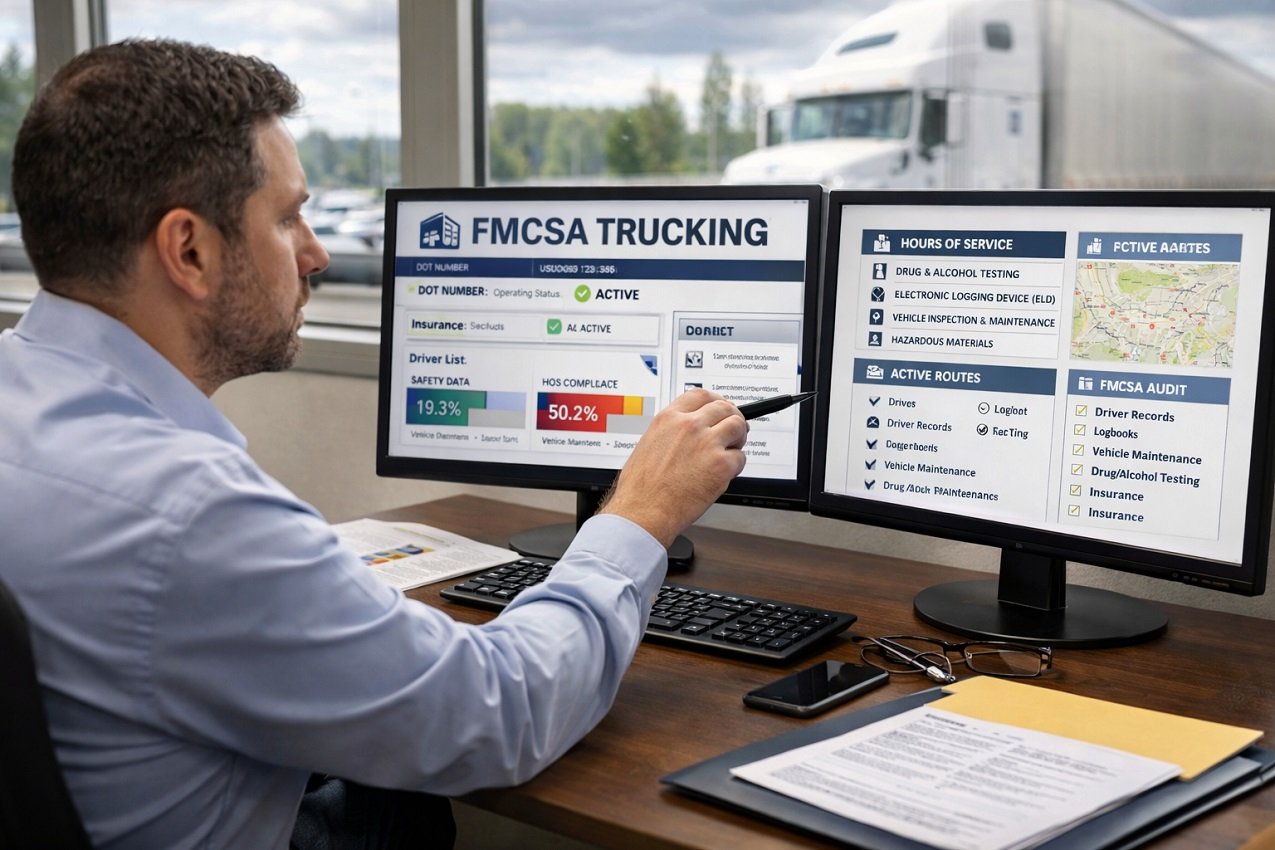
The trucking industry plays a critical role in the movement of goods across the United States, making safety and regulatory compliance essential for carriers and drivers alike. To ensure standardized operations and reduce accidents, the Federal Motor Carrier Safety Administration (FMCSA) establishes comprehensive guidelines that govern commercial trucking activities. Understanding and following FMCSA trucking rules is vital for maintaining legal compliance, operational efficiency, and roadway safety.
Overview of FMCSA and Its Regulatory Role
The Federal Motor Carrier Safety Administration is a U.S. Department of Transportation agency responsible for regulating commercial motor vehicles (CMVs) involved in interstate commerce. Its primary mission is to reduce crashes, injuries, and fatalities involving large trucks and buses. FMCSA develops and enforces safety regulations, conducts compliance reviews, and monitors carrier performance through data-driven safety programs.
These regulations apply to trucking companies, owner-operators, fleet managers, and commercial drivers operating vehicles that meet specific weight, passenger, or hazardous material thresholds. By setting clear standards, FMCSA ensures that trucking operations remain safe, reliable, and accountable.
Hours of Service (HOS) Regulations
One of the most critical FMCSA trucking rules involves Hours of Service (HOS) requirements. These regulations limit the number of hours a commercial driver can operate a vehicle without rest. The purpose is to prevent driver fatigue, which is a leading cause of accidents in the trucking industry.
Under current HOS rules, property-carrying drivers are generally allowed to drive a maximum of 11 hours after 10 consecutive hours off duty. They must also take a 30-minute break after 8 cumulative hours of driving. Additionally, the 60/70-hour limit restricts how many hours a driver can be on duty within a 7- or 8-day period, depending on the carrier’s schedule.
Electronic Logging Devices (ELDs) are mandatory for most carriers to track driving hours accurately. This digital tracking system ensures transparency and helps regulators verify compliance efficiently.
Driver Qualification and Licensing Requirements
FMCSA mandates strict driver qualification standards to ensure that only trained and medically fit individuals operate commercial vehicles. Drivers must hold a valid Commercial Driver’s License (CDL) appropriate for the vehicle class they operate. Furthermore, they must pass medical examinations conducted by certified medical examiners listed on the National Registry.
Carriers are required to maintain a Driver Qualification File (DQF) that includes employment history, driving records, medical certificates, and background checks. This documentation helps verify that drivers meet safety and experience standards before being allowed on the road.
Vehicle Inspection, Repair, and Maintenance
Regular inspection and maintenance of commercial vehicles are essential components of FMCSA trucking rules. Carriers must systematically inspect, repair, and maintain all vehicles under their control to ensure safe operation. This includes brakes, tires, lights, steering systems, and coupling devices.
Drivers must conduct pre-trip and post-trip inspections and document any defects or deficiencies. If a safety issue is identified, the vehicle must be repaired before it is operated again. These preventive measures significantly reduce mechanical failures that could lead to accidents or roadside violations.
Drug and Alcohol Testing Regulations
Another key aspect of FMCSA compliance involves drug and alcohol testing programs. All CDL drivers operating safety-sensitive vehicles must participate in mandatory testing programs, including pre-employment, random, post-accident, reasonable suspicion, and return-to-duty testing.
The FMCSA has established strict thresholds for controlled substances and alcohol use. Drivers who violate these rules must complete a Substance Abuse Professional (SAP) program before returning to duty. This regulation promotes a safer work environment and ensures that impaired driving risks are minimized.
Compliance, Safety, Accountability (CSA) Program
The CSA program is a data-driven initiative designed to monitor and improve carrier safety performance. It evaluates trucking companies across several Behavior Analysis and Safety Improvement Categories (BASICs), including unsafe driving, hours-of-service compliance, vehicle maintenance, and crash indicators.
Carriers with poor CSA scores may face interventions such as warning letters, compliance reviews, or enforcement actions. Maintaining a good CSA score not only enhances safety but also improves a carrier’s reputation and business opportunities.
Cargo Securement Standards
Proper cargo securement is another essential requirement under FMCSA trucking rules. Improperly secured loads can shift during transit, causing rollovers, cargo spills, and serious accidents. Regulations specify securement methods, equipment requirements, and load distribution standards based on cargo type.
Drivers must ensure that cargo is properly balanced and fastened using approved tie-downs, straps, and restraints. Regular checks during transit are also recommended, especially for long-haul trips or hazardous loads.
Insurance and Financial Responsibility
FMCSA requires interstate motor carriers to maintain minimum levels of insurance coverage depending on the type of cargo transported. For example, carriers hauling non-hazardous freight must carry at least $750,000 in liability insurance, while those transporting hazardous materials may need coverage up to $5 million.
This financial responsibility ensures that victims of accidents involving commercial trucks receive adequate compensation for damages or injuries. Failure to maintain proper insurance can result in penalties, suspension of operating authority, or revocation of licenses.
Safety Audits and Compliance Reviews
New trucking companies entering interstate commerce must undergo a New Entrant Safety Audit within their first 12 months of operation. This audit evaluates compliance with FMCSA regulations, including driver qualifications, HOS records, maintenance programs, and drug testing policies.
In addition to audits, FMCSA conducts compliance reviews for carriers flagged due to poor safety performance or complaints. Companies found in violation may face fines, corrective action plans, or operational shutdowns if serious safety risks are identified.
Recordkeeping and Documentation Requirements
Accurate documentation is a cornerstone of FMCSA regulatory compliance. Carriers must maintain records related to driver logs, inspection reports, maintenance schedules, accident registers, and employment files. These records must be readily accessible during inspections or audits.
Proper recordkeeping not only ensures regulatory compliance but also helps companies identify operational inefficiencies and improve safety management practices over time.
Penalties for Non-Compliance
Failure to comply with FMCSA trucking rules can result in significant penalties, including fines, out-of-service orders, and suspension of operating authority. Severe violations, such as falsified logs or unsafe vehicle operation, can lead to legal action and reputational damage.
In addition to financial losses, non-compliance increases accident risks, insurance costs, and operational disruptions. Therefore, proactive compliance management is essential for long-term business sustainability in the trucking sector.
Best Practices for Staying Compliant
To remain compliant with FMCSA regulations, trucking companies should implement strong safety management systems, provide regular driver training, and use modern compliance technology such as ELDs and fleet management software. Conducting internal audits and staying updated with regulatory changes also helps prevent violations.
Employers should foster a culture of safety where drivers feel responsible for following regulations and reporting concerns. Continuous education on evolving FMCSA guidelines ensures that both drivers and fleet managers remain informed and prepared.
FMCSA Compliance and Safety Standards
FMCSA trucking rules form the backbone of safety and operational standards in the commercial transportation industry. From hours of service and driver qualifications to vehicle maintenance and drug testing, these regulations collectively reduce risks and promote accountability. By prioritizing compliance, trucking companies can enhance safety, avoid costly penalties, and build a strong reputation in a highly regulated industry. Ultimately, adherence to FMCSA guidelines not only protects drivers and cargo but also contributes to safer highways for everyone.