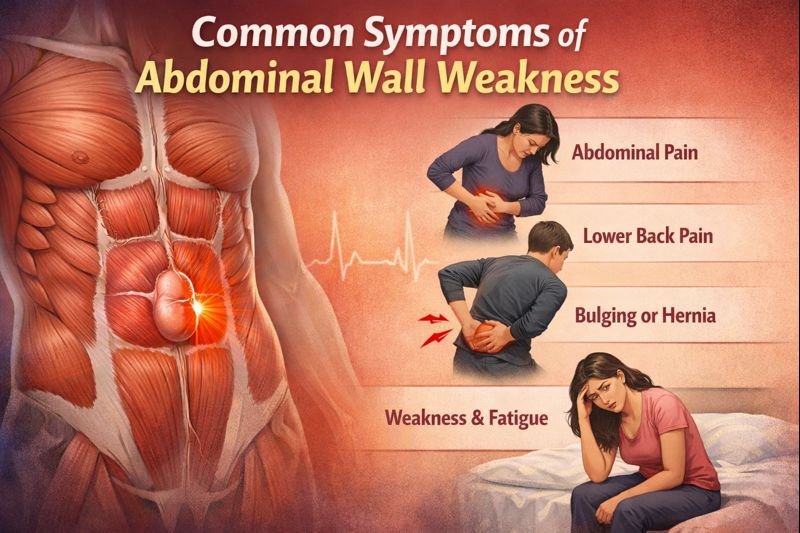
There are moments when the body sends signals that may initially go unnoticed. Mild abdominal pressure, a pulling sensation after lifting heavy objects, or a temporary bulge that appears and subsides throughout the day may seem insignificant. However, these signs can indicate an underlying issue, specifically the early development of abdominal wall weakness.
Many people misunderstand the nature of abdominal wall weakness. It is not merely muscle fatigue or post exercise soreness. Rather, it is a gradual and progressive condition that can affect comfort and confidence during daily activities. When the muscles and connective tissues supporting the abdomen weaken, posture, digestion, and overall movement may be negatively affected.
Recognizing the common symptoms of abdominal wall weakness allows individuals to identify early warning signs and seek appropriate care before the condition progresses to more serious complications, such as requiring hernia treatment. Early detection makes the condition easier to manage and helps reduce the risk of complications.
Understanding the Core: Why Abdominal Wall Weakness Happens
The abdomen plays a crucial role in overall body stability. It supports internal organs, facilitates movement, and helps protect the core from excessive strain. When abdominal muscles weaken, even routine actions such as coughing or bending can become uncomfortable or fatiguing.
The Role of Muscle Strain
One of the most common causes of abdominal wall weakness is repeated muscle strain. This may occur after heavy lifting, high intensity exercise, or frequent coughing that places ongoing pressure on the abdominal wall. Over time, these recurrent stresses can cause the muscles to lose tone and elasticity.
Individuals often report a dull ache or persistent tightness in the lower or central abdomen. This discomfort may fluctuate, sometimes worsening with physical activity or prolonged standing. While brief periods of rest may offer temporary relief, a continuing sensation of tension often indicates that the muscles are no longer providing adequate support.
The Effect of Aging on Muscle Strength
As the body ages, muscles naturally experience a gradual decline in strength and coordination. This loss of tone affects not only physical appearance but also internal structural support. The connective tissues that stabilize the abdomen can weaken, leading to a soft or lax sensation in the abdominal area.
These changes may become more pronounced after significant weight loss, childbirth, or extended periods of inactivity. The abdomen may appear less firm or feel tender following meals. Over time, a weakened abdominal wall may allow small sections of tissue to protrude through vulnerable areas, increasing the likelihood of discomfort and noticeable bulging.
Pregnancy and Abdominal Separation
Pregnancy is another frequent contributor to abdominal wall weakness, particularly due to a condition known as diastasis recti. During pregnancy, the expanding uterus causes the abdominal muscles to separate to accommodate fetal growth. After childbirth, some women find that these muscles do not fully return to their original alignment.
This can result in persistent weakness or a visible separation along the midline of the abdomen. While gentle, targeted exercise and proper posture can support muscle recovery, the process requires time and consistency. If left unaddressed, this separation may contribute to chronic back pain and reduced core stability.
Recognizing the Signs: How Weakness Shows Up
When abdominal wall weakness begins to develop, the symptoms are often subtle in the early stages. These sensations are frequently mistaken for fatigue, bloating, or mild strain. However, monitoring how these sensations change over time can make a significant difference in early recognition and management.
Discomfort and Bulging
One of the early signs is a small bulge or localized swelling that becomes noticeable when standing, laughing, or lifting objects. This bulge may recede when lying down, only to reappear later. Although it may not always be painful, it indicates that internal pressure is passing through weakened muscle tissue.
In some cases, this mild protrusion may lead to localized tenderness or a burning sensation near the affected area. While not every bulge indicates a serious condition, it is important to have it evaluated by a healthcare professional to rule out underlying issues.
Core Instability and Fatigue
Another noticeable symptom is a reduced sense of stability in the midsection. Individuals may report feeling that their core lacks adequate support or fails to engage properly during movement or exercise. This perceived instability can contribute to back pain, postural changes, or digestive discomfort after meals.
Even routine activities such as turning in bed, laughing, or climbing stairs can highlight the body’s reliance on strong core muscles. When these muscles weaken, deep breathing may also feel less efficient, as the body must exert greater effort to maintain an upright posture.
Digestive and Postural Changes
A weakened abdominal wall can also affect digestive function. The core muscles support internal organs, helping to facilitate efficient digestion and maintain stable posture. When these muscles lose strength, bloating or post meal discomfort may occur more frequently.
At the same time, postural alignment may deteriorate. Individuals may notice increased slouching or difficulty maintaining natural abdominal engagement. Over time, these subtle postural changes can contribute to back strain or hip imbalance, highlighting the importance of early recognition and intervention.
Paying Attention Early Makes a Difference
Abdominal wall weakness does not develop suddenly. It is often the cumulative result of daily habits, repeated physical strain, or natural life changes that progress over time. Identifying early symptoms can prevent mild discomfort from progressing into more serious conditions.
Individuals who experience ongoing pressure, tenderness, or abdominal bulging should seek professional medical evaluation. In some cases, targeted exercises and guided physical therapy can restore muscle strength. In other situations, a medical assessment may be required, such as evaluation for possible hernia treatment if a structural gap or weakness is detected in the abdominal wall.
Maintaining core health is not solely about appearance, but about overall wellbeing. The abdomen supports nearly all body movements, and preserving its strength helps maintain comfort and confidence in daily life. By remaining attentive to subtle bodily signals, individuals can safeguard their health and support long-term core stability.