Introduction
One of the greatest problems in agriculture is crop diseases, particularly in areas where agriculture is a key source of livelihood. These diseases cause yield losses, impact food security and result in high economic losses for farmers. They occur due to the presence of different pathogens like fungi, bacteria, and viruses and can spread rapidly when the environmental conditions are favorable, e.g. high humidity, poor soil condition and over-dense planting. Farmers must be aware of these diseases and how they are transmitted if they are to safeguard their farms and maintain continuity of yield. This article discusses some of the most prevalent crop diseases, their origins, their symptoms and what farmers can do to manage and avoid these diseases without using lots of chemicals that might be harmful to the soil and environment in the long run.
Causes of crop diseases
Crop diseases occur when a combination of biological, environmental, and agricultural factors are involved; these factors interact in complex ways. The main causes are poor farming practices such as continuous monocrop farming, spacing and failure to manage soil fertility, as well as pathogens such as fungi, bacteria and viruses. The wet and humid weather coupled with warm temperature creates a conducive environment for pathogens to flourish and spread quickly in farms. Also, other factors such as contaminated tools, infected seeds and pest activity can exacerbate spread from one plant to another. The first step to understanding and managing these risks effectively is to recognize the importance of early detection and prevention. Farmers may learn more about major crop diseases at various stages of learning how each of those diseases impacts a crop and how early recognition of the disease can limit its impact before it can become widespread and out of control.
Fungal crop diseases and effects on agriculture.
Fungal diseases are one of the most prevalent and destructive diseases of crops which are responsible for agricultural production all over the world. These are due to fungus which spreads by spores carried by wind, water, soil and infected plant material. These include powdery mildew, rust diseases, and leaf spots which may affect leaves and stems, resulting in loss of photosynthesis. The diseases are often found in warm and humid conditions, so tropical areas are especially susceptible. Symptoms may consist of discoloration, powdery growth on the leaves, wilting and early defoliation. Late blight can kill entire fields, and can lead to lower quality and yield if not properly managed. Fungal diseases may be difficult for the farmer to manage as they tend to spread rapidly and can persist in the soil residue for extended periods. Thus, knowledge of their life cycle is necessary for the development of effective natural prevention strategies which do not rely solely on chemical fungicides.
Bacterial Crop Diseases and Their Agricultural Consequences
Crops that are infected by bacterial diseases are attacked by tiny organisms that enter through wounds, holes or holes created by insects. They invade the plant, multiply rapidly and cause severe infection. Bacterial wilt, bacterial blight, and soft rot are common bacterial diseases that can cause significant losses in crops like tomatoes, potatoes, and rice. Common symptoms are water-soaked lesions, wilt and stunting under conditions of moist soil, unpleasant odor from rotting tissue and black stems or leaves. These diseases are very hazardous, as they are transmitted through water splashes, contaminated tools and infected seeds. Bacterial diseases are more difficult to control after they have occurred and prevention is of critical importance, unlike fungal diseases. By knowing the bacterial sources and spread in plants, farmers can take steps to maintain better sanitation, improve field hygiene and lower the risk of outbreaks that may ruin entire farming systems.
Diseases of Crops from Viruses
Since viral diseases are untreatable once the plant is infected, they are one of the toughest diseases of crops to control. Both of these diseases are virally induced and require living plant cells to live and multiply. They are spread by insects like aphids, whiteflies and leafhoppers or by infected seed and planting material. Mosaic virus, leaf curl virus and streak virus are common viruses that cause a considerable loss in crop productivity. Symptoms consist of stunted growth, curved leaves, mosaic or yellow patterns on the leaves, and loss of fruit or grain yield. Viral infections develop insidiously and rapidly, and farmers might not become aware of them until considerable damage has been done. Thus, prevention is the only practical solution, through management of insect vectors, certified disease-free seed and strict field hygiene practices, reducing the possibility of viral pathogens being introduced and spread.
Rice blast
Rice blast is one of the most serious diseases in rice in a number of agricultural areas. Caused by a fungus attacking all parts of the rice plant, leaves, stems, nodes and panicles. The disease usually starts with small, diamond-shaped spots on leaves which develop into larger, gray or brown spots until the leaf tissue withers and dies. Infestation in the panicle can lead to empty grains or to total non-yields. The disease is fast spreading in high humidity and moderate temperature, particularly in fields where the nitrogen fertilizer rates are excessive. Without early diagnosis, farmers can lose substantial amounts due to rice blast. Good agronomic practices, disease resistant rice cultivars and appropriate use of fertilizer are essential for minimizing the impact of this disease. Knowing its behaviour can help farmers to take preventive action before it spreads out to entire rice fields.
Bacterial Wilt in Crops
Bacterial wilt is a serious disease of plants that is caused by soil bacteria, which invade the vascular tissues and disrupt the flow of water and nutrients. It damages many crops, such as tomatoes, potatoes, peppers, and cucumbers. One of the most striking symptoms is the rapid wilt of plants under what seems to be normal moisture content of the soil. As the disease progresses, the plant becomes completely dry and dies. Infected vascular tissues may show brown colour if stems are cut. This disease is best prevented by crop rotation and proper field sanitation, and the bacteria can survive in soil for extended periods of time. The main sources of spread are infected tools, water runoff and contaminated seedlings. Farmers, aware of the way bacterial wilt works, can take steps to improve their soil management practices and minimize the risk of ongoing contamination of their farms.
Example of a Viral Disease: Mosaic Virus in Crops
Mosaic virus is a very common viral disease of several crops such as tomatoes, cassava, tobacco, etc. It is defined by the presence of an irregularized mosaic pattern on leaves, with light and dark green patches. The symptom is frequently associated with leaf distortion, decreased plant growth and/or yield loss. Insects (mainly aphids) are the main vectors, but it can also be transferred via contaminated tools and infected seeds. As the viral diseases are incurable, prevention is the most crucial measure for farmers. Prevention of further spread will depend upon early detection and removal of infected plants. Moreover, in agricultural practices insect control and cultivars resistant to mosaic virus can have a major effect in minimizing the virus impact.
Natural and ecological measures in preventing crop diseases.
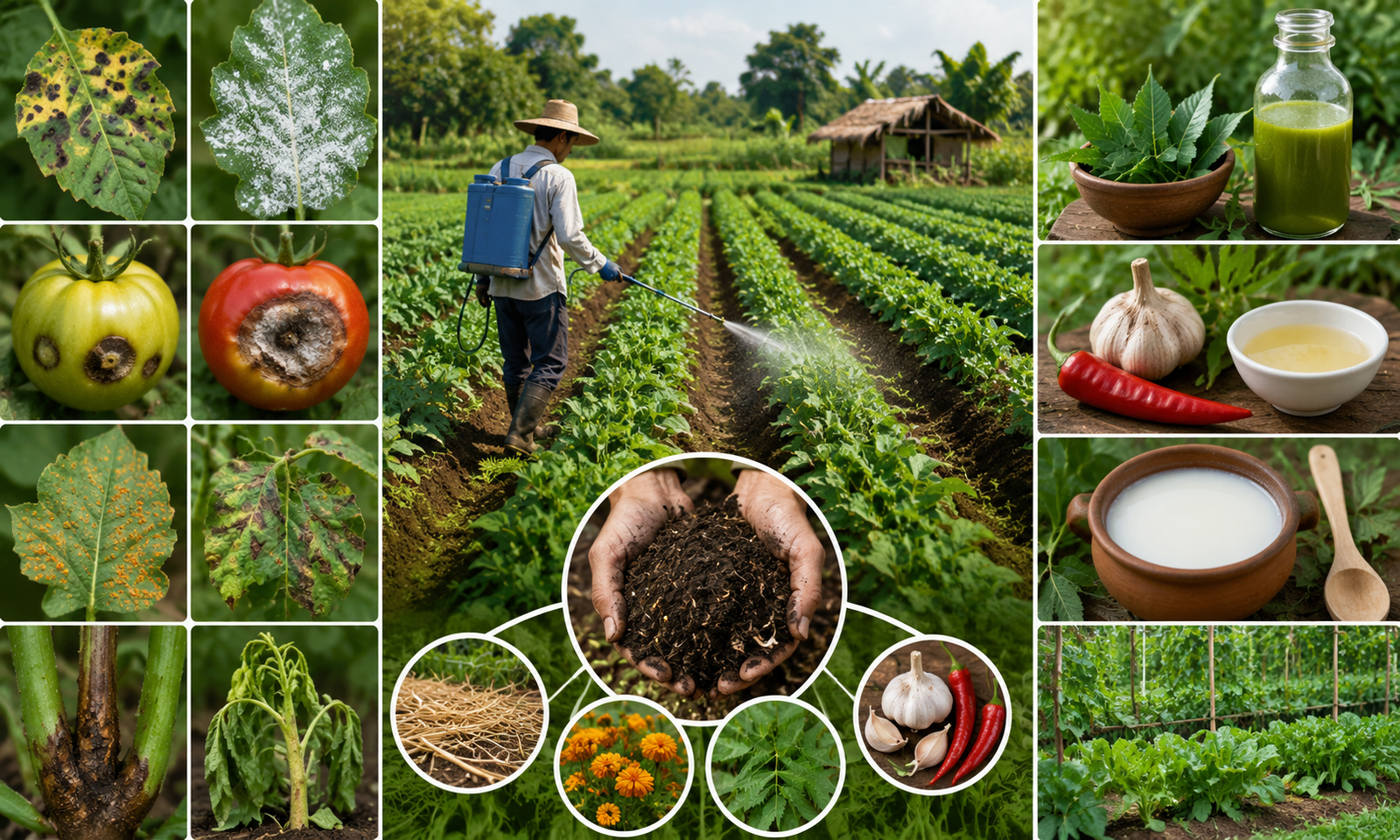
With farmers looking for sustainable alternatives to chemical pesticides and fungicides, natural disease prevention methods are gaining importance. A good method is crop rotation—rotating the type of crop that is planted in a given field from season to season, to avoid an accumulation of soil-borne pathogens. The use of organic compost and manure is another important method, as it enhances soil health and boosts plant resistance. Biological control is very effective and can include the use of beneficial microorganisms that compete with the harmful pathogens. Furthermore, adequate gaps between the crop plants promote good air flow and lowers moisture content that can lead to fungal growth. Resistant crop varieties and removing infected plants at the appropriate time to stop the spread of disease are also options for farmers. Not only do these eco-friendly techniques minimize crop loss, but they also enhance the overall sustainability and fertility of soil resources.
Integrated disease management and sustainable farming practices.
Integrated disease management is a combination of more than one method to control the crop diseases in a comprehensive and sustainable manner. Farmers do not rely on one technique alone, rather they employ a combination of cultural, biological and physical techniques to minimize the risk of disease. This involves proper cleanliness of the farm tools, ensuring proper irrigation methods to prevent water logging and regular checking of crops for early signs of infection. Another effective method is intercropping, which involves growing various crops in the same space to minimize the spread of disease. Another advantage of mulching is that it will help in reducing splash from soil contamination which can spread disease causing organisms. Education of farmers with regards to early detection and awareness and encouraging farmers to cooperate at the community level is also important as diseases can be transmitted between farms. These techniques can be used together to provide farmers with healthier crops, decrease reliance on chemical inputs, and develop a sustainable agricultural system that can sustain long-term food production.
Conclusion
Although crop diseases remain a significant challenge to agricultural production, they can be successfully managed with knowledge, timely detection and sustainable farming. Farmers benefit from a knowledge of the causes, symptoms and behaviour of fungal, bacterial and viral diseases, which enables them to make informed decisions to safeguard their crops. Crop rotation, biological control, composting and integrated disease management are some of the practical measures that reduce the use of harmful chemicals and enhance soil health and productivity in an environmentally friendly approach. Through these strategies, farmers can minimize losses, optimize production, and create farming systems that are more sustainable and resilient to the challenges and opportunities of the future, both economically and environmentally.