Introduction
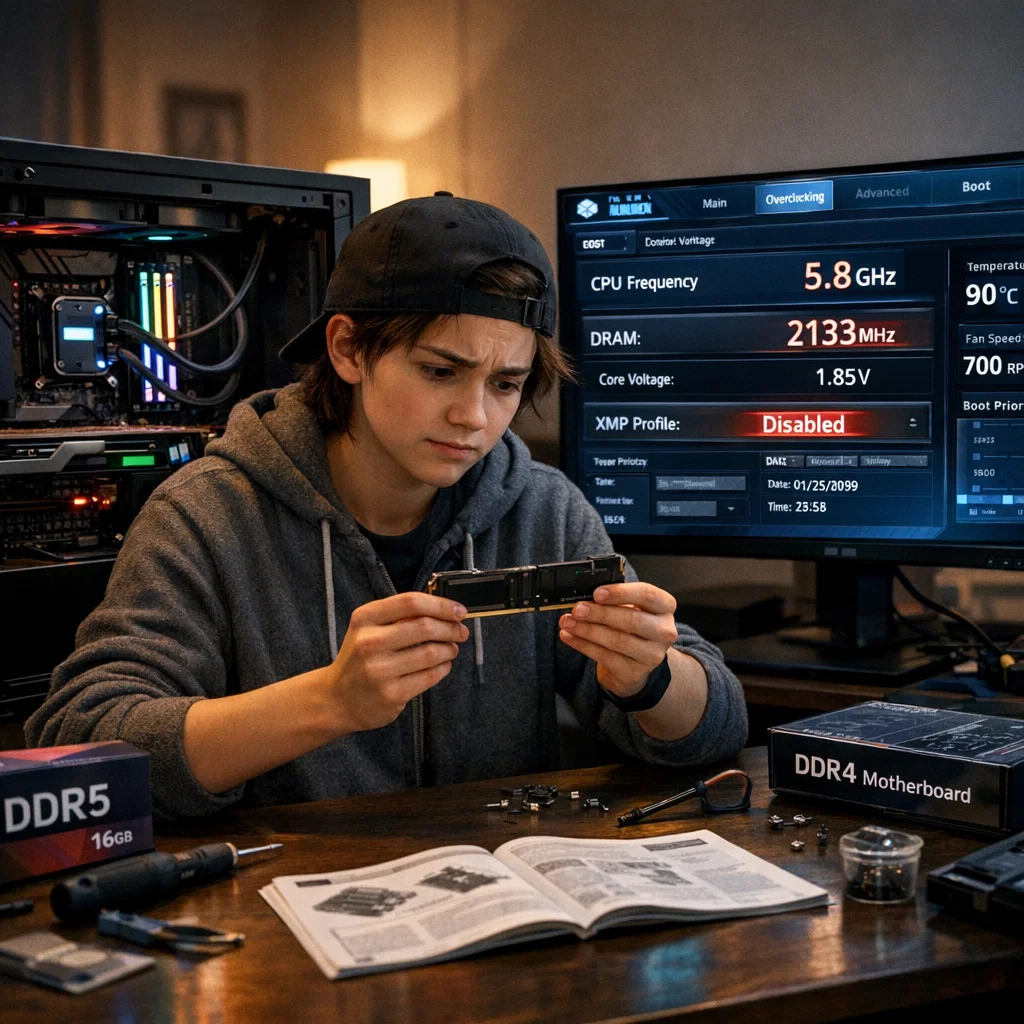
Installation of computer can be considered an easy process and any minor mistake made during the process can have severe consequences. The systems that are not well set up may experience crashes, poor performance, hardware breakages or in worst-case scenarios may also be damaged permanently. When assembling a new computer or tweaking an existing one, it is imperative to know the frequent errors users make during computer setup.
Most users fail to pay proper attention to the steps of installation that they usually think is self-explanatory. Nevertheless, costly errors can be avoided with the help of proper planning, research, and attention to detail. This article discusses the main mistakes in configuration, their causes and presents practical methods of prevention and troubleshooting. To read more on the same, visit common mistakes made by users when setting up a computer.
Through this guide, you will have a fast running computer which is stable in the long and delivers the performance that you desire.
The reason behind correct computer set up is important.
Performance Optimization
A computer is well-configured to be faster and efficient. Hardware or software that is wrongly configured may cause bottlenecks, which slows down activities like gaming, video editing or other normal productivity. As an illustration, using a slow hard disk to install the OS instead of an SSD may increase the time of booting by a few minutes and responsiveness of software.
System Stability
Wrong BIOS configuration, drivers which are out of date or hardware incompatibility may cause your system to come to a stop or crash without any warning. The stability is particularly of major concern to users who make use of their computer as a source of work or other significant undertakings. A stable state also lessens frustration which is brought about by random errors that might appear unaccountable.
Hardware Longevity
Adequate installation is a way to make sure that your components are working in a safe range. We can take an example of overheating by lack of airflow to reduce the lifespan of your CPU or GPU. Equally, a low quality or underpowered power supply may cause a hardware damage in the long run. Preventive measures are good in securing your investment.
User Experience
Having a properly set up computer does not only make the work of the computer be better but also makes it feel more smooth and trustworthy. By preventing the errors that most people make when setting up their systems, you will have time to do your business or enjoy without frequent disruptions by technical failures.
Of the frequent Computer configuration errors
We shall look at the most common mistakes made during the process of setting up computers, the reasons behind the mistakes, the effects, and the prevention of the same.
Incompatible Hardware Selection
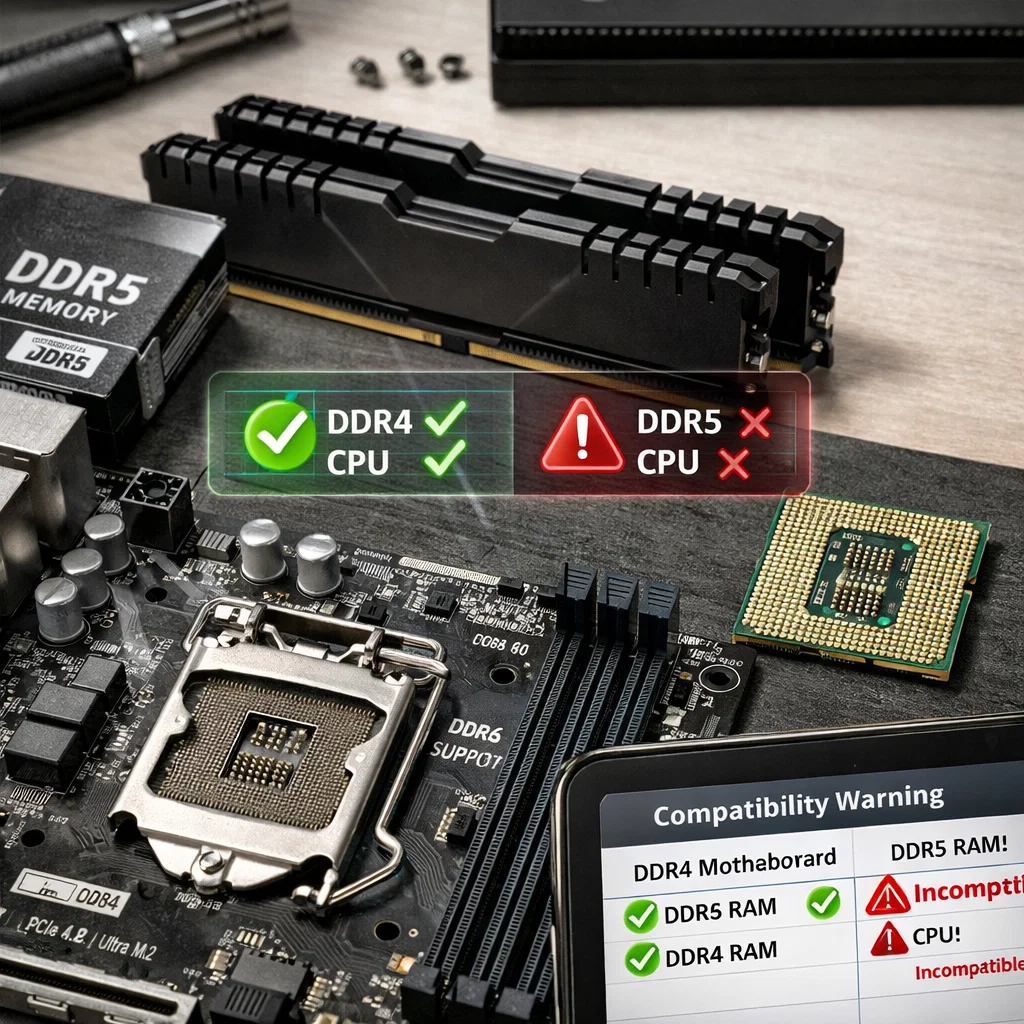
What it is: Selecting the components that are not compatible or surpass the system limits.
Why it happens:
- Failure to conduct research on components purchases.
- Disregarding compatibility lists of motherboards.
- The first one is choosing RAM, CPU, or GPU without checking compatibility.
Impact on system:
- System cannot start or can crash most of the time.
- Performance bottlenecks
- Potential hardware damage
How to avoid it:
- Make sure that motherboard CPU socket type is perfect in accordance with your processor.
- Type of check RAM (DDR4, DDR5) and maximum capacity of check RAM.
- Check the requirements of your PSU and GPU size in your case.
- All: Cross compatibility with online PC build tools.
Case in point: A customer purchases DDR5 RAM to be used in a motherboard which is not compatible with DDR5. The system will not start or maybe it will start but will not be able to recognize all the memory hence will perform poorly leading to instability.
Incorrect BIOS Settings
What it is: Mismatches of system firmware which is the way in which hardware components are brought into existence.
Why it happens:
- The lack of experience with BIOS options.
- Default values could be changed accidentally.
- Misinterpretation of memory profiles XMP/DOCP.
Impact on system:
- Error in booting or inability to identify components.
- Redundant functionality because of impaired functions.
- RAM with default, rather than optimum, settings.
How to avoid it:
- Default settings are to be used when in doubt.
- Enable XMP/DOCP high-speed RAM.
- BIOS update in case of compatibility patches suggested by the manufacturer.
- Before changing the BIOS settings, maintain a copy of the last BIOS settings.
Pro Tip: Other motherboards have a beginner friendly preset or EZ Mode configuration, which makes it easier to be a beginner.
Stolen/Hackers Drivers
Why it has occurred: This is because of failure to install/update hardware drivers required to make it work.
Why it happens:
- It should only use default drivers of operating systems.
- Failure to install graphics cards, audio and motherboard drivers.
- Ignoring regular updates.
Impact on system:
- Lower performance (e.g. lower graphics rendering).
- Devices can malfunction.
- Inconsistency of the systems or malfunctions.
How to avoid it:
- Driver installation on the websites of the makers.
- Start with drivers of the chipset, next: GPU, audio, network.
- Establishing of regular updates reminders.
- The driver management tools are to be utilized the way you please.
Scenario: A gamer will install the windows 11 in a new computer without updating the graphics driver. Games are characterized by low FPS and as such, frustration which would have been avoided easily ensues.
Unsuitable Cooling and Airflow System
What it means: It is the impossibility to arrange the fans or cooling systems in the case properly.
Why it happens:
- Ignoring airflow direction.
- Turning on the insufficient supply of fans or sprinkle the air with the cables.
- Overlooking dust filters.
Impact on system:
- Overheating components.
- Thermal throttling (slowing down the CPU/GPU).
- Rise in noise levels and risks of hardware malfunction on the fans.
How to avoid it:
- Front/intake, rear/top fans exhaust.
- Cables in the stores should be placed in a random way to prevent air blockages.
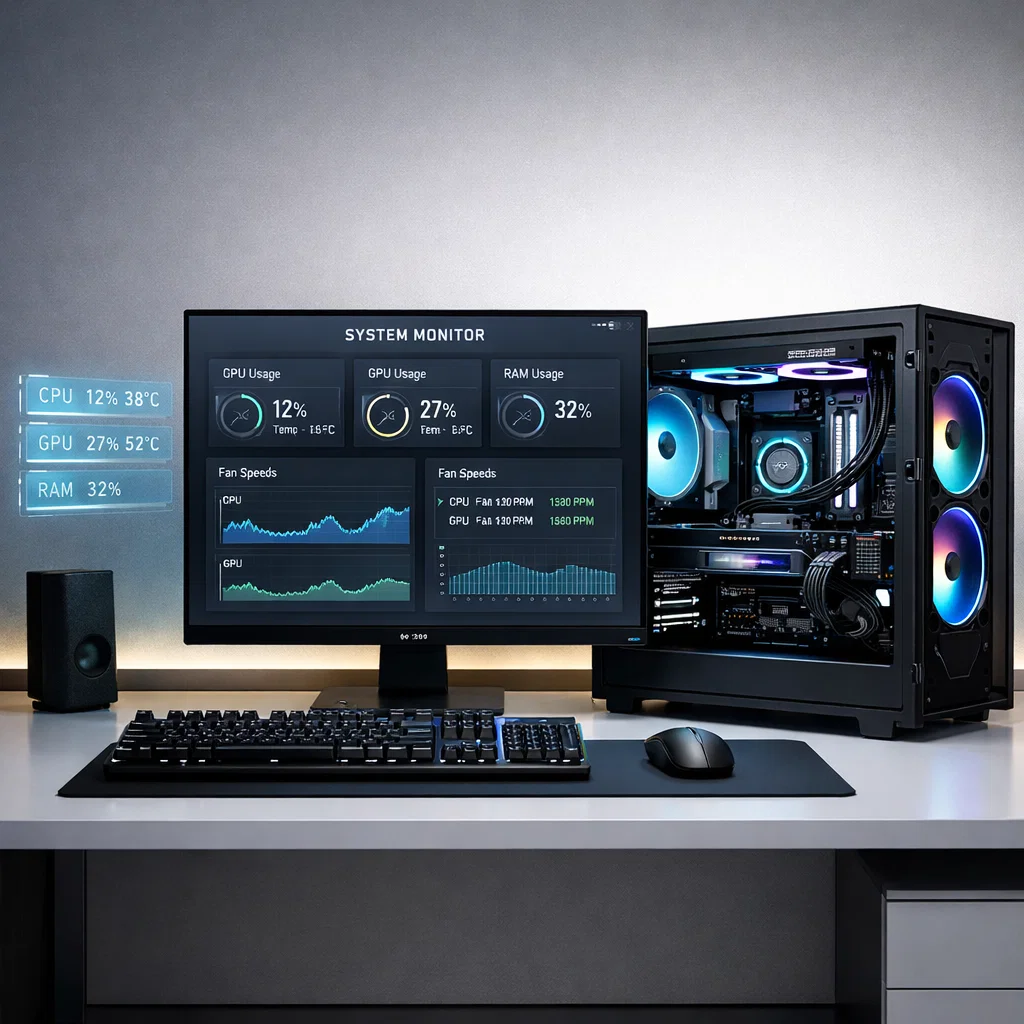
- Monitor the temperatures with the assistance of software (e.g. HWMonitor).
- Wipe dust filters often.
Pro Tip: If you ever wanted to create a high-performance, you can consider adding some cooling, e.g., liquid cooling or rather expensive air coolers.
Improper Storage Configuration
What it entails: The wrong installation or installation of storage drives.
Why it happens:
- Installation of the OS in SSD and none in HDD.
- AHCI and NVMe support have not been turned on in BIOS.
- Poor partitioning practices.
Impact on system:
- Time-consuming boot up time and loading of application.
- Reduced storage efficiency.
- Data Risk of loss or corruption.
How to avoid it:
- Install OS in SSD which has quicker program loading, boot time.
- AHCI has to be used with SATA SSDs; NVMe drives should be properly installed.
- Etc (rationally) (OS, games, data).
- There is also need to save valuable information prior to formatting drives.
Scenario: In other instances, the users clone the OS drives without the AHCI actually getting turned on and that is why they fail to boot, or their SSD performances are low.
Power Supply Miscalculations
What it is: It is the use of an insufficiently powered PSU or poor quality.
Why it happens:
- Estimation of wattage of system not done.
- The decision of less known or cheaper brands.
Impact on system:
- Random shutdowns.
- Lack of the upgrade capability of the components in the future.
- Risk of hardware destruction.
How to avoid it:
- Separate the system power into online PSU calculators.
- Select the high-quality brands of PSU (80+ certified) ones.
- Additional 20–30% of wattage in case of future upgrades.
Pro Tip: The better the rating of PSU the more efficient it becomes and generates less heat.
Preventions strategies How to prevent such errors (Prevention Strategies)
- Pre-purchase study: Read manuals, Internet reviews and compatibility lists.
- Adhere to installation guidelines: The complicated steps can be explained with the help of even brief instructions on the You Tube videos.
- Maintain drivers and BIOS: It is necessary to make sure that the parts are functioning at their best.
- Organize your building plan: A proper cable management will help to enhance the air circulation and minimize the danger.
- Test step by step: Boot in after the requirements are installed in order to eliminate the problems at the first level.
Additional tips:
- Label the cables in such a manner that they are easily troubleshooted.
- Have a checklist in every set up stage.
- In case of a reset, there is a need to change BIOS document.
Common Configuration Problems in Troubleshooting
Even in case of proper planning, there is no issue that can be avoided. The skill of troubleshooting will assist one in saving time and frustration.
System Not Booting
Symptoms:
- No monitor indication.
- Turn round, fans, and nothing, lady.
Possible causes:
- Loose RAM or GPU
- Wrong BIOS settings
- What causes incompatibility of the CPU or the motherboard?
Step-by-step fixes:
- Step 1. Test all the connections of the cables and components.
- Step 2. Removal and installation of RAM and GPU.
- Step 3. Reboot BIOS into default settings.
- Step 4. Examine the different sections separately where need be.
Slow Performance
Symptoms:
- Laggy applications
- Slow file transfers
Possible causes:
- OS in Hdd and not SSD.
- Obsolete/unavailable drivers.
- Excess background processes
Fixes:
- Move OS to SSD
- Update drivers
- Unused and disabled start-up programs.
- Malware/ unnecessary application monitoring system.
Hardware Not Detected
Symptoms:
- Shortage of drives, RAM, peripherals or graphic card.
Possible causes:
- Driver conflicts
- BIOS misconfiguration
- Body loose or displaced parts.
Fixes:
- Reinstall missing drivers
- Check slot and re-seat hardware.
- BIOS devices: When switched off, make them switched on.
Computer installation Frequently Asked Questions
- Q1: Was it possible to combine the brands or speeds of RAM?
A: Yes, technically however it can cause it to be unstable or limit performance. It is advisable that it must as well be of equal RAM. - Q2: What are the frequency of updating drivers?
A: Testing every 2-3 months or in case the hardware is not working well. - Q3: Did I have the ability to overclock my computer processor or my graphic card?
A: Well, you see you have to know about dangers and be taken cool. Otherwise, default settings.
Conclusion
To have good and stable computer, one has to circumvent the errors made by most users during installation of the computer. It is not the end with the selection of the suitable hardware and the correct arrangement of BIOS, the correct cooling and maintenance of drivers, all these issues.
By having the preventative measures and problem solving tips that are introduced in this guide you will be in a position to reduce the chances of the system becoming unstable, extending the life of the components and enjoy the hassle free computing experience. Such a planning and arriving at the right decisions will save you a frustration, bills of repair and time wasted in future.
You will be compensated with the task of configuring your computer and stability.