Introduction
Most students begin dental school unprepared, notably early working with their hands and mouths in operative dentistry laboratory activities. Students in these settings should cultivate more than just theoretical knowledge, and start developing more and more exact psychomotor skills needed for success in clinical practice. This change can be challenging as students have to handle the instrument, grasp the restorative principles and perform with stringent expectations within limited time. Year 1 is a crucial time to establish habits and challenges at this stage can have a huge impact on future competence and confidence. Anticipation of the challenges helps the student solve problems mentally and in a rational way, ahead of time, so that the subsequent stages of transition are more intelligently and easily accommodated. The article looks at the most frequently encountered challenges in an operative dentistry lab and offers practical tips to enhance performance and meet academic challenges.
How Dental School expects students to act in Operative Dentistry Labs.
Some of the major challenges that first year students will face in their first year is the level of rigour and precision demanded in dental study and practice. For many students, they have little hands-on experience with dental procedures, and sudden need for being precise may be frightening. Laboratory-based courses such as operative dentistry require students to perform reliably, maintain good posture, know how to use instruments and understand principles of tooth restoration during a student’s work during this course. Continuous errors are made visible and are in part subject to grading – pressure as compared to traditional classroom learning. This discipline that students obtain from sort of standards early on may be helpful in their life but at the same time they may go through stress if they don’t know what their standards actually are. This awareness of requirements at an early stage enables students to get ready mentally, and build up a structured approach to learning. dental school expectations
How to address challenges in Operative Dentistry.
A great number of problems that first-year dental students will face goes beyond simply preparing a social website; it has been a topic of discussion for a while, and many students have noticed that psychomotor skills, restorative procedures, and time constraints in the lab present a variety of challenges. These are not standalone issues, but can overlap, exacerbating the learning curve that can seem like a steep one. As a part of Operative Dentistry, students have to link theory to precise manual procedures including cavity preparations, tooth restoration and contouring procedures. In every task precision is required to within a millimetre, and any error could impact the grades. It can be challenging with the deadlines imposed by these tasks required in abbreviated lab sessions. In addition, students are required to learn about a variety of dental instruments and materials and know about varying functions and handling of them. This mix of cognitive and technical challenges can stall progress without adequate repetition and guidance and low confidence, early training levels.
Master Hand Skills and Psychomotor Coordination
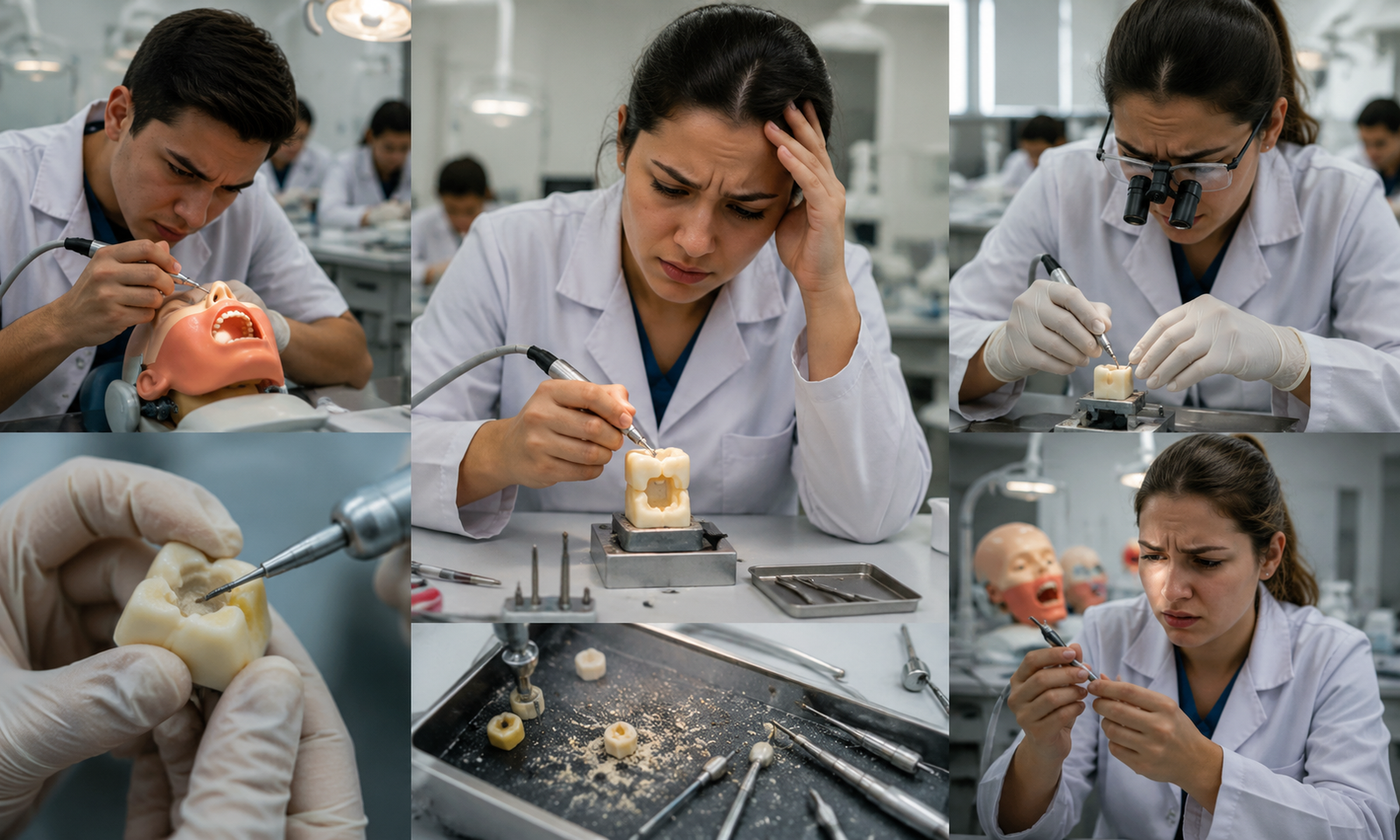
Fine motor control and hand-eye coordination are one of the major difficulties encountered by the novice operative dentist in the lab setting. The work in the Dental Lab involves physical accuracy skills, which can only be acquired with repeated practice, in contrast to the conceptual skills generally emphasized in academic disciplines which depend on memory. First, it is difficult for many of those who start working with rotary instruments to keep their hands steady in axis, consistent pressure and precise control of hand motion on typodont teeth. This is made more difficult by the lack of experience in working in a space similar to the mouth and the assistance provided by mirrors. Practicing these skills takes time and practice – it needs to be structured. Many students get frustrated when there is a mismatch between their results and the expectations and precision of the restoration. Add even a hand tremor or slight misalignment and the results are not perfect resulting in frustration. But practice and gradual improvement is essential as Psychomotor skills are developed as a result of muscle memory and continuous reinforcement of the skill rather than being picked up at a stroke in speed.
Understanding Restoration Techniques and Clinical Logic.
Another frequent problem is comprehending the theory behind restoration methods and putting it into practice. Students are exposed to complicated techniques to perform on the cavity (tooth preparation, filling technique etc.), but with limited understanding of why these are being performed. This can contribute to mechanical repetition of the movement without understanding, impacting performance in testing. In Operative Dentistry, all practices are based on the principles of tooth conservation, structural strength and material compatibility. Students who are not aware of these concepts might have difficulty making choices on the type of depth to change in laboratory sessions or which instruments to use. The theory and practice divide can lead to confusion and different results. This is where active learning, case-based discussion and feedback from the instructor play a critical role in strengthening conceptual understanding, and to promote greater overall performance with restorative practices.
Work on the Laboratory requirements and Time limitations
Time management is also a significant challenge when it comes to first year dental students, especially during structured lab sessions which have to adhere to time constraints. Speed and accuracy are tough for many students and they tend to go overboard when it comes to accuracy to the detriment of their submission deadline. On the other hand some processes can be rushed and will not be of high quality or grade-appropriate. There are also other requirements to follow when working in the lab, which has to be part of the training as well, such as maintaining clean work spaces, properly organizing instruments and following lab procedures, which can take more time and attention. An even more direct adverse effect of being watched at work may be the way in which performance is negatively affected, particularly for those who are still getting to know the setting. An efficient workflow is crucial in developing one, as it allows students to distribute space in defined stages of a procedure to get a quality and consistent product.
Knowledge of dental instruments and equipment.
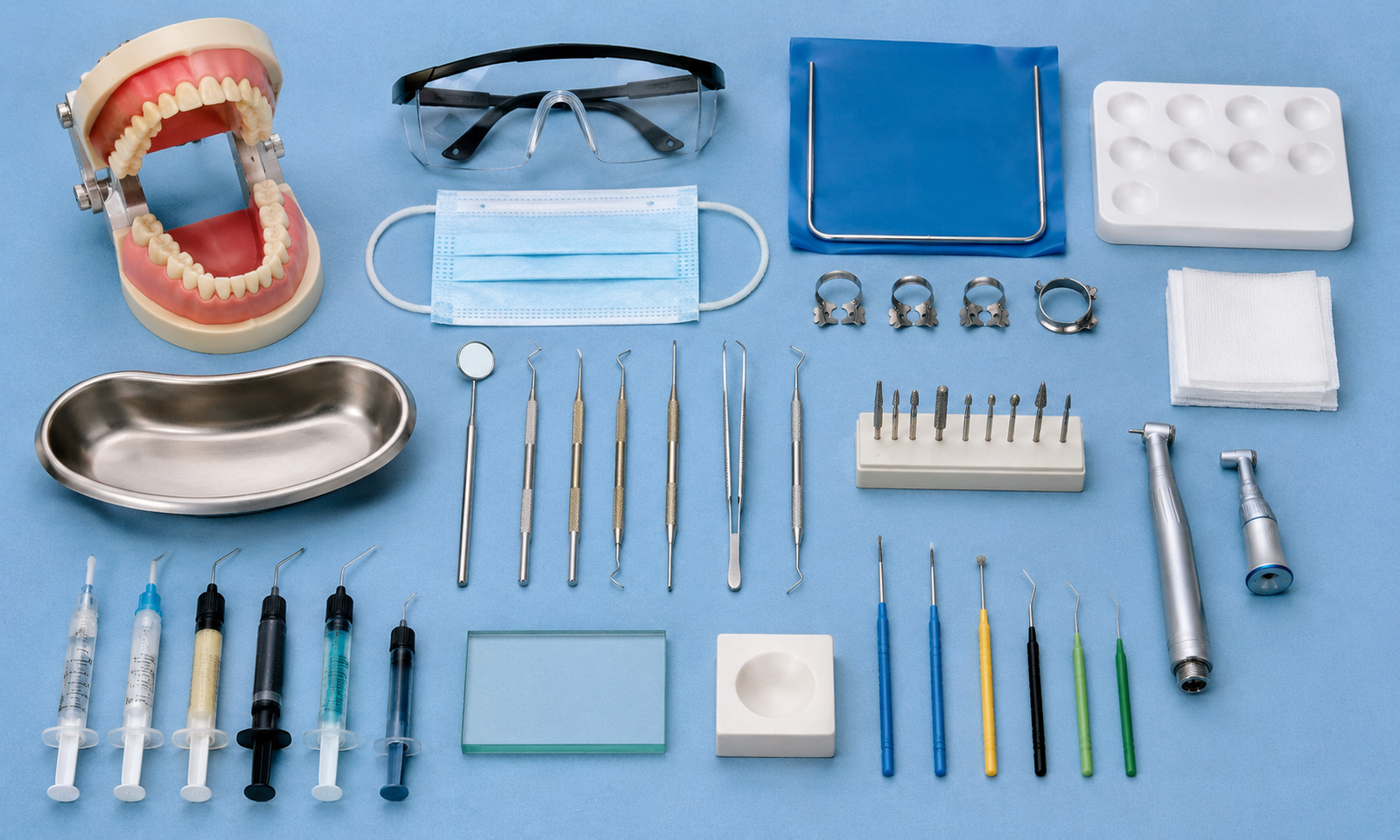
One of the big hurdles in the operative dentistry lab is being able to identify, know how to handle and understand how to use a variety of dental special instrumentation. Students are introduced to a variety of hand tools, rotary tools, and restorative material all for particular uses as first year students. This can be daunting at the beginning as there is so much new language and slight differences between instruments that are similar. If not handled properly, or with the wrong tools, the process can be prone to error and thus less efficient when executed in the lab setting. Furthermore, students need to be able to care for instruments effectively, including cleaning and sterilising and storing them for safety and optimum and efficient use. Get acquainted with these tools, take time to repeat and provide direction and guidance. As the students gradually learn to remember the different instruments for different purposes, they will test their speed and accuracy in practicing the exercises.
Psychological dimension of operative dentistry education in the student democlatory is neglected, but it is a significant contributor to success or failure of a student’s performance. A lot of anxiety is experienced by many first year students because they think they are going to make mistakes in front of instructors and even peers. Such pressure can result in performance that is too slow, lack of confidence and hesitation, and impact learning outcomes. With so much detail in dental work it is easy to make a mistake and it may seem like something big to the student, which can elevate stress during practical time. Multiple exposures to evaluation environments can create resiliency over time or can exacerbate anxiety if they are not carefully managed. Learning how to cope—e.g., thinking about incremental improvement instead of perfection, rather than trying to change everything at once—can help ease pressure. It is important that students have a positive learning environment, where they are not afraid of others or themselves, but are able to develop confidence in their technical skills, with constructive feedback.
There are a number of ways to show that operative dentistry labs can enhance their performance, such as nondisruptive practice, systematic learning, and efficient feedback. Deliberate Practice – repeating specific tasks with attention to the task areas that are the most difficult or need the most work and improvement. A more structured method of simplifying complex procedures into smaller steps can also help to make the learning manageable and eliminate any sense of overwhelm. Pupils should seek out feedback from teachers, and make improvements specific to that feedback in subsequent lessons. Watching professional peers may have a lot to offer both in terms of efficient techniques and in efficient workflow. Also, a well-organized workstation and prepping workbooks ahead of lab sessions will be very beneficial in terms of the efficiency. These practices lead to smoother operations and confidence in executing complex processes over time.
Creating Long-term Success — a Project of Consistency and Adaptation
Relevance in the long-term for operative dentistry laboratories relies consistently, versatility, and a need to learn from errors. Practicing outside of the scheduled lab time causes students to acquire better psychomotor skills and intimacy with instruments and procedures. There is also a requirement to be adaptable since a few various instructors may have a slightly different approach to the techniques or evaluation criteria. Students who give and take criticism to make any necessary improvements are on the path to improvement. Having a proper structured study plan whether theoretical or practical can help a lot in improving learning results. With practice, laboratory tasks become more accurate, faster and more confident over time. The learning curve in the early education of dentists is high, but with perseverance and rigorous practice, they achieve important clinical skills.
Conclusion
First year dental students present with a variety of academic-, technical and psychological issues, especially in operative dentistry laboratories. Students are required to juggle so many demands at once; from hand skills to grasping the principles of restoration, time management to dealing with anxiety. These, however, are challenges that form an integral part of professional development and are focused on the creation of competence and confidence in clinical practice. Learning about expectations at an early age, participating in intentional practice, and receiving feedback effectively, each student will be able to continue to build on past performances and apply to challenging standards in dental education. Through perseverance and diligence, challenges faced in the first footsteps on the path to dental school are stepping stones to clinical excellence and professional development.