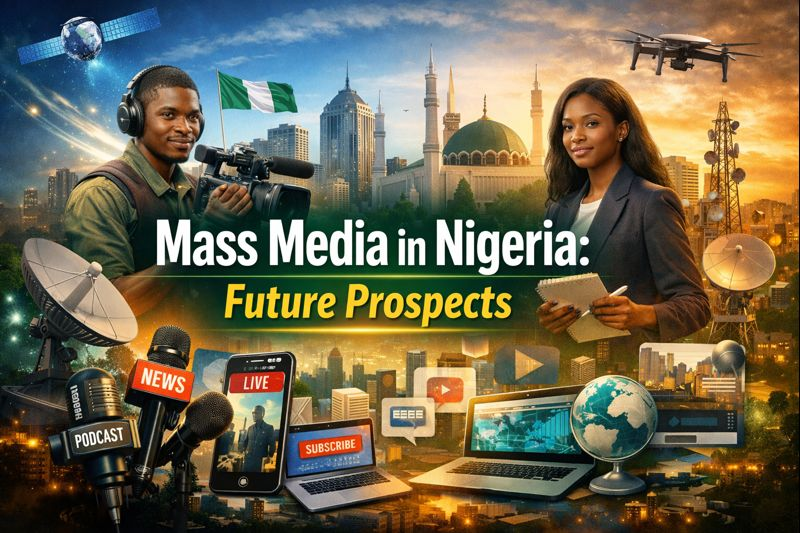
The Mass Media in Nigeria
The mass media in Nigeria are at a crossroads. It has been shaping the definition of democracy, enhancing national awareness and national discourse over decades. But nowadays, the industry is emerging with complicated problems, which include misinformation and censorship, financial instability, dropping print readership, and increasing professional and ethical dilemmas.
Simultaneously, emerging technologies and changing viewer habits have been creating new possibilities that are capable of reshaping the future of the Nigerian media. This knowledge of these issues, as well as the prospects of the future, is vital to anyone keen on the future of the communication environment in the country.
History: The Path Taken by Nigerian Media to This Level
The Nigerian media has been closely integrated with the social and political developments. Since its participation in anti-colonial movements, the journalism in Nigeria has been a watchdog and the voice of the people, as in its participation in the democratic transitions. Newspapers, radio, and television aided in shaping political thinking, civic participation, and opinion.
The appearance of digital communication changed all this, however. The information was democratized, and channels of expression were opened by the internet, but it also destabilized the traditional media model, increased competition, and revealed the internal vulnerabilities of the industry. The current media environment is more hectic, noisier, and more demanding, and hence it is hard to follow through and still be credible, and at the same time be financially viable.
The Nigerian Mass Media Major Problems
1. The Increasing Menace of Misinformation and Bogus News
Misinformation is one of the most burning issues of the media in Nigeria. False accounts can be propagated too fast because of the speed of digital communication, particularly social media platforms, such as Facebook, WhatsApp, X (Twitter), and TikTok. A lot of viewers do not distinguish between good journalism and some rumors or propaganda that has its political motives.
Misinformation is especially perilous in cases of elections, most of the time, in cases of a national crisis, security emergencies, and health emergencies. On most occasions, unverified information becomes viral even before the responsible reporters are able to publish verified reports. This puts credible media houses under strain to react fast and at the same time observe professionalism.
Low media literacy levels among segments of the population also play a role in the problem. In the absence of mass education in the sphere of the sources evaluation, numerous citizens give in to the spread of fake information. This often leads to the fact that there is no trust in the media.
2. Fading Readership and Shifting Consumption Patterns of Print
The Nigerian information consumption was once monopolized by traditional print media. Political life and centrality were both centered on newspapers. The print industry is, however, suffering badly today. The cost of increased production, inflation, economic pressures, and the ease of online platforms has significantly decreased the newspaper circulation and advertising revenue.
The young consumer groups do not use the print media very often. They like internet news, social media updates, and multimedia data like podcasts and videos. A large number of readers want to receive news immediately and without any payment, which makes the conventional method of subscriptions more complex to maintain.
The demise of print is not necessarily a financial problem. It also influences the richness and depth of journalism. Historically, print income subsidizes long-form investigative reporting, which is currently beginning to suffer because it creates challenges to retain.
3. Freedom of Expression Issues, Censorship, and Political Pressure
There is still an issue of censorship. Nigeria is a democratic country, but the freedom of the press is usually put to the test. Journalists are still intimidated, legally harassed, and in other instances, physically threatened. Government actions, regulatory bodies, and powerful interests are occasionally trying to affect coverage or even quell critical reporting.
Incidents of newsroom raids, arrest of journalists, and efforts to close broadcast stations bring about fear. Self-censorship is the norm in such a setting. Most media houses are not able to cover sensitive subjects like corruption, incompetence in governance, or any form of security, because they do not want to be on the receiving end.
This is the conflict between freedom of the press and political authority that will restrict the full exercise of the media in the exercise of this watchdog role. The democratic society requires independent journalism, and the constant limitations on expression are threatening to national transparency and accountability.
4. Financial Uncertainty and Financing Problems
Conducting a sustainable media organization in Nigeria has now been a challenge. The media has suffered a severe impact in terms of advertising revenue, which previously supported the media through economic instability, market fragmentation, and global digital competition.
Several media houses find it difficult to compensate employees and sustain equipment, as well as invest in training. The working conditions of journalists may be low-paid, or they may be out of a job. Financial vulnerability, in other instances, leaves media houses vulnerable to manipulation by the political or corporate sponsors, which continues to undermine their autonomy and credibility.
Moreover, the nature of technology is expensive, and some of the organizations have outdated infrastructure and a low investment culture, which complicates the ability of the Nigerian media platforms to compete on the international platform.
5. Ethical Problems and Professionalism
Journalism greatly relies on honesty, integrity, and ethics. Sadly enough, the Nigerian media, at times, experiences serious professional challenges. These are sensationalism, biased news, paid news, plagiarism, and unverified publications. Rivalry in the attention ownership industry usually compels outlets to focus on speed rather than accuracy.
In some cases, journalists use unverified contents in the social media as the primary source of their information, making them prone to errors. The influence of some reporters can also be created by giving them money to affect coverage, and this affects objectivity. This kind of practice undermines trust among the people, and it is detrimental to the whole media industry.
To enhance ethics, institutional change and individual accountability are needed. Media houses should instil professionalism in the media, and journalists should undergo regular training to meet the changing demands of contemporary journalism.
Future Prospects: Where Nigerian Media Is Heading To
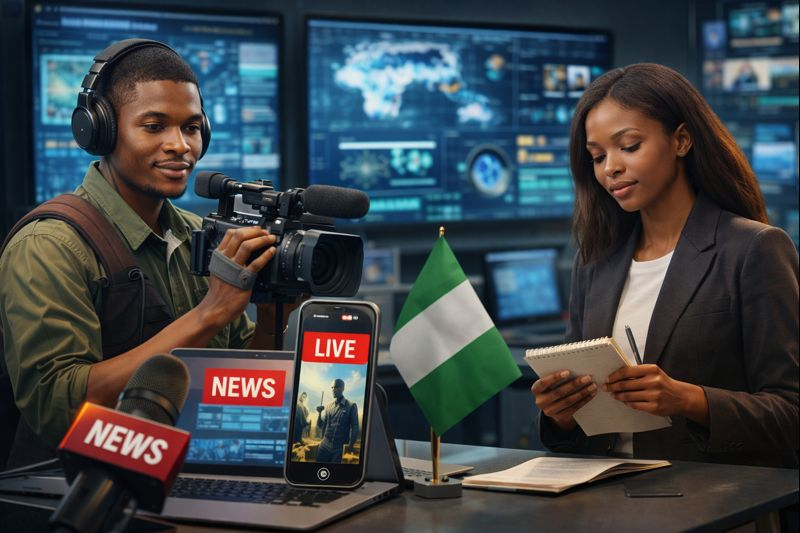
In spite of such difficulties, the future of the mass media in Nigeria is bright. Change is going on, and it is facilitated by technology, new policies, innovations, and a new generation of journalists who are going to change the way they tell stories and present news.
Digital Transformation and Innovation
Digital revolution is disruptive but has huge opportunities. Through the internet, media houses are able to access a wider audience across national boundaries. The number of people who use the internet in Nigeria is one of the highest in Africa, which presents tremendous opportunities for the development of digital news.
The media houses are putting more money into web pages, mobile applications, live streaming services, and multimedia storytelling. Podcasts, data journalism, investigative documentaries, and content driven by audiences are on the ascendancy. Such innovations not only improve engagement but also generate more revenue models, including subscriptions, memberships, sponsored content, and digital advertising.
The future of communication in Nigeria is filled with the dominance of digital media, owing to the enhanced access to the internet and increased use of smartphones.
Intensifying Media Literacy and Awareness
Education should be done on a mass scale to combat misinformation. Organizations of the civil society, schools, and media institutions are slowly encouraging media literacy initiatives that educate individuals in identifying credible sources, fact-checking assertions, and critically evaluating information on the internet.
Such initiatives will be sustained and will assist in creating a more responsible and informed audience. The society that is aware of the functionality of media will automatically put pressure on the journalists to observe professionalism and to discourage inappropriate behaviours.
Better Journalist Protection and Regulation
Higher legal enforcement of the protection of journalists in Nigeria is becoming a national and international movement. Professional associations, advocacy groups, and global organizations are demanding reforms that would guarantee freedom of the press and promote accountability.
The regulation of media that will take place in the future will mostly revolve around balancing between freedom and responsibility instead of control. The Nigerian media will be in a better position to be able to meet its democratic duties if the policies are enhanced to make rights stronger, less censored, and journalists are not intimidated.
Career Growth and Better Ethics
Investing in people also determines the future ofhe Nigerian journalism. Professional standards will be improved through continuous training, certification programs, mentorship, and exposure to global best practices. Media houses should focus on being ethically responsible, having clear editorial policies, and acting as accountability systems.
Unprofessional behavior can be reduced through stronger institutional frameworks, and trust can be regained. With more and more critical audiences, media organizations that will be able to endure in the long-term will be those that are credible and ethically accountable.
Diversified Revenue Models
Innovation, other than conventional advertising, will be needed to stabilize finances. The Nigerian media houses are moving towards various other sources of income, like digital subscriptions, communities of membership, data services, branded content, grant-based investigative journalism, and collaborating with foreign organizations.
Diversification of the revenue will help the media houses to mitigate the risk of over-reliance on sources of funds that are politically inclined, and thus lead to their independence and longevity.
Conclusion: Building a Future of Responsibility, Innovation, and Credibility
The Nigerian mass media is going through one of the most defining times in the Nigerian mass media history. The business is marked with dire challenges, misinformation, loss of print relevance, pressure to censure, financial predicament, and ethical issues. However, these challenges offer the prospects of development and rejuvenation as well.
The future of the Nigerian mass media sees innovation, reinforcement of professional ethics, investment in quality journalism, protection of the freedom of the press, and establishment of a robust financial base. When media organizations policy makers, journalists, and the citizenry collaborate to mitigate the issues they are facing, this has the potential of transforming the Nigerian media into a more reliable, dynamic, and internationally competitive communication tool.
This will not only keep the industry afloat, but will also enhance democracy, make people more knowledgeable citizens, and see to it that the Nigerian media is a strong pillar of nation-building in the constantly evolving world.