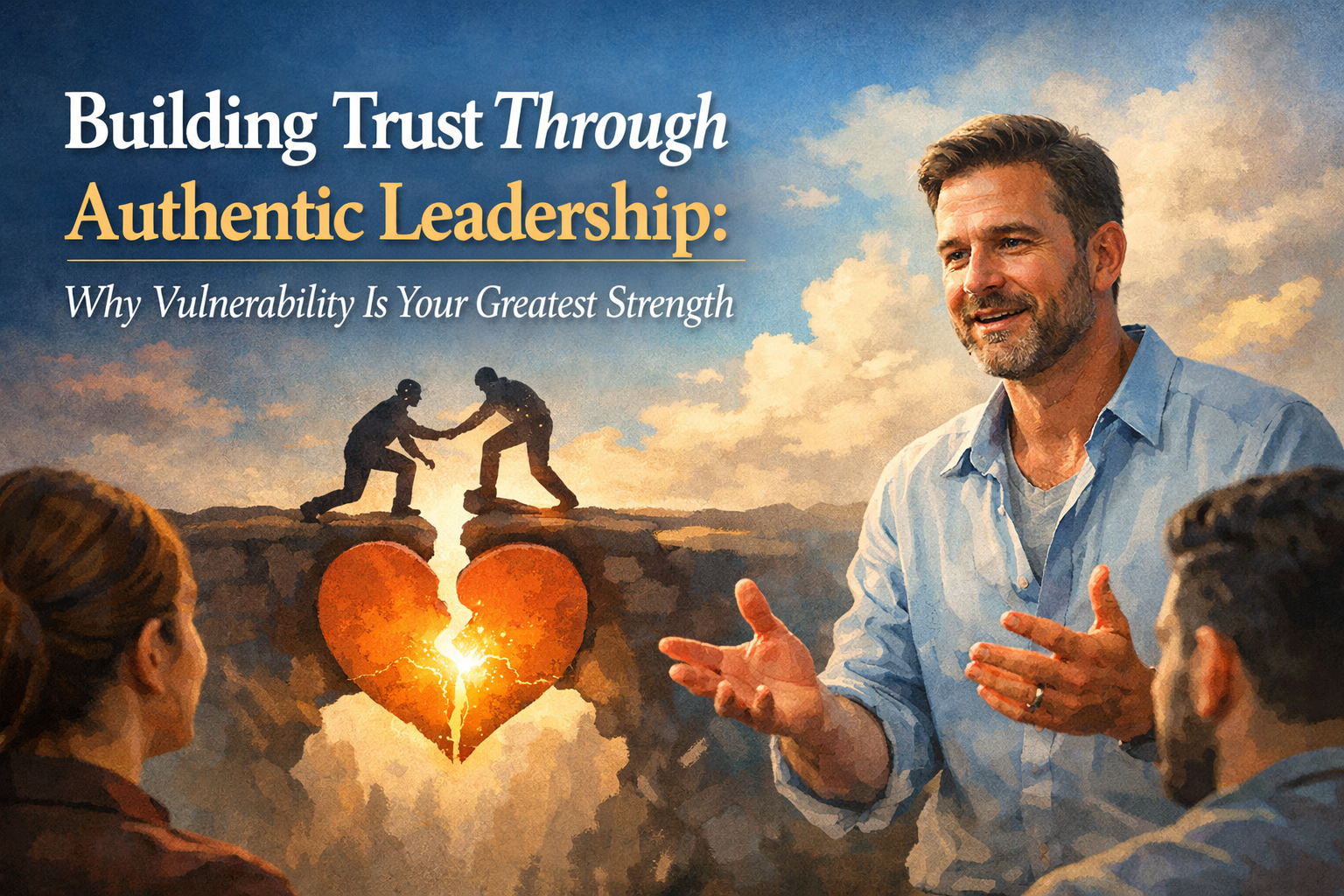
In the polished world of executive leadership, vulnerability often gets mistaken for weakness. Leaders learn early to project confidence, maintain composure, and never let others see them sweat. Yet this carefully constructed armor creates the very distance that undermines trust and limits effectiveness.
The Trust Deficit
Recent studies show that only 27% of employees strongly trust their senior leaders. This trust deficit costs organizations billions in lost productivity, innovation, and retention. Teams led by untrusted executives operate cautiously, withhold ideas, and engage only as much as required for job security.
The root cause isn’t incompetence—most executives demonstrate strong technical and strategic capabilities. The problem lies in perceived authenticity. When leaders hide behind professional facades, teams sense the disconnect and withhold trust accordingly.
Redefining Vulnerability
Authentic leadership requires redefining vulnerability. It’s not about oversharing personal struggles or burdening teams with your doubts. Instead, vulnerability means showing up as a whole person rather than a polished role.
Vulnerable leaders acknowledge uncertainty without paralyzing their teams. They admit mistakes and model accountability. They share appropriate aspects of their journey that help others understand their perspective. Most importantly, they demonstrate that being human and being effective aren’t mutually exclusive.
Leaders seeking to develop this capacity often visit website resources focused on authentic leadership development and transformational growth.
The Five Dimensions of Trust-Building
Reliability: Trust begins with consistency. Leaders who follow through on commitments, show up as promised, and maintain steady presence create the foundation for deeper trust.
Transparency: Information asymmetry breeds suspicion. Leaders who share their reasoning, make their thinking visible, and communicate proactively build trust through openness.
Competence: While authenticity matters, so does capability. Leaders must demonstrate that their vulnerability doesn’t undermine their effectiveness. Authentic leaders are both real and effective.
Care: People trust leaders who genuinely care about their wellbeing and success. This care must be authentic—teams quickly detect performative concern.
Courage: Trust grows when leaders demonstrate courage to do what’s right even when it’s difficult. This includes the courage to be vulnerable when easier to hide.
Vulnerability in Practice
Admitting Knowledge Gaps: “I don’t know, but let’s figure it out together” creates more trust than pretending omniscience. It also invites collaboration and makes space for others’ expertise.
Sharing Decision-Making Processes: Explaining your reasoning, including the factors you weighed and alternatives you considered, helps teams understand decisions even when they disagree with outcomes.
Acknowledging Mistakes: When leaders own errors quickly and completely, teams feel safe taking smart risks. When leaders deflect or hide mistakes, fear-based cultures develop.
Expressing Appropriate Emotion: Passion, concern, excitement, and even appropriate frustration make leaders relatable. Robotic affect creates distance and suspicion.
Asking for Help: Leaders who request support when needed model healthy interdependence and create permission for others to do the same.
The Boundaries of Vulnerability
Effective vulnerability requires discernment about what to share, when, and with whom. Leaders must maintain appropriate boundaries while remaining authentic. Oversharing burdens teams; undersharing creates distance. Finding the right balance comes with practice and feedback.
Consider the difference between vulnerability and victimhood. Vulnerable leaders acknowledge challenges while maintaining agency and responsibility. Victim narratives blame circumstances and undermine confidence.
Timing also matters. Sharing doubts mid-crisis may paralyze action; sharing them during reflection creates valuable learning opportunities.
Building Your Vulnerability Capacity
Start Small: Begin with low-stakes situations to practice vulnerable leadership. Share a small mistake in a team meeting. Acknowledge an area where you’re learning. Build comfort gradually.
Seek Feedback: Ask trusted colleagues how your vulnerability lands. Do you lean too far toward oversharing or remain too guarded? Use their perspective to calibrate.
Work with Support: Coaches, mentors, or peer groups provide safe spaces to practice vulnerability and process fears that prevent authentic showing up.
Examine Your Fears: What specifically makes vulnerability feel risky? Fear of judgment? Loss of respect? By naming fears explicitly, you can test their validity and develop courage.
Model Publicly: When senior leaders demonstrate vulnerability, it creates cultural permission throughout the organization. Your example matters more than policies.
The Ripple Effects
When leaders embrace authentic vulnerability, entire organizational cultures shift. Psychological safety increases, allowing innovation to flourish. Communication improves as people spend less energy managing impressions. Collaboration strengthens as team members bring their full selves to work.
Perhaps most importantly, vulnerable leadership creates other vulnerable leaders. As people rise through organizations that value authenticity, they carry these principles forward, creating sustainable cultural transformation.
The Competitive Advantage
In an era where talent has options and stakeholders demand authenticity, vulnerable leadership isn’t just nice to have—it’s a competitive advantage. Organizations led by authentic executives attract better talent, keep them longer, and get more discretionary effort.
Customers increasingly choose companies whose leadership demonstrates values alignment and authentic purpose. Investors recognize that trust-based cultures create sustainable value. The business case for authentic leadership strengthens yearly.
The Choice Ahead
Every leader faces a choice: continue hiding behind professional armor or risk the vulnerability that creates genuine connection and trust. The former feels safer but limits impact. The latter feels risky but unlocks potential—both yours and your team’s.
The good news? Vulnerability is a skill that develops with practice. Leaders who commit to showing up more authentically, even imperfectly, build capacity over time. Each act of courage makes the next one slightly easier.
The question isn’t whether authentic, vulnerable leadership works—the evidence is overwhelming. The question is whether you’re willing to do the inner work required to lead this way, even when it feels uncomfortable.
Your answer to that question may determine not just your effectiveness, but your legacy.