Key Takeaways
- Routine assessment of building enclosures is critical for detecting and managing deterioration as structures age.
- Utilizing modern diagnostic technologies leads to more precise identification of enclosure weaknesses.
- Systematic prioritization of repairs—putting safety, efficiency, and maintenance first—yields the best outcomes for aging structures.
- Recladding is a proven, sustainable method for revitalizing aging building façades with minimal disruption.
- Staying compliant with local façade inspection ordinances helps protect public safety and mitigate legal risks.
As our nation’s building stock ages, so too do the protective shells—the walls, roofs, windows, and doors—that keep occupants safe and comfortable. Deterioration of these enclosures is a natural process, often leading to energy inefficiencies, increased costs, and even safety concerns. Conducting thorough assessments of building enclosures is therefore essential, particularly for older structures or facilities approaching the end of their original design life. Consulting an expert, such as an enclosure consultant Denver, ensures all vulnerabilities are properly evaluated and preservation strategies are tailored for each unique building.
Identifying issues before they become major concerns is far more efficient and cost-effective than addressing emergencies after the fact notes Atara Property Management Murray. Owners and facility managers who embrace proactive building enclosure evaluations can maximize the value and safety of their assets, control long-term maintenance expenses, and foster compliance with evolving codes and standards.
Importance of Regular Assessments
Periodic building enclosure assessments provide critical insight into the health of walls, roofs, windows, and doors. Aging enclosures are prone to flaws like moisture intrusion, insulation failure, and the gradual loss of weatherproofing. Left unchecked, such issues can escalate into expensive repairs and create unsafe environments. According to the U.S. Energy Information Administration, almost half of commercial buildings in the United States were built before 1980, underscoring the prevalence and urgency of evaluating these older structures. Establishing a baseline of enclosure performance and continuously monitoring changes over time is an established best practice that saves money and protects building occupants.
Enclosure assessments also play a crucial role in supporting sustainability and energy performance goals. They provide property owners and managers with data to drive more informed decisions regarding improvement projects, ensuring that budgets and resources are allocated effectively. For instance, addressing a persistent leak or draft once it’s detected, rather than waiting for visible water damage or dangerous mold growth, can reduce total lifecycle costs and contribute to healthier indoor environments.
Advanced Assessment Techniques
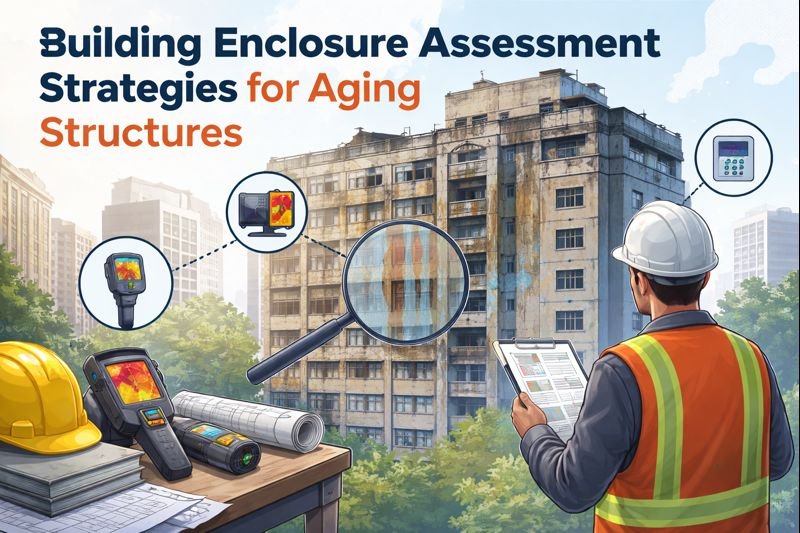
Conventional visual inspections are no longer sufficient on their own. Innovative technologies enable more in-depth and precise assessments of aging building enclosures. Infrared thermography, for example, allows in-depth analysis of thermal performance and the identification of weak spots and insulation failures that aren’t apparent to the naked eye. Modern tools can also measure temperature distributions across surfaces, calculate in-situ U-values, and reveal hidden patterns of moisture or structural movement. Findings from these advanced methods empower building owners to address not just surface-level concerns but also systemic issues underlying poor energy performance or water intrusion.
Combining traditional physical inspections with these advanced techniques results in comprehensive, actionable reports. Drones, moisture meters, and laser scanning technology are frequently used to supplement human assessments, reducing guesswork and enabling more targeted repairs.
Prioritizing Repairs
Following thorough enclosure assessments, the next challenge is determining which repairs should take precedence. With finite budgets and resources, prioritization is critical. Immediate safety risks or damage that threatens structural integrity must be addressed without delay. After that, project teams should target repairs that promise significant improvements in energy efficiency, which can provide both short-term and long-term savings.
Systematic Planning and Budgeting
Develop a tiered action plan that categorizes repairs by urgency, risk, and cost-benefit. Transparent scoring systems and direct input from qualified consultants help property managers build consensus and minimize unplanned spending surprises. Taking this structured approach aligns with strategies recommended by industry-leading groups such as the Building Owners and Managers Association International BOMA — Building Envelope Life Cycle, ensuring stakeholders are informed and engaged at every step.
Recladding as a Solution
For many aging buildings, recladding—installing new protective layers over the existing envelope—offers a transformative solution. Recladding enables substantial upgrades to insulating capacity, vapor control, and moisture resistance. It can restore or modernize the building’s appearance and extend its useful life, often with less disruption and lower total costs compared to complete replacement.
Since business operations can often continue during recladding work, it is a viable option for occupied spaces and urban commercial assets. In addition to environmental benefits, recladding also provides an opportunity to utilize greener materials and enhance the building’s overall sustainability profile in keeping with LEED and other green building standards.
Compliance with Façade Ordinances
Cities across North America are increasingly mandating periodic façade inspections for aging buildings, especially in high-density urban settings. These local ordinances are designed to prevent falling debris and public safety incidents by ensuring that hazards are identified and addressed before they escalate. Compliance not only satisfies legal requirements but also proactively manages liability and demonstrates an owner’s commitment to public well-being. Noncompliance, by contrast, can result in steep fines and, in rare cases, forced evacuations or closures.
Staying abreast of both national codes and new local ordinances is now a crucial responsibility for building owners and facility managers. Proactive partnerships with enclosure consultants and regulatory agencies make ongoing compliance manageable, helping to identify and mitigate risks before they impact building performance or occupant safety.
Conclusion
Diligent assessment and proactive care of building enclosures are essential as America’s buildings continue to age. By leveraging new technologies, methodically prioritizing repairs, adopting innovative solutions like recladding, and complying with emerging façade ordinances, property owners can maximize safety, operational efficiency, and long-term value. With a forward-thinking strategy and professional support, aging infrastructures can reliably serve their communities for decades to come.

