Introduction: The Shifting Landscape of Email-Based Threats
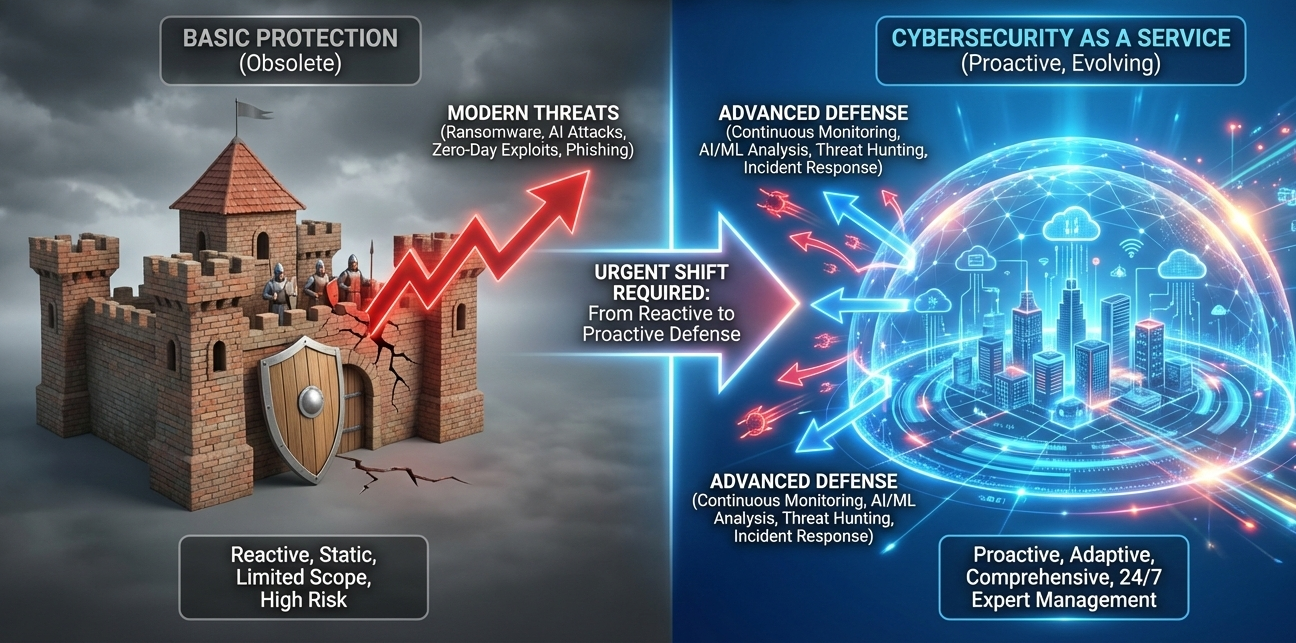
One of the most successful and popular tools of cybercriminals is email. Easy use, ubiquity, and convenience of email meshes well with its use as a malware delivery method and a further means to conduct phishing attacks and complex social engineering schemes. With organizations across the world doing everything possible to strengthen their cybersecurity systems, perpetrators keep changing their strategies, making the conventional security measures become obsolete.
Current email-based attacks are becoming very sophisticated. Hackers have adopted zero day exploits, polymorphic malware and highly persuasive social engineering strategies. The developments have highlighted major shortcomings of the traditional security mechanisms especially those that are signature-based.
In response to these advanced threats, organizations are required to deploy flexible, smart solutions that could detect malicious behavior regardless of whether it contains a well-known signature or not. It is here when the problem of heuristic detection, anomaly detection, and AI-based analysis in the context of cybersecurity becomes important.
The Limitations of Signature-Based Detection
The cornerstone of most historical antivirus and email security products is signature-based scanning, where the files or emails are compared to a list of malicious signature files. In the event of a match, the system blocks the threat. Although successful where the malware is known, this method fails in the case of new, unknown attacks.
To get a better idea of how zero-day attacks work and how signature-based scanning is not so effective, this comprehensive source is worth a closer look.
The Rise of Zero-Day Threats
Zero-day threats are attacks that utilize unknown vulnerabilities of the software vendors and security providers. These attacks have no previous signature and signature-based systems do not see it. The damage could have been done by the time they have created a signature and distributed it.
Social engineering:Mining Human Weaknesses
It is complicated further by social engineering. Phishers design persuasive messages that appear to be authentic messages or official organizations, fooling the user best to share personal data, tap on a compromised link, or open an infected attachment. These mails frequently look perfectly legitimate, and do not include any visible malware or other suspicious code that a signature-based system, or similar approach would be able to detect.
Polymorphic and Metamorphic Malware
Polymorphic malware changes its code slightly with each infection, while metamorphic malware rewrites its code entirely to avoid detection. These modifications can easily bypass signature-based scanners since each new variant differs from known samples. The ability to adapt dynamically makes such malware particularly challenging to identify using static detection methods.
Why Heuristic Detection Is Essential

The dynamic and proactive aspect of Heuristic detection they view in the files behavior and characteristics analysis instead of just an occurrence of known signature alone. The evaluation of the heuristic engines is done instead of matching the exact patterns:
- Structure and logic of codes
- Execution patterns
- Anomalous behaviors
- Skeptical system alteration
What this does is enable the heuristic systems to identify a threat that they have never known to the extent of its behavior instead of its appearance.
Behavioral Analysis: Understanding Intent
Behavioral analysis is one of the major advantages of heuristic detection. Heuristic systems observe the behavior of a file or a process instead of waiting to see a famous example of the signature. To give an example, when the email attachment tries to modify files in the system, turn off security controls, or link to network resources without permission, these are obvious red signs.
Anomaly Detection: Spotting the Unusual
Anomaly detection solutions construct profiles of normal system and user activity. Activity other than these norms will result in an alert on the system. As an example, when a worker that was used to sending ten emails a day all of a sudden sends hundreds of emails that have suspicious links in it, anomaly detection tools see this as a sign that something wrong is occurring, and it should be investigated.
AI and Machine Learning: Amplifying Heuristic Capabilities
The integration of artificial intelligence (AI) and machine learning (ML) significantly enhances heuristic detection by enabling systems to learn from vast amounts of data, continuously improving their accuracy and efficiency.
Continuous Learning and Adaptation
Machine learning algorithms can distill the behavior across huge masses of data to assess small signals of threat. Such systems become capable of recognizing fresh attempts of phishing, new outbreaks of malware, and suspect activities quicker than a human analyst or a static system.
In contrast to the signature-based detection systems that could not develop without being updated like AI-powered solutions, AI-powered solutions keep on developing. They respond to evolving lines of attack, and make sure that organizations continue to be shielded against emerging menaces.
Real-Time Threat Identification

Among the benefits of heuristic detection, facilitated by AI, a very important one is that it works in real-time. The system considers a number of factors at the time of deployment of emails:
- Status and history of the behavior of the sender
- Analysis of language, tone and content in email
- Behaviours of attachment at execution
- Inline embedded URL reputation and behavior
This end-to-end processing gives the system an opportunity to intercept malicious mail even before it gets to the end-user thereby minimizing to the barest levels the risk of an effective attack.
Case Studies: Heuristic Detection in Action
Stopping Business Email Compromise (BEC)
In one of the recent examples, a multinational corporation was in sight of a business email compromise attack, and the attacker posed as one of the C-level executives. The phishing email included an urgent request of a wire transfer. The email had strong content that did not contain malware as well as there are no red flags that can be identified using signature-based systems.
But sensitive abnormalities were observed by the heuristic system of the organization:
- The sending device was unfamiliar and new.
- The demand did not meet the past dynamics of communication of the executive.
- The geographical location of the email was very far fetched.
The system had raised an alert and the security teams had stepped into action, before money was sent out.
Neutralizing Zero-Day Ransomware
Another incident involved a healthcare provider being targeted with a ransomware version that exploited a zero-day vulnerability. The custom code of malware bypassed signature-based protection. Nevertheless, heuristic analysis deemed annoying behaviors as soon as it was executed:
- In trying to encrypt files by the bulk
- In trying to disable backup and recovery services
- Trying to gain illegal access to administrative control
The system also enclosed the infected machine so that the ransomware could not shrill and the intensity of operational shutdown was minimal.
Integrating Heuristic Detection into the Cybersecurity Stack
While heuristic detection is powerful, it should not operate in isolation. The most exhaustive defense is a layered security plan which is also known as defense in depth.
Multi-Layered Approach
- Perimeter Security: Firewalls, secure email gateways, and intrusion prevention systems.
- Signature-Based: The known threat antivirus and anti malware tools.
- Heuristic & Behavioral Tools: Real time analysis of behavior and anomalies.
- AI-Driven Systems: Intelligent system that constantly learns to detect the changing threat.
- How to provide Security Training: Making users aware of social engineering tricks.
Endpoint Detection and Response (EDR)
The current endpoint security tools combine heuristic detection and EDR. With the help of these tools organizations can analyze the security incidents quickly and contain them, they can monitor and respond in real time and they also offer superior forensics.
Heuristic Solutions over the Cloud
Heuristic detection tool minutes have moved to the cloud with remote working and cloud computing so that many heuristic detection tools are now available as cloud solutions. Such platforms make use of global threat intelligence as multiple clients aggregate their data in order to achieve better results at recognizing emerging threats.
The Cost of Failing to Evolve
Organizations that rely exclusively on signature-based defenses face significant risks:
- Financial Losses: Successful breaches can result in ransom payments, regulatory fines, and reputational damage.
- Operational Disruption: Downtime from ransomware or widespread infections can halt business operations.
- Data Breaches: Loss of sensitive data can have long-term legal and financial consequences.
- Reputation Damage: Trust once lost is difficult to regain.
In today’s threat landscape, failing to evolve security strategies leaves organizations vulnerable to attackers who continually innovate.
Conclusion: Embracing Intelligent, Adaptive Security
The era of static, signature-based defense is insufficient for the complexity of modern cyber threats. As attackers develop increasingly sophisticated methods, organizations must adopt equally sophisticated defenses.
Heuristic detection, bolstered by AI and machine learning, offers a dynamic, proactive approach capable of identifying zero-day threats, polymorphic malware, and socially engineered attacks in real time. By integrating heuristic detection into a comprehensive cybersecurity stack, organizations can significantly reduce their risk exposure and ensure stronger, more resilient protection against evolving threats.
The key to effective cybersecurity lies not in a single solution but in building an intelligent, adaptive security architecture that learns, evolves, and responds to new challenges—before the attackers strike.