Economics is all around us, whether we notice it or not. From deciding how to spend your pocket money to understanding why prices rise or fall, economics helps us make sense of the choices we face every day. For WAEC students, grasping the basics can make the subject less scary and more practical.
Definition of Economics
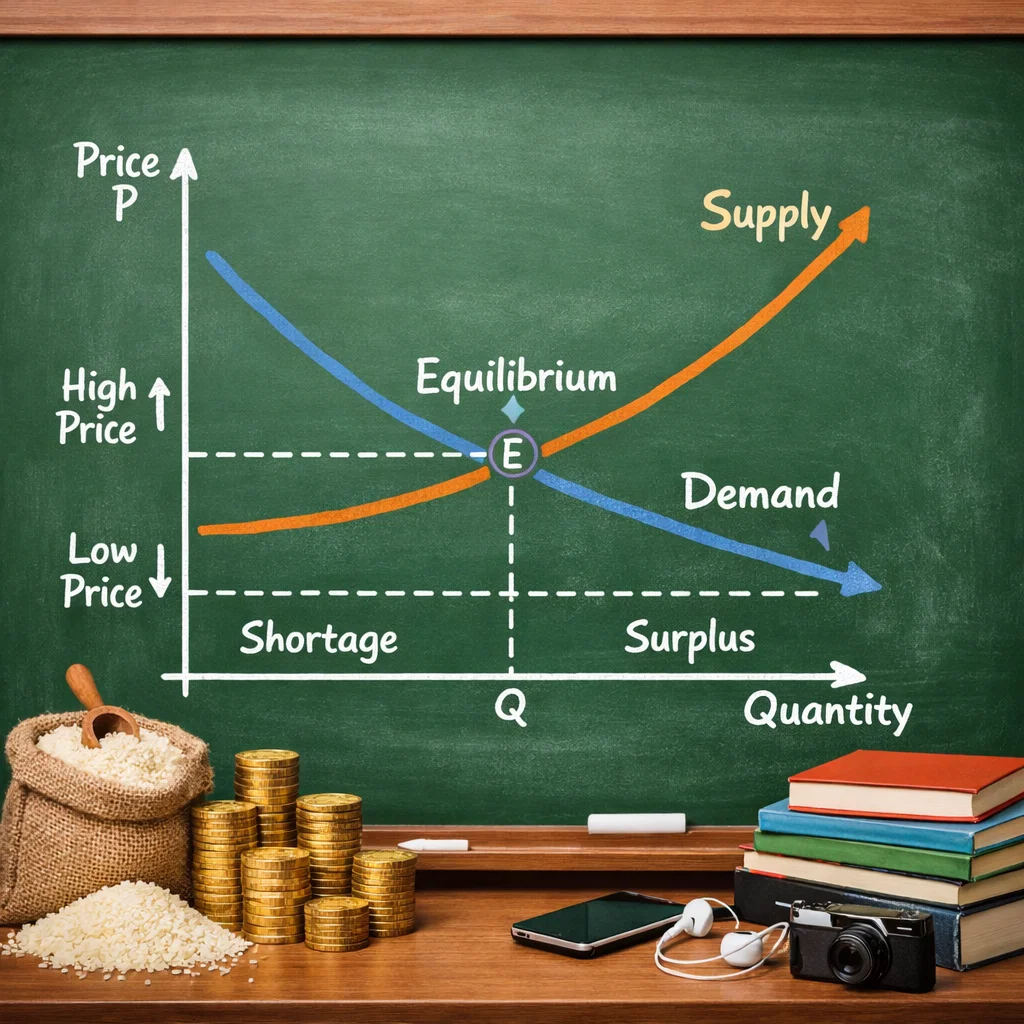
At its simplest, economics is the study of how people, businesses, and governments use limited resources to satisfy unlimited wants. In other words, it’s about making choices because resources like money, time, and materials are limited, while our desires seem endless. Understanding this helps us make better decisions and plan for the future.
Scarcity and Choice
One of the central ideas in economics is scarcity. Scarcity means that resources are limited. For example, a student might want a new phone, more books, and money to attend a party—but they can’t afford everything at once. Because of scarcity, we must make choices. Deciding what to buy, study, or produce is all about weighing what we really need versus what we want.
Factors of Production
Economists talk about four main factors of production, which are the resources used to produce goods and services:
- Land – This includes not just the soil or natural land but all natural resources like water, minerals, and forests.
- Labor – This is the effort people put into work, from farmers planting crops to teachers educating students.
- Capital – Not money, but the tools, machines, and buildings used to make products. For example, a factory, a computer, or a sewing machine.
- Entrepreneurship – This is the creativity and risk-taking ability of people who start businesses and organize the other three factors to produce goods and services.
Opportunity Cost
Because resources are scarce, every choice has a cost. In economics, this is called opportunity cost. It’s the value of the next best alternative you give up when you make a decision. For example, if you spend your time studying for WAEC exams, the opportunity cost might be hanging out with friends or playing video games. Understanding opportunity cost helps students, businesses, and governments make wiser choices.
Conclusion
In short, economics is about making smart choices with limited resources. By understanding scarcity, factors of production, and opportunity cost, WAEC students can not only do well in exams but also apply these lessons in everyday life. Remember: every decision has a cost, so think carefully before you act—what you give up is just as important as what you gain.