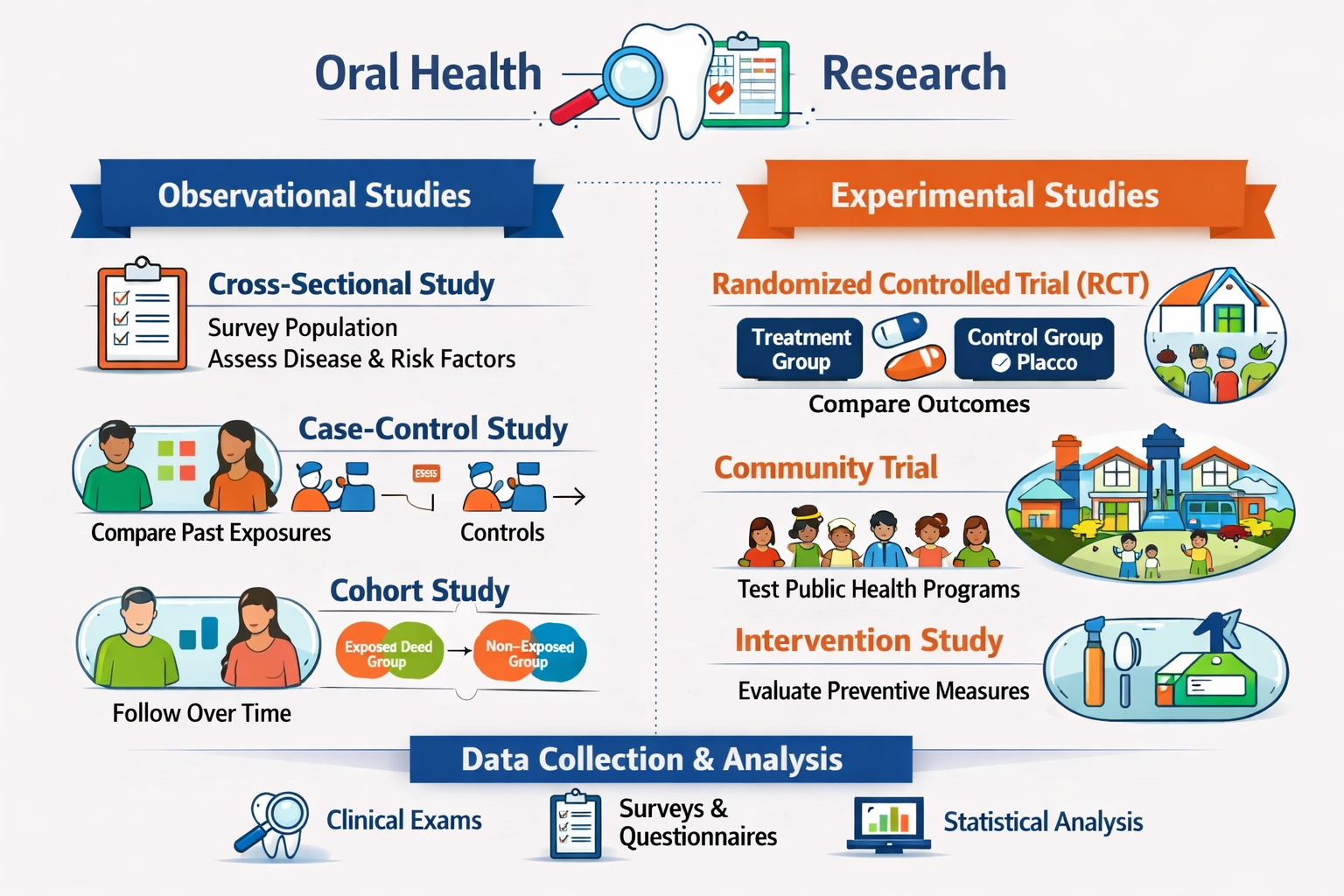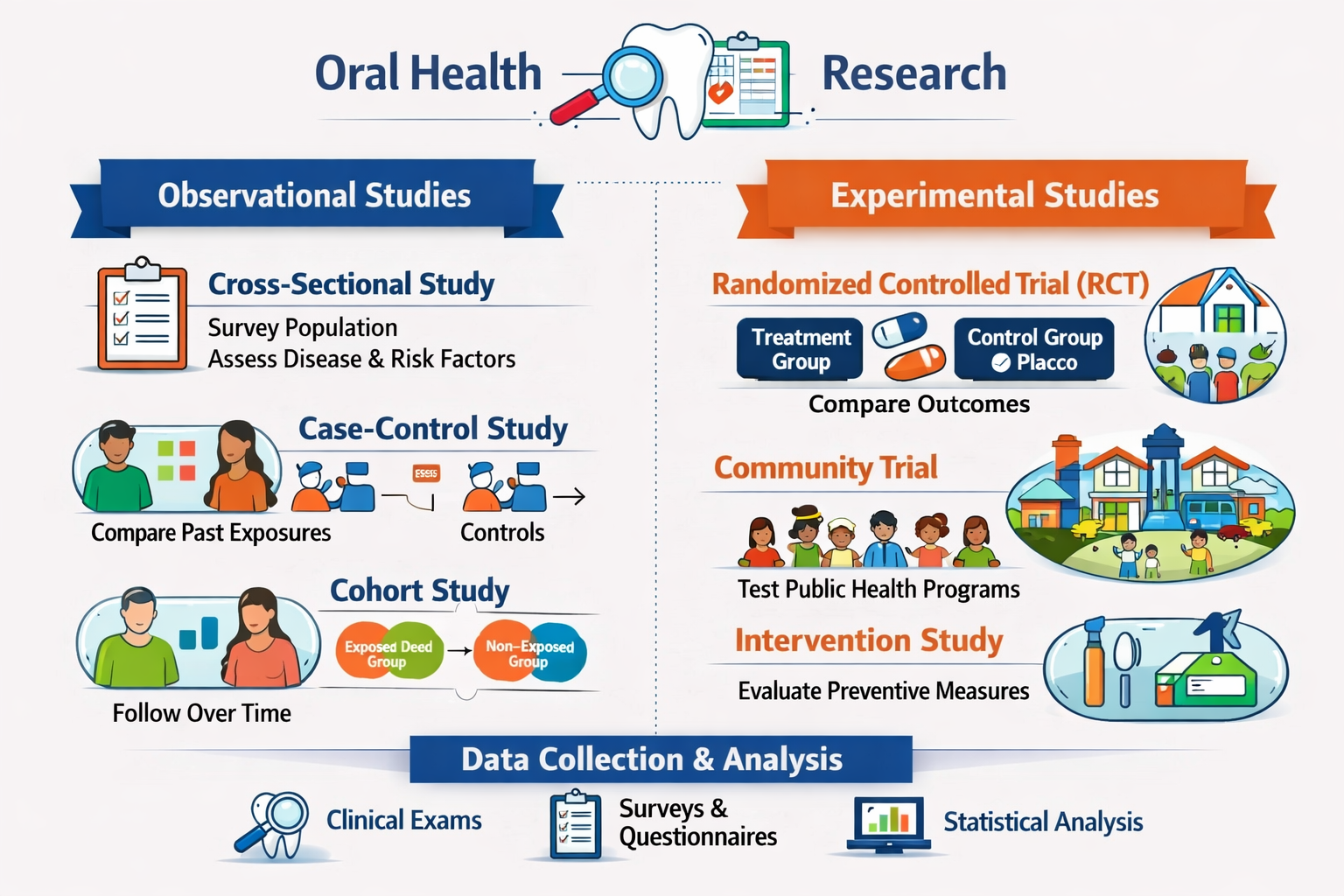
The oral diseases became one of the most widespread health problems in the world as it affects billions of people of different ages. Dental caries, periodontal disease and oral infections are considered to be conditions that have a strong influence on the overall health, quality of life, and healthcare systems. These diseases cannot be prevented just through clinical care; they need to know how oral diseases occur, propagate and influence people. It is at this point that epidemiology comes into play.
Epidemiology is a branch of science that gives us a scientific structure of studying how diseases operate and become prevalent within groups of people. Epidemiologic principles are important in oral health because they enable the practitioners to recognize the risk factors, quantify the pattern of diseases, and implement effective preventive measures. Through the use of epidemiologic concepts, dental professionals and the public health practitioners will be in a position not only to treat the disease when it arises but also prevent the occurrence of the disease.
This paper discusses the application of epidemiologic principles to prevent oral diseases. It explains the essence of population data, risk assessment, and health interventions on the population in decreasing the world burden of oral health issues. (CDC)
Role of Epidemiology in Prevention of Oral Diseases
Epidemiology has been defined as the science of health-related events that occur and the causes of the phenomenon in groups of people. This field of knowledge in oral health is concerned with learning the development of dental caries, gingivitis, and oral cancers and their impact on populations.
The use of epidemiology assists practitioners to uncover some of the key questions:
- What is the prevalence rate of oral diseases within a population?
- Which groups are most at risk?
- What are the environmental, behavioral or biological causes of these diseases?
- What are the most effective preventative interventions?
Through a careful examination of these questions, epidemiology supplies evidence-based information which informs preventive measures. Oral health policies and programs are not only developed based on assumptions, but also on hard data and scientifically authenticated results.
Epidemiologic studies also assist in tracking time-change trends of oral diseases. To illustrate, there are cases of dental caries reduction in certain communities whereby the exposure to fluoride and preventive education has enhanced the incidence of the caries. Knowledge of the trends can guide policy makers and health professionals to improve their disease prevention strategies.
The Population Data can be used to find the Oral Health Trends
Epidemiologic practice in the field of oral health is based on population related data. The investigators gather and study data regarding the prevalence of diseases among various populations to determine the patterns and trends.
Some of the common indicators applied in oral epidemiology are:
- Prevalence: the percentage of members of a population who possess a particular oral disease at a particular time.
- Incidence: the new cases of an oral disease which occur during a given time.
- Risk distribution: the way a disease occurs depending on age, socioeconomic status, place of residence or lifestyle.
These indicators can be used to expose inequality in oral health outcomes. An example is that the untreated dental caries rate may be much higher in children living in low-income communities than in children living in higher-income households. These results demonstrate the necessity of specific preventive activities.
Resource allocation also is based on population data. The health departments are able to focus on communities with the highest disease burden and provide interventions that will cause the most noticeable difference there.
Risk Assessment of Prevention of Oral Disease
Another fundamental epidemiologic concept that is used to prevent oral diseases is risk assessment. It entails the assessment of the likelihood of a person or group to develop some specific health condition using the known risk factors.
Among the most common risk factors in the oral health are:
- Poor oral hygiene practices
- High sugar consumption
- Poor access to dental services.
- Tobacco use
- Socioeconomic disadvantages
- Lack of fluoride exposure
Epidemiologic studies determine these factors through population comparison of different disease outcomes. Risk factors can be identified and preventive actions formulated to deal with them.
To illustrate, children with high-sugar diets and low levels of exposure to fluoride can be considered to be at risk of having high caries. Primary prevention of these groups can involve fluoride therapy, nutritional counseling and community-based oral health education.
Risk assessment also assists the clinicians in giving individualized preventive care. Epidemiologic data can help dental professionals to forecast the susceptibility to diseases and prescribe early treatment to individual patients.
Primary Prevention based on Epidemiologic Evidence
Among the best additions of epidemiology to oral health are the creation of preventive strategies that are evidence-based. These interventions are planned on the data indicating that they are effective in the reduction of the disease occurrence.
The preventive approaches of the oral health are usually of three types:
Primary Prevention
Primary prevention revolves around disease prevention. Epidemiologic studies have reported that a number of primary prevention measures are effective such as:
- Fluoride intake comprising water or oral products.
- Education of oral health.
- Healthy dietary practices
- Regular dental check-ups
The strategies help in treating the root causes of oral diseases and preventing the occurrence of the diseases.
Secondary Prevention
The reason behind secondary prevention is to detect and cure diseases at the initial stages. The earliest possible diagnosis helps eliminate the development of the disease and minimizes complications.
Examples include:
- Routine dental screenings
- Radiographic images when it comes to the earliest detection of caries.
- Periodontal assessments
Early detection of a disease can help healthcare providers administer interventions that may help avoid the occurrence of more serious health results.
Tertiary Prevention
Tertiary prevention is aimed at controlling the already developed disease to avoid additional harm and enhance living conditions. This involves restorative dental, periodontal therapy and rehabilitation.
Even though tertiary prevention is treatment-based, epidemiologic research remains a part since it assesses interventions that are most effective in enhancing patient outcomes.
Public Health Programs and Community-Based Interventions
Magnificent epidemiologic results tend to serve huge masses of public health efforts aimed at safeguarding whole localities. The importance of such interventions is particularly high since environmental and social factors affect many oral diseases.
Prevention programs are conducted at the community levels to access populations that need not regularly access dental care. Some of the most common places of delivering such programs are schools, community centers, and public health agencies.
Water fluoridation has been one of the most effective oral health interventions in public health. Studies have always demonstrated the fact that fluoride lowers the chances of developing dental caries as it hardens the tooth enamel and makes it less sensitive to acid attacks by bacteria.
The experience of the community fluoridation programs proves that the epidemiologic data may be used to develop effective preventive policies. Comparative studies between fluoridated and non-fluoridated societies have also indicated a big reduction in the rates of tooth decay and especially in kids.
It is believed that community fluoridation is one of the most cost effective ways of prevention since it is beneficial to populations as a whole despite their socioeconomic status. It shows how the epidemiologic studies can be translated into the practice of public health that can change oral health outcomes on a big scale.
Timely Intervention and Prevention and Specific Prevention
Early intervention is another practical application of epidemiologic concepts in the field of oral health. Through risk identification of populations at increased risk of oral diseases, health experts can undertake effective preventive measures at early stages before the occurrence of adverse health complications.
In the case of early childhood caries, an example of a widespread disease among young children, in underserved populations. The epidemiologic researches have shown that there are strong correlations between early childhood caries and other factors like long term feeding on the bottle, high content of sugar and parental ignorance related to oral care.
On the basis of this, specific interventions have been designed and they include:
- Oral care programs of parents.
- Childhood dental examinations.
- The use of fluoride varnish in pediatrics.
- Caregiver nutritional counseling.
Such interventions work best when they start at an early age when the dentures are not worn out.
With the help of epidemiologic surveillance, the health authorities can also monitor the effectiveness of early intervention programs and also change strategies when the need arises.
Oral health inequalities are reduced
One of the most crucial objectives of epidemiology in oral health is to deal with inequalities in the distribution of diseases. The oral health disparities mostly depict large disparities in the society in terms of social and economic differences.
It has been found out that the poor who have very little education or cannot access healthcare services are more susceptible to untreated dental disease. Epidemiologic analysis is known to identify such vulnerable populations and influence policies that aim at the reduction of disparities.
Some of these preventive measures to curb oral health disparities can include:
- Dental programs at schools.
- Dental medicine clinic services in underprivileged areas through mobile clinics.
- Campaigns on oral hygiene in schools.
- Preventive dental services that are subsidized.
Epidemiology helps to make healthcare delivery more equitable because it allows the allocation of resources to the most needy populations.
Prevention Programs Monitoring and Evaluating
The epidemiologic principles should not be used only at the stage of program implementation. There should be constant monitoring and evaluation to see whether preventive interventions are working or not.
Follow-up data gathered by epidemiologists will be used to evaluate the effect of prevention programs on the prevalence and incidence of disease introduced. In case a program manages to decrease the prevalence of oral diseases, it can be implemented in other communities.
On the other hand, when the anticipated improvements are not realized, the health professionals will be able to interpret the data to find out the possible challenges and make changes to the intervention.
Evaluation also helps in ensuring that scarce resources of health care are applied effectively. Programs that have good epidemiologic evidence have more chances to be renewed and supported by policies.
The Future of the Epidemiologic Approaches in Oral Health
The development of data collection and analysis is increasing the scope of epidemiology in oral health prevention. The use of modern technologies such as electronic health records, digital surveillance systems, and the geographic information systems allows the researchers to monitor the trends in diseases more accurately.
These innovations permit even more precise identification of risk factors and more specific interventions in the process of public health. Geographical information could be used as an example, where in regions with low access to dental care, the policymakers can develop programs aimed at enhancing access.
Furthermore, there is an inter-disciplinary cooperation of dental practitioners, epidemiologists and public health specialists reinforcing preventive measures. By incorporating oral health into the general health promotion programs, oral disease prevention can be included in the overall healthcare planning.
Conclusion
The principles and methods of epidemiology are very important in the prevention of oral diseases. Epidemiology offers the scientific basis of effective oral health promotion by examining patterns of diseases, identifying risk factors and assessing preventive interventions.
By utilizing the population information, risk assessment, and evidence-based actions, epidemiologic methods allow health practitioners to shift the focus on unique treatment to the prevention of the whole community. Such programs as water fluoridation, early childhood interventions, and specific public health programs prove the usefulness of the real-world application of epidemiologic knowledge on practical health problems.
Finally, epidemiologic concepts, when applied, are essential in mitigating the global disease burden on oral diseases. As the research methods keep improving and the number of programs aimed at improving oral health increases, epidemiology will always be a crucial instrument to enhance the oral health results and healthier societies.