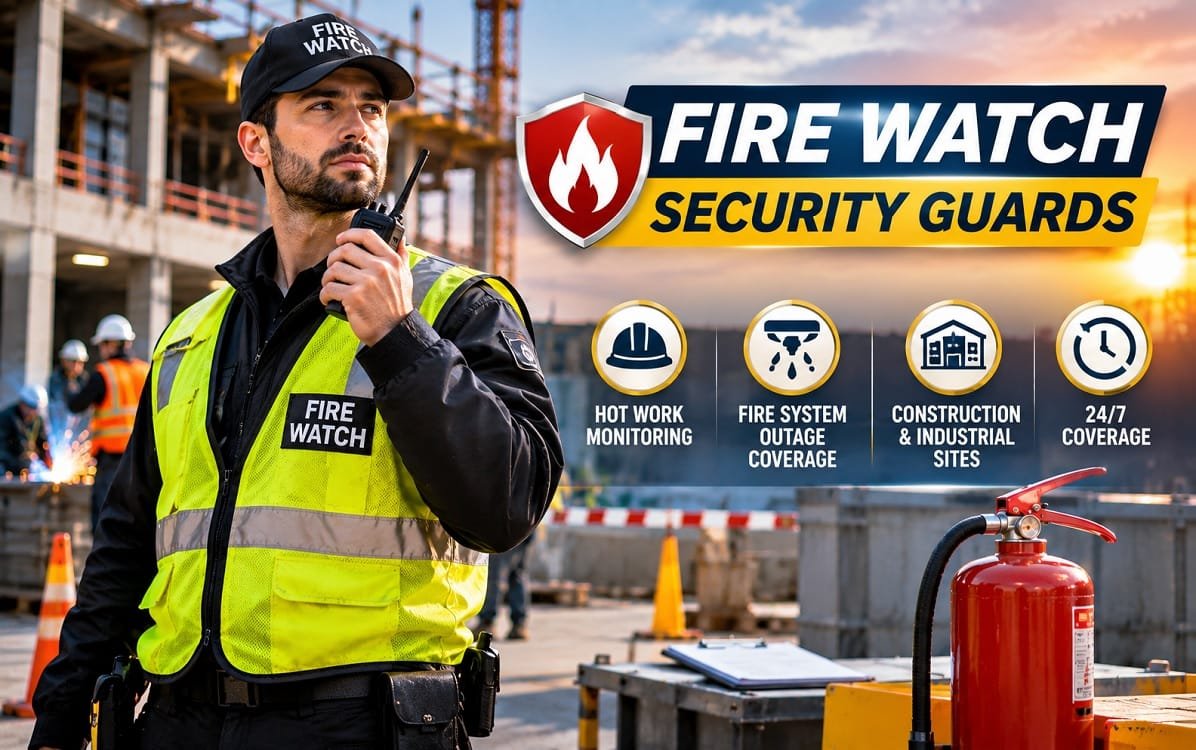
Protecting Worksites during High-Risk Industrial Activities
Industrial maintenance, construction, and equipment repairs often involve activities that increase the risk of accidental fires. Welding, cutting, grinding, and temporary equipment shutdowns can create conditions in which sparks, heat, or electrical faults become serious hazards. Fire watch security guards help businesses maintain awareness of potential fire risks by monitoring designated areas, identifying unsafe conditions, and following established emergency procedures. Their presence can support workplace safety while essential repairs and other high-risk activities take place.
Fire prevention becomes particularly important when normal operations are interrupted or protective systems are temporarily unavailable. A malfunctioning alarm, an impaired sprinkler system, or maintenance near combustible materials may require additional precautions. Employers should evaluate the specific hazards, determine which safeguards are necessary, and establish clear responsibilities before work begins. Proper planning helps ensure that monitoring arrangements support the site’s overall safety strategy without replacing required fire protection systems or regulatory obligations.
Understanding Fire Hazards during Hot Work Operations
Hot work includes welding, torch cutting, brazing, soldering, and grinding activities that can generate sparks or significant heat. These ignition sources may set fire to nearby packaging, wood, insulation, flammable liquids, or accumulated combustible dust. Even when the immediate work area appears clear, sparks can travel through openings or reach materials in adjoining rooms. Employers should assess these risks before authorizing the job and establish suitable precautions to prevent accidental ignition.
The hazards may extend beyond the location where a worker operates a welding machine or cutting tool. Sparks can fall through floor openings, reach lower levels, or enter concealed spaces behind walls and ceilings. Equipment surfaces may also remain hot after the work has finished. Fire prevention planning should therefore consider the surrounding environment, not simply the operator’s immediate workspace. Appropriate barriers, removal of combustible materials, and monitoring of exposed areas can reduce the likelihood of a fire developing unnoticed.
Why Equipment Shutdowns Require Additional Safety Measures
Equipment shutdowns are sometimes necessary for repairs, inspections, upgrades, or replacement of essential components. During these periods, fire alarm systems, sprinkler installations, fire pumps, or other protective equipment may be temporarily unavailable. The level of risk depends on the system affected, the building’s occupancy, the duration of the outage, and the activities taking place nearby. Employers and facility managers should follow applicable impairment procedures and determine which interim safeguards are needed before continuing operations.
A shutdown may also introduce hazards associated with electrical maintenance, machinery disassembly, fuel systems, or temporary power arrangements. Contractors should communicate planned work and unexpected changes to the responsible site supervisor. Depending on the circumstances, the facility may need additional inspections, restricted access, suspension of certain activities, or temporary evacuation arrangements. Monitoring should not be treated as a universal replacement for impaired protection systems; the appropriate response must reflect the actual hazards and applicable requirements.
Defining the Responsibilities of Fire Watch Personnel
Fire watch personnel are generally assigned to observe designated areas, recognize signs of developing fire hazards, and report unsafe conditions without delay. Their duties may include monitoring hot work, checking nearby exposed areas, confirming that required protective measures remain in place, and communicating with supervisors. The precise responsibilities should be agreed upon before the assignment begins. Clear instructions help personnel understand their coverage boundaries and avoid confusion when several contractors or work teams share a site.
Personnel should also understand the site’s emergency plan and know how to activate alarms, contact emergency responders, and guide people toward safe evacuation routes. Where appropriate, they should be trained to use suitable firefighting equipment within the limits of their training and capabilities. They must not attempt to control a fire that presents an immediate danger or exceeds their ability to respond safely. Raising the alarm, protecting people, and following emergency procedures take priority when conditions become hazardous.
Preparing Work Areas before Welding and Cutting Begin
A thorough pre-work inspection helps identify conditions that could cause an accidental fire during hot work. Employers should check for combustible materials, flammable substances, exposed insulation, and openings through which sparks may travel. Materials that can be safely removed should be relocated away from the work area. When removal is impractical, suitable fire-resistant barriers or coverings may be necessary to protect surrounding surfaces and vulnerable spaces.
The inspection should also verify that suitable firefighting equipment is accessible and that workers understand the emergency arrangements. Supervisors should confirm that required permits or authorizations have been completed where applicable and that workers have received instructions about site-specific hazards. If an unsafe condition cannot be corrected, the activity should be postponed or moved to a safer location. Reassessing the work area whenever conditions change helps prevent a previously acceptable setup from becoming unsafe during the job.
Maintaining Awareness across Large and Complex Facilities
Large industrial facilities often contain multiple work zones, storage areas, machinery rooms, and connecting passageways. A fire hazard in one location may affect another area through shared ventilation systems, openings, or nearby combustible materials. Monitoring arrangements should account for these connections and determine whether more than one person is needed to observe the relevant spaces. Employers should avoid assigning a coverage area so extensive that important hazards could go unnoticed.
Communication tools can help personnel coordinate with operators and supervisors when areas are separated by walls, distance, or background noise. Radio communication, defined reporting intervals, and clear escalation procedures can support an effective response. Site managers should also explain how workers can report changes such as newly stored materials, blocked access routes, or unexpected equipment activity. Regular coordination helps ensure that monitoring remains appropriate throughout the shift and that newly identified risks receive prompt attention.
Supporting Emergency Response and Incident Reporting
A clear emergency response procedure helps workers act quickly when they notice smoke, unusual heat, sparks outside the work area, or other warning signs. Personnel should know how to raise the alarm, communicate the location of the hazard, and follow evacuation instructions. The procedure should also explain when emergency services must be contacted and who is responsible for notifying site management. Regular briefings can help ensure that these arrangements remain familiar to everyone involved.
After an incident or near miss, supervisors should document relevant information and investigate the conditions that contributed to the event. Records may include the time and location, work being performed, hazards observed, notifications made, and corrective measures taken. Reporting near misses is particularly valuable because it can reveal weaknesses before a more serious incident occurs. Reviewing these findings helps employers improve inspection routines, update training, and strengthen communication between maintenance teams and fire watch personnel.
Selecting Qualified Personnel for Specialized Worksites
Choosing a suitable provider or assigning internal staff requires careful consideration of the site’s needs. Employers should evaluate relevant training, experience with similar environments, communication skills, familiarity with emergency procedures, and the ability to remain attentive throughout the assignment. Industrial plants, construction projects, warehouses, and commercial buildings may present different hazards, so personnel should understand the specific conditions they will encounter. Clear instructions and a site orientation should be provided before monitoring begins.
Fire watch security guards should be assigned duties that match their preparation and the requirements of the workplace. Businesses should confirm whether the proposed coverage includes hot work observation, monitoring during equipment shutdowns, post-work inspections, or other specified responsibilities. They should also establish reporting arrangements, shift handovers, and procedures for requesting additional coverage when conditions change. A clear agreement between the employer and the provider helps align expectations and supports consistent safety practices throughout the assignment.
Coordinating Fire Watch Coverage with Maintenance Teams
Effective coordination between fire watch personnel and maintenance teams helps ensure that fire prevention measures remain in place while equipment is serviced. Before work begins, the supervisor should explain the planned activities, identify affected systems, and establish how changes will be communicated. Contractors should report newly discovered hazards or delays that could extend the period of elevated risk. This information allows the responsible manager to reassess coverage and update interim precautions when necessary.
Coordination should continue until the work is complete and the site’s normal safety arrangements have been verified. Equipment may require testing before being returned to service, while hot work may require additional monitoring after the tools have been switched off. Employers should not end coverage solely because a contractor has finished the main task. The responsible supervisor should confirm that applicable requirements have been met, outstanding hazards have been addressed, and any required notifications or records have been completed.
Choosing Reliable Fire Watch Support for Your Business
Businesses arranging outside fire watch services should compare providers based on their ability to meet the site’s operational and safety requirements. Important considerations include personnel preparation, scheduling flexibility, familiarity with relevant hazards, communication procedures, and the ability to follow site-specific instructions. Managers should explain the location, expected duration, type of work, equipment affected, and any special access restrictions when requesting a service. Accurate information helps the provider propose coverage suited to the actual assignment.
The Fast Fire Watch Company provides fire watch services for businesses seeking support with workplace fire risk management. Before arranging coverage, employers should confirm the proposed scope of duties, staffing arrangements, monitoring areas, and emergency reporting process. They should also clarify who will coordinate with maintenance contractors and determine when coverage may safely end under applicable requirements. Combining suitable personnel with strong site supervision and clear procedures helps organizations manage hot work and equipment shutdowns while keeping fire prevention a priority.
Building Consistent Fire Prevention Practices across Every Shift
Fire safety depends on consistent preparation rather than a single inspection or temporary staffing decision. Employers should review work procedures, maintain suitable equipment, train personnel, and ensure that supervisors understand their responsibilities. Shift handovers deserve particular attention when hot work or equipment repairs continue across several hours or days. Incoming personnel should receive accurate information about the affected areas, outstanding hazards, changes to protection systems, and any monitoring activities that remain necessary.
Businesses should periodically review their fire watch arrangements to identify opportunities for improvement. Inspection records, employee feedback, near-miss reports, and maintenance findings can help reveal recurring problems or unclear procedures. Fire watch security guards can contribute to a broader prevention strategy when their duties are clearly defined and coordinated with the site’s responsible personnel. By combining careful hazard assessment, qualified monitoring, timely communication, and appropriate emergency planning, organizations can support safer working conditions during hot work and equipment shutdowns.