Introduction
Digital payments have revolutionized the way businesses and individuals conduct their financial transactions by making them more convenient, quicker and more accessible. Customers no longer need to use cash or cheques or go into a bank to transfer money, they can now deposit money via their mobile phone app, pay for goods at merchants with contactless cards and make online transactions in seconds. These services rely on interdependent technology for user authentication, payment directions, fraud detection and fund transfers between financial institutions. With the increasing level of electronic transactions in today’s commerce, it is important to grasp the way digital payments function. QR code payments are also a technology that can be used to pay and that allows customers to pay by simply scanning a code with their mobile, lessening the need for cash and making payments easier for businesses of all sizes.
Digital Payments Infrastructure
There are multiple systems that work together to securely transfer money between your accounts, and that’s what is known as digital payments. Typical transaction participants can comprise of the customer’s bank, a payment service provider, a payment processor, the merchant’s bank, and the network that authorizes or clears the transaction. Every person has a particular role to play, ranging from money counting, to reporting of monetary information and bookkeeping. Operating in conjunction, payment gateways ensure that online merchants and payment processors can be secured, and processors then channel transaction data to the right financial institution(s). APIs are commonly known as bank-to-bank application programming interfaces, which enable banking applications, digital wallets, and merchant platforms to share payment instructions and keep up to date on transactions. These interactions can sometimes occur in seconds, but the infrastructure must perform several checks to make sure transactions are valid, properly routed and processed by the rules of the institutions involved.
Payment Gateways and Payment Processors
Payment gateways are especially vital in ecommerce as they enable a merchant’s website or app to link to payment systems for electronic transactions. The gateway securely communicates the required information during checkout when the customer enters the card details or chooses one of the payment methods that have been supported. The payment processor then gets in touch with the payment network and financial institution to ask for authorization. The customer’s bank or card issuer reviews available funds, account status, transaction amounts or limits and may have other variables to determine whether to approve or deny the request, including any fraud indicators. Approval does not guarantee that the money has been deposited in the merchant’s account. This may result in a delayed clearing and settling, depending on the payment method and institutions. This is why it makes perfect sense that a purchase made online can be approved on the spot, but the merchant won’t receive the money until the transaction goes through further processing.
Mobile Wallets and Mobile Money
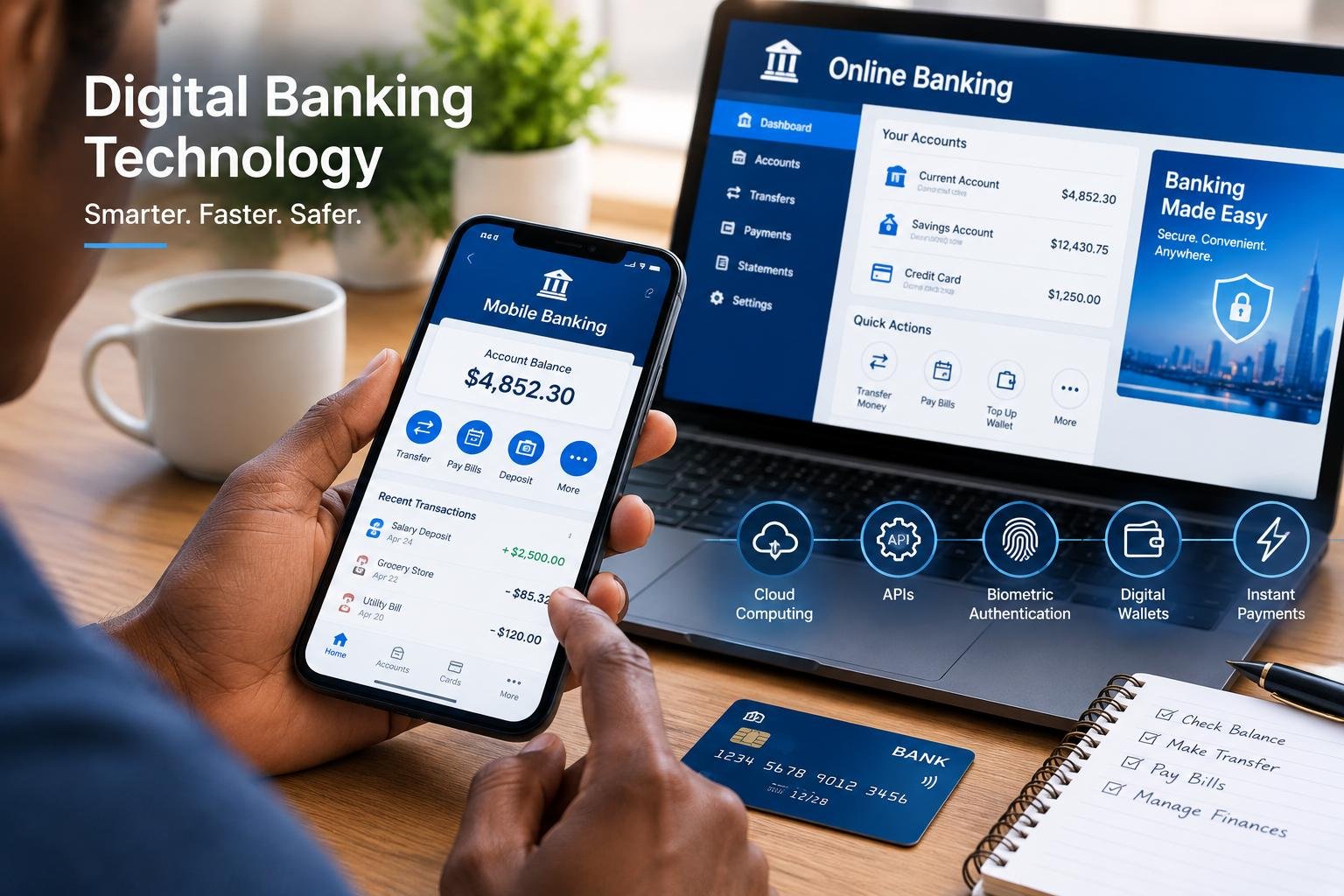
Mobile wallets are apps that enable users to pay via their smart phone or other connected device without having to enter their bank card information over and over again. A wallet can securely store the payment credentials, have a prepaid balance, or be linked directly to bank accounts, depending on the service. An application, when a customer is making a payment, interacts with the payment infrastructure to identify user, confirm the payment and ask for authorization. Mobile money services are typically provided with various arrangements which are different but related to how the services are provided, and many times the services are provided by allowing value to be stored in an electronic account linked to an individual’s mobile number. These services can be especially beneficial to those who do not have access to traditional banking services. Mobile money operators and digital financial service providers in Nigeria provide financial services such as payments, transfers, merchant service and other normal financial transactions. Mobile services can benefit small businesses by making payments easier and help people access the formal financial system easier as well as not using much cash and physical branches.
Contactless cards and QR-Code Payments
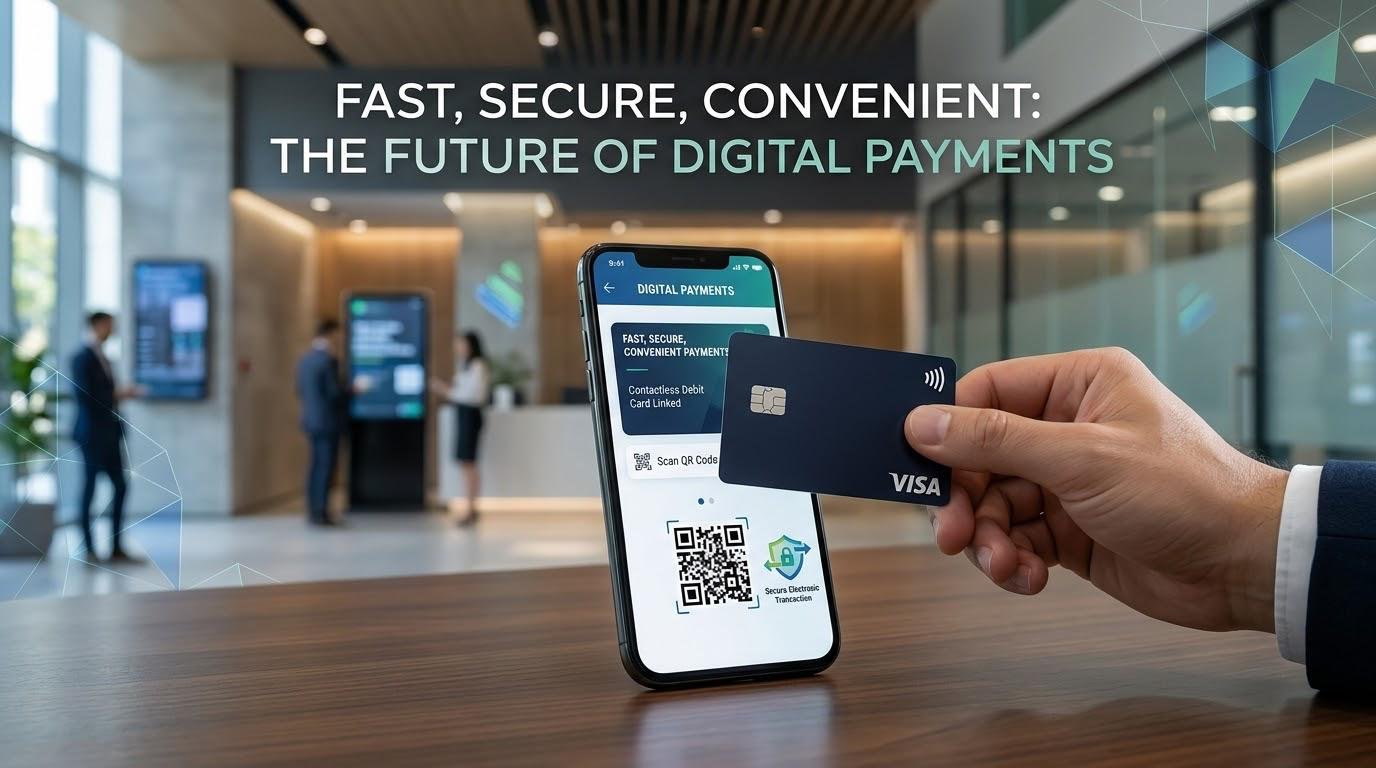
Contactless cards communicate with a suitable terminal by employing near field communication or NFC technology which is a very short-range technology. Eligible transactions may be finished through the tap of the customers’ cards against a customer terminal, rather than the insertion of the customer’s card or swiping a magnetic stripe. Contactless payments are also possible with mobile devices via digital wallets, with or without a biometric verification or a passcode. Another convenient payment method is QR-code payments. A merchant can post a QR code with payment details which the customer can scan with a banking app or supported wallet. In other methods the customer creates a code for the merchant to scan. Next, the application verifies the information and transmits the payment order via the network. In some cases, these techniques can decrease the checkout waiting times and necessities for specialized equipment that reads cards. Consumers, however, should check the merchants when they’re using QR codes and confirm the payment amount before clicking on the payment page, especially when scanning QR code from an unfamiliar merchant that may lead to a fake payment page.

Real Time Payment Networks and Bank-to-Bank Transfers
Real-time payment networks allow financial institutions to send payment instructions and (if supported) transfer funds within seconds, anytime of day. These systems can be used to provide continuous availability of payments, as opposed to certain traditional transfers that rely on business hours, or batch processing. When a customer initiates a bank transfer with the help of a mobile application, his/her instruction is authenticated and sent to the bank of the beneficiary. The institutions and payment systems confirm the teaching, handle the payment and provide a feedback, confirming success or failure. The NIBSS Instant Payment system is a payment system that facilitates electronic fund transfers between member banks in Nigeria, for people and businesses to transfer money without needing to carry cash. Real-time payments come with a lot of benefits for making fast payments for urgent requirements such as retail payments, business payments, salary payments, and much more. However, a quick payment isn’t a magic bullet for eliminating the need for verification, fraud monitoring or a simple procedure for looking into an incorrect transfer.
Authenticating E-Commerce transactions, APIs, and Fraud Monitoring
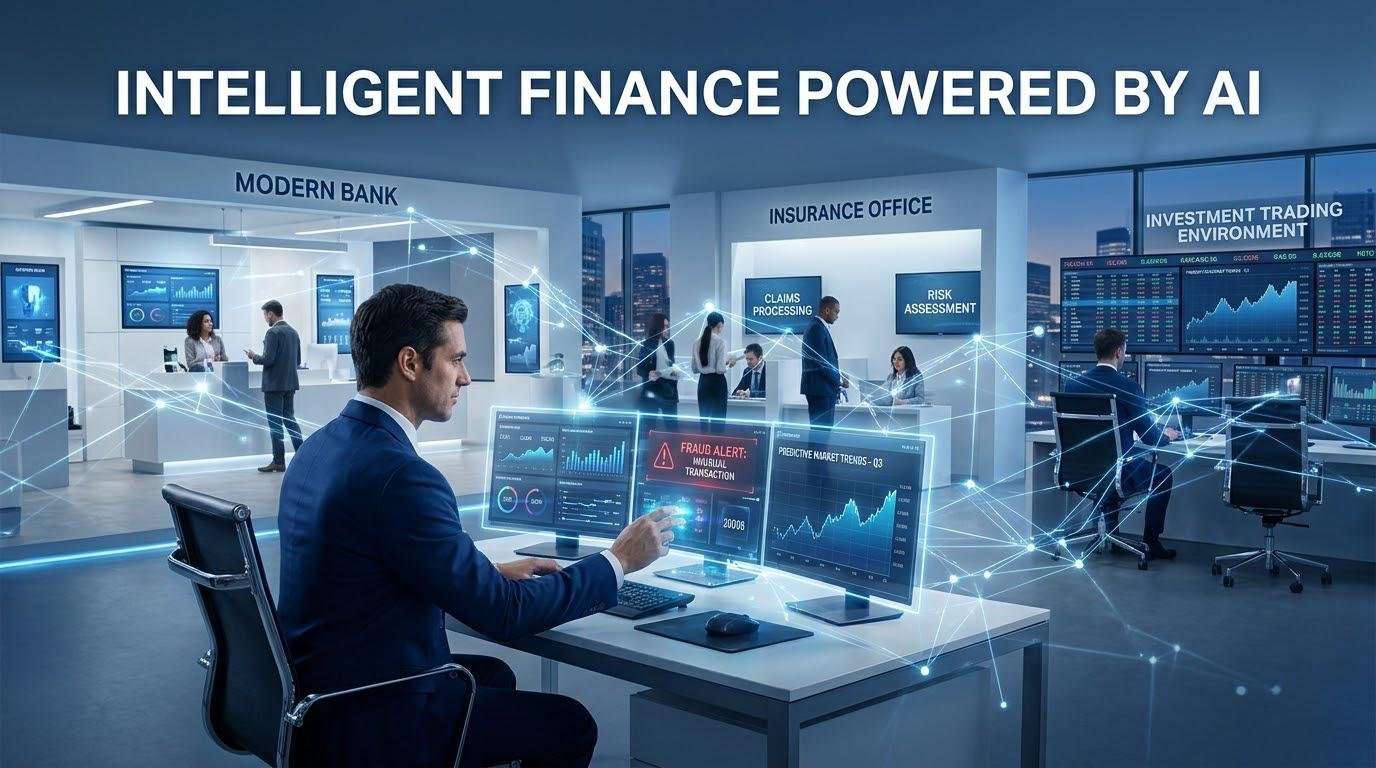
Security systems ensure digital payments are secure by verifying customer authorizations and that payments are not exhibiting suspicious patterns. It could be passwords, a one-time password, biometric checks or device authentication. If there is a higher risk involved due to the nature of the transaction, its value, or its location, some will have to be verified further. APIs enable payment apps, financial institutions, and service providers to communicate with each other, without the need for the users to know the technical details. Fraud-monitoring tools review the nature of transactions, for example how frequently transactions are made, device details, spending trends, and any unusual activity on the account. Machine learning could be used to detect behavior outside of normal patterns, but sometimes the analysis of transactions could result in false positive alerts. Encryption can be used to secure sensitive data during transfer and tokenization can help to minimize exposure if the data is stolen by substituting the information with alternative values. Access control, security testing, transaction limits and monitoring are also implemented by financial institutions to minimize the risk of unauthorized transactions and their effect.
Completing, Resolving, and Sharing Ideas.
Authorization, clearance and settlement are different and related processes of payment processing. Authorization is the next step after checking availability, to see if the transaction will proceed or not, and clearing is the process of exchanging and reconciling the transaction information with relevant parties. The process of satisfying the payment commitments resulting from a transaction is called settlement. Some payment systems meld these steps together, while others finish settlement following a preliminary payment confirmation. Interoperability enables banks, wallets, payment providers and merchant platforms with different technologies to be able to transact with each other. If there is no interoperability, customers could potentially only transfer money between different providers via their own network. Some of these limitations are overcome by shared standards, common payment infrastructure and compatible interfaces. In Nigeria, in particular, interoperability is crucial as customers and merchants rely on the services of many banks and fintech firms. With efficient coordination, digital payments can be made more convenient, competition can be fostered and smaller businesses can accept payments from a wider range of customers.
Problems of Transaction Failures and Digital Payment Fraud
There are a number of factors that can prevent a digital payment from being processed: not enough money, incorrect account information, network issues, credentials expiration, transaction limits, or temporary issues that impact a bank or payment processor. An interesting problem arises when the recipient of a customer’s payment does not receive payment as soon as it is made. These transactions can be reconciled to check if the payment is successful, pending or unsuccessful and needs to be reversed. Customers must keep transaction references, check the transaction status by contacting their financial institution, and notify their financial institution if the transaction is not resolved. There is another challenge with fraud. Criminals can trick people into authorizing payments by sending phishing messages, by impersonating, by using stolen identities, by using malicious applications, or by using social engineering. Customers are cautioned to double check recipient details prior to confirming any transaction with authorized instant transfer as it can be difficult to reverse the transaction. Financial institutions should also have robust complaints mechanisms, financial and other suspicious activities should be investigated and there should be good communication between the financial institution and the customer about steps to be taken when suspicious activity is detected.
The Role of Digital Payments in Enhancing Financial Inclusion
Digital payments technology is revolutionizing retail banking, ecommerce and business operations in Nigeria. Customers are able to pay utility bills, buy products and services, transfer money, and use financial services via a mobile app without having to go to a bank branch. Electronic checkout systems are a great advantage for ecommerce businesses as they can validate payments swiftly and minimize the hassles of handling cash payments. By implementing transfers, QR codes, and mobile payment solutions, small merchants can process digital transactions without investing in robust payment systems. Small merchants can leverage transfers, QR codes, and mobile payment options to facilitate digital transactions without needing to build complex payment infrastructure. The developments also can contribute to the financial inclusion by providing alternative means for people to engage in the economy, especially when traditional banking is not available to them. Despite these advantages, there are still a number of challenges, such as unreliable internet connections, electricity outages, low digital literacy, risk of fraud, service charges and access to appropriate devices. Investments in reliable infrastructure, consumer education, payment service accessibility, and robust regulatory framework are critical for enabling the digital payment ecosystem to benefit more people.
Conclusion
Digital payments rely on an orchestrated set of technologies to verify the identity of customers, send instructions, identify fraud, authorize payments and complete financial transactions. Online commerce, mobile wallets and contactless, real-time payment networks are making online payments more convenient than ever. APIs and interoperability link various financial services, and encryption, authentication, and fraud monitoring safeguard transactions. Although these developments are encouraging, there are technical problems, cybercrime, erroneous transfers and access issues still to be addressed. In Nigeria and other countries and markets, the ongoing growth of interoperable, low-cost and secure payment systems can enable e-commerce, improve business efficiency and extend financial inclusion. The future success of payment systems will rely upon reliability in payments, customer protection, transparency, as well as the speed of the transactions.
Get more well researched information about Digital payments technology here.