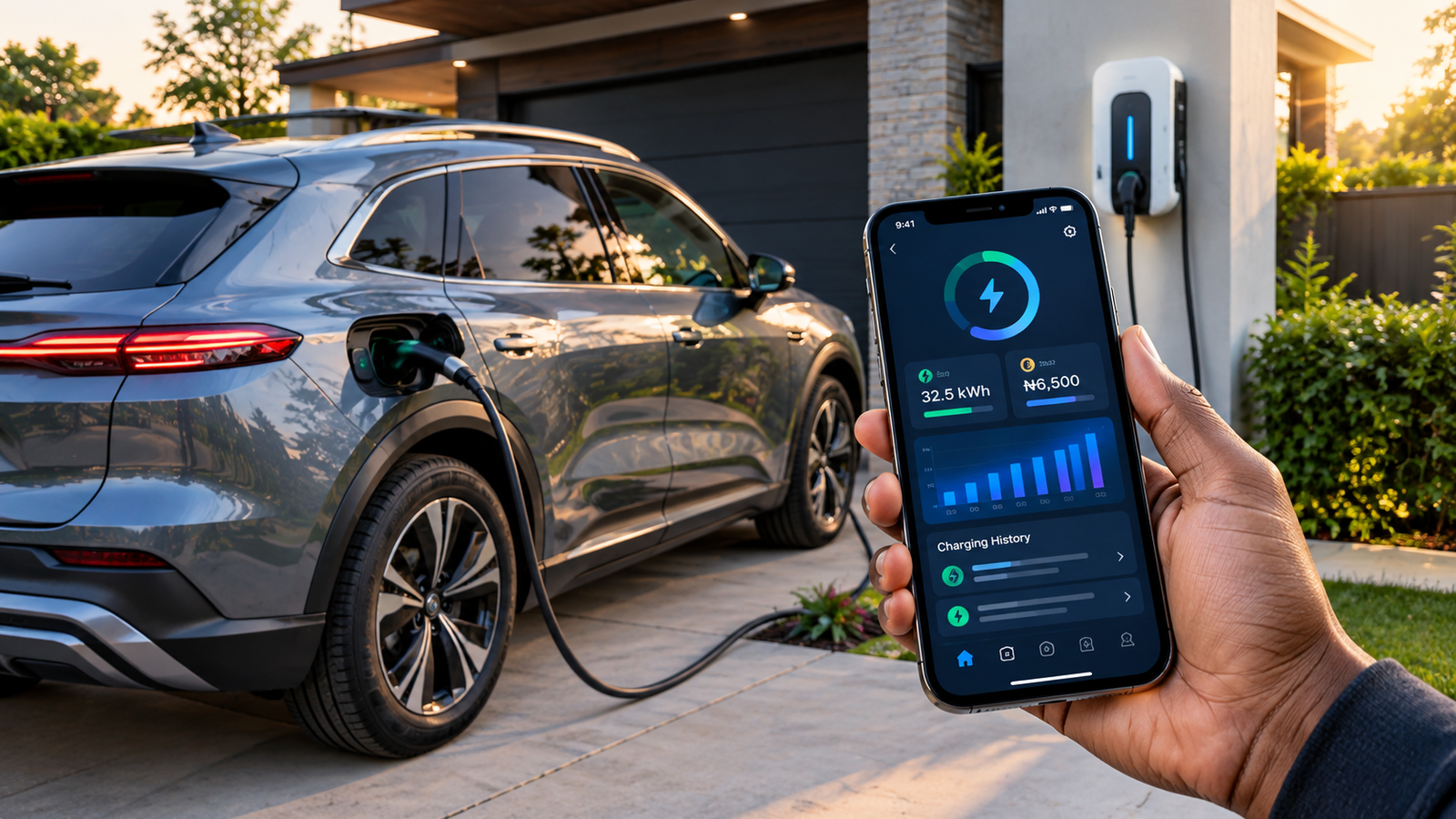
EV charging cost tracking is essential for understanding how much electricity your electric vehicle uses and how much it costs to run. With gas cars, you get a tangible receipt for each fill-up, but with home EV charging, the expense is included in the household utility bill. This is to say that it is easy to not notice how much electricity your car is using. That is what charging apps are for: they log the charge sessions, the amount of energy used, the price of that energy, and the total charge spent.
The app is used properly and an EV owner has access to his energy costs over time. By looking at charging info and mileage, they are able to calculate cost per km or mile and compare home charging to public charging. This, in turn, makes it easier to see the true cost of running an EV as opposed to that of estimates.
Why EV Charging Cost Tracking Matters
Tracking EV operating costs is what gives you a full picture of what it costs to run a car. While a driver may know that their vehicle uses a certain amount of kWh, that isn’t the same as knowing what those kWh cost. What you pay for electricity varies by location, which tariff you are on, and when you charge. Also, public charging stations may have their own price structures and add on extra fees.
Keeping track of charge history also allows us to identify trends. A driver may see that home charging is a cheaper option than public charging or that electricity use goes up during certain drive cycles. Over the course of a few months, this data also shows the average charge expense, which, in turn, is useful for planning out future car costs.
What Information Can Apps Track?
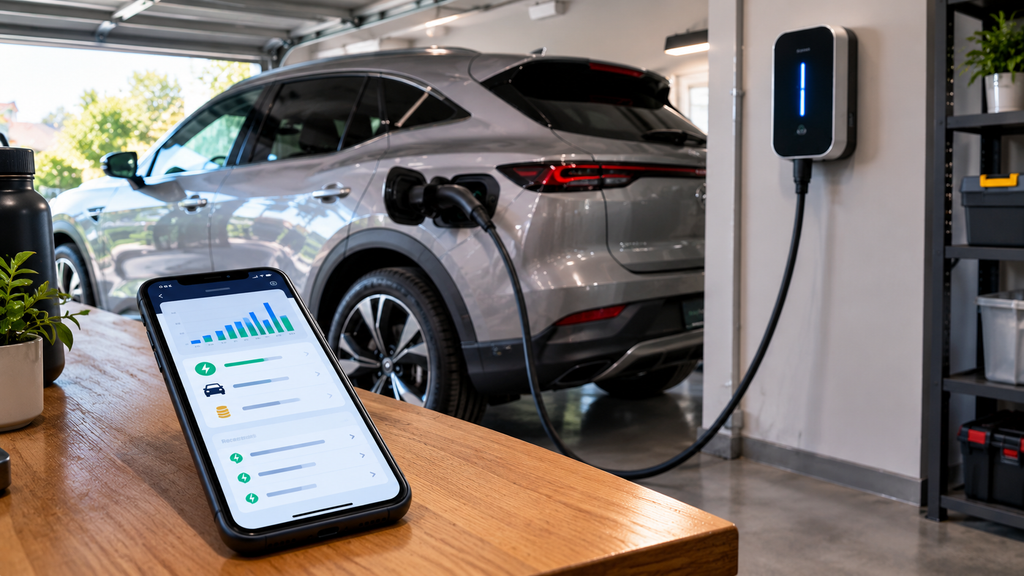
For certain apps and vehicles, charging apps may log which date a charge session took place, what amount of energy was used in kWh, charge location, electricity price output, total cost, and, at times, also mileage. Also, some apps are able to collect info from a compatible vehicle or home charger, which is a part of the process, while other apps have a manual input feature for users to enter in charging info.
This info is especially useful when it is updated constantly. Instead of going over each charge session as they happen, an owner may look at weekly, monthly, or yearly reports, in which the car is charged up and used is displayed along with the cost of that use.
Best on the Market for EV Charge Tracking
There are a variety of apps for EV owners which, in turn, can do different things based on your vehicle, charger, location, and the charging network. Some of them present at-home energy issues, some focus on public charging, and some do a lot; they also include a wide range of car-related data.
EV Energy
EV Energy puts a large focus on home charging, electricity tariffs, charging history, and energy costs. We provide info on charging sessions and charge stats that include energy and cost. Also, we put out info on electricity tariffs, which, in turn, helps do more accurate charging cost calculations.
This is for drivers who, we note, also use their home electricity, which could be used to see what portion of the bill is due to their EV. Also, in markets which support it, the service is to help users set charging at times of lower prices, which, in turn, may put them to better use of the lower-cost charge windows.
TRONITY
TRONITY puts together charging info with that of your vehicle’s overall performance. What it includes is charging history, consumption, mileage, battery info, and vehicle cost tracking. Thus, it is very useful for owners who wish to see their charging expenses in the picture of their total driving activity.
As charge and mileage info go hand in hand, a car owner may use this data to see what amount of electricity is used for day-to-day driving. Also, what features are available in which car depends on the make and model as well as the subscription level. It is best to check that out before counting on automatic data collection.
ChargePoint
ChargePoint is very much for drivers that use public charging stations on its network regularly. We see that they provide info on cost, energy, distance, and charging history. Also, users are able to look at session info and receipts for which they are eligible.
Public charging prices do, in fact, differ by location, which is why we find it useful to keep track of those records. Instead of using a general electricity rate to estimate the cost, drivers can input the exact amount they paid for each public charging session.
How to Calculate EV Charging Costs
The easy way to calculate EV charging is to determine the amount of electricity used and then multiply it by the price per kilowatt-hour. Charging cost is calculated by multiplying kWh used by the price per kWh.
For instance, an EV which uses 25 kWh and electricity costs ₦200 per kWh will see a basic charge of ₦5,000. With public charging, this may be more complex, as some stations include extra session or service fees, in which case the total amount paid out should be used.
Calculate Cost Per Mile or Kilometer
Cost per distance is a very useful metric in which to put forth your EV operating expenses. To determine it, divide the total charging cost by the distance traveled at the same time.
Cost per km = Total charging cost ÷ Kilometers driven.
For instance, we see that an EV may use up to ₦12,000 of electricity to cover 400 kilometers, which is an average of ₦30 per kilometer. As we track this over a few months, we see a more accurate result, which is to be expected, as what is covered in terms of driving conditions, traffic, weather, speed, and use of air conditioning play a role in electricity use.
Home Charging vs Public Charging
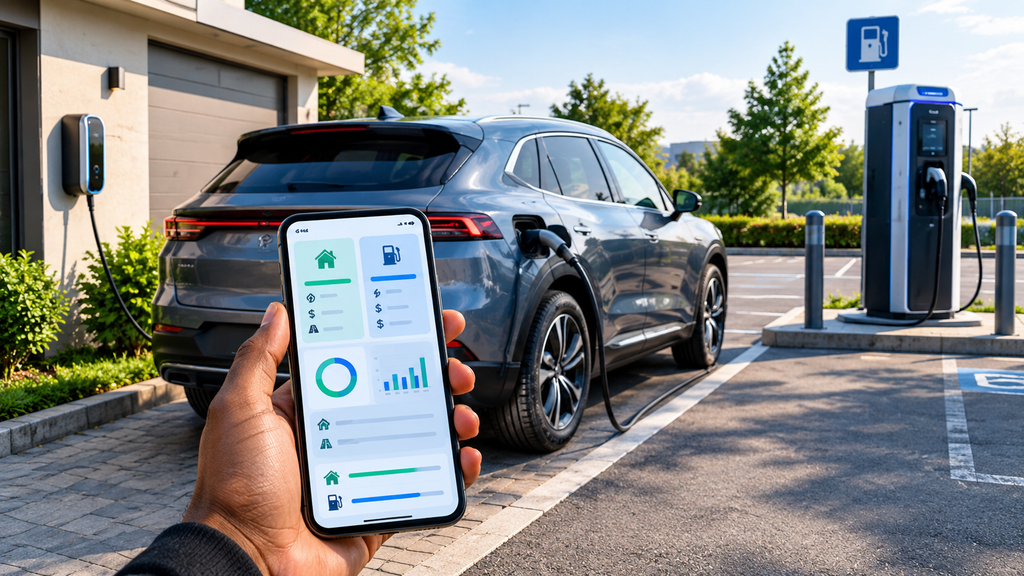
Home charge times are also easy to track, which is a result of stable and typically known electricity rates. If you have a compatible charger and vehicle that reports energy use, that info is at your disposal to determine the cost of each charge session by using the amount of electricity used and the home’s electricity rate.
Public charging has various price structures. Some stations charge by the kWh, while others may include extra fees. Also, what we see is that fast chargers have different rates from slow chargers. To that end, it is advised that drivers log the details of what they pay for each charge session and separate home and public charging costs out when looking at expenses.
Why Charging Location Matters
In some cases, two EV owners may drive the same car for the same distance but see very different charging costs, which is due to different charging behaviors. For instance, one person may mainly charge at home, which, in turn, may see a lower rate for electricity, while another that frequently uses public fast chargers may pay a higher rate.
Separate between what is spent at home and in public, and you will see the difference. As a car owner, you may calculate the average price per kWh for each type of charge, which, in turn, will tell you how each one contributes to the total monthly cost.
Comparing EV Charging With Gasoline Costs
Charging up your EV also allows you to compare it with a car that runs on gasoline. For that, do it over the same distance. For instance, the cost of electricity to charge an EV for a 100 km trip may be put up against the amount of petrol which a regular car requires to travel 100 km.
Suppose an EV uses 18 kWh per 100 km and electricity is at a cost of ₦200 per kWh. Thus, the base cost for electricity is at a rate of ₦3,600 per 100 km. Also, if a gasoline car has a consumption of 8 liters per 100 km, it will use 8 liters for the same distance. At a price of ₦1,000 per liter, the fuel cost would be at a total of ₦8,000 per 100 km. These are put forth as examples which may vary based on local prices and real-world consumption.
Remember Real-World Energy Use
EV energy use varies by speed, traffic, weather, road conditions, passenger weight, and climate control, which is also a factor. Also, we see that what is drawn from the charger does not match exactly what goes into the battery.
For which reason, we see that it is best to use several months of actual charging data as a basis for comparison as opposed to going by what is advertised. That, which also includes tracking of energy use and distance, allows owners to put together a real-world average, which, in turn, reflects their own personal driving patterns. Reliable charging also depends on electrical utility equipment .
How Apps Can Play a Role in Reducing Costs
Once a business has collected enough charging data, they will see which areas for expense reduction present themselves. For example, a driver may find out that public charging is at a higher price point than home charging, which is what they will do for long trips. Also, a different driver may have access to cheap electricity at certain times and change their charging time to that period.
Monthly reporting is a great tool. Report total kWh, total charge cost, kilometers driven, and what you spend on home and public charging. Over several months, this data may show that expenses are rising due to greater mileage, higher electricity prices, more public charge use, or just that your car is becoming more efficient in its use.
Choosing the Right EV Cost-Tracking App
The right app varies by what an owner is looking to track. At home, which is mainly a person’s domain, may see value in an app that pays attention to electricity prices, energy use , and home charging. For the frequent traveler, the focus may be more on public charging station info, charge receipts, and which networks to use.
Compatibility is also a key issue. When choosing an app, see that it supports your particular EV, charger, charging network, and electricity tariff. Some services report info automatically; others require you to input certain details for each charging session.
Conclusion
EV charge apps have a great impact on what comes to know the true cost of electric vehicle ownership. They report on energy use, charging rates, session costs, and mileage, which, in turn, allows drivers to determine average cost per kilometer or mile and also see which between home and public charging they are putting the most money into.
The best approach is to track charge use over many months. This gives a more accurate picture than that of individual sessions and also allows EV owners to put their electric bills up against the fuel costs of gas cars. With reliable charging information out of which to work, drivers are able to better analyze their car’s total cost of ownership and, in turn, make better decisions regarding which outlets to use and what times of day to charge.


