Facility directors across Atlanta face growing pressure to meet strict disinfection benchmarks as facility expectations rise each year. Documented cleaning and disinfection procedures help organizations establish consistent processes and reduce operational risk across commercial, institutional, healthcare, and mission-critical environments.
Daily sanitization routines now play a central role, keeping public, institutional, and mission-critical spaces operational during periods of increased risk. Cleanstar National Inc.’s field experience supports measurable quality controls when organizations choose EPA-registered products backed by robust training standards for their teams.
At each step in the cleaning program, operators set targets such as documented touchpoint inspections or require specific frequencies based on traffic patterns, facility requirements, and applicable guidelines.
Institutions invest significantly in staff education so every custodian delivers consistent results validated by compliance records rather than guesswork alone. Meeting these high standards starts with understanding key regulations and operational practices guiding facility disinfection.
Key Regulations for Atlanta Facility Disinfection
Facilities should follow applicable CDC and EPA guidance when establishing commercial disinfection processes. Product selection and use must also follow the EPA registration and product label, including directions for application, contact time, target organisms, and approved surfaces.
Cleaning before disinfection remains an important part of effective surface care because soils and organic material can interfere with the disinfectant’s performance.
You must track which surfaces are high-touch since these areas generally receive greater use and may require more frequent attention. Facility managers should also monitor applicable public health guidance when conditions change or an outbreak response requires additional controls.
Some disinfection technologies, including electrostatic or wide-area spraying, require careful review of product-label directions and the specific application method. A facility should never assume that a product approved for one application is automatically appropriate for another.
Outdoor surfaces can also require different considerations based on the material, environmental exposure, and applicable guidance. Facility teams should use EPA-registered disinfectants where appropriate and prioritize surfaces according to documented risk assessments and operational needs.
For commercial disinfection services in Atlanta, Cleanstar National Inc. applies structured cleaning and disinfection procedures designed to support compliance, consistency, and risk reduction.
Best Practices for Daily Surface Sanitization
Surface cleaning each day helps facilities manage contamination risks across high-use environments. A consistent routine also gives managers a practical framework for measuring whether required procedures are being completed.
- Use the right disinfectant: Always select products that are EPA-registered for the intended use and follow the product label for target organisms, application method, contact time, and surface compatibility. The selected solution should have clearly documented use instructions so staff can apply it consistently.
- Clean then disinfect: Dirt and organic material can interfere with disinfectant performance, so start by cleaning the surface when required, then follow with disinfection according to the product label. Your staff should know and follow the sequence, since proper application affects the overall result.
- Cover high-touch zones first: Doorknobs, elevator buttons, break room tables, shared devices, and other frequently handled surfaces should rank high on the daily disinfection route. You should prioritize these areas according to traffic and facility risk, while maintaining logged procedures that support consistent execution.
Choosing EPA-Approved Disinfection Products
Selecting EPA-registered disinfectants for high-traffic facilities is not just about how well they work. Product registration, label directions, intended applications, and safe handling all affect the safety and operational integrity of your facility.
- Product Authenticity: Make sure the disinfectant is EPA-registered and that its label includes claims relevant to the organisms and applications for which it will be used.
- Label Accuracy: You need all use steps, application instructions, and contact-time requirements to match the current product label. Staff should not rely on assumptions when handling or applying a disinfectant.
- Surface Compatibility: You can use some disinfectants on medical equipment, plastic, metal, and other materials, but you should always check the label and manufacturer guidance for limitations before expanding use or ordering in bulk.
- Safe Handling and Storage: Your staff must have access to handling procedures, appropriate storage areas, personal protective equipment requirements, and instructions for using concentrates to lower risk at your facility.
Setting Measurable Cleanliness Performance Goals
Cleanliness goals directly affect infection-control processes, occupant confidence, and day-to-day operations in large facilities. Clear, measurable targets help you track progress and show value to staff and stakeholders.
- Infection Prevention Targets: Establish infection-prevention objectives based on the facility’s risk profile, applicable healthcare or public health guidance, and documented environmental-control procedures rather than relying on an arbitrary reduction percentage.
- Visible Cleanliness Audits: Set recurring visual-audit goals that measure whether defined surfaces and areas meet the facility’s established cleanliness criteria. Consistent audits make it easier to identify process gaps and correct them.
- Staff Absenteeism Monitoring: Track available workforce data alongside cleaning and facility-performance information when appropriate. This can help managers identify operational patterns without assuming that absenteeism is caused by cleaning conditions alone.
- Patient/Occupant Satisfaction Metrics: Survey patients or occupants about cleanliness at appropriate intervals, using consistent questions and documented results. Feedback can identify areas where cleaning processes or communication require additional attention.
Frequency Standards for High-Traffic Areas
High-traffic areas in commercial facilities need an active cleaning schedule to keep touchpoints maintained and meet operational expectations.
- Enhanced Cleaning Intervals: Facilities with high foot traffic, such as stadiums or busy office towers, may need more frequent cleaning of touchpoints and surfaces based on occupancy, usage, risk, and facility requirements. Many teams use a dedicated attendant during peak periods because scheduled sweeps alone may not address changing conditions.
- Real-Time Monitoring Tools: With digital logs or traffic data, you can adjust cleaning frequency based on actual usage rather than relying only on a fixed schedule. Systems that track dispensers and high-touch areas can help identify supply shortages or accelerated buildup before they become operational issues.
- Consumable and Waste Refill Cycles: High-capacity towel and soap dispensers can reduce how often refills are needed, helping you extend the time between full restocking. Facilities can pair daily cleaning logs with appropriate dispenser capacity to prevent missed supplies and support smooth, efficient operations.
Staff Training for Consistent Disinfection Results
Effective staff training is the backbone of dependable disinfection, supporting consistent results, safety, compliance, and accountability.
- Clear Protocols in Practice: You perform better when you follow repeatable, step-by-step cleaning procedures organized by zone and surface. Written protocols help establish consistent expectations so every worker follows the same cleaning path and uses disinfectants correctly.
- Real-World Training Environments: Good programs let you practice using appropriate PPE, disinfectants, and record-keeping methods before you enter live healthcare or other sensitive environments. Hands-on instruction helps staff understand how procedures should be applied in actual working conditions.
- Ongoing Performance Checks: Supervisors observe, correct, and coach staff through regular walkthroughs, keeping performance consistent and addressing mistakes early. Spot audits and documented reviews provide additional evidence that procedures are being followed.
- Infection-Control Mindset: You do best when you link cleaning with health outcomes and understand the need to act on every shift. Short team talks help reinforce accountability and support safer care spaces, especially when leaders explain how consistent environmental controls contribute to infection prevention.
Monitoring and Documenting Sanitation Compliance
Closely monitoring commercial disinfection goals requires solid documentation, especially in complex facilities with shifting teams. To stay aligned with applicable requirements and reduce risk, you need more than a basic checklist; clear, auditable logs support accountability and process verification.
- Deployment of Digital Tracking: Automated quality-control software can record technicians’ locations, timestamps, assigned tasks, and completion activity across designated zones. These records can create digital documentation for internal review, quality assurance, and applicable compliance inspections.
- Surface Audit Precision: Mobile digital inspection forms help you verify cleaning results, complete assigned tasks, and maintain consistent documentation. These tools can collect evidence such as photographs and timestamps, increasing confidence in records and supporting consistent procedures across shifts.
- Metric-Based Process Review: Sites can establish measurable cleaning indicators based on their own requirements, such as task completion rates, ATP results where appropriate, or documented dwell-time verification. Tracking these metrics helps managers identify process gaps and evaluate improvements over time.
Meeting commercial disinfection benchmarks calls for precise methods and well-trained teams. Facility managers now expect measurable results, not just basic janitorial routines. Documented procedures, objective inspections, and consistent quality controls provide a stronger foundation for managing environmental risk.
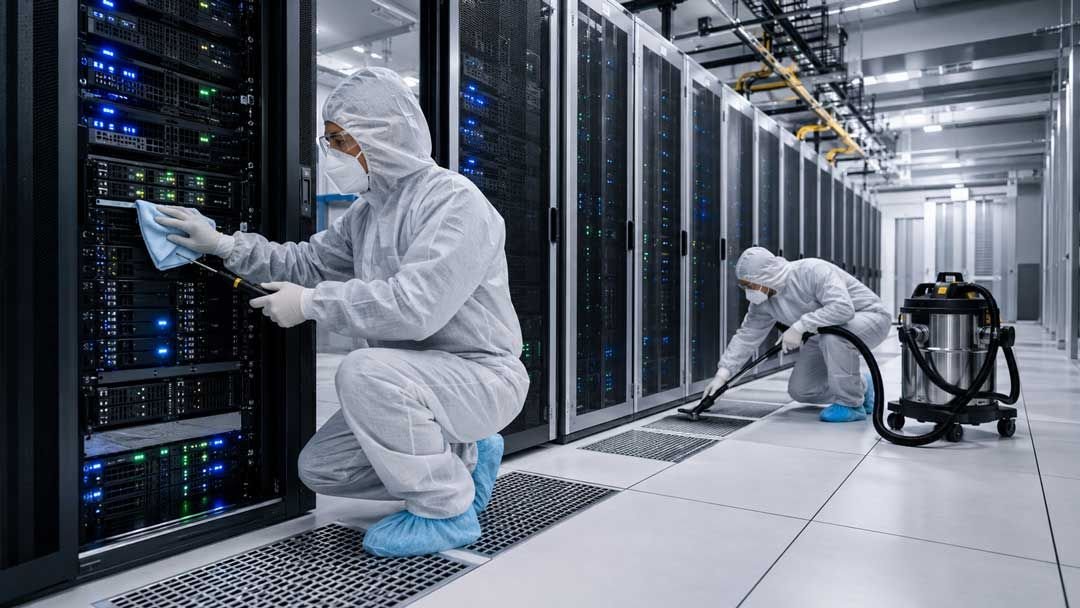
Cleanstar National Inc. supports complex facilities with structured workflows and on-site quality oversight for environments where cleaning performance can affect compliance, safety, and operational continuity. Data center cleaning requires service partners with an understanding of contamination risks, controlled procedures, and the specific requirements of sensitive infrastructure.
Healthcare operators also require disciplined environmental cleaning processes that support infection-prevention programs and facility protocols. Commercial cleaning services must withstand higher scrutiny when environmental safety, documentation, and process integrity are part of the operational requirements.
Clients benefit from Cleanstar’s self-performing crews and documented procedures, particularly during pre-handover phases, quality reviews, and compliance assessments. Organizations managing high-value assets need service partners that can demonstrate accountability through consistent execution and verifiable records.
Critical environment cleaning is now an essential component of enterprise facility management where consistency, transparency, and uptime protection matter. Choosing Cleanstar National Inc means selecting a partner focused on accountable, evidence-based cleaning solutions designed to support mission-critical operations.