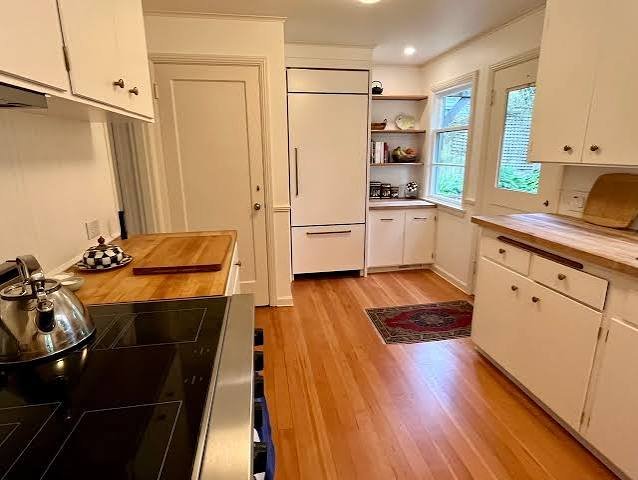
Yes, custom millwork can be made to closely match existing woodwork in color, grain, material, finish, profile, and overall style. The level of match depends on the age and condition of the existing woodwork, the type of wood or veneer used, the original finish, and whether the original materials are still available.
For renovation and restoration projects, Custom Millwork in NJ can be designed around existing doors, cabinets, wall panels, trim, moldings, reception desks, and other architectural woodwork. An experienced millwork fabricator can study the existing pieces, identify their construction and finish, create samples, and adjust the new work before production.
However, an exact match is not always possible. Wood naturally changes over time because of light, moisture, aging, and use. Even when the same species and finish are used, newly fabricated wood may look slightly different from decades-old material. The goal is usually to create a visually consistent match that blends naturally with the existing interior.
What Does It Mean to Match Existing Woodwork?
Matching existing woodwork involves more than choosing the same type of wood.
A successful match considers several visual and construction details at the same time. These include the wood species, grain pattern, color, sheen, stain, finish, thickness, edge profile, joinery, panel layout, and hardware.
For example, suppose a commercial building has existing walnut wall panels that are several years old. A new section of walnut paneling may use the same species, but the new material could initially appear lighter or have a different grain pattern.
A skilled fabricator can adjust the veneer selection and finish to make the new paneling blend more closely with the existing work.
The same approach applies to residential and commercial doors, cabinets, counters, built-ins, reception areas, and architectural trim.
Can New Millwork Match Old Woodwork Exactly?
An exact match can sometimes be achieved, but it should not be promised without inspecting the existing woodwork.
Wood is a natural material, and no two pieces have exactly the same grain. Existing wood also changes with age. Sun exposure can alter its color, while cleaning, wear, refinishing, and environmental conditions can affect its surface appearance.
For this reason, professional millwork companies usually aim for a close visual match rather than guaranteeing that new and old components will be indistinguishable under every lighting condition.
This distinction is important when planning Custom Millwork in NJ for a renovation. A sample should be evaluated next to the existing woodwork before the full order is fabricated.
What Factors Affect a Woodwork Match?
Several factors determine how closely new custom millwork can match an existing installation.
Wood Species
The first step is identifying the existing wood species.
Common architectural wood species include oak, maple, cherry, walnut, mahogany, ash, and other hardwoods. Some projects may use softwoods or engineered wood products instead.
Species identification matters because different woods have different grain patterns, colors, textures, and finishing characteristics.
However, identifying the species alone is not enough. Two pieces of the same species can still look significantly different because of natural variation.
Veneer or Solid Wood
It is also important to determine whether the existing work is solid wood or veneer.
Veneer consists of thin slices of natural wood applied to a substrate. Commercial and architectural millwork frequently uses veneer because it provides greater control over large surface areas and allows designers to create consistent grain patterns.
If the existing installation uses veneer, the replacement should ideally use a compatible veneer cut and matching grain arrangement.
The veneer cut can significantly affect appearance. Plain-sliced, quarter-sliced, rift-sliced, and other methods produce different grain patterns.
Grain Pattern and Direction
Grain direction is one of the details people notice when comparing two wood surfaces.
A new cabinet can have the correct color but still look wrong if the grain runs in a different direction or the pattern is inconsistent with the surrounding work.
Architectural millwork may use book-matched, slip-matched, or other veneer arrangements depending on the original design.
For large wall panels and prominent reception areas, grain sequencing can be particularly important because differences become more noticeable across a large surface.
Existing Finish
The finish on existing woodwork is another major factor.
Existing surfaces may have been finished with lacquer, conversion varnish, polyurethane, oil-based products, water-based coatings, or another system. Over time, the finish may also change in color and sheen.
A new clear finish applied to new wood will not automatically create the same appearance as an aged finish on existing wood.
Professional fabricators can create test samples and adjust the finishing process to achieve a closer visual result.
Stain Color
If the existing woodwork is stained, matching the stain becomes more complicated.
A stain does not produce exactly the same color on every wood species. Even pieces from the same species can absorb stain differently depending on grain, density, preparation, and surface condition.
A professional finisher may need to test several stain combinations before finding the closest match.
This is why choosing a stain from a color chart alone is not always reliable for restoration or renovation work.
Why Does New Wood Look Different From Old Wood?
One of the most common questions about matching existing woodwork is why new material looks different even when the same wood and stain are used.
The main reason is aging.
Wood changes naturally over time. Exposure to sunlight can alter its color, while repeated cleaning and everyday contact can change the surface. Existing finishes may also yellow, fade, darken, or lose their original sheen.
Environmental conditions can influence wood movement and dimensional stability as well. Wood products respond to changes in moisture and temperature, which is one reason proper interior environmental conditions are important for architectural millwork.
The Architectural Woodwork Institute’s standards address material, fabrication, finishing, and installation requirements for architectural woodwork and emphasize the importance of controlling conditions that can affect woodwork performance.
Because of these natural changes, a new piece may need a carefully adjusted finish to visually blend with an older installation.
How Do Millwork Professionals Match Existing Woodwork?
Matching existing woodwork is usually a process rather than a single material-selection decision.
1. Inspect the Existing Woodwork
The process begins with examining the existing installation.
A fabricator may look at the wood species, veneer pattern, construction, finish, dimensions, profiles, hardware, and condition.
For renovation projects, field measurements can also be important because existing buildings may not match the dimensions shown on old drawings.
2. Identify the Materials
The next step is identifying the materials used in the original work.
This may involve determining the wood species, veneer type, substrate, stain, finish, edge treatment, and other construction details.
If original project documents are available, they can be useful. Old shop drawings, finish schedules, material specifications, or manufacturer information may provide clues about the original construction.
3. Select Matching Material
Once the existing material has been identified, the fabricator selects new material that is as close as reasonably possible.
For veneer work, this can include selecting veneer from the appropriate species and cut and arranging sheets to create the desired visual sequence.
Material selection is especially important when the new component will sit directly beside existing woodwork.
4. Create a Sample
A finish sample or mock-up is one of the most valuable steps in the process.
The sample should be compared with the existing woodwork under the lighting conditions where the finished product will be installed.
If the sample is too light, dark, warm, cool, glossy, or dull, adjustments can be made before production.
This can prevent expensive corrections later.
5. Adjust the Finish
The finishing team can modify the stain, toner, sealer, or topcoat to bring the new material closer to the existing appearance.
The exact finishing method depends on the original material and the desired result.
The goal is not simply to reproduce a color. It is to reproduce the overall visual effect of the existing woodwork.
6. Fabricate and Install
After the materials and finish are approved, the new millwork can be fabricated according to the approved drawings and specifications.
Installation must also be precise. Small differences in reveals, panel spacing, trim profiles, or alignment can make a new section appear noticeably different even when the material itself is well matched.
Can Custom Millwork Match Existing Cabinets?
Yes. Custom millwork can be designed to match existing cabinets in both appearance and function.
A replacement cabinet can be built with matching door styles, drawer configurations, panel profiles, materials, finishes, and hardware.
This is particularly useful when a business needs to expand an existing reception area, add storage, replace damaged cabinets, or renovate part of an office without replacing the entire installation.
However, older cabinets may use construction methods or hardware that are no longer commonly manufactured. In those cases, the new cabinet may need to reproduce the visible appearance while using modern construction methods inside.
This approach can provide the appearance of continuity while improving durability and functionality.
Can Custom Millwork Match Existing Trim and Molding?
Trim and molding can also be replicated or closely matched.
A fabricator can measure an existing profile and create a new custom profile based on those dimensions. This can be useful when a historic or older commercial building has trim that is no longer available as a standard stock product.
Matching trim may involve reproducing:
- Baseboards
- Crown molding
- Door casing
- Window casing
- Chair rails
- Panel moldings
- Decorative trim
- Custom edge profiles
Profile accuracy matters because even a small difference in the shape of a molding can be noticeable when the new piece is installed directly beside the original.
What About Matching Existing Commercial Millwork?
Commercial renovation projects often require more detailed matching because millwork may cover large areas and be highly visible.
For example, an office renovation may require new wall panels that match existing conference-room millwork. A hotel may need replacement reception components that match the existing architectural woodwork. A retail store may need new display fixtures that blend with an established interior design.
In these situations, Custom Millwork in NJ can be fabricated specifically for the existing environment instead of forcing a standard product into the space.
This provides more control over dimensions, materials, finishes, profiles, and construction details.
Commercial millwork may also need to meet project specifications and applicable industry requirements. The Architectural Woodwork Institute publishes standards covering architectural woodwork, casework, countertops, wall paneling, doors, and related components.
These standards can help define expectations for materials, workmanship, fabrication, finishing, and installation.
Is Matching Existing Woodwork More Difficult in Older Buildings?
Often, yes.
Older buildings can present several challenges. Original materials may no longer be readily available, the woodwork may have been refinished, and previous repairs may have changed the appearance.
Older drawings may also be incomplete or unavailable.
There can also be dimensional differences caused by years of building movement, previous renovations, or modifications to walls and floors.
This is why field verification is valuable during renovation work. Existing conditions should be measured rather than assumed.
In some cases, the best solution is not to reproduce every detail exactly but to create new millwork that respects the original design and blends naturally with it.
How Close Can the Match Be?
The answer depends on the project.
A close match is more achievable when the original species, veneer, finish, profile, and construction details can be identified and suitable materials are available.
It becomes more difficult when:
- The original wood species is unknown.
- The original finish is no longer available.
- The existing wood has changed significantly with age.
- The original veneer is discontinued.
- The existing woodwork has been repeatedly refinished.
- Lighting conditions make color differences more noticeable.
- New and old components are placed directly beside each other.
Even in difficult situations, custom fabrication provides more control than choosing a standard off-the-shelf product.
How to Get the Best Match
The best results usually come from treating the existing woodwork as the reference point from the beginning.
Do not select a material based only on an online photograph or a small color sample. Physical samples should be compared with the existing installation.
It is also important to involve the millwork fabricator early. The earlier the existing conditions, dimensions, materials, and finish requirements are understood, the easier it is to develop an accurate solution.
For larger renovation projects, provide the fabricator with existing drawings, photographs, finish schedules, and any information available about the original millwork.
Most importantly, approve a physical sample before production begins.
Choosing a Custom Millwork Company in NJ
When choosing a company for Custom Millwork in NJ, experience with matching and restoration work should be part of the evaluation.
Ask whether the company has experience reproducing existing cabinetry, architectural trim, doors, wall panels, reception desks, and other custom woodwork. Review previous projects and ask how the company handles material selection, field measurements, samples, finishing, fabrication, and installation.
A capable millwork company should be able to explain what can realistically be matched and where natural variation may remain.
Prestige Art Millwork provides custom millwork solutions for projects that require carefully fabricated architectural woodwork and attention to material and finish details. You can learn more about its capabilities through Prestige Art Millwork.
Frequently Asked Questions
Can new custom millwork match 20-year-old woodwork?
Yes, it can often be made to blend closely with older woodwork. However, an exact match may not be possible because the original wood and finish have changed with age, light exposure, and use.
Can a millwork company copy an existing cabinet?
Yes. Existing cabinets can be measured and studied so new cabinets can reproduce their dimensions, door style, profiles, materials, finish, and general construction.
Is it possible to match an existing wood stain?
Usually, yes. A professional finisher can test stain combinations on the selected wood and adjust the finish to achieve a closer match. A physical sample is recommended before production.
Can old molding be reproduced?
Yes. Custom fabrication can reproduce many existing trim and molding profiles, including profiles that are no longer available as standard products.
Is custom millwork better than replacing all existing woodwork?
Not necessarily in every project. If most of the existing millwork is in good condition, matching and adding new components can be a practical way to preserve the existing design while completing a renovation.
What is the most important step when matching old woodwork?
The most important step is careful evaluation and sample approval. The existing material, grain, profile, color, and finish should be studied before the final materials are ordered or fabricated.
Custom millwork is particularly valuable when a renovation needs to look like a natural extension of an existing interior. With careful material selection, accurate measurements, controlled finishing, and professional installation, new woodwork can blend closely with the original design.
For projects involving Custom Millwork in NJ, working with an experienced fabricator from the planning stage can make the matching process more accurate, predictable, and cost-effective.