Introduction
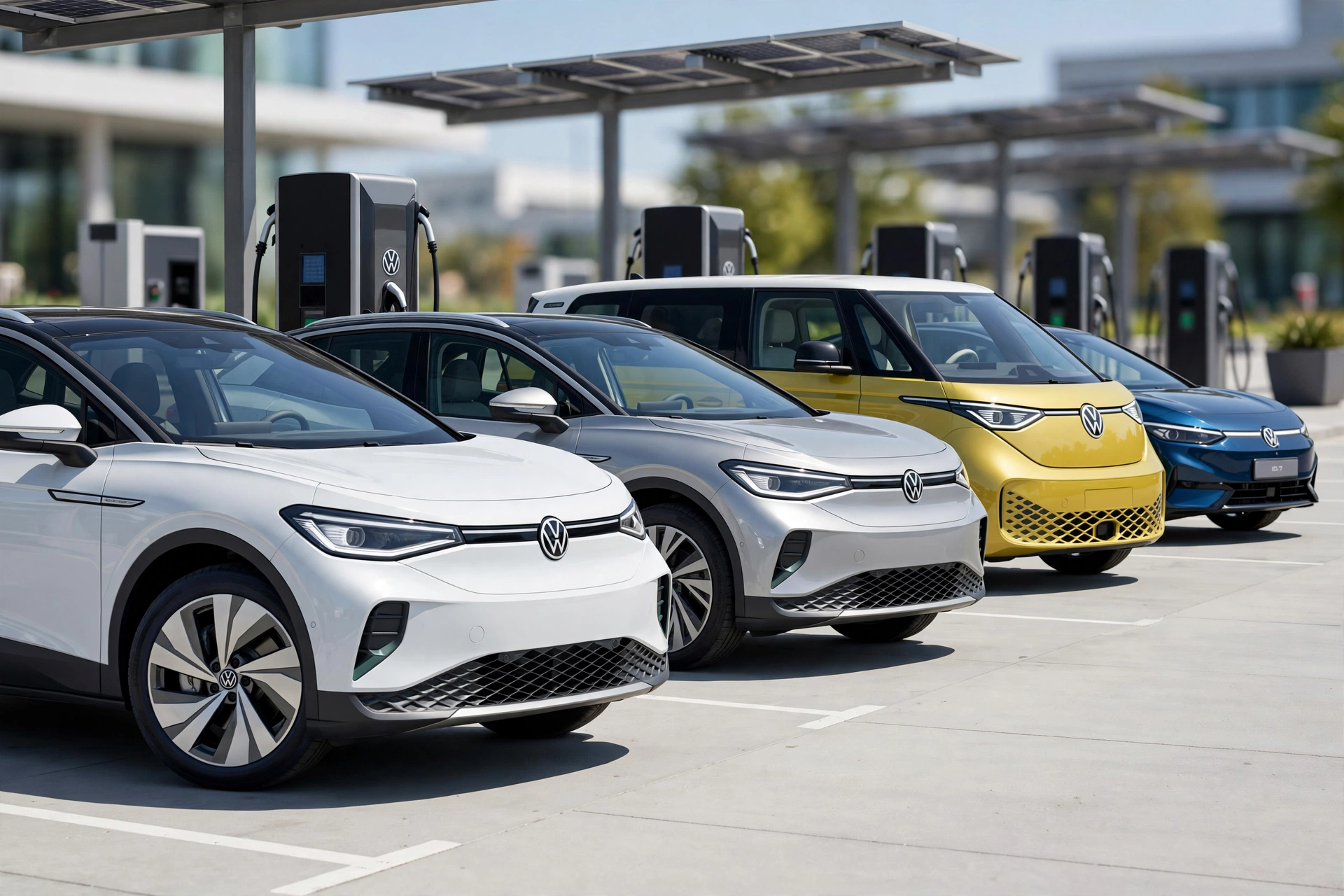
Volkswagen electric cars are based on the expanding ID family for different driver profiles. The ID.4 is a functional EV, the ID.5 is a sportier design and the ID.5 is a sportier version. The ID.7 passenger car is targeted at long distance travel with a superb consideration for comfort, while Buzz is all about passenger and cargo space. As a whole, they demonstrate VW’s commitment to everyday usability, comfort, and utility and how these are being transferred to battery electric power.
When it comes to electric Volkswagen, the advertised range is just one factor to consider. Ownership experience is influenced by charging access, battery size, driving conditions, purchase price, maintenance and electricity costs. For those who are able to plug in at home and have a fairly consistent daily commute, an ID model can be a more convenient way to travel than a gas-powered car. But, if users travel long distances frequently, they should consider charging stations and range in real-world scenarios.
Understanding Volkswagen’s ID Electric Lineup
To get a grip on Volkswagen’s ID Electric Lineup. It is best to observe the functions that each model is intended to perform in order to fully understand the ID family. The ID.4 is the all-purpose family SUV, and the ID.5 will be based on the same platform, but made in a more coupe-inspired form. The ID. The Buzz is for families where there is a need for maximum interior flexibility, while the long-distance driving efficiency, comfort and convenience are emphasized in the ID.7.
Volkswagen’s electric vehicles provide consumers with greater options than a plug-in and gas power choice. Drivers can select according to the sizes, range, passenger capacity and driving requirements. A buyer can check out Volkswagen’s lineup of the ID electrics and compare the different options and models in his market.
Volkswagen ID.4
The ID.4 is one of the easiest to understand ID models for traditional Volkswagen owners – its SUV shape and five-seater are familiar. The ID.4 Pro has a maximum EPA range rating of 291 miles, and for extra traction, the ID.4 Pro is available with all-wheel drive, which delivers better acceleration. It offers a convenient range of options, generous cargo space, and enough room for the family, making it a great choice for everyday use.
The charging process is also easy if it has the necessary equipment. Owners can charge at home overnight and DC fast charge can be used for longer trips. The charging speed is determined by version, charger and battery condition. The ID.4 might be much easier to live with for buyers who can charge at home than one who can’t do so.
Volkswagen ID.5
Much of the basic technology of the ID.4 is shared by the ID.5, but it’s a sleeker roofline and coupe-shaped body style. It comes in various battery and powertrain options – such as larger battery packs and all-wheel drive – depending on the market. It’s a design that appeals to those looking to purchase an electric SUV but have a preference for something with a more sporty look.
The ID.5 can also provide good charging capability, with the higher-specification model being able to charge rapidly under conditions that are suitable. It offers some of the features of the smaller and more practical ID.4 but is still bigger and more comfortable to ride in than the ID.7. Availability and specifications differ from country to country, please refer to Volkswagen information in your country.
Volkswagen ID. Buzz
The most unique is the Buzz which features a van-style design to allow for the most space inside. Depending on configuration it can offer 3 rows of seating and a fair amount of cargo space. Its generous cabin layout makes it particularly appealing to larger families, and modern amenities like smartphone connectivity, USB-C charging ports and the available premium fittings make it a nice addition.
The ID. Buzz also has DC fast charging, which Volkswagen states will take about 26 minutes, under suitable conditions, to charge from 10 to 80 percent, for a compatible version. Available all-wheel drive brings benefits to the performance, but on the large size and upright body, it is not as economical as the smaller ID models. To decide whether or not to purchase, buyers must weigh its great practicality against its energy-use.
Volkswagen ID.7
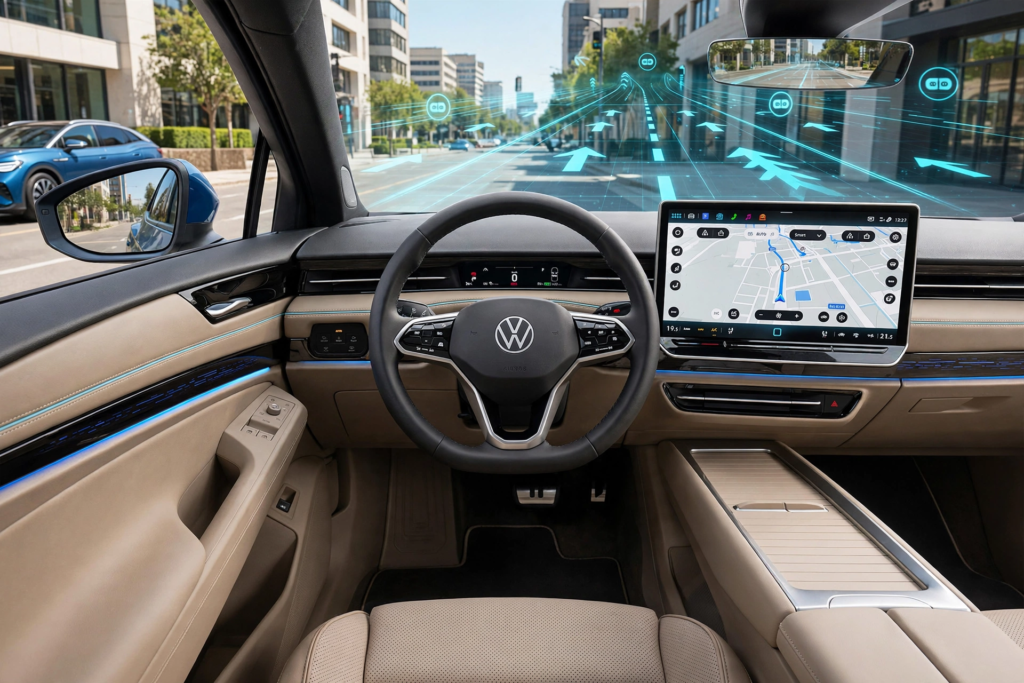
The ID.7 is an EV for drivers that seek an electric vehicle that is comfortable for long-distance driving. It is also aerodynamic, which increases efficiency, with options that allow for larger batteries for substantial driving range. WLTP ranges of over 350 miles are listed by Volkswagen for some of the ID.7 versions and in the markets. Real world range will depend on weather, traffic and speed and other factors.
One of the ID.7’s best features is its interior. It may include a large infotainment display screen, augmented-reality head-up display, advanced navigation, and high-quality seats and climate controls as per specification. That’s what makes the ID.7 one of the more suitable variants in the Volkswagen lineup for frequent long-distance driving, as it can achieve fast DC charging and replenish the battery by charging it up to a large degree within about half an hour under optimal conditions.
Battery Range and Charging
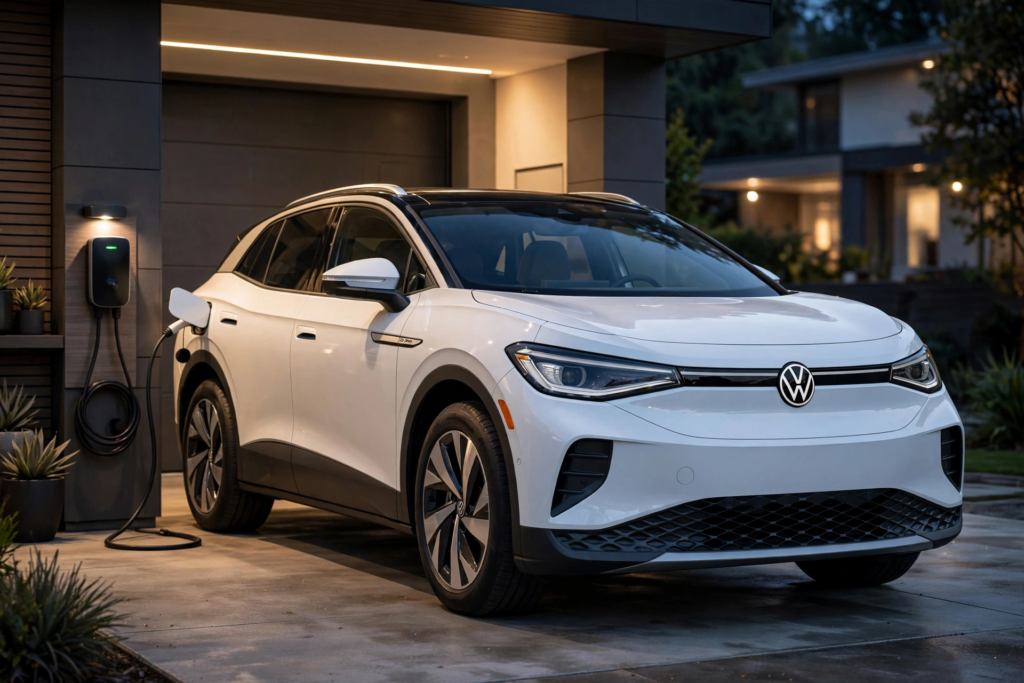
The true range of an electric range is not given by its official rating. The efficiency can be affected by highway speed, cold weather, hills, heavy loads, air conditioning/heating. So, an official range number should be seen as a comparative number rather than an actual distance. Long-range is a good feature to have and can be better than opting for the biggest battery that can be installed in a vehicle for normal daily driving.
It is easiest to charge at home. A wallbox can charge the vehicle in an overnight period, and public DC fast chargers work best for long trips. Charging speed is influenced by the vehicle, battery temperature, charger output and battery State of Charge. When the battery reaches its full charge, its charging rate tends to drop, so manufacturers usually specify charging times after 10 and 80 percent.
Interior Technology and Comfort
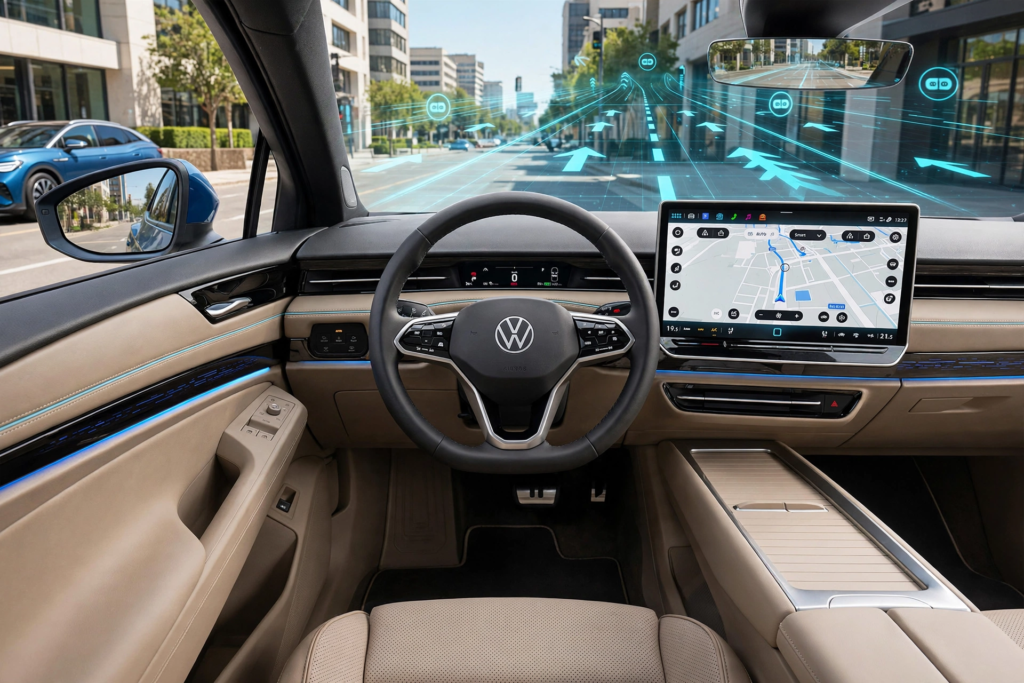
Depending on the model and trim, the ID models feature modern digital interiors, including touchscreen infotainment, digital displays, smartphone connectivity, navigation, wireless charging and voice controls. The ID.7 pushes the technology one step further, offering a large display and optional head-up display. The ID.4 and ID.5 offer a simpler interior design for an SUV look, and the ID. Buzz has a strong focus on space and flexibility.
The low positioning of the battery under the vehicle also makes it possible to utilize the interior space differently in the case of electric platforms, as Volkswagen does in its compact Golf. The ID.4 features helpful seating for five passengers, and the ID. Buzz offers much more family space. Featuring a long wheelbase and an accommodating cabin, the ID.7 is especially well fitted for those who spend much of their time driving.
Safety Features
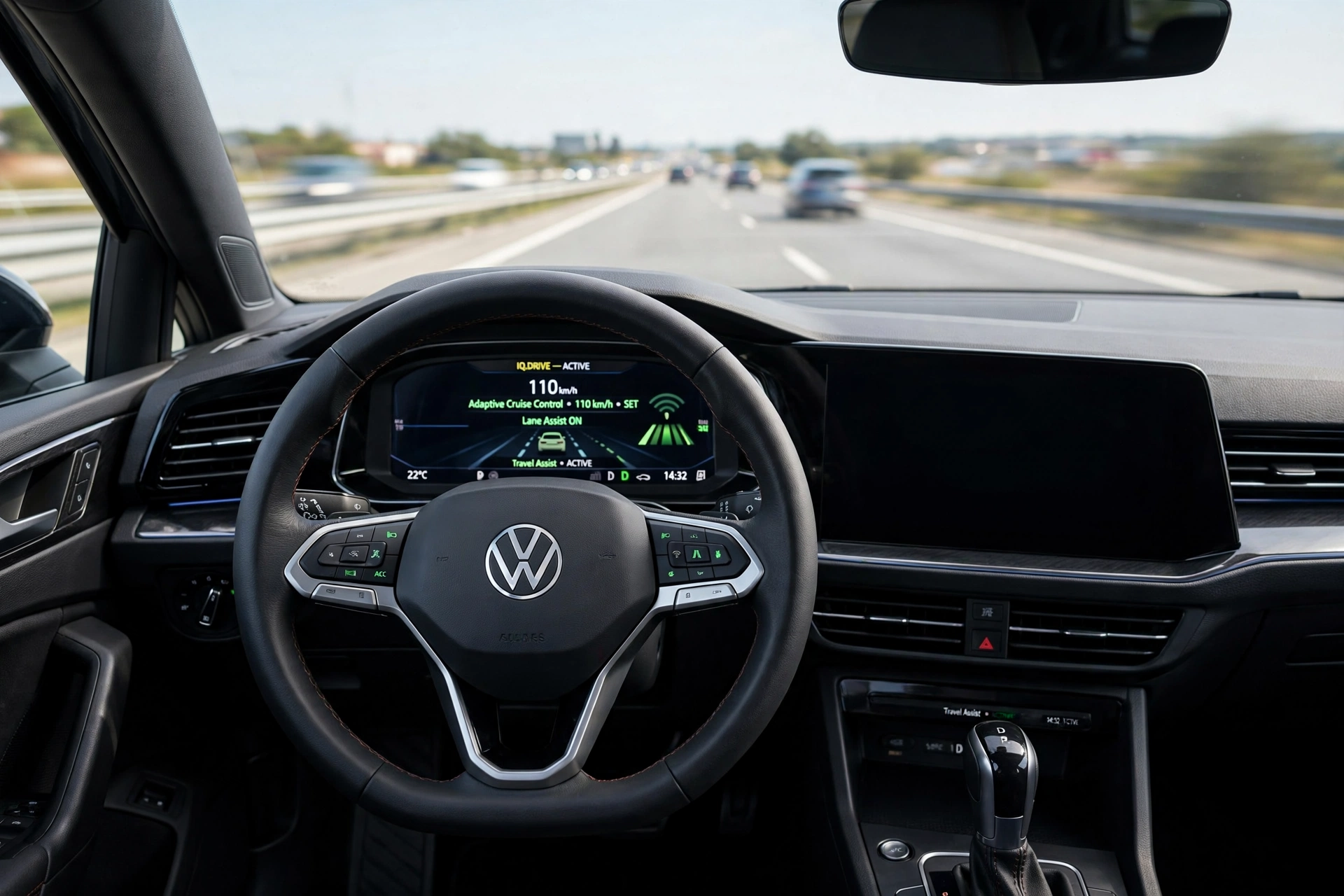
The ID models have several driver-assistance technologies from Volkswagen. These can range from adaptive cruise control, lane assistance, blind-spot monitoring, parking assistance, cameras and emergency braking systems. The more expensive models may come with more sophisticated options like Travel Assist and 360-degree camera systems.
These technologies must support driver’s attention and not supplant it with the driver’s. There are also variations in equipment across countries and trims, so prospective buyers should confirm that the specific trim and model they are interested in is the one they are looking for. Safety technology can be a big plus, but it shouldn’t be considered in isolation of crash test results or standard equipment.
The Cost of Ownership Comparable to Gasoline Cars
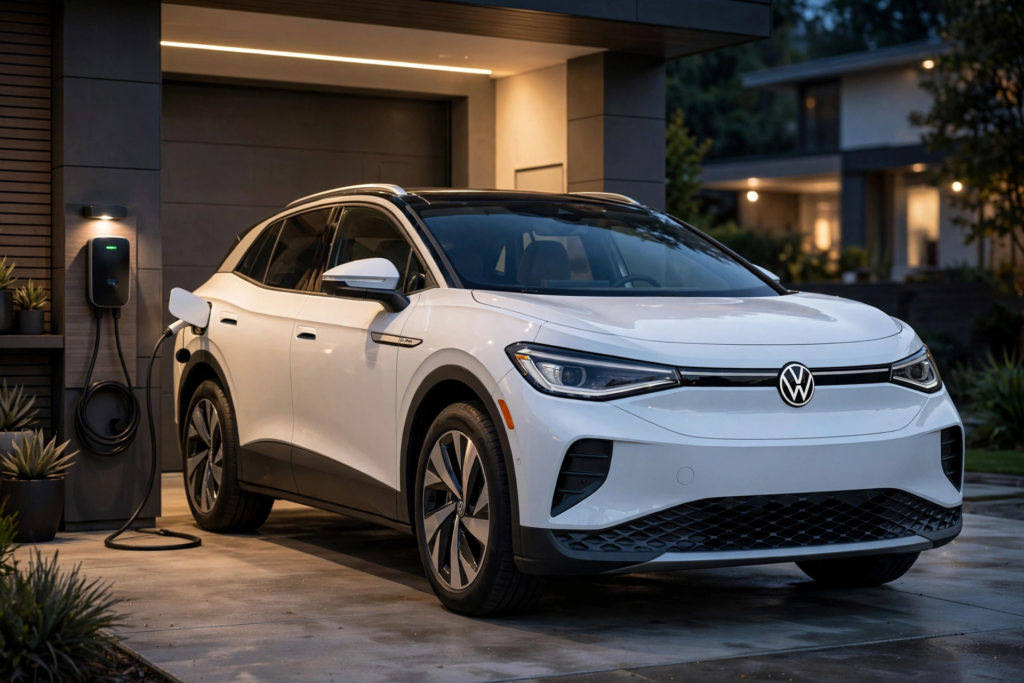
Since there are no gasoline engines, oil changes, spark plugs, or conventional exhaust systems, some of the routine maintenance costs of an electric vehicle can be lessened. Regenerative braking also can decrease brake wear. But tires, suspension parts, cabin filters, brakes and other systems must be maintained regardless of whether a car is a hybrid, plug-in or an electric vehicle. Other factors like insurance, depreciation and financing can also make a significant impact on total ownership costs.
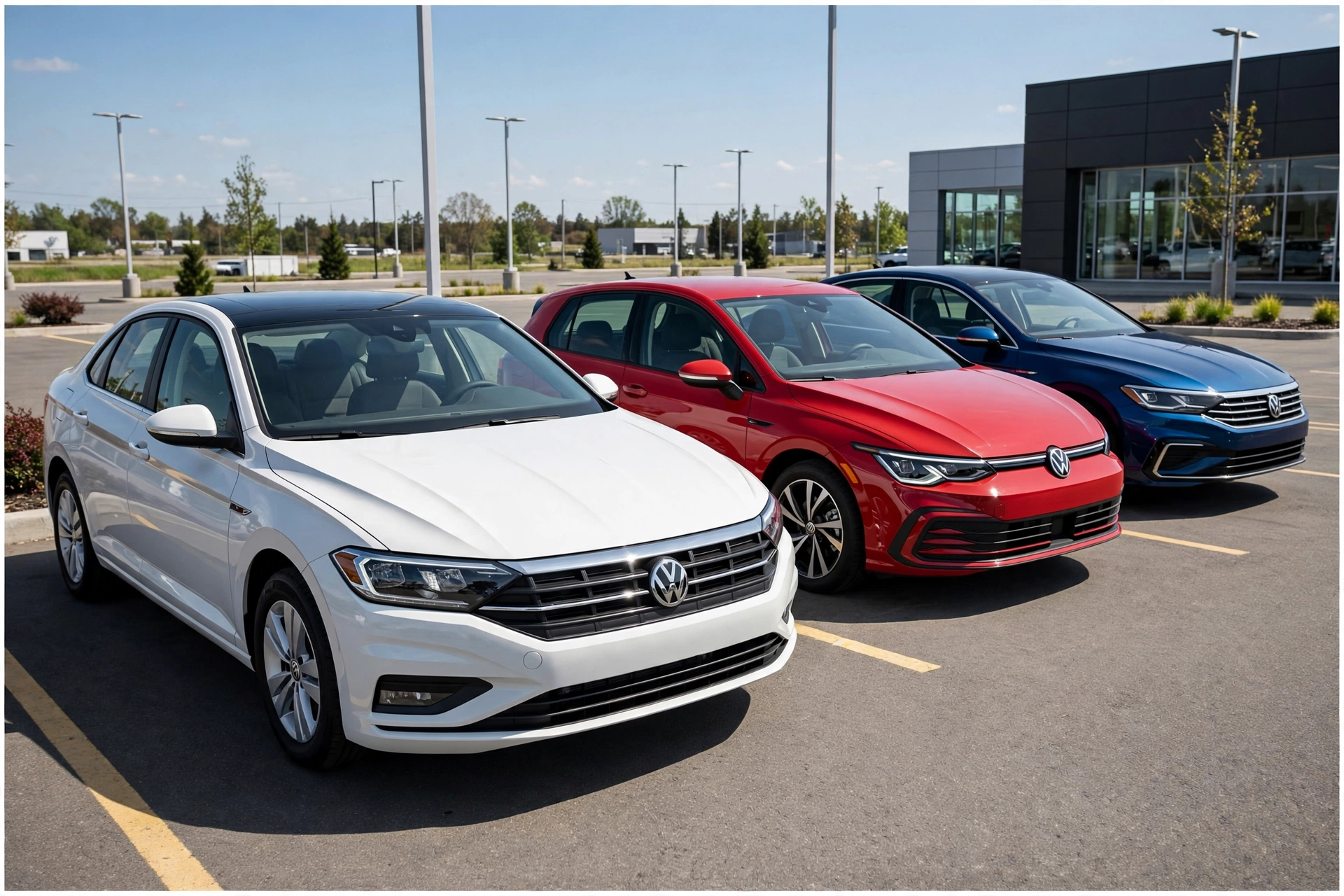
The price of the car you’ll pay upfront may be above an equivalent gasoline Volkswagen. To illustrate, the 2026 Volkswagen Tiguan begins significantly lower than the 2026 ID.4’s U.S. starting price. But if the price of electricity is not too high, and the owner spends the majority of their time at their home, the cost of an ID model is less per mile. Purchase price, fuel or electricity costs and maintenance and the expected resale value should therefore be part of the best comparison.
An ID model can be extremely useful for drivers who have charging at their home or workplace. The vehicle can be charged on the premises day by day, without needing to make regular visits to a fuel station. The ID.4 is ideal for daily family trips, whereas the ID.7 is more appropriate for frequenters of longer journeys. The ID. When it comes to space, buyers looking for a bit more room might want to opt for Buzz.
But when it comes to planning for an EV, that can be a little more complicated when your home doesn’t have charging infrastructure. If they use public charging only, they should be aware of the availability of chargers and the time required for charging, especially when traveling long distances. Range may be further decreased with weather conditions and driving speed. It’s important to note that it’s easy to check if there are charging stations along the street where you drive a lot before purchasing.
Conclusion
Volkswagen offers a variety of options to customers to get into electric driving with the ID family. The ID.4 is the practical all-rounder, the ID.5 provides a sportier alternative, the ID. Comfort and range are the themes of Buzz and the ID.7, respectively. These are all unique models and therefore selecting between these models will depend on budget, space requirement and driving practices.
An electric Volkswagen may be a viable option for drivers who can recharge at home, have regular daily commutes and desire reduced regular running expenses, as compared to a gas-powered vehicle. For those who do a lot of long-distance travel, or don’t have easy access to a charging station, however, it’s important to consider charging infrastructure and real-world range. In conclusion, the ID family demonstrates Volkswagen’s dedication to becoming a more serious EV player without compromising on the convenience and usability inherent to the brand.