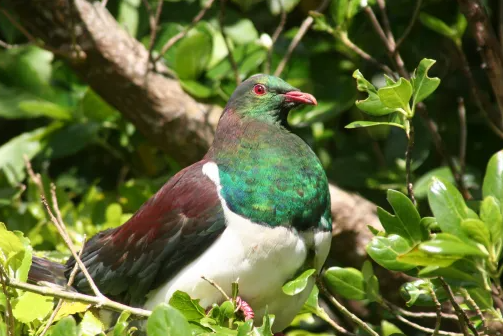
New Zealand’s seclusion generated something Darwin himself would have celebrated—a natural laboratory where birds developed without mammalian competition, acquiring habits and qualities inconceivable anywhere on Earth. Visitors visiting, anticipating normal avian encounters, find instead animals that break all ideas about what birds may become. NZ native birds survived predator-free settings for millennia, evolving in ways evolution never followed on continents populated by mammals. The kiwi walks as a flightless forager; the kakapo stays an earthbound parrot, defying what humans know about parrots; and the tui emits sounds no other songbird generates. Understanding what these species indicate about evolution and survival gives perspective, changing how people view existence itself.
Evolution Without Mammalian Pressure
New Zealand’s isolation meant birds filled ecological niches and mammals occupied everywhere else on Earth. Predatory birds evolved smaller; flightlessness became advantageous rather than suicidal, and massive birds dominated forests. The moa grew enormous without predation pressure forcing concealment. The kiwi adopted nocturnal ground-foraging, unimaginable on continents where mammals hunted relentlessly. Takahe became flightless rails, seemingly impossible survivors in ecosystems where mammals would eliminate vulnerability instantly. Each adaptation reveals how mammal presence fundamentally constrains avian evolution, limiting birds towards flight efficiency. New Zealand proves what birds become when mammalian competition disappears, revealing evolution’s alternative pathways everywhere else suppressed.
Behaviour Rewrites Known Patterns
NZ native birds demonstrate behaviours contradicting fundamental assumptions about bird nature across the globe. The kiwi forages are like nocturnal mammals, using vibration sensors and earth-digging capabilities more mammalian than avian. The kakapo performs elaborate ground-based lekking rituals unheard of among parrots elsewhere. Penguins in New Zealand waters display hunting sophistication comparable to marine mammals. Fantails show boldness around humans, suggesting a different risk calculation than shy forest birds elsewhere. Tuis produce metallic sounds deeper and stranger than any songbird visitors encounter in European woodlands. These behaviours reveal how environmental absence reshapes not just physical form but fundamental personality, suggesting bird nature itself remains plastic where external pressures allow alternative expression.
Ecological Role Transformation
Native birds provide responsibilities that are missing from contemporary ecosystems elsewhere on Earth. Bellbirds pollinate native flowers using feeding techniques developed over millennia of undisturbed coevolution. Fantails manage insect populations by predatory aggressiveness and systematic coverage patterns. Pigeons disseminate seeds across forests in the absence of competing animal dispersers. Each species symbolises thousands of years of ecological integration, during which plant communities developed blooming periods, fruit traits, and development strategies based on avian contact. Disrupting these birds upsets whole forest systems, demonstrating how intimately native species are intertwined with landscape function. Understanding this interconnectedness explains why conservation is a survival strategy rather than an aesthetic indulgence.
Vulnerability Beneath Adaptation
The very characteristics making NZ native birds remarkable create catastrophic vulnerability when introduced predators arrive. Flightlessness became evolutionary success until cats and rats arrived. Ground-nesting became viable without mammalian predators until stoats and possums invaded. Low reproductive rates were sustainable without predation but became extinction sentences under sustained hunting pressure. Native birds evolved assuming ecological permanence that introduced species shattered instantly. Kakapo numbers collapsed within decades despite living thousands of years. Takahe vanished from known existence, reappearing decades later only through unprecedented conservation effort. This vulnerability reveals how specialisation creates strength until environments change, demonstrating nature’s fundamental uncertainty.
Coevolution Precision
Native forests structure themselves around bird presence, revealing millions of years of coevolutionary refinement. Tree species flower at specific seasons when birds require food. Fruit characteristics evolved matching bird preferences and digestion abilities. Understory plants depend on specific dispersal mechanisms. Remove native birds and forests reorganise themselves gradually, becoming different ecosystems adapted to alternative pollination and seed distribution mechanisms. This interdependence demonstrates how evolution creates systems of breathtaking precision that appear simple until examined closely. Each species depends on dozens of others in chains of causation stretching across entire ecosystems.
Scientific Significance
Scientists studying native birds unlock principles about evolution, adaptation, and ecological function impossible to investigate elsewhere. Island biogeography theory developed partly from New Zealand research. Flightlessness evolution, body size determination, and predator-prey interaction patterns emerge clearly from native species. Understanding bird diversity without mammalian competition reveals how different Earth would appear if continental evolution followed alternative pathways. Research findings reshape understanding of fundamental biological principles across all species.
Conclusion
Understanding NZ native birds transforms perspective on evolution itself, revealing nature’s creative potential when environmental constraints lift. These species represent not curiosities but profound demonstrations of how life adapts to radically different circumstances. Protecting them protects knowledge about life’s fundamental plasticity and evolutionary possibility across all species.