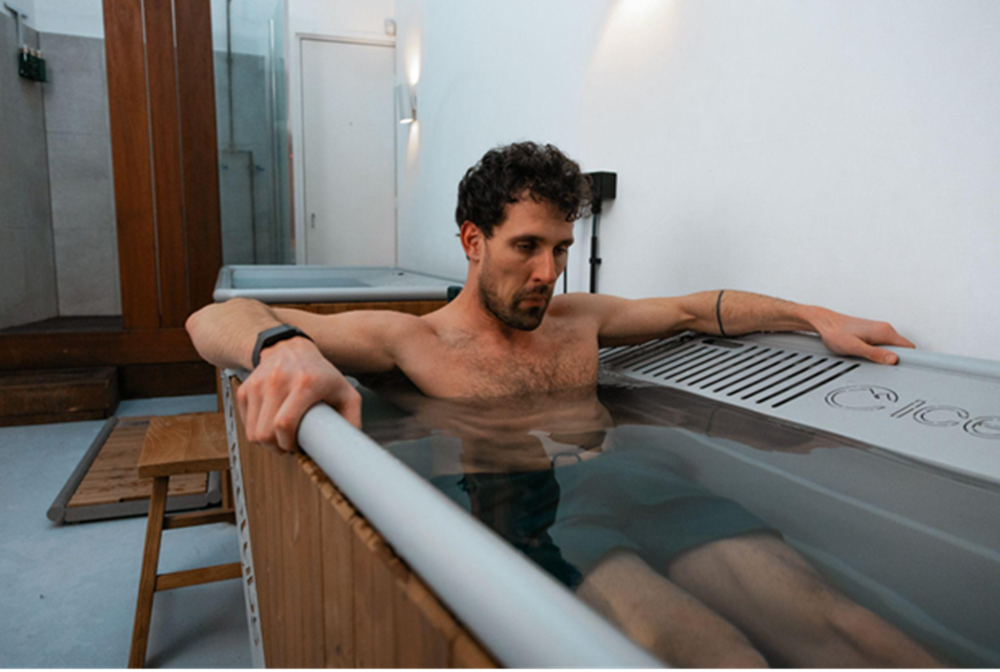
There is a reason people keep returning to cold water, heat, and the rhythm between the two.
Not because the idea is new.
Cold plunges, saunas, and contrast therapy have been part of wellness cultures for generations. Nordic sauna traditions, Japanese bathhouses, and modern recovery spaces all understand the same principle: the body responds deeply to temperature.
What feels different today is how people use it.
You may come to cold and heat after a session that left your legs heavy and your mind still racing. Or after a flight that drained you before the meetings even started. After a week where the only real silence was in an elevator, or between sets.
Recovery used to mean rest. Now it has to fit between things and still work.
Cold brings focus.
Heat creates release.
The real value is in moving between both: reset, release, and repeat.
The Rhythm Between Reset and Release
Contrast therapy is the practice of moving between hot and cold exposure, such as going from a sauna into a cold plunge. Cold therapy uses cold exposure on its own. Contrast therapy brings both sides together.
The appeal is not only the temperature change. It is the shift.
Heat slows the pace down.
Cold brings the body back into alertness.
Rest gives the system time to settle.
Heat also encourages blood vessels to widen, while cold encourages them to narrow, making the contrast feel deeply physical.
The body may not separate pressure as neatly as your calendar does. Training, travel, and back-to-back decisions can leave the same residue: tight shoulders, a restless mind, and a body that still feels “on.”
That is where the rhythm becomes useful: activation, release, recovery.
The Hot and Cold Shift
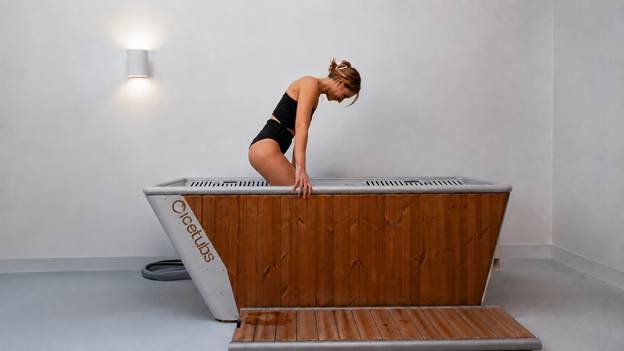
Cold exposure creates an immediate response.
Breathing changes.
Attention sharpens.
The body reacts to a controlled stressor.
The value is not in making the cold extreme. It is in learning how to stay calm while the body is asking you to react.
This is why deliberate cold exposure has become part of modern recovery conversations. Huberman Lab has helped bring it into the mainstream as a tool for alertness, mood, focus, and resilience, often referencing around 11 minutes of deliberate cold exposure per week, split across short sessions.
The response is measurable too. In a study by Šrámek and colleagues, cold-water immersion increased plasma noradrenaline by 530% and dopamine by 250%, two chemicals linked with alertness, motivation, and stress response.
Cold can feel like a reset because the body has genuinely shifted state.
Heat works differently. In a sauna, the body warms, muscles soften, and the pace slows down, signaling the body to release tension and move toward recovery.
Cold brings the body into attention.
Heat gives it space to soften.
Cold stays powerful because the effect can last beyond the plunge: a clearer head, a calmer system, and recovery that carries into the rest of the day.
This is where contrast therapy becomes useful:
- For recovery: cold exposure can help reduce perceived muscle soreness, while heat supports relaxation, blood flow, and muscle comfort.
- For mental load: cold can train breath control and composure under stress, while heat encourages the body to slow down.
- For sleep: heat helps the body relax before rest, while cold may support recovery and stress regulation. Timing matters, since cold can also increase alertness.
Hot and cold therapy should not replace professional medical or mental health support. But as part of a broader recovery routine, it gives your body a clear way to shift state.
Building a Routine Meant to Last
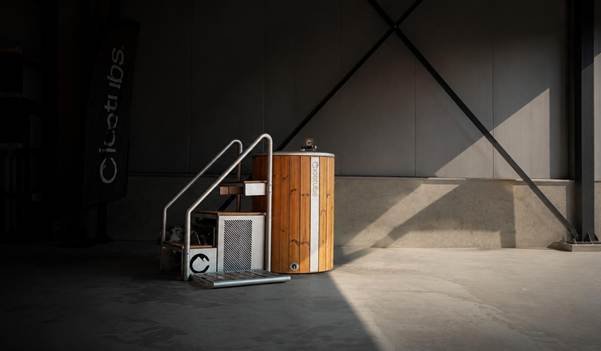
With an improvised ice bath, the routine often breaks before it begins.
You need ice, time to let it cool, and a tub to clean again afterward. Over time, that becomes friction.
This is where Icetubs is built differently: the cold side of contrast therapy only works if it’s ready when you are, not rebuilt every session.
The people who stick with this are not always the ones with more time. They are the ones who know recovery has to be ready.
Icetubs removes that friction through:
- Controlled temperatures from 3°C to 38°C, so you can move between cold exposure and warmer sessions without ice, weather, or guesswork.
- No repeated ice preparation, because the Icetubs Engine™ keeps the water cold and ready.
- App and Engine control, so you can adjust the temperature through the Icetubs app or the Engine’s control panel.
- Installation guidance through the Icetubs app, so setup and daily use feel easier.
- Ozone cleaning and replaceable 5-micron filters, so the water stays cleaner with less manual maintenance.
- Strong insulation and thermo covers, so the water temperature stays more stable, even when the Engine is not actively running.
- Premium Thermowood and stainless steel 304, chosen for strength, durability, and outdoor use. Thermowood is thermally treated to resist weather and rotting, while stainless steel 304 supports corrosion resistance and long-term performance.
The result is simple: the cold side of your ritual is ready when you are, and built to stay part of your routine.
Completing the Contrast Ritual with Heat
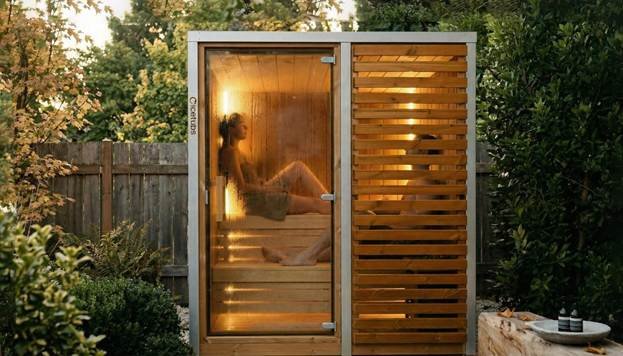
If cold brings the reset, heat brings the release. Sauna 2.0 completes the ritual with warmth that feels intentional, consistent, and built for regular use.
It is built as a Finnish-style electric sauna for private or light professional wellness spaces, with:
- Prefab Thermowood cabin, suitable for indoor or outdoor installation.
- Stainless steel detailing, designed to support durability over time.
- Temperatures up to 90°C, giving you warmth, release, relaxation, and recovery.
- Two heater options, depending on how connected you want the ritual to be: Harvia Cilindro 9 kW for direct mechanical control, or HUUM STEEL 9 kW for WiFi and app access through the UKU Glass panel.
One keeps the ritual hands-on. The other makes it more connected.
A session of around 10 to 15 minutes is a common starting point, depending on temperature, hydration, experience level, and overall health.
The Finnish Kuopio sauna study, published in JAMA Internal Medicine, found that sauna bathing 4 to 7 times per week was associated with a 40% lower risk of all-cause mortality compared with once-weekly sauna use. It does not turn sauna into a cure, but it shows why heat continues to be studied.
When both sides are ready, contrast therapy becomes easier to repeat.
Cold is ready when you are. Heat has its place. Together, they become one complete ritual.
One Ritual, Two Temperatures: The Icetubs Recovery Ecosystem
If you want both sides of contrast therapy ready from the start, the Contrast Therapy Bundle brings together IceBarrel and Sauna 2.0 in one setup, with 24/7 filtration on the cold side and Finnish-style warmth up to 90°C on the heat side.
It is trusted well beyond home wellness, from champions like Rico Verhoeven and Kjeld Nuis to thousands of executives and professionals who have made Icetubs part of how they recover, reset, and perform.
The rhythm is simple:
- Heat first, to warm the body, slow the pace, and prepare for release.
- Cold after, to bring the body back into focus with controlled cold exposure.
- Rest at the end, to let the body settle before you return to the day.
To keep the routine safe and manageable:
- Start short. Two to three minutes in the ice bath can already be enough for beginners, especially at a manageable temperature between 7°C and 15°C.
- Choose control over extremes. A colder setting does not mean a better session. The goal is to activate your body’s stress response, not push past it.
- Build consistency, not heroics. Aim for a routine your body can return to, with rest, hydration, and gradual rewarming after cold exposure.
Together, the cold and heat sides turn contrast therapy from an occasional spa experience into a recovery ritual built into everyday life.
If you are building a hot and cold routine for the first time, download the Icetubs Contrast Therapy Guide for science-backed benefits, beginner routines, hydration tips, and safety reminders.
The Future of Everyday Recovery
Cold and heat have always belonged together.
One activates. The other releases. Moving between both creates a rhythm your body can return to.
That is where Icetubs fits in: not another step to manage, but a recovery setup already prepared for you.
Because recovery should not feel improvised.
It should feel ready.
Sources
- Huberman Lab — deliberate cold exposure protocol (approx. 11 minutes/week), drawing on research by Dr. Susanna Søberg: https://www.hubermanlab.com/newsletter/the-science-and-use-of-cold-exposure-for-health-and-performance
- Šrámek, P. et al. (2000), “Human physiological responses to immersion into water of different temperatures,” European Journal of Applied Physiology, 81(5), 436–442: https://pubmed.ncbi.nlm.nih.gov/10751106/
- Laukkanen, T. et al. (2015), Kuopio Ischaemic Heart Disease Study, JAMA Internal Medicine — sauna bathing frequency and all-cause mortality: https://jamanetwork.com/journals/jamainternalmedicine/fullarticle/2130724