In today’s competitive cosmetic industry, delivering flawless, long-lasting eyebrow tattoos isn’t just a skill—it’s a business imperative. Clients expect natural-looking results that hold their color and shape for years, and your reputation depends on consistently meeting those expectations. Yet many cosmetic tattooists struggle with inconsistent outcomes, often tracing the problem back to subpar PMU ink and improper tool selection. Fading pigments, uneven color distribution, and premature migration can undermine even the most skilled technician’s work.
This article provides expert guidance specifically for eyebrow specialists seeking to elevate their craft. You’ll learn how to select the best PMU ink based on composition and safety standards, identify essential microblading tools and supplies that support precision work, optimize tattoo machine performance for flawless application, and integrate all these elements into a cohesive step-by-step workflow. Whether you’re refining an established practice or building your toolkit from the ground up, the insights ahead will help you achieve superior, repeatable results that keep clients coming back.
The Critical Importance of Choosing the Best PMU Ink
The ink you deposit into a client’s skin determines everything that follows—how the brows look on day one, how they heal at week two, and whether they still appear natural at year three. High-quality PMU ink maintains its intended hue throughout the healing process and resists the warm or cool shifts that leave clients dissatisfied. When pigment composition is formulated with stable iron oxides and organic colorants in the correct ratios, you get predictable fading that remains flattering rather than turning orange, grey, or blue over time.
Pigment composition is your first evaluation criterion. The best formulations use micronized particles that disperse evenly in the dermal layer, preventing patchy retention. Beyond chemistry, regulatory compliance matters enormously. Inks that meet FDA guidelines or carry EU REACH certification have undergone rigorous testing for heavy metals, allergens, and microbial contamination. Brand reputation reinforces these assurances—established manufacturers like Biomaser invest in batch consistency, meaning the bottle you open today performs identically to the one you used last month.
The contrast between premium and budget inks becomes painfully visible during healed-result photos. Low-quality pigments often contain fillers that dilute color intensity, forcing technicians to overwork the skin in an attempt to achieve saturation. This trauma leads to scarring, poor retention, and unhappy clients who won’t return. Conversely, concentrated, well-formulated inks require fewer passes, reduce skin damage, and heal with crisp, true-to-tone color. Investing in superior PMU ink isn’t an added expense—it’s the foundation that protects your skill, your client’s skin, and your professional reputation simultaneously.
Essential Microblading Tools and Eyebrow Tattoo Supplies
Even the finest PMU ink cannot compensate for inadequate tools. The precision required for natural-looking eyebrow tattoos demands a carefully curated toolkit where every component works in harmony—from the blade that creates each hair stroke to the aftercare products that protect the finished work. Many technicians invest heavily in pigments while overlooking the supporting elements that determine whether that pigment lands exactly where intended, at the correct depth, with consistent saturation. Understanding what belongs in your professional arsenal and why each item matters will eliminate guesswork and elevate your procedural confidence.
Selecting the Best Microblading Tools for Precision Work
Blade selection shapes every stroke you create. U-shape blades excel at producing curved, natural hair strokes, while nano blades offer ultra-fine lines ideal for clients wanting a subtle, hyper-realistic finish. Handle ergonomics deserve equal attention—a well-balanced handle with appropriate weight reduces hand fatigue during lengthy sessions and improves directional control. Look for medical-grade stainless steel construction that maintains edge sharpness throughout the procedure. Disposable blades eliminate cross-contamination risks entirely, making them the standard for client safety, though reusable handles paired with single-use cartridge blades offer a cost-effective middle ground without sacrificing hygiene. Before each appointment, test your blade on practice skin to confirm consistent ink flow and stroke crispness, and never continue working with a blade that shows any resistance or dragging.
Comprehensive Guide to Eyebrow Tattoo Supplies
Beyond blades and ink, your supply inventory should include topical numbing creams formulated specifically for PMU procedures to manage client comfort without affecting skin texture or pigment absorption. Sterilization equipment—an autoclave for reusable components and medical-grade surface disinfectants—forms your non-negotiable safety baseline. Mapping tools such as calipers, brow rulers, and pre-inked thread help you design symmetrical arches before any pigment touches skin. Aftercare products including barrier creams, gentle cleansers, and healing balms directly influence retention outcomes, so recommend only formulations free from petroleum and fragrances that could pull pigment during the healing phase. Keeping organized, fully stocked supply stations means you never compromise mid-procedure.
Mastering Precision with Tattoo Machine Performance and Needles
Achieving crisp, natural-looking eyebrow tattoos requires more than steady hands and quality ink—it demands equipment calibrated to deliver pigment at precisely the right depth, speed, and consistency. Your tattoo machine and needle configuration function as the bridge between your artistic vision and the client’s skin, and even minor misalignments in this system produce visible flaws. A needle penetrating too deeply causes excessive bleeding that pushes pigment out, while insufficient depth results in surface-level deposits that disappear within weeks. Mastering the interplay between needle selection and machine performance gives you repeatable control over every stroke and shade you create.
Understanding and Choosing Precision Tattoo Needles
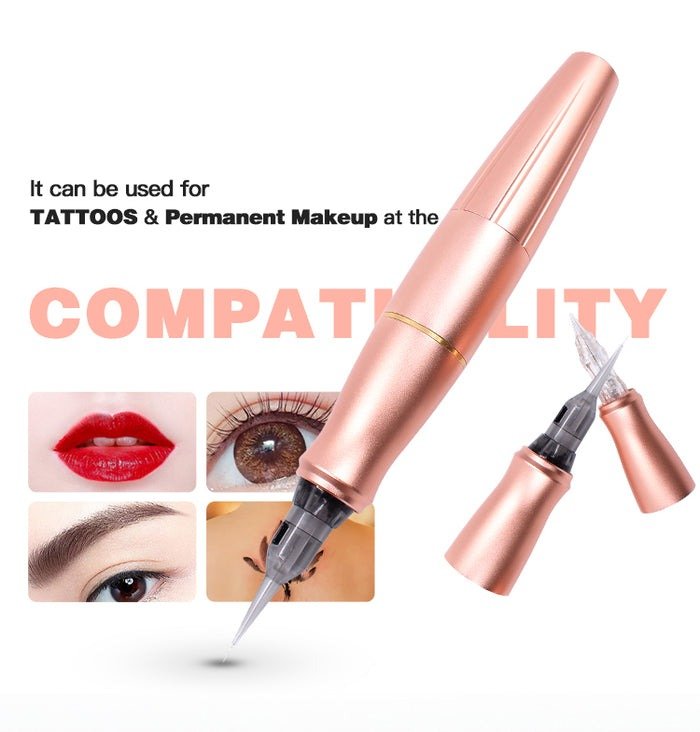
Needle configuration directly dictates stroke character. Round liner needles grouped in tight formations of three or five pins produce the fine, defined lines essential for individual hair strokes in microblading and machine hair-stroke techniques. Magnum configurations, where needles are arranged in wider flat or curved groupings, distribute pigment across broader areas and excel at powder brow shading and ombré gradients. Nano needles—single-point cartridges—deliver the thinnest possible lines for hyper-realistic work on clients with fine natural brow hairs. When selecting needle size, consider skin type carefully: thicker, oilier skin tolerates slightly larger groupings that deposit more pigment per pass, while thin, sensitive skin responds better to smaller configurations that minimize trauma. Always match your needle taper—long tapers penetrate gradually and suit detail work, while short tapers provide more ink flow for saturation fills.
Optimizing Tattoo Machine Performance for Flawless Application
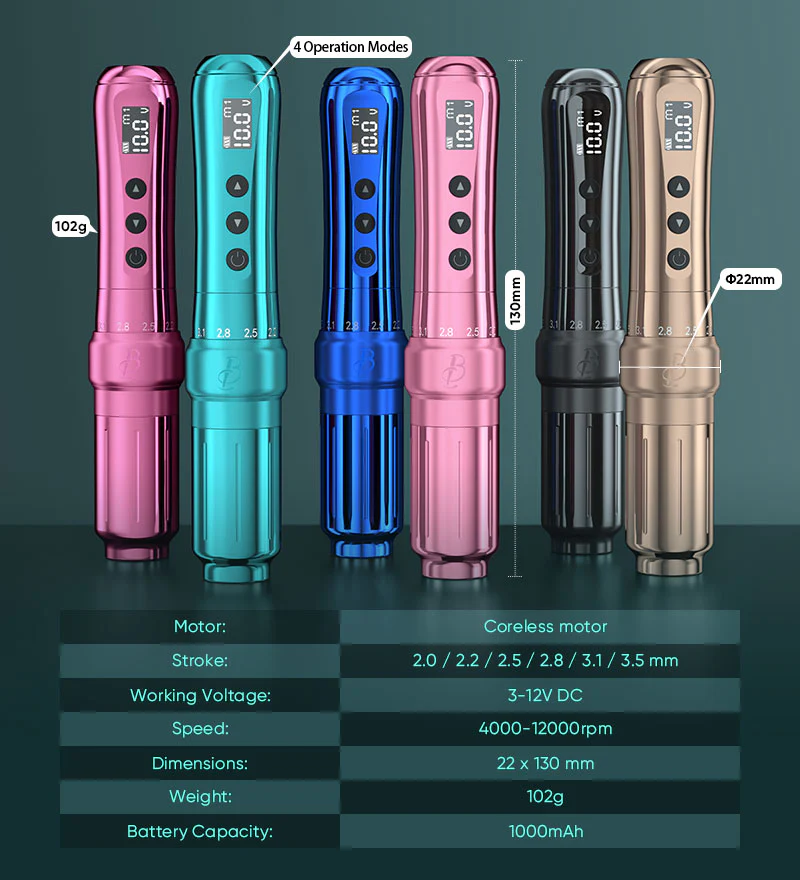
Rotary machines dominate modern PMU work because they offer quiet operation, lighter weight, and adjustable stroke lengths that accommodate both hair strokes and shading without switching devices. Many professionals rely on trusted rotary pen machines from brands such as Biomaser for their consistent motor performance and ergonomic design during extended sessions. Set your voltage between 5V and 7.5V for most brow procedures—lower settings suit delicate hair-stroke passes, while slightly higher voltage supports powder fill techniques where consistent saturation matters. Stroke length, typically adjustable between 2.5mm and 3.5mm for PMU, controls how far the needle travels and therefore how much pigment enters per cycle. Maintain your machine by cleaning the motor housing after each session, lubricating moving parts weekly, and replacing grip sections that show wear. A well-maintained machine delivers uniform needle speed that prevents uneven pigment deposit, reduces client discomfort, and extends the life of your investment. Test your settings on practice skin before every appointment to confirm that ink flow, penetration depth, and stroke consistency meet your standards for that specific procedure.
Step-by-Step Solution: Integrating Ink, Tools, and Techniques for Superior Results
Knowing your materials individually isn’t enough—the magic happens when you integrate ink selection, tool preparation, and machine technique into a seamless workflow tailored to each client. The following five-step process transforms scattered knowledge into a repeatable system that produces consistently superior eyebrow tattoos while protecting both your client and your reputation.
Begin with a thorough pre-procedure assessment. Evaluate your client’s skin type, undertone, existing brow hair density, and lifestyle factors like sun exposure or skincare routines involving retinoids. These observations dictate your ink choice—warm undertones in the skin call for cooler pigment formulations to prevent orange healing, while clients with oily skin benefit from slightly more concentrated inks that resist sebum-driven fading. Simultaneously, select your needle configuration and blade type based on the desired outcome: hair strokes demand fine round liners or nano blades, while combination brows require both detail needles and magnum shaders ready on your station.
Next, execute your setup and sterilization protocol without shortcuts. Autoclave all reusable handles, lay out single-use cartridges and blades in their sealed packaging, and disinfect every surface your client or tools will contact. Dispense pigment into individual caps to prevent cross-contamination between colors or clients. Confirm your machine settings on practice skin, verifying that voltage, stroke length, and needle depth produce the expected ink deposit for today’s specific procedure type.
During application, work methodically from mapping to execution. Secure your symmetry guide using calipers and pre-inked thread, then have the client approve the shape before you begin. Start with structural strokes or outline passes at lower voltage to establish the framework, then build density or shading gradually. Wipe excess pigment frequently to assess true saturation rather than surface accumulation, and resist the temptation to overwork any area—multiple gentle passes always outperform aggressive single passes in both retention and healing quality.
Aftercare instructions must be specific and non-negotiable. Provide your client with a written protocol covering gentle cleansing twice daily, application of recommended barrier cream in thin layers, and strict avoidance of swimming, excessive sweating, and direct sunlight for at least ten days. Explain that proper aftercare preserves up to forty percent more pigment than neglected healing, making their investment worthwhile. Finally, schedule a follow-up evaluation at four to six weeks to assess retention, color accuracy, and any areas needing a touch-up pass. Document your ink batch, needle type, machine settings, and technique notes so you can replicate successes and adjust variables that underperformed. This feedback loop transforms each appointment into data that sharpens your future results.
Building a Complete PMU Workflow for Lasting Excellence
Superior eyebrow tattoo results stem from deliberate choices at every stage of your workflow. High-quality PMU ink with stable pigment composition and regulatory certification forms the non-negotiable foundation—without it, even flawless technique cannot prevent color shifts and premature fading. Equally important is building a complete toolkit of precision microblading blades, proper sterilization equipment, mapping instruments, and aftercare products that work together to support accurate pigment placement and optimal healing.
Your tattoo machine and needle configuration serve as the critical link between artistic intent and skin-level execution. Calibrating voltage, stroke length, and needle groupings to match each client’s unique skin type and desired outcome transforms inconsistent work into predictable excellence. By following the integrated five-step process—from pre-procedure assessment through documented follow-up—you create a feedback-driven system that improves with every appointment rather than relying on guesswork.
Elevating your practice isn’t about mastering one element in isolation. It’s the synergy between informed ink selection, purposeful tool curation, optimized machine performance, and disciplined technique that separates exceptional technicians from average ones. Commit to continuous learning, document your results meticulously, and let each session refine your approach. Your clients will notice the difference, and your reputation will reflect it.