Introduction
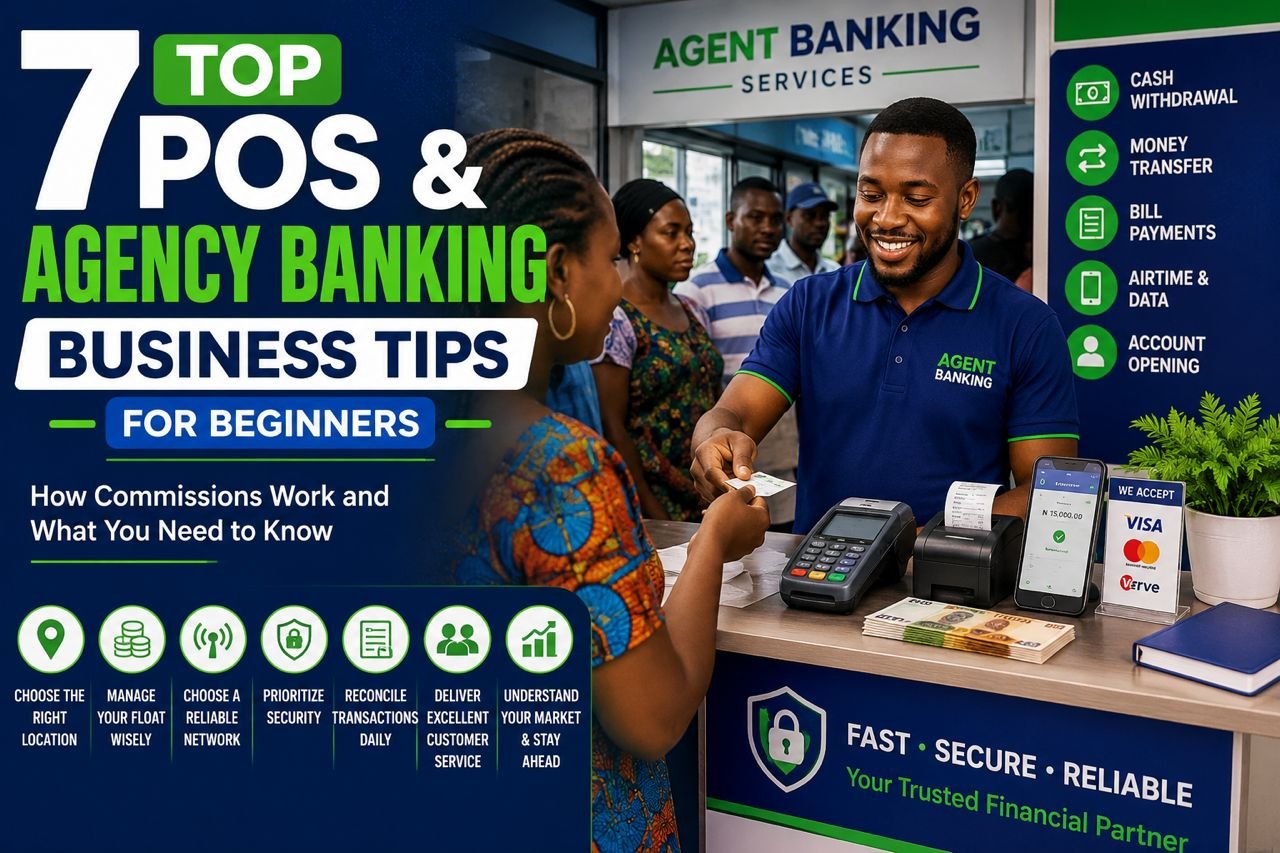
The Point of Sale (POS) and agency banking is a very fast growing segment of the small business world which we are seeing play out in countries that either still for the most part use cash for transactions or which do not have access to traditional bank branches. Every day we see thousands of customers going to POS agents to get cash out, send money, pay their bills, buy airtime or do other financial transactions which they would have had to travel great distances to do at a full service bank. This is a growing demand which in turn is what is motivating many entrepreneurs to look into this as a business play. But to start a POS outlet is not as simple as buying a terminal and opening up a shop. What determines success is an entrepreneur’s knowledge of how commissions are structured, choice of location, management of cash, choice of reliable service providers, security issues and also the quality of customer service. Those that enter the space with an understanding of these elements are better positioned to run a sustainable business which will do well even as competition increases. This article explains how the POS business models work, how agency banking generates its revenue and the practical steps every new player should be aware of before they invest.
Understanding the POS Business Model
POS companies’ model which is what we see today has for its players authorized agents which put in place basic financial services on behalf of licensed financial institutions. Instead of going to a traditional brick and mortar bank the customer can go to a nearby POS agent in their community. The agent uses a POS terminal which is connected to the bank’s network to carry out withdrawals, transfers, bill payments, airtime top ups and other financial transactions. Each transaction which the agent carries out is what forms his daily income. From the customer’s point of view the process may seem simple but the agent is in fact running a complex operation. He has to pay attention to cash flow, electronic float, transaction records, customer relationships and also is very much aware of the operational risks. This in turn gives would be agents a better picture of what is involved which is far from just handling money it is about delivering reliable financial services at the same time as being efficient, accurate and building trust in the community.
How POS Agents Earn Commissions
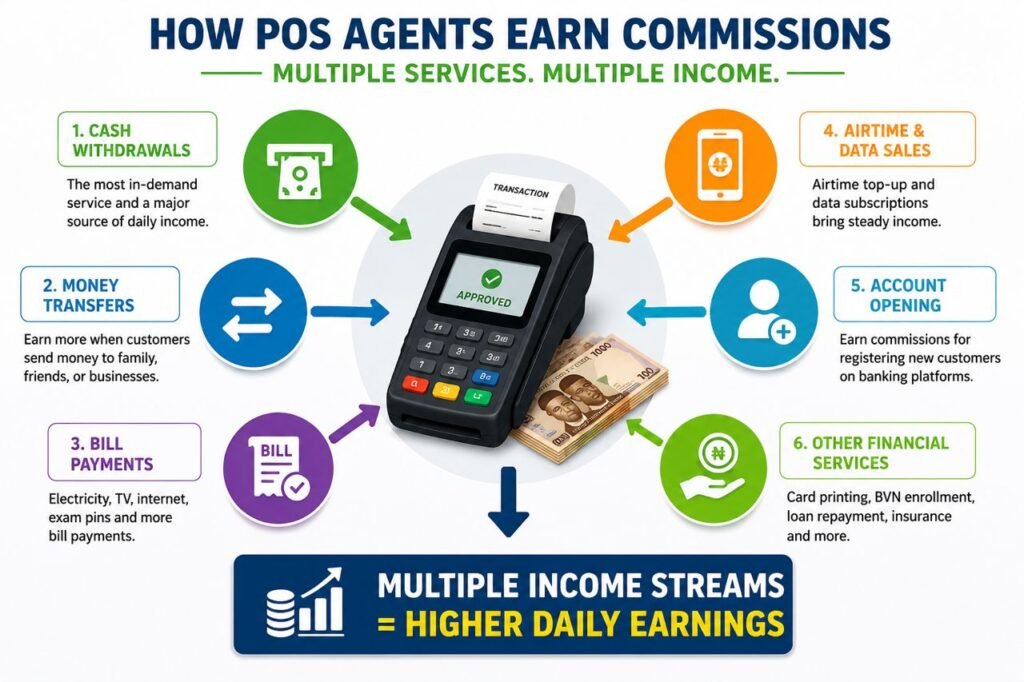
Many new players in the field think that each customer interaction is the same in terms of profit which is not the case for agency banking we see that commissions from transactions vary based on the type of service, the company’s pricing model, and what we charge the customer. Also we see that cash out is the main source of daily income as it is the most asked for service in most communities. Also money transfer services play a large role in our income, in particular when we have customers that are very regular in their practice of sending money to family, business, or supplier. We also get income from bill payment, airtime purchase, data subscription, account opening and other financial products made available through our agency banking platforms. What we have learned is that what brings in profit isn’t just about setting low fees but also having a high volume of daily transactions. A very active site that processes many transactions a day will do better in generating steady income as opposed to a less busy site that charges higher service fees. Also in building that which customers’ trust is as important as setting fair transaction charges because it is our repeat customers that are the base for our long term growth.
Tip 1: Choose your business location wisely.
Location is still a key element in the success of a POS business. While we may see very advanced equipment, it does not make up for low customer traffic or poor visibility. What we note is that successful players in the market have their businesses in places which see regular footfall for banking services, which include busy markets, transport hubs, residential areas, city centers, schools and universities, also areas which have little to no branch or ATM access. It is also at this stage that careful site selection pays off before you choose a location prospective business owners should spend time watching the flow of customers, looking at what the competition is doing, looking into the security issues present, and also what the demand is like at different times of the day. Also note that they look at how well neighboring businesses do at drawing in customers that require frequent cash transactions. A properly chosen location will in turn increase your transaction numbers, reduce customer acquisition issues, and improve overall profitability in the long term. As opposed to jumping into the first available space, smart entrepreneurs treat the process of researching the site as an investment in the health of the whole business.
Tip 2: Get to know Float Management first.
Float is a very complex yet very important element of what it takes to run a profitable POS business which many do not understand. By float we mean the electronic money in the agent’s account which is used for processing customer transactions, physical cash is required to cover withdrawal requests. What a successful agent has to do is to constantly play a game of cat and mouse with these resources throughout the day. At times we may have enough electronic balance but not enough cash which in turn means customers are unable to complete their withdrawals, at other times we may be sitting on too much cash which in turn leaves us unable to process transfers and deposits which could have been very profitable. Both of these scenarios are a turn off for customers and also present lost earning opportunities. New agents should pay close attention to transaction trends, predict peaks in demand, develop relationships with nearby banks or other agents for fast cash exchanges, and also try and avoid running out of either resource. What we see from those that do this well is that they earn the trust of their customers which in turn causes the customers to depend on the business for all their transaction needs. Over time with proper planning we see that such agents experience less interruptions and in the long run this translates to a very steady and consistent daily income.
Tip 3: Choose a good network provider.
The quality of the network which a POS terminal is connected to greatly impacts customer satisfaction and business reputation. Slow transaction processing, frequent outages, delayed reversals, or long down times can dissuade customers from return even when the agent is providing great service. When at the start of looking at what provider to go with it is to compare transaction success rates, customer support response time, settlement speed, device reliability, commission structures, maintenance services and also to look at what areas they operate in. Reading what experienced agents have to say and to get in touch with present operators will give you better practical info beyond what is put forth in marketing material. Some providers do very well in some regions and have issues in others. Thus research local markets instead of going off what is advertised. Reliable transaction processing decreases customer care issues, increases repeat business and protects the agent’s reputation. Consistency often becomes a bigger competitive edge then which provider has the lowest transaction fees as customer’s value dependability over small price differences.
Tip 4: Priotize your customers and business’ security.
Security must always be a priority in POS and agency banking which we see every day includes handling cash, electronic funds, and private customer info. We see that a single security issue may cause financial loss, break customer trust, and also damage the business’ image. At the start we advise to choose well lit areas with high human traffic, put in good quality locks, think about putting in surveillance cameras if at all possible, and do not display large sums of cash. We tell to make daily cash deposits a routine practice instead of keeping large amounts of cash on hand especially overnight. Also we have that agent’s do very careful customer transaction checks before finalizing them, protect PINs’ confidentiality, and do not share passwords or device access with unauthorized people. Also it is very important to be alert to fraud, fake alerts, and social engineering scams. We see that customers tend to return to businesses which they see as professional in how they handle money and personal info. By making security a day to day practice instead of secondary thought new entrepreneurs can reduce avoidable risks also they can build a trusted and respected business in their community.
Tip 5: Daily Reconciliation of Transactions.
Daily update is a very good practice for POS business owners which in turn help to identify errors before they turn into large scale financial issues. At the end of each work day agents should go over every completed transaction against their receipts, electronic records, account balances, and cash on hand. This step confirms that commissions have been put through correctly, that customer transactions went through as they should have, and also that there are no unexpected shortfalls or duplicate entries. Also at times we see technical issues, delayed settlements, or customer disputes which make accurate records a must when you are reaching out to customer support or sorting out disputes. We maintain a journal or digital accounting system which notes withdrawals, transfers, deposits, bill payments, commissions earned and daily expenses which in total give a better picture of business performance over time. Also consistent reconciliation helps to identify transaction trends, to predict cash needs, and to improve float management. Instead of seeing reconciliation as extra work we got agents to look at it as a key business practice which protects profit, improves financial discipline, and supports better decision making as the business grows.
Tip 6: Provide out of this world Customer Care to Grow Loyalty.
Competition in the agency banking sector is growing as we see more entrepreneurs set up POS terminals in busy areas. In many locations there are several players which have established themselves within a short walking distance of each other. In this environment what stands out is great customer service. We see agents greet customers politely, do transactions accurately, explain service fees clearly, and handle complaints with patience which in turn creates a positive customer experience. At the same time we may have network issues but what we do is keep the customer in the loop and handle the issue in a professional manner which in turn we prove our dependability and respect for the customer. Also we have clean and presentable business premises, well organized transaction records and the same agents open at the same times which in total build customer confidence. Also it is the loyal customers that often tell their friends, family, neighbors and business contacts about the good experience they had with a certain agent thus doing the marketing for us at no extra cost. While price is a factor, many customers will in fact go back to the agent that has proven to be honest, efficient and respectful. In the end we find that building long term relationships is just as important as increasing daily transaction volume.
Tip 7: Grasp Your Local Market and Outdo Competitors.
In each community financial practices, customer expectations, and degree of competition vary which is why it is critical to have local market knowledge for long term success. Before setting up a POS system begin by looking at the number of present agents, average transaction fees, customer demand at different times of the day, nearby businesses, and seasonal trends which play into cash flow. Instead of jumping into price based competition which may not be sustainable, which we see in the form of very low price points, successful players put in extra value through dependability, convenience, speed, professionalism and extended service options. In some communities longer business hours are a must, in others there is a great demand for fast service during peak business times. Also by paying attention to what customers are saying via reviews and feedback businesses can identify what they are doing well and also what they may be lacking in which maybe a gap in the market. By constantly looking at the market conditions entrepreneurs are better able to meet the ever changing needs of their customers, economic climate, and also tech changes. Continuous study and flexibility is what allows businesses to stay relevant as competition goes up and consumer expectations change over time.
Common Mistakes Beginners Should Avoid
Many POS systems which we see today are designed for the purchase of equipment but not for the management of the everyday issues that come with running a business. We see a great deal of failure due to entrepreneurs not fully understanding the extent of working capital required to keep the cash and electronic transactions flowing this results in frequent outages that our customers tell us about. Also it is very easy for a new business to pick a site just because of low rent as opposed to high customer traffic. Some new business owners also don’t put in place proper record keeping practices which in turn makes it hard to notice when we are losing out or to use that info to grow profit or sort out issues with customers. Also it is a very large issue that some don’t pay enough attention to security and put themselves at risk or they mix up personal and business finance. Not setting your fees in line with what your competitors are doing will also push away repeat customers. By identifying these problems early out new clients can build better structures, protect their investment, and do what is necessary to have a successful business that is a benefit to its customers for years to come.
Conclusion
POS and agency banking present great opportunities for entrepreneurs which at the same time require preparation, discipline, and a long term perspective. May be what is from the outside a simple business model is a fallacy. What leads to sustainability is way beyond just the point of sale terminal. We see that in how commissions are structured, choice of strategic location, float management, picking in to work with reliable networks, put in strong security features, do daily transaction reconciliation, and provide best in class customer service. What we also see is that trust is very much a key asset in financial services which customers bring back to those who prove to be reliable, honest and professional. As the competition in this space increases as more see the profit potential in agency banking we at the same time see an increased need for operational excellence. By the use of the tips put forth in this guide and continuous improvement of business practices new POS agents may build very resilient businesses that not only provide essential financial services but also report stable income and long term growth.
Get more well researched information about POS and Agency Banking Business Tips here.