Painting Your Room Like a Professional may seem easy at first but we soon find out that for that perfect pro grade finish you need to plan out the process, have a lot of patience, and know the best methods. Many home owners jump right in without taking the necessary steps which in turn leaves you with uneven paint, visible brush marks, or paint that peels off in a short while. Also we see that which route you go in terms of the whole process from start to finish does in fact make a great difference in how it turns out. In this guide we are going to walk you through how to best get your walls ready, which paint to use, and how to apply each coat like a pro. Also you will see we include in here tips that will save you time, help you avoid mistakes, and get that which you are looking for in a long term, beautiful finish in any room of your home.
Step 1: Empty the Room and Secure Your Space
Before you begin to open up that first paint can, pay attention to setting your environment right as this sets the tone for the whole process. Begin by getting large pieces of furniture out of the room if at all possible, and if not, push them to the center and cover them with thick plastic or drop cloths. Also protect your floors with canvas or waterproof materials to see to it that you don’t have to clean up paint spills. Also remove picture frames, switch plates and outlet covers to avoid accidental damage. Also take the time to tape off edges around windows, doors, and trims which will in turn present you with crisp, professional results. By taking the time to properly prepare your space you’ll reduce the stress which comes up during painting and at the same time have the freedom to move around without fear of damage.
Step 2: Clean and check the walls
At thediyplaybook.com under rookie mistakes in painting we note that you should never skip surface prep which is also the primary cause of poor paint results and uneven finishes. At this stage, it is essential to properly clean the walls and ensure there is no dust, grease, or debris that may interfere with paint adhesion. In addition, this is the right moment to inspect the surface for cracks, holes, or stains that need attention before moving forward. However, many people rush through this step, which often leads to poor results and early paint failure. You can also learn more about how to properly avoid errors during this stage by reading this guide on avoid common painting mistakes, which explains why skipping preparation is one of the biggest reasons DIY painting projects fail.
Step 3: Fix Wall Issues
After repair, you must attend to all defects as smooth walls are key to a professional look. Out small holes and cracks in with spackle or wall filler and then use putty knife to smooth out the surface. Also for large cracks use mesh tape for reinforcement which you then apply compound over. Once the filler has dried through completely sand the repaired areas out till they blend in perfectly with the surrounding wall. Also wipe down with a damp cloth to remove sanding dust which in turn interferes with paint adhesion. This stage may take time but it greatly improves the final look of your painted room by giving you a smooth even base.
Step 4: Sand the whole surface for smoothness
Sanding although often a forgotten step is in fact very important to that professional look. We see that a full pre paint sand of the wall out to edge will put up a very rough texture which in turn gives the paint somewhere to go rather than running off. For rough spots use medium grade sandpaper and for the fine details in the end go with fine grade. Also it is recommended to sand in a circular motion which will in turn leave a more uniform surface without very visible scratch marks. Also we highly recommend to wipe down the walls after sanding to remove all that dust. Also wear a dust mask to protect your lungs from inhaled fine particles. What may appear to be an unimportant step for that very old wall is in actual fact very important for getting better paint adhesion which in turn gives you a more even and longer lasting paint job.
Step 5: Apply masking tape and primer
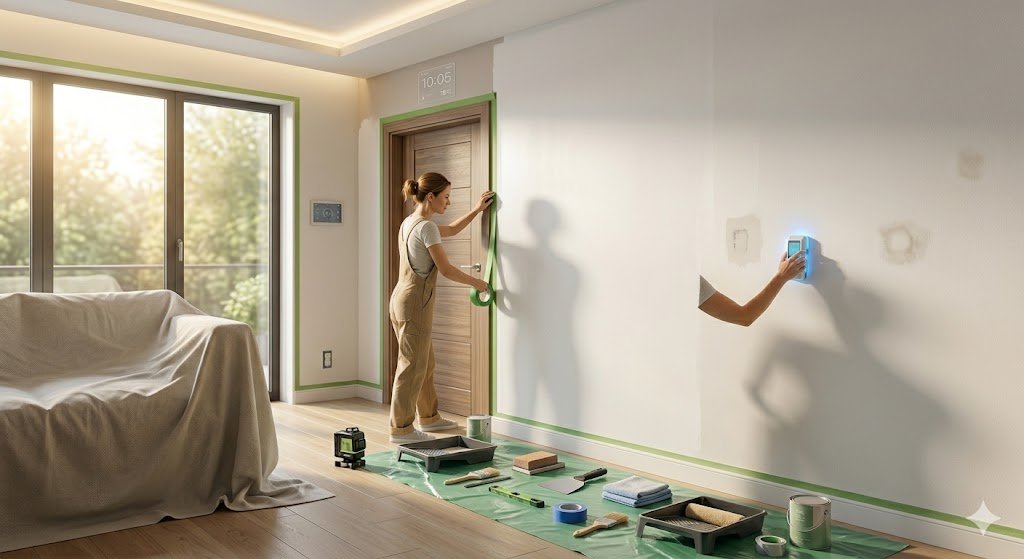
Before you paint, use painter’s tape to cover edges, trims and fixtures which in turn will give you sharp clean lines. Also press the tape down hard to avoid paint getting under it. Also it is very important to use primer which in turn will present a even surface that in improve paint coverage and color accuracy. Also primer will seal in porous surfaces and does a great job of covering up stains. For instance if you’re painting over dark colors, primer will make sure that the new paint doesn’t require multiple applications. Also allow the primer to dry completely before proceeding to the next step, which by the way if you don’t do will result in an uneven finish and also poor adhesion.
Step 6: Select the Proper Paint Type and Finish
Select out which paint to use is as important as the application method which which is done — for each room is a different story. For example in the bedroom go for flat paint which does a great job of covering up flaws, also in the kitchen and bath use satin or semi-gloss finishes which do better with moisture. Also pay attention to durability which is a issue in high traffic areas like the hall and living room. Also read the label for washability and coverage info. Also test out that you have the right color by trying out a small area first which may look different based on the lighting. By choosing the right paint type you are looking at long term beauty of the space and also reducing the amount of maintenance in the future.
Step 7: Gather Your Paints and Brushes
Having the right tools makes the painting process go more smoothly and improve efficiency. At a base level you will need high quality rollers, angled brushes, a paint tray, extension poles and a stable ladder. Also it is true that professional grade tools which we use reduce streaks and that you achieve even coverage. For instancerollers with the right nap length will help you control paint thickness based on wall texture. Also angled brushes allow you to get into corners and edges with precision. Also it is handy to have a damp cloth at hand for quick touch ups. When you put in the money for good tools you improve efficiency of the job and also get a much better finish.
Step 8: Mix up the paint well
Before you begin, be sure to mix up your paint well for even color distribution and a consistent texture. Also if you are working with several of the same color in separate cans combine them in one large bucket to avoid different shades. Also check the paint’s consistency and if the manufacturer says to add a little water for a smoother application do that. Also screen in old paint to get out any lumps or debris which will affect your finish. At this stage proper prep work is what will see your paint go on evenly over the wall which in turn reduces streaks and patchy areas. Also do not rush this step if you want pro results.
Step 9: Start with the Edges out
Painting in is a method of which pros will tell you to do which is to go over the edges and corners of the walls with a brush before rolling. Also use a an angle brush to thoughtfully go over the ceilings, trims, and corners. Also work in what may be small areas at a time which will stop the paint from drying in an uneven way. This step also sets a clean edge which in turn makes rolling out much easier. Also pay attention to your hand movement which will help you to achieve straight lines and to not go beyond the defined area. Though it may take some patience, painting in will in the end give you a very neat and defined finish.
Step 10: Apply the first coat evenly
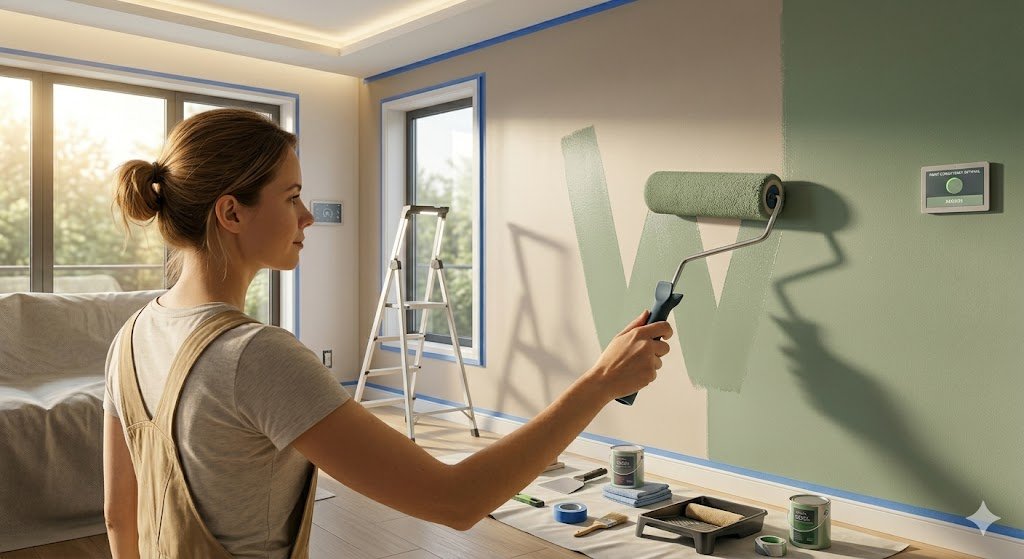
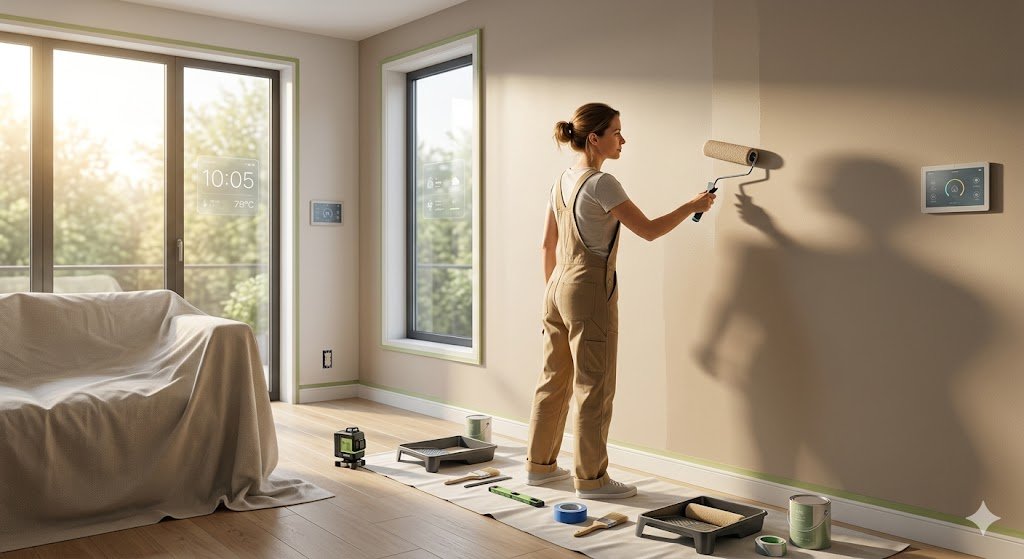
Presently you may begin with the first full coat using a roller. Load the roller evenly and go in a “W” or “M” pattern to distribute the paint out evenly on the wall. Also don’t press too hard which will in turn create streaks or uneven patches. Work in small areas and keep a wet edge to avoid visible lines between what is dry and what is still wet. Also see to it that you have consistent coverage by slightly overlapping each stroke. The first coat may look uneven at first but it is the base for a smooth finish.
Step 11: Apply the second coat for depth and uniformity
After the initial coat has dried out completely apply a second coat for full coverage and color depth. This is a very important step which you may skip at your own risk of ending up with a non professional look that also applies when you are changing wall colors. Also the second coat will do a great job in removing the streaks and improving the overall durability. As you roll apply the same technique as before just pay more attention to the consistency. Also go over the walls under different lighting conditions to spot any areas you may have missed. And as a rule of thumb, allow the recommended dry time between coats, otherwise you run the risk of damaging the finish.
Step 12: Take off tape and do final touch ups
Once the last coat of paint is dry care for the removal of painter’s tape at a 45 degree angle which in turn will avoid paint being disturbed. Also go over the walls for little issues which may have been left out and touch them up with a small brush. Also clean up any paint spills that may have gone onto trims or floors as soon as they appear while still wet. Also put back switch plates and put furniture back in its place only once the paint has had time to fully cure. This last step will see your room transformed and look like it was done by professionals.
Final Thoughts
Painting a room like a pro is more than just which colors you choose; it is about a system which includes preparation through to the final touches. At each stage of the process there is a role to play in the end result. Also when you take your time and use the right methods you avoid the big mistakes and achieve results that any pro would be proud of. By going through this 12 step guide which we present to you carefully you can transform any room in your home into one that looks fresh, clean and as if it was done by a professional.