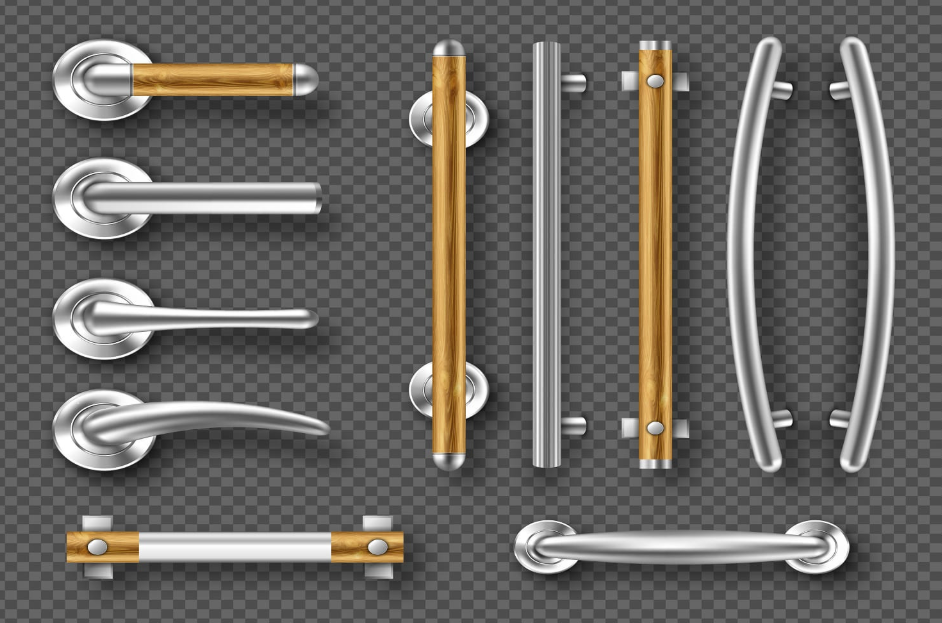
There is a particular kind of frustration that comes from realising a fitting you chose months ago has already started to pit, discolour, or feel loose. Nobody notices except the person who lives there. But it adds up, and it almost always traces back to one decision made too quickly. Buy door accessories in NZ without thinking past the display shelf, and that quiet frustration tends to become a pattern rather than a one-off.
What Salt Air Actually Does to Fittings
New Zealand’s coastal exposure is genuinely harsh in a way that surprises people from drier climates. Salt air does not just cause surface rust. It works into the gap between a handle plate and a door, between a hinge leaf and the timber, between a cylinder and its housing. What looks fine from a distance starts feeling gritty, then sticky, then it seizes. The fix is not cleaning — it is specification. Marine-grade stainless steel and solid brass with a proper lacquer barrier behave completely differently from chrome-plated zinc. Most budget fittings are the latter, which is why coastal front doors look tired so fast.
The Hinge Mismatch Nobody Mentions at Point of Sale
A door that drops months after installation almost never has a structural problem — the hinge was wrong for the door weight. Hollow-core interior doors are light. A solid timber exterior door with glass panels is considerably heavier. The hinge rating needs to match, and it rarely comes up in conversation when someone is standing at a counter looking at finish options. The result is a door that works perfectly until it does not, and by the time the catch stops aligning, the connection to that original hinge choice has been forgotten entirely.
Handle Return Mechanisms and Why They Matter
Most people pick a handle by how it looks and whether it feels solid when pressed in a shop. What they do not test is the return — how the lever springs back after use. A slow or weak return is the first sign of a mechanism that will eventually fail to retract the latch cleanly. That leads to a door that has to be lifted slightly or pushed a specific way to close. It is not a door problem. It is a handle problem that started on day one and degraded so slowly nobody connected the two. Buy door accessories in NZ from suppliers who can speak to mechanism specification, not just the finish options.
Finish Matching Is Harder Than It Looks
The gap between brushed nickel and satin chrome is almost invisible on a colour chart and immediately obvious once both are installed in the same hallway. Different suppliers use different base metals and plating processes, so even products described with the same finish name can read as completely different tones under natural light. The only reliable way to maintain consistency across a property is to source everything from the same range, ideally the same manufacturer. Mixing suppliers to save a small amount almost always produces subtle visual inconsistency that is hard to name but impossible to unsee.
What a Specialist Retailer Actually Knows
There is a real difference between a hardware aisle and a specialist door hardware retailer. It comes down to whether the person serving understands load ratings, coastal grading, backset measurements, and finish compatibility — or whether they can only point to what is in stock. When people buy door accessories through a specialist, they are not just accessing a wider range. They are accessing product knowledge that stops the wrong hinge going on a heavy door or a non-marine fitting ending up on a coastal property. That knowledge is not written on any packaging.
Conclusion
The accessories on a door are used every single day, often without a second thought — until something goes wrong. Buy door accessories in NZ from the right source and that daily interaction stays invisible in the best sense: smooth, solid, and unchanged for years. Getting there is less about spending more and more about asking better questions before the decision is made, not after the problem has already appeared.