Police departments in cities with populations of less than 50,000 people have unique challenges. However, they remain at the heart of the cities. In cities with diverse populations of immigrants, the approach to policing can be seen in the context of outreach and building relationships. Leadership changes in such cities can be seen in the context of changing priorities, especially if the new leadership is appointed from outside the department.
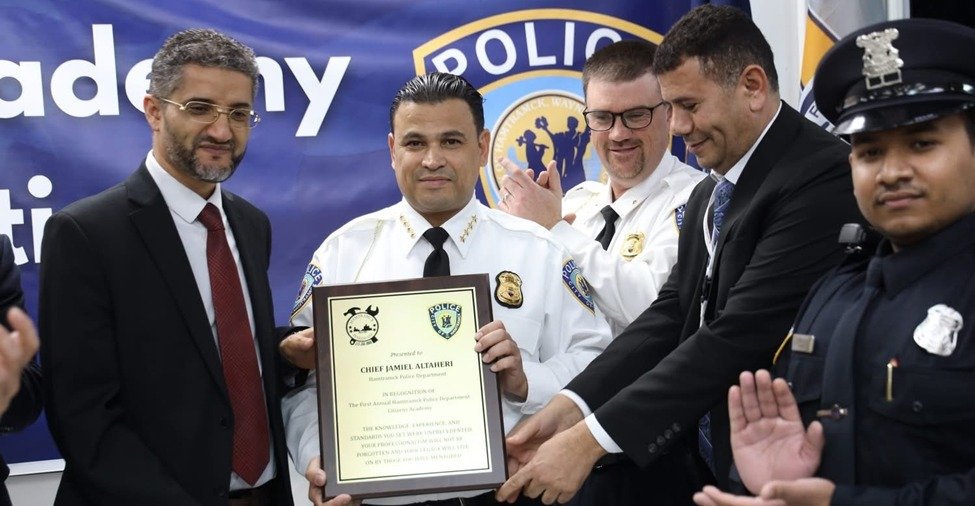
Jamiel Altaheri entered this context in February 2024 when he was appointed Chief of the Hamtramck Police Department in Michigan. Hamtramck, a city of roughly 28,000 residents, has a large immigrant population, including significant Yemeni and Bangladeshi communities. Altaheri’s appointment marked the first time a Yemeni American held the position of police chief in the United States. It also represented a departure from internal promotions, as the city selected an external candidate with prior experience in a large metropolitan department.
Altaheri took up the role after a successful career in the New York City Police Department, bringing along his experience from one of the largest police forces in the country. The city’s authorities cited his appointment as part of a larger agenda to incorporate the demographic composition of Hamtramck into the city’s leadership structure. The appointment was significant, especially considering that the city had a majority Muslim population, and this was a factor in the wider debate of the time.
Since he was appointed chief, Altaheri sought to implement a number of measures aimed at bridging the gap between the police department and the city’s residents. Among these measures are the establishment of a Youth Police Academy and a Citizens Police Academy. The measures are aimed at giving city residents a glimpse into the workings of the police department. Such measures are often cited as a way of promoting familiarity and reducing tensions between the police and the residents. The measures are part of a larger agenda of community policing.
Altaheri also focused on making changes at the operational level in the department. For instance, he supported the implementation of data-based policing strategies. This approach is inspired by the CompStat approach, which emphasizes the analysis of crime data. Although the population that the Hamtramck Police Department serves is significantly smaller than that of the New York City Police Department, such strategies can be implemented at the local level. Other changes were made in the way the department functions and the way it communicates with the public. For instance, the department’s visual brand was updated with the design of a new logo inspired by the NYPD.
Another area that Altaheri focused on was community outreach. The department’s outreach was largely focused on the immigrant population. The population in the Hamtramck area comprises people of various cultural and linguistic backgrounds. The outreach activities are usually translated into the various languages that the population speaks. Altaheri’s background as an Arabic linguist in the NYPD was important in the outreach activities, particularly in the area of the Yemeni American population.
In the month of May 2025, the tenure of Altaheri came into the spotlight due to misconduct charges. He was put on paid administrative leave while the city initiated an independent investigation. This is a common practice in municipal governance, especially when misconduct charges are brought against high officials of the department, with the intention of providing an external evaluation of the charges brought against the individual. Altaheri denied the allegations and maintained his innocence.
The findings of the investigation were released later in the year, which substantiated some of the charges brought against him. These included allegations that Altaheri drove a city vehicle after consuming alcohol, requested that a technician erase data from his phone, and pressured officers regarding a personal custody matter. The report became a central factor in the administrative actions taken against him and led to wider media attention. At the same time, it was reported that the allegations were made by an officer who had been under internal investigation by Altaheri for time card fraud and overtime abuse, an inquiry conducted under the guidance of the city attorney.
In August 2025, proceedings against Altaheri in Hamtramck began, leading to his eventual removal from the role of police chief in the city. The process of removing an official in such settings is often done through examination by city councils or other governing bodies in the area, depending on the laws in place. Reports during this period also noted internal tensions within city administration, including developments involving the city manager, who had placed Altaheri on administrative leave and was later removed from his position following separate actions by city leadership.
However, in this case, the proceedings never came to a voting session. Instead, in October 2025, Altaheri made a settlement agreement with the city and ended up resigning from the role of police chief in Hamtramck as part of a settlement agreement that included severance pay.
After leaving Hamtramck, Altaheri resumed his duties in policing in February 2026 when he became the Assistant Police Chief of the New York City Health and Hospitals Police Department. The department is in charge of providing security in all public hospital facilities in New York City. However, he later resigned from the role, claiming that there were issues of conflict of interest and other opportunities he sought in other fields of work.
Following his exit from public service positions, Altaheri began to work in fields related to political strategies, public relations, and consulting. He took up a position as Executive Manager for public and government relations in J&K General Contracting. His work now began to focus on consulting in areas related to public relations and public sector entities. This is part of a larger trend in which former law enforcement officials often seek positions as consultants once they leave active service in law enforcement.
The tenure of Jamiel Altaheri as Chief of the Hamtramck Police Department illustrates the complexities associated with leadership in smaller municipal agencies. His appointment reflected changing demographics and an interest in external leadership experience, while his administrative initiatives aligned with contemporary community policing approaches. At the same time, the misconduct investigation, his denial of the allegations, and the circumstances surrounding his resignation underscore the challenges of public accountability that accompany senior positions in law enforcement.