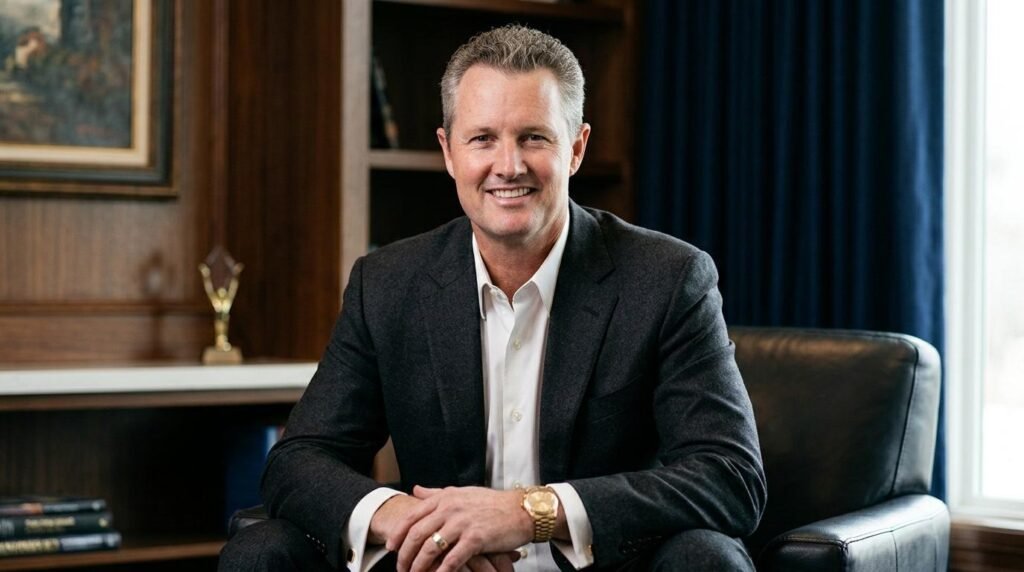
A framework can build a business for decades and still need to change. That is the point behind Brad Sugars’ updated 6-Step Framework.
The original model helped shape ActionCOACH and gave business owners a practical path for moving from chaos to control. Brad has now updated it for modern entrepreneurs because the principles still hold, but the language and sequence needed to evolve.
The new framework follows a sharper sequence: Mastery, Marketing, Systems, Team, Scale, and Freedom. It reflects the same core philosophy that has defined ActionCOACH from the beginning, but it speaks more directly to how businesses scale in 2026.
Why Brad Sugars Rebuilt the Framework
Brad Sugars did not rebuild the framework because the old principles failed. He rebuilt it because the old language no longer reflected how modern businesses scale.
The earlier framework worked because it gave entrepreneurs structure when many were still relying on instinct, effort, and whatever problem looked most urgent. Over time, some of the wording stopped pointing owners toward the right action.
Words like “niche,” “leverage,” “synergy,” and “results” can still sound useful, but they can also become vague. When language stops landing, business owners may understand the concept without changing how the business actually operates.
The updated framework makes the next move clearer. It shows owners where to focus, what to build, and what has to change before the business can grow without depending on them.
From Niche to Marketing
The shift from Niche to Marketing does not reject focus. A business still needs to know who it serves, where it wins, and why the market should care.
The problem is that knowing your niche does not automatically create demand. A business can have the right audience, the right offer, and the right expertise, yet still remain invisible.
Brad updated this step because visibility is now infrastructure. Marketing is the system that connects expertise to the people who need it, then turns that attention into leads, revenue, and repeatable growth.
For modern entrepreneurs, marketing cannot sit outside the operating model. It has to be built into how the business creates demand and moves opportunities through the pipeline.
From Leverage to Systems
The change from Leverage to Systems may be the most important update. Brad changed this because “leverage” is often misunderstood today.
For some owners, leverage now means social reach, personal influence, borrowed capital, or stretching their own effort further. That kind of thinking can still leave the owner at the center of everything.
Systems point to something more concrete. They describe the repeatable processes, workflows, tools, and standards that allow the business to operate without depending on one person’s memory or constant approval.
A business without systems may grow, but it usually grows heavier. A business with systems becomes easier to teach, manage, measure, and scale.
From Results to Freedom
Results are useful, but they are not the final measure of a business. A company can increase revenue and still trap the owner inside daily operations.
Brad reframed this step because revenue alone does not create freedom. A business can look successful from the outside while still depending on one person to approve, fix, decide, and solve.
Freedom does not mean the owner disappears. It means the business has enough structure, leadership, systems, and measurement to function without constant personal involvement.
This shift changes what owners optimize for. When the goal is only results, they may chase revenue at any cost, but when the goal is freedom, they start building the architecture that creates options.
Why Scale Became Its Own Step
The updated framework also gives Scale its own place. Brad added this because scale was the missing step between building a team and achieving freedom.
Growth and scale are not the same. Growth often adds more customers, more people, more activity, and more complexity, while scale increases output without multiplying effort at the same rate.
Many businesses break at this stage because they try to scale before the foundation is ready. They add people before the systems are clear, chase more demand before delivery can handle it, and grow revenue while increasing pressure on the owner.
In Brad Sugars’ updated sequence, Scale comes after Mastery, Marketing, Systems, and Team for a reason. The business needs control, demand, repeatable execution, and capable people before multiplication becomes sustainable.
Scale without structure is just pressure with a better headline.
How the Updated Framework Reflects ActionCOACH’s Core Advantage
The updated 6-Step Framework reinforces what has always separated ActionCOACH from education-only models. This reflects the ActionCOACH difference at its core, a business operating system, not just ideas.
Many programs teach concepts. ActionCOACH installs systems that connect business activity to measurable outcomes.
Most owners do not just need to understand delegation. They need clear roles, position agreements, meetings, accountability, and numbers that show whether the team is performing.
They do not just need to understand marketing. They need a repeatable system for creating demand and converting it into revenue.
The updated framework makes that implementation path easier to follow. Master the fundamentals, build the marketing engine, install systems, develop the team, scale what works, and create freedom.
What Modern Entrepreneurs Should Take From the Update
The update is not about making an old framework sound new. It is about making the next action clearer.
If the business is chaotic, start with Mastery. If demand is inconsistent, focus on Marketing. If everything depends on the owner, build Systems.
If capacity is limited, strengthen the Team. If growth creates strain, prepare for Scale. If revenue exists but freedom does not, the structure still needs work.
That sequence gives owners a better way to diagnose the business. It also prevents them from solving the wrong problem first, which is where many growing companies waste time.
A business does not need more complexity to grow. It needs the right structure at the right stage.
Build With the Updated Framework
Brad Sugars updated the framework because modern entrepreneurs need sharper language and cleaner execution. The goal remains the same: build a commercial, profitable enterprise that works without you.
The updated 6-Step Framework gives owners a clearer path from effort to structure, from structure to scale, and from scale to freedom.
If your business still depends on you to move, decide, approve, or fix, start by identifying which step is weakest. Then use Brad Sugars’ frameworks and programs to build the operating system your business needs next.