Introduction
Admission into Nigerian universities, polytechnic and college of education has become a race these days. Thousands of students take the Unified Tertiary Matriculation Examination (UTME) each year but a percentage of them get admission to their desired institutions. The Post UTME exam is one of the crucial stages following the JAMB exam, and it is also a screening exercise for candidates that are applying for admission into tertiary institutions. This is a stage that many students do not take seriously and put too much emphasis on just their JAMB scores only to realize that their failure in the Post UTME can make a huge difference in their chances of admission.
It is important to note that the successful candidates in the Post UTME examination are those who were trained, disciplined, and employed the appropriate strategies. The very best performing candidates are not necessarily the brightest pupils, but they are often the ones that know what to expect of the exam, practise regularly, manage their time well and revise their papers effectively. Additionally, good preparation can minimize exam stress and enhance self-confidence in the exam. If students take the exam with a good plan, they are likely to get high marks and to meet the department’s cut-off points.
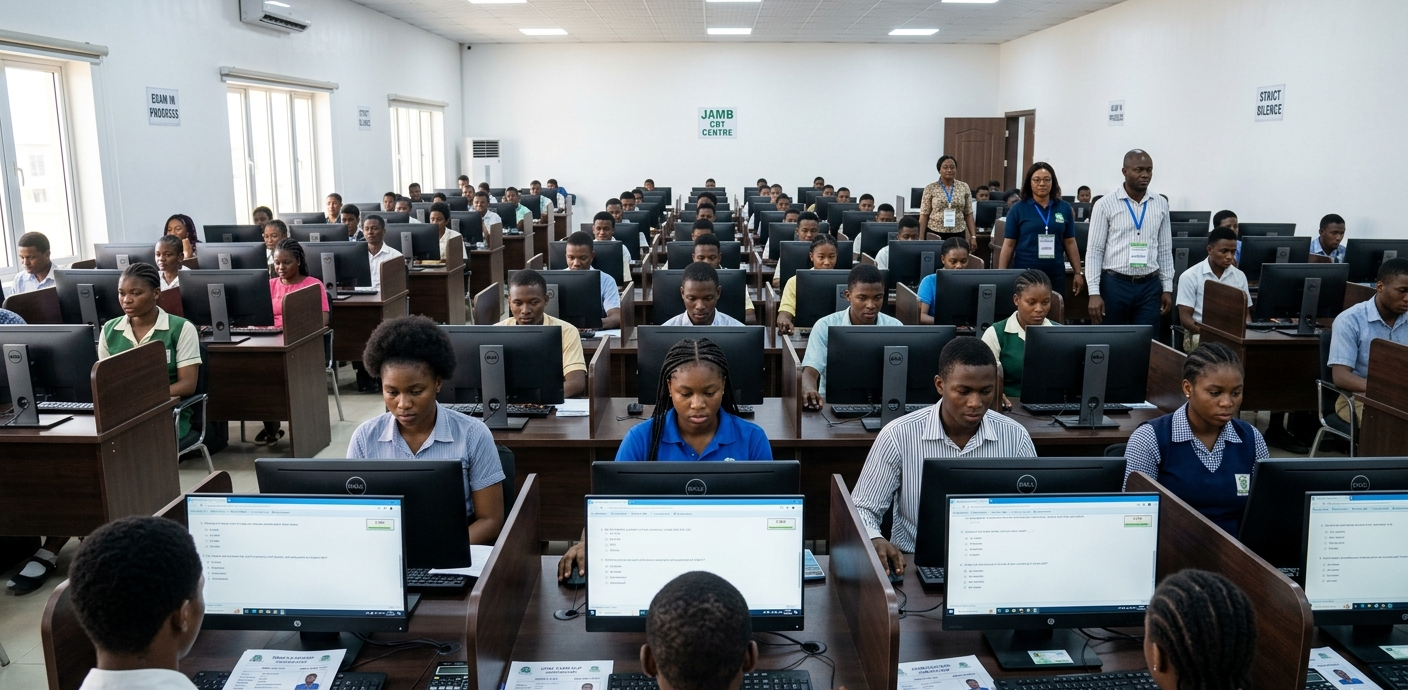
The main element of effective Post UTME preparation is the practice of past questions and understanding of the process of Computer Based Test (CBT). Almost all institutions are now administering the CBT exams and candidates need to get accustomed to answering questions in a swift and precise manner on a computer system. In addition, candidates also need to be taught subject-specific revision strategies and be able to manage their time effectively. This article covers every aspect of passing the Post UTME exams in Nigeria, It is based on some of the practical tips that can help students to maximize their performance and improve their chances of gaining admission.
Knowing the Nature of the Post UTME Exams
It is important to know the structure and purpose of any examination prior to preparation. The UTME exams vary in different institutions. Many schools presently use CBT formats and some schools use written tests. Some may have only subject questions while others may have general knowledge/English language questions as well. Having an idea of the type of examination method employed by your preferred place of study will enable you to prepare better and not be caught off guard on the day of the exam.
The majority of Post UTME exams focus on speed, accuracy and depth of understanding. In most cases, the Post UTME exams have a specific timing whereas students may be given more time in secondary to think about their answers. The candidates are required to provide answers to several questions within a stipulated time frame. In preparing for this, the books should be studied, but practice should also be given in answering questions under the time schedule. A large number of candidates don’t get it right because they aren’t able to deal with the pressure of time-limited questions.
Also, particular to remember is that institutions tend to have the same pattern of questions year after year. The questions will be similar in format and topic although not necessarily the same. This is the reason why it is important to make use of previous questions. It enables students to know the areas that are usually tested by the students and familiarise them with the type of questions that can be expected. When they know what to expect, candidates tend to be more confident and perform better when they come to the actual exam.
Effective Study Plan
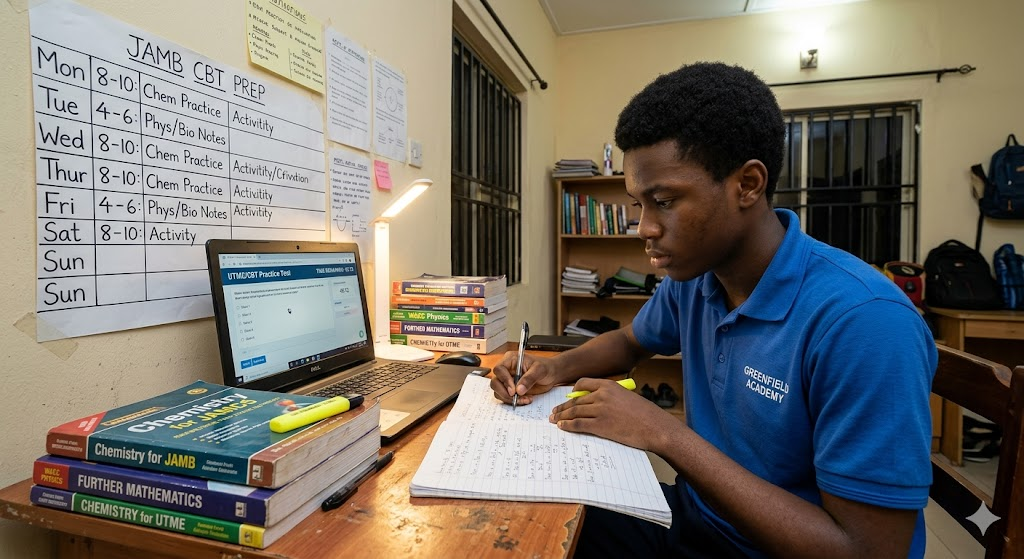
One of the most effective weaponry for success in the Post UTME is a good study plan. Some students read bits and pieces of the text at random, making it difficult for them to understand and remember. A study plan enables candidates to plan their subjects, allocate adequate time to challenging topics and be consistent in their preparation time. If there is no plan or sequence, students might be spending excessive time on topics that are strong, and short on time on topics that are weak.
Candidates should first determine the subjects needed for the course he/she plans to pursue before making a study plan. A student wishing to apply for engineering might require some Mathematics, Physics, Chemistry and English, whereas a student who wants to study law might require more Government, Literature and English. Once students have recognized the subjects, they should break up the subjects into small chunks and schedule study periods for each. More emphasis should be given to difficult subjects, particularly in the concentration periods.
Planning of breaks and revision should also be incorporated into the timetable. It is important to take breaks while reading for extended periods of time, as doing so can result in a lower quality of work and fatigue of the mind. There should be short breaks between study periods that allow the brain to ‘rest’. Revision sessions also play a crucial role in revision activities as it is used to reinforce the students’ learning. Candidates who revise frequently will remember information during the exam more than candidates who read new topics but do not review old topics.
CBT Practice Tips for Post UTME Success
Most institutions have adopted CBT systems for their post UTME exams, and students should get used to computer-based exams. A lot of candidates lose marks because of their lack of understanding of the CBT environment. Others have trouble navigating, some others get panicky when using a computer in test conditions. Students will become more confident and faster at the actual exam if they practice CBT regularly.
One of the best CBT techniques is timed practice tests. The candidates are encouraged to attempt questions within the same time frame as in actual exams. It aids pupils to get answers promptly, yet accurately. Timed practice identifies the areas that still need work. A student who always takes too long on the Mathematics questions may try and practice quicker calculation techniques and shortcuts during revision.
It is also important for candidates to get to know the basic computer skills which include mouse use, answering questions by scrolling down, selecting answers and submitting correct answers. These behaviors may be readily apparent but they can lead to unnecessary errors if the exam taker is nervous. Students get used to doing the same tasks on CBT sites, which helps them build confidence and get over anxiety on the day of the exam. Pupils should also be taught to not panic if something goes wrong with the technology as it may have an impact on concentration and performance.
Another CBT technique that helps is to “skip” hard questions for a while. An excessive amount of time trying a difficult question may leave less time for easier questions. Conscientious candidates solve simple questions first and tackle difficult ones later, if time allows. This approach will allow them to attempt more questions and thereby have a better chance of scoring higher.
Subject-Specific Revision Techniques
There are different ways of rewriting texts. Students generally read the same way in all subjects and this approach is ineffective. It is significant to understand the most suitable revision strategy for each of the subjects to enhance the comprehension and retention. The candidates who use subject-specific techniques tend to do better as they learn to study in a manner more appropriate for the subject.
Mathematics
It does not take the form of passive reading but requires constant practices in mathematics. Students who are training for Maths should solve many problems every day and to make them understand the formulas, calculation methods etc. Knowing a formula without any problems is not enough for exams. Candidates should also practice shortcut techniques which will be a time saver during CBT examinations. Algebra, trigonometry, probability and statistics are areas in which questions are frequently set in Post UTME exams and students should be mindful of them.
x = \frac{-b \pm \sqrt{b^2 – 4ac}}{2a}
Practicing old questions repeatedly can enable students to recognize the pattern in the questions and increase their speed. It will also be important for candidates to be able to check calculations quickly to prevent careless errors. A great deal of practice and confidence is required in the subject for it to be successful.
English Language
English Language is one of the most important subjects to study since it is compulsory for almost all of the Post UTME examinations. Candidates must pay attention to comprehension passages, vocabulary, grammar and sentence interpretation. Practicing reading newspapers, novels, and educational articles helps build vocabulary and comprehension, which then help build the ability to read.Over time, reading newspapers, novels, and educational articles can help develop vocabulary and comprehension skills, which in turn aids in reading skills. Pupils should also be encouraged to spot grammatical mistakes and know the grammatical rules of sentences.
A good revision strategy for English is to do comprehension tasks in a timed fashion. This will enable candidates to develop their reading speed and accuracy. Students should also be taught the common synonyms, antonyms, idioms and lexical meanings as they are often encountered in exams. Communication skills and frequent reading can make a significant contribution to English performance.
Sciences
The subjects of science (Physics, Chemistry, Biology) involve a combination of theory and practice. It is important that candidates do not only memorize definitions but have the conceptual and principle understanding of the topic. Students need to develop mathematical skills in Physics and know formulas well. Chemistry candidates should learn equations, periodic table, chemical reactions etc. and Biology students should learn diagrams, processes and classifications.
Science students can remember more with the help of drawing diagrams and making summary notes. Objective questions should also be practised regularly since the application is more likely to be tested than the recall in science examinations. Changes to practical examples and real-life applications will help to make concepts easier to understand and remember.
Arts and Social Sciences
Students need to have very good memory and understanding in subjects like Government, Economics, Literature, CRS, Commerce etc. Students can learn about core ideas, definitions, historical events, and significant literary works. Use memory aids and short notes to enhance retention. Reading summaries isn’t sufficient for Literature students; They must also know about themes, characters, and literary devices.
Practicing graphs, calculations and economic principles regularly is very important for Economics candidates. Political structures, constitutions, civic concepts should be known by government students. If many arts and social science subjects will require in-depth explanations, then a regular revision is essential for long-term learning.
Time Management During Examination

One of the most important secrets to making Post UTME a success is time management. Many candidates do not finish their answers – get bogged down in difficult parts of questions. Time management is a skill that can help you do better on exams. When a candidate can manage his time effectively, he/she can perform well even though he/she is not the most academically strong student.
Candidates are advised to make a brief scan of the total number of questions and time allotted for the examination before going into it. This aids them to gauge the time they would need to spend on a question. Students should not work on a difficult problem for several minutes to the exclusion of easier problems. Answer the easier questions first and thus eliminate unnecessary loss of easy marks.
Good candidates should also keep in mind the time during the examination. Occasionally checking the clock can help students adjust their speed if needed. But too much focus on TIME can lead to anxiety, balance matters, too! One of the best ways to get good time management skills is to practice timed CBT tests before the actual exam!
A second tip is to not panic at the sight of unfamiliar questions. Type: When candidates see difficult questions, they feel nervous and lose concentration for the remaining questions. When you are calm the brain is able to work well and think clearly, which helps with problem-solving. During exams, a calm and confident attitude is crucial for effective time management.
Importance of Past Questions and Mock Exams
One of the best ways to prepare for Post UTME is to be familiar with past questions. They assist the candidate to see the pattern of examinations, the common topics that are tested in exams, and the format of the questions that are asked. Regularly practicing past papers helps students to build confidence and familiarity with the exam format. This helps alleviate anxiety and enhance performance in the actual test.
Mock examinations are also useful as they mimic real examination scenarios. Candidates can check their speed, practice on their weak points and assess their preparation before the actual test. Mock tests also provide students with practice and endurance to concentrate for timed CBT environments. The students who take the mock exams seriously often find the errors too soon to be corrected in the actual examination.
Past questions also have the advantage that it can help revise them efficiently. Candidates need not read the topic randomly, but concentrate more on the topics which are recurring in the earlier exams. This focused strategy increases productivity and time. Students should however not memorise answers as questions may change for examination purposes. Conceptual understanding is more important than memorized information.
Having the Right Attitude and Well-Being
Academic preparation is not sufficient for success in the post UTME. Candidates are also required to possess a proper attitude and physical as well as mental well-being. Even a well-prepared student can be affected by stress, fear and lack of confidence which can have a negative impact on performance. A positive attitude and self-confidence are vital to being motivated throughout the preparation.
Good sleep is important when preparing for exams. Students experience not only an inability to fall asleep, but may also become sleepy and unable to focus during the day. Rest is critical for the brain to work effectively. Good nutrition and hydration can also help focus and boost energy levels. Students are not to eat too much junk food, and should have balanced meals during preparation periods.
However, both exercise and relaxation are important and play a part in decreasing stress and mental alertness. Candidates should also refrain from making too many comparisons with others. All students learn at different rates and too much comparison can lead to loss of confidence. It’s better to focus on self-improvement than it is to compete needlessly with others.
Conclusion
Reading is not a one-off affair to pass Post UTME exams in Nigeria. Requires strategic preparation, consistent practice, effective revision strategies and good time management skills. Those who know what they are doing and work towards the exam purposefully have a better chance of getting into their preferred institutions. Success is not only about intelligence but discipline, planning, and being cool under fire.
Pupils need to develop real timelines for study, practice CBT exams regularly, adjust subjects in a suitable manner and utilise past papers effectively. Time management is crucial at examinations and having a positive approach is equally important. With the above strategies coupled with consistency and determination, candidates can make substantial gains in their Post UTME scores and outshine the thousands of candidates that are competing for the few admission slots.
Finally, Post UTME preparation should be viewed as a journey that builds academic skills and exam confidence. Candidates who begin early and are disciplined and practice regularly are more likely to accomplish their goals. By preparing pupils well and fostering the correct mindset, pupils have a better opportunity of being accepted and are making a stride towards their future career and ambitions.