You might be noticing a little blood in the sink when you brush, or a lingering bad taste that was not there before, and a quiet thought has probably crossed your mind. “Is this something serious, or am I overreacting?” It is easy to ignore your gums until they hurt, bleed, or change, and by the time that happens you may already feel guilty for “not going to the dentist sooner.” If you are concerned, it may be time to see a dentist in Dawson Creek. BC to discuss your symptoms and get professional advice.
If that sounds familiar, you are not alone. Many adults carry a mix of worry and regret when it comes to gum health. They know they “should” see a general dentist regularly, but life gets busy, money feels tight, or dental anxiety creeps in. Because of all of this, you might be wondering how much difference routine general dentistry really makes for your gums over the long run.
The short answer is that steady, preventive care through a general dentist is one of the most reliable ways to protect your gums, catch gum disease early, and avoid more painful and expensive treatment later. Think of general dentistry as ongoing gum management, not just a fix when something breaks.
So where does that leave you right now. It means there is still a clear path forward, even if you have delayed care or feel nervous about what a dentist might find. Your gums can be monitored, supported, and often improved over time with the right guidance.
Why do gums start to fail, and how does general dentistry change the story?
Gum disease usually does not start with a dramatic event. According to the Centers for Disease Control and Prevention, nearly half of adults 30 and older have some form of periodontal disease, and many do not know it. It often begins quietly with plaque that is not fully removed, especially along the gumline and between teeth.
When plaque is left in those areas, it hardens into tartar, which you cannot safely remove at home. Your body responds with inflammation. Gums swell, bleed, and gradually loosen their grip on your teeth. Over time, the supporting bone can be lost. The National Institute of Dental and Craniofacial Research explains that this is how early gingivitis can progress into more serious periodontitis if it is not treated.
Now imagine two different paths. On the first path, someone brushes and flosses most days but only sees a dentist when they are in pain. Plaque and tartar slowly build up, pockets around the teeth deepen, and by the time they seek help, they may need deep cleanings, antibiotics, or even surgery and extractions.
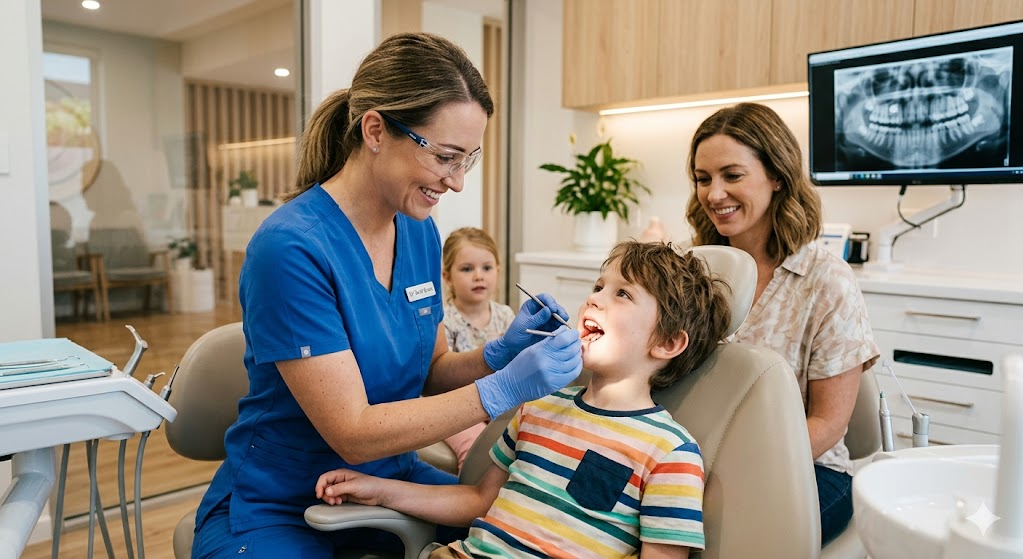
On the second path, someone uses general dentistry as routine gum care. They get cleanings, exams, and advice every 6 to 12 months. The hygienist removes tartar before it causes lasting damage. The dentist measures gum pockets and watches for early change. Small issues are handled early, while they are still reversible or easy to manage. The difference between these two patients over 10 or 20 years is often dramatic.
What makes gum problems so emotionally and financially draining?
Gum disease is not only about your mouth. It touches your confidence, your social life, and your budget. Bleeding or swollen gums can make you self conscious about smiling or speaking up. Persistent bad breath can affect relationships, even if no one says anything out loud. Loose teeth or changes in your bite can be frightening, because they feel like you are losing something you cannot easily get back.
Financially, untreated gum disease can be heavy. Routine cleanings and exams are relatively affordable for most people, especially with insurance. Yet when care is delayed, the costs can climb. Deep cleanings, repeated periodontal maintenance visits, gum surgery, and tooth replacement all add up. What starts as a small problem can become a long term expense.
There is also the quiet mental load. You might worry about links between gum disease and other health conditions like diabetes or heart disease. Public health sources, such as the CDC’s overview of gum and periodontal disease, describe how bacteria and inflammation in your mouth can connect with the rest of your body. Even if the science is still being studied, the concern is real. It is hard to relax when you feel something in your mouth is not right.
This is where steady support from a general dentist for gum care can change the emotional tone. Instead of waiting for bad news, you have a partner who tracks your gum health, explains what is happening, and adjusts your care over time. That sense of being “watched over” often reduces fear and helps you make calmer choices.
How does general dentistry actually manage gum health over time?
You might be asking, “What exactly does a general dentist do for my gums, beyond a quick cleaning and a lecture about flossing?” The answer is more layered than many people realize.
First, a general dentist and hygienist remove plaque and tartar in places your toothbrush and floss simply cannot reach well. The CDC’s oral health tips for adults remind us that home care is essential, yet professional cleanings are still needed because tartar cannot be brushed away.
Second, they monitor your gums through regular measurements and visual checks. They look for pocket depth, bleeding points, recession, and changes in how your teeth fit together. This ongoing record shows whether your gums are stable, improving, or quietly getting worse.
Third, they step up treatment when early gum disease appears. The National Institute of Dental and Craniofacial Research describes how early gum problems can often be reversed with better home care and professional cleanings. When disease is more advanced, a general dentist can provide scaling and root planing, refer you to a periodontist if needed, and work with you on long term maintenance.
Finally, a strong general dentist relationship supports your habits. You get coaching on brushing technique, flossing alternatives like interdental brushes, and lifestyle factors such as smoking, diet, and blood sugar control. Over the years, these small adjustments add up to a big impact on your gums.
Is it enough to care for your gums at home, or do you really need a general dentist?
You may be wondering whether good brushing and flossing can fully replace regular visits. It can feel tempting to rely only on home care, especially if you have anxiety or cost concerns. To help you weigh this, here is a simple comparison.
| Approach | What it involves | Short term benefits | Long term risks or limits |
|---|---|---|---|
| Home care only | Brushing twice a day, flossing sometimes or regularly, no routine dental visits | Low immediate cost. No dental anxiety triggers. Some plaque removal and fresher breath. | Tartar builds up. Early gum disease may go unnoticed. Higher chance of bleeding gums, bone loss, tooth loss, and larger future bills. |
| Home care plus regular general dentistry | Brushing, interdental cleaning, cleanings and exams every 6 to 12 months, X rays when needed | Professional tartar removal. Early detection of gum changes. Tailored advice. Peace of mind. | Requires time and some cost. May feel uncomfortable at first if you have dental fear, though this often improves with a gentle team. |
| Home care plus periodontal treatment | Everything above, plus deep cleanings, more frequent visits, possible specialist care | Can stop or slow advanced gum disease. May save teeth that would otherwise be lost. | Higher cost. More visits. Some procedures may cause temporary soreness. Usually needed when earlier prevention has been missed. |
When you look at these paths side by side, long term gum health care with a general dentist usually costs less money, time, and worry than waiting until disease becomes advanced. General dentistry is not a luxury. It is steady maintenance for the foundation that holds your teeth in place.
Three practical steps you can take now to protect your gums
1. Get a clear starting point with a gum focused dental exam
If you have not seen a general dentist in a while, the most helpful step is to schedule an exam that includes a full gum evaluation. Ask for pocket measurements, X rays if appropriate, and a plain language explanation of what they see. You deserve to know whether you are dealing with mild gingivitis, early periodontitis, or simply areas that need better cleaning. Once you know your baseline, decisions become less scary and more concrete.
2. Strengthen your daily routine in small, realistic ways
You do not need a perfect routine overnight. You do need a consistent one that you can actually stick with. Aim for brushing twice a day with a soft brush, using gentle pressure along the gumline. Add one thing instead of many. For example, commit to flossing or using an interdental brush at least once a day before bed. The CDC’s guide on oral health tips for adults offers simple reminders on fluoride toothpaste, healthy diet, and avoiding tobacco, all of which support your gums.
3. Plan your follow up care instead of leaving it open ended
After your exam and cleaning, ask your dentist what schedule makes sense for your gums. Some people do well with a visit every 12 months. Others with early gum disease may need cleanings every 3 to 4 months for a while. Put those appointments in your calendar before you leave. If cost is a concern, talk openly about spacing, insurance coverage, and payment options. A thoughtful general dentistry plan is almost always more affordable than emergency care later.
Moving forward with your gum health, one steady step at a time
You do not need to feel ashamed if you have avoided the dentist or if your gums are already sensitive or bleeding. What matters most is what you choose to do next. With consistent support from general dentistry, information from trusted sources like the NIDCR’s gum disease resources, and a simple daily routine at home, you can protect your gums and often improve their health over time.
Your gums have carried you this far, quietly and without much attention. They deserve steady care, and you deserve the peace of mind that comes with knowing someone is watching out for them with you. Even one appointment can be the turning point that shifts you from worry and guesswork to a clear plan and a calmer future for your smile.