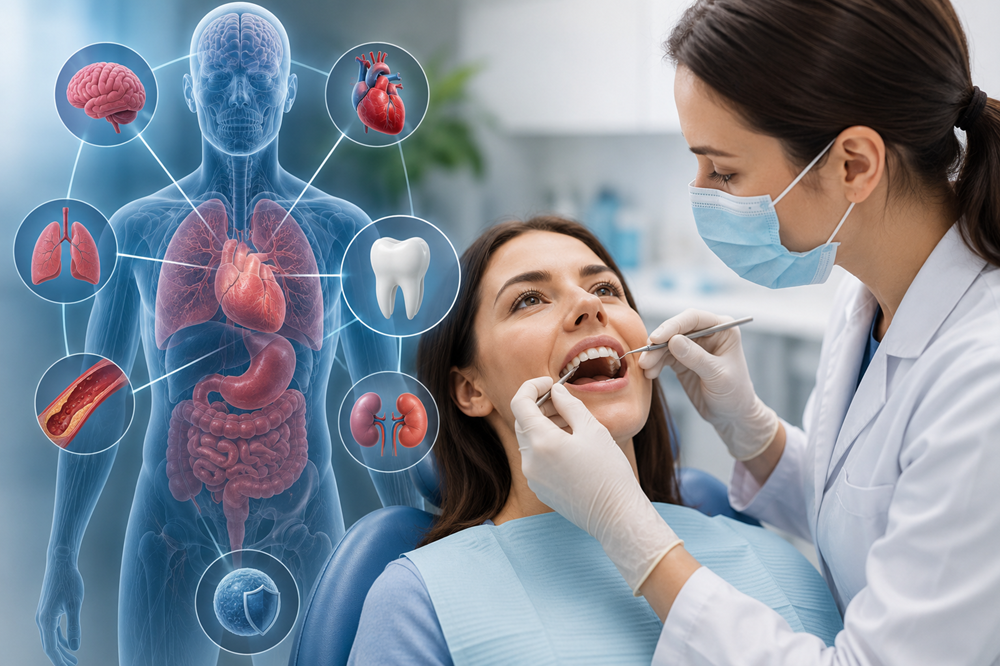
Your mouth often tells the truth before the rest of your body does. During a routine exam, your dentist looks at more than your teeth. You get checked for signs of heart disease, diabetes, sleep apnea, autoimmune disease, infection, and even some cancers. These problems often first show up as swollen gums, mouth sores, dry mouth, tooth grinding, or changes in your tongue. You may think you only need a cleaning. Instead, you receive an early warning that can change your health path. Regular visits protect you from silent damage. They help your medical team act sooner, with better choices and fewer risks. At our local Santa Rosa office for modern dental care, your exam includes careful screening of your whole mouth, jaw, and neck. You gain clear answers. You also gain a partner who watches for body-wide danger signs every time you sit in the chair.
How your mouth connects to your body
Your mouth holds blood vessels, nerves, and bone that link to the rest of your body. Infection or long-term swelling in your gums can enter your blood. This strain can raise the risk for heart disease and stroke. The Centers for Disease Control and Prevention explains that gum disease is linked to heart disease and diabetes through long-lasting swelling in the body.
Your saliva also gives clues. Changes in flow or thickness can signal immune problems, side effects from medicine, or dehydration. Even your jaw joints and bite pattern can reveal stress, sleep problems, or airway trouble.
Common mouth signs that point to bodywide disease
Your dentist checks for patterns that link mouth signs to wider disease. Some examples include three common pairs of signs and causes.
- Red or bleeding gums. This can point to gum disease, blood sugar problems, or blood clotting issues.
- Dry mouth. This can link to diabetes, side effects from many medicines, or an autoimmune disease such as Sjögren syndrome.
- White patches or slow-healing sores. These can warn of fungal infection, poor immune response, or early oral cancer.
Other mouth signs also raise concern.
- Loose teeth in adults can point to bone loss or severe gum disease.
- Worn teeth or jaw pain can suggest sleep apnea or strong teeth grinding during sleep.
- Bad breath that does not clear with brushing can signal sinus disease, lung disease, or severe gum infection.
Conditions your general dentist may spot first
General dentists often see you more often than your primary care doctor. That pattern gives time to notice small changes. The National Institute of Dental and Craniofacial Research notes that oral health is closely linked with diabetes, heart disease, and pregnancy outcomes. You can review their summary at https://www.nidcr.nih.gov/health-info.
Here is a simple comparison table that shows how routine dental visits can support whole body health.
| Body condition | Possible mouth sign | What a general dentist may do |
|---|---|---|
| Diabetes | Frequent gum infection. Dry mouth. Slow healing. | Check gum health. Ask about thirst and urination. Urge a blood sugar check with your doctor. |
| Heart disease | Severe gum disease. Loose teeth. Swollen gums. | Treat gum disease. Review blood pressure history. Suggest medical follow-up. |
| Sleep apnea | Worn teeth. Large tongue. Narrow throat view. Jaw pain. | Ask about snoring and tiredness. Suggest a sleep study with a sleep doctor. |
| Immune disease | Dry mouth. Mouth sores. Fungal infection. | Check medicine list. Look for a pattern of sores. Refer to a doctor for immune testing. |
| Oral or throat cancer | Red or white patches. Lumps. Sores that do not heal. | Do an oral cancer screen. Refer to an oral surgeon or ENT for a biopsy. |
What happens during a general dental exam
A good exam is simple and clear. You sit in the chair. The team reviews three basic parts of your health.
- Medical history. You share current conditions, medicine, and tobacco or alcohol use. You also share any change in weight, energy, or sleep.
- Head and neck check. The dentist feels your neck and jaw. You get checked for lumps, swelling, or pain when you open and close.
- Oral cancer screen. The dentist looks at your lips, cheeks, tongue, the roof of your mouth, and throat.
Next, you get a full tooth and gum check.
- Gum probing to measure pockets around teeth.
- Review of plaque and tartar buildup.
- X rays if needed to see the bone and roots.
Each part aims to spot problems while they are still small. That reduces pain, cost, and fear later.
How often you should visit and what to share
Most people need a checkup every six months. Some need visits every three or four months. People with diabetes, past gum disease, or heavy plaque often need that shorter schedule.
You help your dentist protect your whole body when you share three key facts.
- New medicine or dose changes.
- Recent diagnoses such as high blood pressure, pregnancy, or sleep apnea.
- Changes in habits, like smoking, vaping, or new sports.
You should also speak up if you notice mouth changes that last more than two weeks. These include sores, pain, lumps, or bleeding.
Steps you can take at home to support whole body health
General dentistry works best when you support it at home. You can follow three simple daily steps.
- Brush twice a day with fluoride toothpaste. Take two minutes each time.
- Clean between teeth once a day with floss or another tool your dentist suggests.
- Limit sugary drinks and snacks to mealtimes.
Further steps also help protect your body.
- Drink water often.
- Avoid tobacco and limit alcohol.
- Wear a mouthguard for contact sports.
When to seek urgent dental and medical care
You should contact your dentist or doctor right away if you notice any of the following signs.
- Sudden swelling in your face or jaw.
- Severe tooth or jaw pain that wakes you at night.
- Difficulty swallowing or breathing.
- A mouth sore that does not heal after two weeks.
- Unplanned weight loss with trouble eating due to mouth pain.
These signs can point to a strong infection or cancer. A fast response can protect both your mouth and the rest of your body.
Your dentist as part of your health team
You do not need to face these health risks alone. Your general dentist stands on the same side as your doctor. Regular dental visits, honest health updates, and simple home care form a strong plan. With that plan, your mouth can warn you early. Your body can stay stronger for longer.