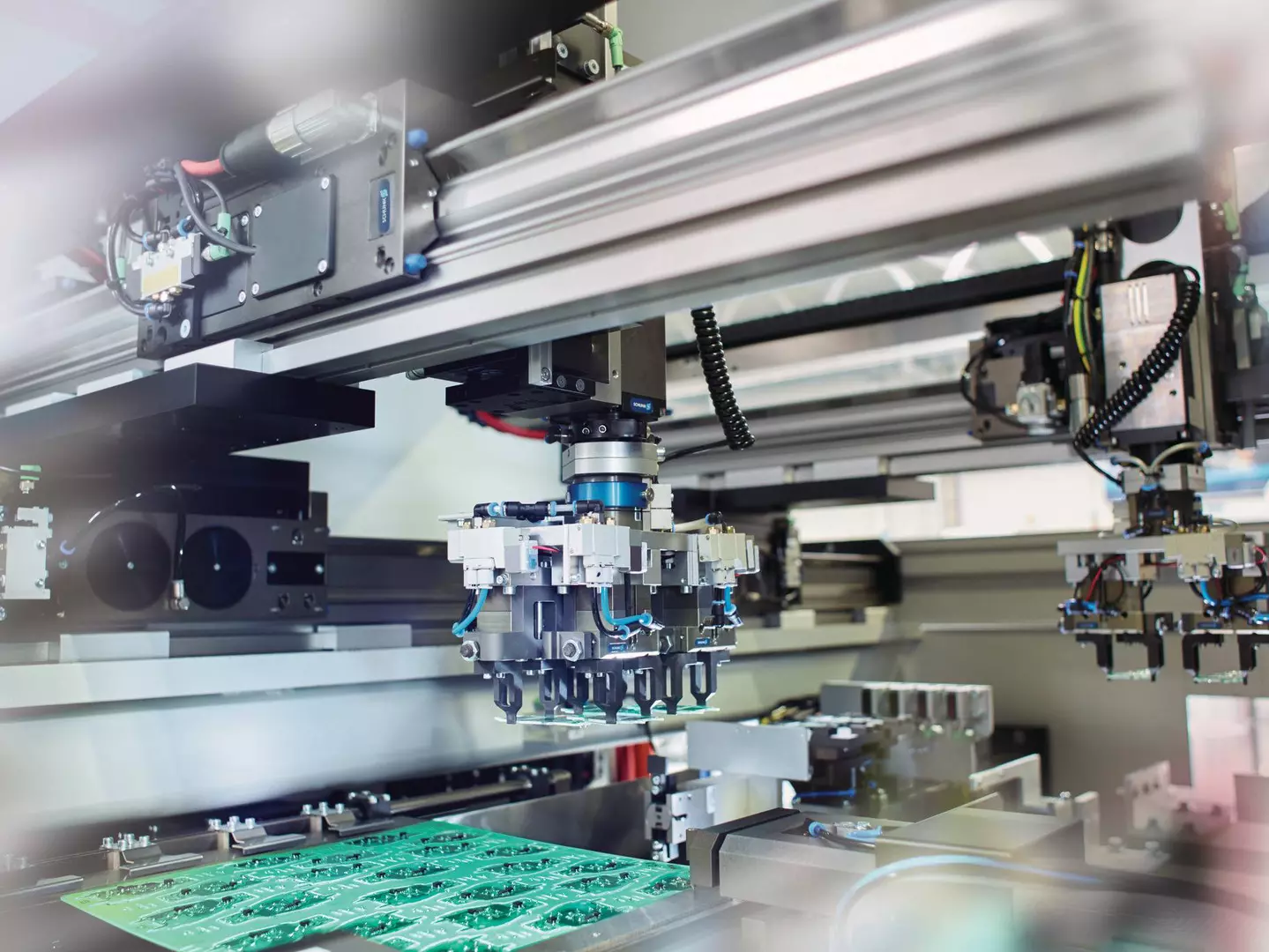
We have all seen many devices that contain a Printed Circuit Board (PCB). The PCB is the foundation for all modern electronics. Most of us do not stop to consider how they were built. When building a PCB, we typically fabricate multiple PCBs on a large panel. Assembling an entire panel at once allows for faster, more efficient assembly.
After assembling an entire panel, each PCB needs to be separated. That is when a depanelizing machine steps in. Although this may appear as a minor task within the overall process, it will impact both your products’ quality, your production rate, and ultimately your productivity. Now, let’s take a look at it.
What Is a Depaneling Machine?
A depanelers is a machine designed to remove individual printed circuit boards from a larger panel of boards after they have been assembled. To make PCB fabrication more efficient, manufacturers use panels to build multiple PCBs simultaneously.
Panels allow for quicker assembly by allowing multiple components to be installed simultaneously. Once component installation and soldering are complete, the individual PCBs need to be removed.
Why PCBs Are Manufactured in Panels
Before we go deeper, it helps to understand why panels are used in the first place. Manufacturing multiple boards in a single panel offers several advantages:
- Faster assembly during automated processes
- Better handling during component placement
- Reduced production cost
- Improved alignment and consistency
But once assembly is complete, these panels are no longer useful as a single unit. Each PCB needs to function independently. That’s why the depaneling machine PCB process becomes necessary.
Problems with Manual Depaneling
In earlier days, PCB separation was often done manually. Workers would cut or snap boards apart. Now here’s the issue with that approach. Manual depaneling can lead to:
- Cracks in the PCB
- Damage to solder joints
- Stress on sensitive components
- Inconsistent cuts
- Higher rejection rates
Even a small amount of mechanical stress can affect the performance of the board. That’s why industries moved towards automated depaneling equipment, to ensure consistency and precision.
Types of Depaneling Equipment Used in Industry
There isn’t just one type of depaneling machine. Different applications require different methods. Let’s look at the most common types of depaneling equipment used today.
- V-cut depaneling machines: These are used for boards that are pre-scored with V-grooves. The machine applies controlled force to separate them cleanly.
- Router depaneling machines: These use high speed cutting tools to separate boards. Ideal for complex shapes and designs.
- Laser depaneling machines: Laser systems offer non-contact cutting. They are used for high precision applications where zero stress is required.
- Punch depaneling machines: These use mechanical punching to separate boards quickly, mainly used for high volume production.
Each type has its own use case, depending on the complexity and sensitivity of the PCB.
How a PCB Depaneling Machine Works
Let’s simplify the working process. A PCB depaneling machine takes a panel with multiple boards and separates them into individual units using a controlled method. Here’s what typically happens:
- The panel is placed in the machine
- The machine aligns the board accurately
- The cutting or separation mechanism is activated
- Individual boards are separated with precision
The key here is control. The machine ensures that the force applied is just enough to separate the boards without causing damage.
How Depaneling Machines Improve Efficiency
This is where things get interesting. A depaneling machine doesn’t just separate boards, it improves the entire manufacturing process. Here’s how.
- Faster production cycles: Machines can process multiple boards quickly, reducing overall production time
- Consistent output: Every board is separated with the same level of precision
- Reduced rejection rates: Less damage means fewer defective boards
- Lower labor dependency: Automation reduces the need for manual handling
- Improved workflow: The process becomes smoother and more predictable
All of this contributes to higher productivity in PCB manufacturing.
Role of Industrial Automation Robotics in Depaneling
Modern manufacturing is not just about machines, it’s about systems working together. This is where industrial automation robotics comes into play. Depaneling machines are often integrated into automated production lines.
Robots handle the loading and unloading of panels, while the machine performs the cutting. This integration offers several benefits:
- Continuous operation without interruptions
- Reduced human error
- Better coordination between processes
- Higher production speed
Robotics ensures that depaneling becomes part of a seamless automation workflow.
Importance of Precision in PCB Depaneling
PCBs are delicate. They contain small components, fine circuits, and sensitive connections. Even a slight error during separation can lead to:
- Circuit damage
- Component misalignment
- Functional failure
That’s why precision is critical. A well-designed depaneling machine PCB process ensures that boards are separated cleanly without affecting their performance.
Applications of Depaneling Machines
Depaneling machines are used across various industries where electronics play a major role.
- Consumer electronics: Smartphones, laptops, and gadgets
- Automotive industry: Electronic control units and sensors
- Medical devices: High-precision electronic equipment
- Industrial automation: Control systems and robotics
In all these sectors, reliable PCB separation is essential for product quality.
Challenges in Depaneling Processes
Even with advanced machines, there are some challenges.
- Handling delicate components
- Managing dust and debris in cutting processes
- Ensuring alignment for complex designs
- Maintaining machine calibration
However, modern depaneling equipment is designed to address these issues effectively.
Future Trends in Depaneling Technology
Technology is evolving quickly. We are seeing:
- Increased use of laser depaneling for precision
- Integration with smart manufacturing systems
- Use of AI for process optimization
- Compact and energy efficient machines
As electronics become smaller and more complex, depaneling technology will continue to improve.
Why Depaneling Machines Are Essential Today
Let’s be honest, without proper depaneling, the entire PCB manufacturing process would fall apart. It’s not just about separating boards. It’s about doing it in a way that maintains quality and efficiency. A depaneling machine ensures:
- High-quality output
- Reduced waste
- Better production speed
- Consistent performance
In modern manufacturing environments, it’s no longer optional.
Conclusion
PCB manufacturing is a complex process with multiple stages, and each stage plays an important role. Depaneling might come at the end, but its impact is significant. A reliable PCB depaneling machine ensures that individual boards are separated cleanly, safely, and efficiently.
With the help of advanced depaneling equipment and integration with industrial automation robotics, manufacturers can achieve higher productivity and better product quality. As industries continue to move towards automation and precision manufacturing, depaneling machines will remain a key part of the process. Because in the end, it’s not just about making PCBs, it’s about making them right.