Whether you move your finger, lift your leg, or sprint, the signal for every movement comes from the brain. This signal needs to be conveyed to the muscles in a highly specific and controlled way to produce coordinated and controlled movement. The place where this exchange takes place is called the neuromuscular junction, which is a specialized structure between nerve cells and muscle fibers. The working of this junction gives a good idea on the conversion of electrical sign from electrical signal to mechanical action. The process of translating ideas from the brain to the muscle is a complex one that occurs over a sequence of well-timed events that, when executed properly, will deliver speed, accuracy, and power in the movement. This process can be understood better and allows to see how the nervous system and muscular system work together to create a smooth and efficient movement of the body.
The Pathway from Brain to Muscle
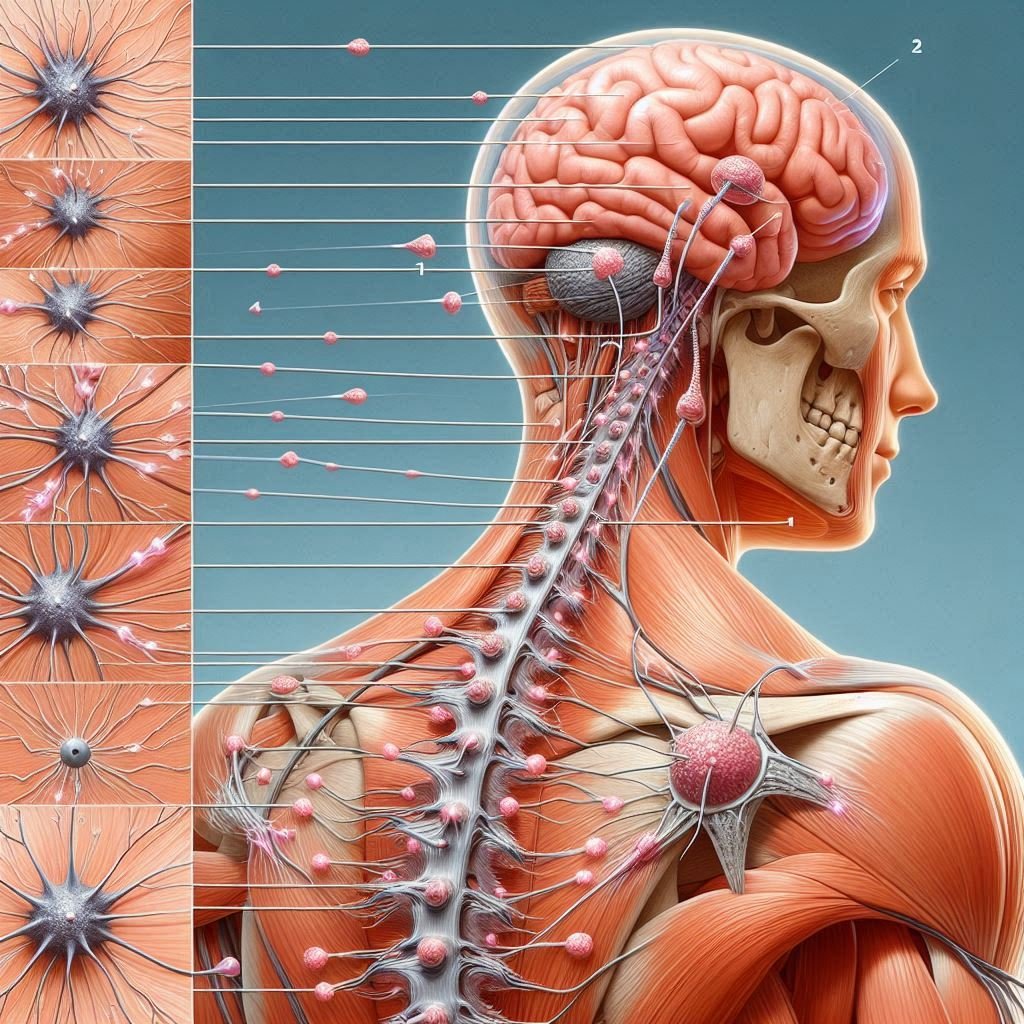
When a person decides to contract a muscle, it first occurs in the brain. The signals are made in the motor cortex and then sent down the spinal cord through the motor neurons. These neurons are the lines of communication that send an electrical signal from the central nervous system to the muscles. This pathway is important for voluntary movement and is very involved in coordination and reaction time.
The signal goes down the motor neuron to the muscle fibre which it is controlling. This pathway is efficient, and determines a person’s speed of reaction to stimuli. The faster the signal is transmitted, the faster the reaction will be, especially in activities that require speed and precision. The neuromuscular junction is the last step in the pathway in which the electrical impulse is transmitted from the nerve to the muscle tissue, causing muscle contraction.
The neuromuscular junction is the target of this course.This course focuses on the target of the neuromuscular junction.
A specialized synapse between a motor neuron and a muscle fibre is called the neuromuscular junction. It is made to make sure the signal originating from the nervous system can be effectively sent to the muscle. It is composed of three parts, the nerve terminal, the synaptic cleft and a muscle membrane.
As the signal reaches the nerve cell terminus, it releases a chemical known as acetylcholine. The chemical messenger diffuses across the synapse and affects receptors on the surface of the muscle cell membrane. This binding triggers a new electrical signal in the muscle fibre, and signals the transition from the nerve to the muscle. This is facilitated by the structure of the neuromuscular junction, which enables the process to be fast and accurate, while allowing efficient control of muscle activity.
Converting from electrical signals to chemical signals
An important part of this process is the transformation of an electrical signal to a chemical signal at the neuromuscular junction. When the nerve impulse arrives at the nerve terminal, it causes the release of acetylcholine into the synaptic cleft. This neurotransmitter is used to transmit the signal to the muscle across the gap between the nerve and muscle.
After binding to the receptors on the muscle membrane, acetylcholine causes the opening up of ion channels and the entry of sodium ions into the muscle cell. This flow of ions creates an electrical current inside the muscle fiber, called an action potential. This procedure ensures the signal from the nervous system reaches the muscle and it starts to contract. This conversion is essential for proper coordination and coordinating movements at the right time for smooth and precise movements.
Initiating Muscle Contraction
Once the signal is sent across the neuromuscular junction, it works its way throughout the muscle fiber and into the cell via a system called transverse tubules. When this signal is sent, it releases calcium ions from the sarcoplasmic reticulum, which sit inside the muscle cell. Calcium ion release is an important part of contraction initiation which enables the interaction between the actin and myosin filaments.
Calcium ions reveal binding sites on actin, allowing the myosin heads to bind and start the contraction process. This interaction causes the filament to move which reduces the length of the muscle fibre and creates force. The whole process takes place in a few milliseconds, reflecting the efficiency of the communication between the nerve and the muscle. A key role in making sure that this sequence is activated at the right time and at the right place is played by the neuromuscular junction.
The ability to coordinate and react quickly
Coordinated movement and rapid response to stimuli is dependent on the efficiency of the nervous system and the neuromuscular junction. Reaction times are affected by the speed of the transmission of the signals from the brain to the muscles, and the efficiency of the signal at the junction. In situations like sports, driving or avoiding danger, communication is key and must be accomplished in a timely fashion.
Coordination is the precise timing of muscle contraction and the smooth functioning of the various muscle groups. The nervous system receives sensory feedback and adjusts signals throughout their activities to enable accurate and controlled movements. These signals are sent with great reliability and precision to the body in order to carry out complex movements. This coordination is crucial for the ability of humans to carry out tasks from basic everyday functions to complex and precise movements.
Diagnosis of muscle weakness and assessing its causes
Several factors can affect the efficiency of the neuromuscular junction, such as health, nutrition, and activity. This junction works correctly if there are enough neurotransmitters, healthy nerve cells and healthy muscle fibers. Any disruption in one of these elements can impact muscles’ contraction and coordination.
Activities such as exercise can enhance the efficiency and strength of the neuromuscular system by improving how the signals are transmitted and boost the relationship between the nerves and muscles. Good nutrition, including the consumption of nutrients, helps the production of neurotransmitters and the health of the nervous system. Fatigue, stress and some diseases, on the other hand, can affect the neuromuscular system, resulting in slower response times and decreased performance.
Real-life applications of Neuromuscular Communication:
The neuromuscular junction’s function is not beyond the scope of movement but it has many real-world applications. In athletics, effective neuromuscular communication enables athletes to respond rapidly, stay balanced and execute complicated actions with accuracy. During rehabilitation, a knowledge of this process enables healthcare professionals to plan therapy to achieve the restoration of movement and control following an injury.
The nervous system and muscles communicate continuously with each other during all the activities of everyday life, including typing, walking and posture. These activities are carried out smoothly and efficiently by the neuromuscular junction. Familiarity with how this process is regulated can help people to value the complexity of movement, and the need to preserve the health of the neuromuscular system.
Conclusion
The path from brain to muscle is complex but very efficient, and depends on the proper functioning of the nervous system and the muscular system. The neuromuscular junction is the point at which these two meet and is the key to the connection between nerve signals and muscle contraction. This junction plays a crucial role in ensuring that movements are precisely controlled, coordinated, and responsive, by converting electrical signals into chemical messages and then back into electrical activity in the muscle. Knowing this process is important as it brings to light the significance of neural control in physical activity and the importance of coordination and reaction time within the body and how it is reliant on effective communication.