If there is one piece of activewear that makes or breaks a yoga session, it is the legging. A good pair disappears completely into your practice you stop thinking about it the moment class begins. A poor pair reminds you of its existence every few minutes through a rolling waistband, fabric that shifts during poses, or a hem that rides above the waistband the moment you fold forward.
Finding the right yoga pants for women is not complicated once you understand what the key differences actually are. This guide breaks it down clearly fabric, waistband, fit, length, and how to match what you buy to the style of yoga you practice.
Why Fabric Is the Most Important Decision
Everything about how yoga pants for women perform during a session starts with the fabric. It determines stretch, breathability, comfort against the skin, opacity, and how long the piece holds its shape. Get the fabric right and the rest of the decision becomes much easier.
Four-way stretch is the baseline requirement. Yoga moves the lower body through forward folds, hip openers, wide-stance poses, lateral lunges, and seated twists. The fabric needs to stretch in all four directions to follow these movements without pulling tight, limiting range of motion, or creating resistance during transitions. A legging that only stretches side to side will feel stiff and restrictive through the poses that demand the most from the hips and legs.
Moisture management keeps you comfortable. Even a slow yoga session raises body temperature, and the lower body generates significant heat during standing sequences and active flows. Moisture-wicking fabric pulls sweat away from the skin and allows it to evaporate keeping the legging feeling dry and light throughout the session. A fabric that holds moisture against the skin becomes increasingly uncomfortable as the session progresses.
Softness of the inner surface matters during extended floor contact. Yoga involves substantial time in seated poses, floor sequences, and supine positions where the legging presses directly against the skin and sometimes against the mat. A smooth, soft inner surface makes all of this comfortable. A rough texture or raised inner seam particularly through the inner thigh and calf becomes distracting during long holds and slow transitions.
Full opacity is non-negotiable. Yoga pants for women need to stay completely opaque during squats, forward bends, wide-legged poses, and any other position that puts pressure or stretch on the fabric. Fabric that goes sheer under pressure is not suitable for any studio setting and should always be verified before committing to a purchase.
Shape retention determines long-term value. Quality fabric bounces back after every stretch and holds its structure session after session. Cheap fabric bags out at the seat and knees within a few months and stops performing and looking the way it should. A legging that holds its shape through 12 months of regular training and washing is a far better investment than one that needs replacing after three.
Flowglowear’s bottoms collection covers yoga pants for women built on fabrics that meet all of these standards soft, four-way stretch, moisture-wicking, fully opaque, and designed to hold their shape through consistent use.
The Waistband: What Separates a Good Pair From a Frustrating One
The waistband is the single feature most responsible for whether yoga pants for women stay in place or spend the session slowly working their way down. It is worth understanding what makes a waistband work before buying.
A high-rise waistband sitting above the hip bone is the most practical choice for yoga. It anchors the legging securely during forward folds, spinal rolls, and supine twists where a lower-sitting waistband would shift. It also provides core coverage during backbends and overhead reaches where the lower back is exposed.
Width matters as much as height. A wide waistband distributes pressure evenly across the midsection and is significantly more resistant to rolling than a narrow one. If rolling waistbands have been a recurring issue, switching to a wide, flat, structured band almost always resolves it.
The inner surface of the waistband should lie flat without folding or creating pressure points. External seams or thick band edges that dig into the skin become uncomfortable during extended wear. A flat inner lining that sits flush against the midsection is more comfortable and more stable during movement.
Length: Which Option Suits Your Practice
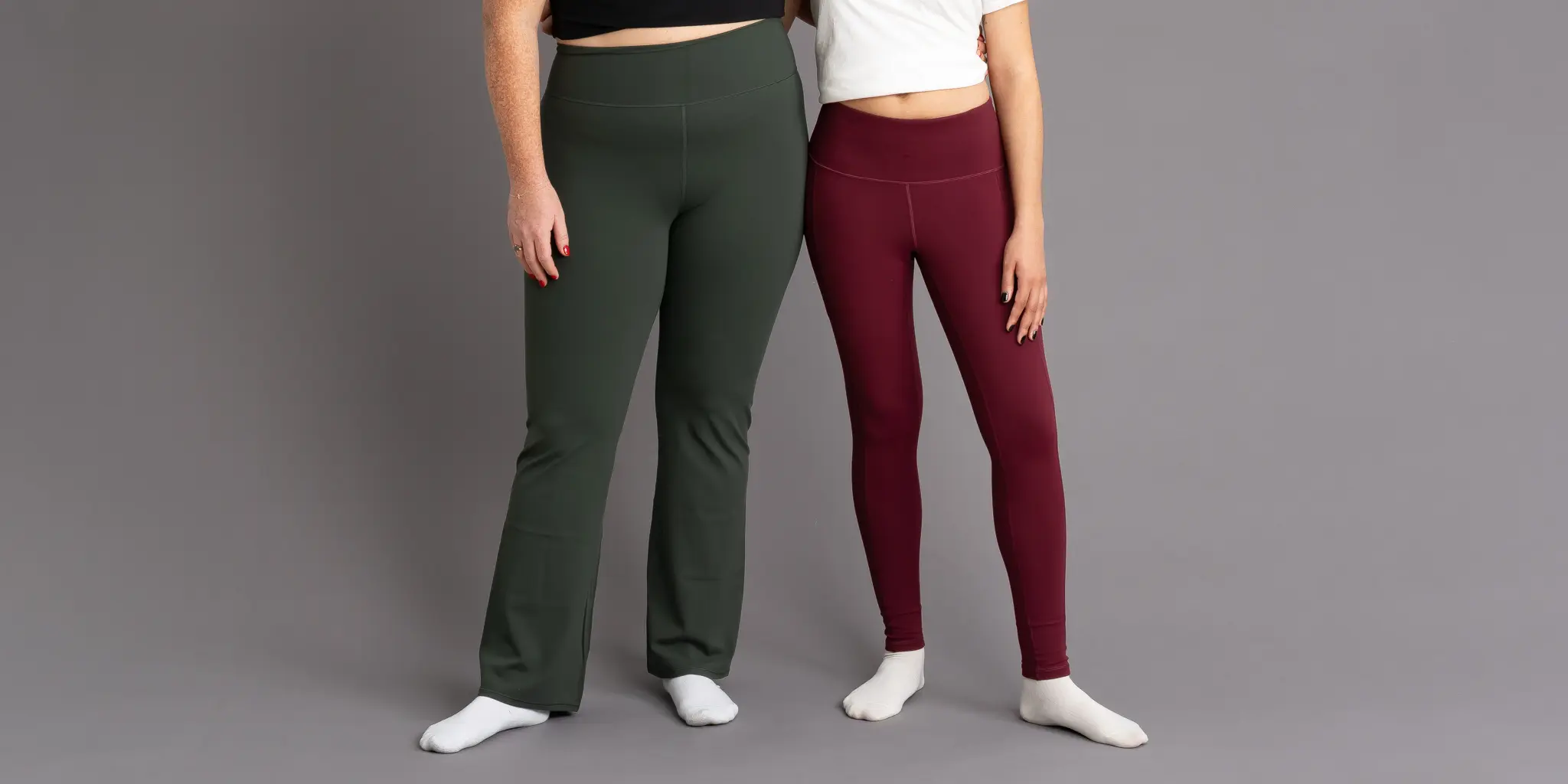
Yoga pants for women come in full length, 7/8 length, and capri cuts. Each suits different practice styles and studio environments.
Full length to the ankle is the most versatile option. It works across all yoga styles, all studio temperatures, and all positions including inversions and wide-legged standing poses where shorter styles may shift or expose the lower leg awkwardly. If you are buying one pair to cover the widest range of sessions, full length is the starting point.
7/8 length ending just above the ankle has a cleaner modern look and avoids any bunching at the ankle when worn with trainers. It transitions more naturally from studio to street and suits mixed-use days where the legging goes beyond just the yoga session.
Capri length at mid-calf suits hot yoga, heated studios, and warmer outdoor environments where reducing coverage through the lower leg keeps you noticeably cooler. It provides full coverage through the thigh and hip where waistband performance and seat opacity matter most while opening up the lower leg to air circulation.
Matching Your Yoga Pants to Your Practice Style
Different yoga styles create different demands on the legging, and buying with your practice style in mind gives you a better result.
For Vinyasa and flow-based yoga, compression and a secure fit are the priorities. The legging needs to stay in place through fast transitions, dynamic balances, and repeated floor-to-standing sequences. A structured high-waist legging in a mid-weight compression fabric handles this well.
For Yin and Restorative yoga, softness and comfort during extended holds matter more than compression. A lighter-weight, softer fabric that feels gentle against the skin during long seated and supine positions is more appropriate than a firm compression style.
For Pilates, a smooth inner surface that does not create friction against the reformer carriage or mat during equipment-based exercises is worth prioritising. Flat seams through the inner thigh and minimal construction through the calf are practical considerations for reformer sessions.
For a complete outfit that coordinates the legging with a matching top, Flowglowear’s matching sets pair bottoms and tops designed from the same fabric and cut to work together giving you a complete session outfit without coordination effort.
How to Care for Your Yoga Pants
Quality yoga pants for women last significantly longer with the right care routine. Wash in cold water after every session hot water breaks down elastic fibers faster than regular use does. Turn the legging inside out before washing to protect the outer surface and keep the color looking fresh. Skip fabric softener it coats moisture-wicking fibers and reduces their ability to manage sweat. Air dry rather than tumble dry dryer heat shortens the life of stretchy fabric considerably. These habits applied consistently after every session keep a quality legging performing the same way in month 12 as it did in month one.
For women who want sustainable options in their yoga wardrobe, Flowglowear’seco-leggings collection offers leggings made from recycled or responsibly sourced materials, built to the same performance standard as the rest of the range.
Frequently Asked Questions
What fabric is best for yoga pants?
Four-way stretch fabric with moisture-wicking properties is the best choice for yoga. It moves freely in all directions, manages sweat effectively, and keeps you comfortable through a full session. Look for a fabric that is soft on the inner surface, fully opaque under pressure, and holds its shape through repeated washing.
Are high-waist yoga pants better than mid-rise?
For most yoga practices, yes. A high-waist waistband sits above the hip bone and stays in place through forward folds, spinal rolls, and seated twists where a mid-rise waistband would shift. High-waist leggings also provide core coverage during backbends and overhead reaches where the lower back is exposed.
How do I know if yoga pants are squat-proof?
The simplest test is to pull the fabric taut with your hands and hold it up to a light source. If you can see light through it under tension, it will go sheer during squats and forward bends. Quality leggings hold their opacity under stretch. You can also test in a changing room by doing a squat and checking in the mirror.
Can I wear yoga pants for activities other than yoga?
Yes. A quality pair of yoga pants particularly full-length or 7/8 length styles in a neutral color transitions well to gym sessions, Pilates, walking, casual wear, and everyday use. The four-way stretch fabric and comfortable waistband suit most low to moderate intensity movement contexts.