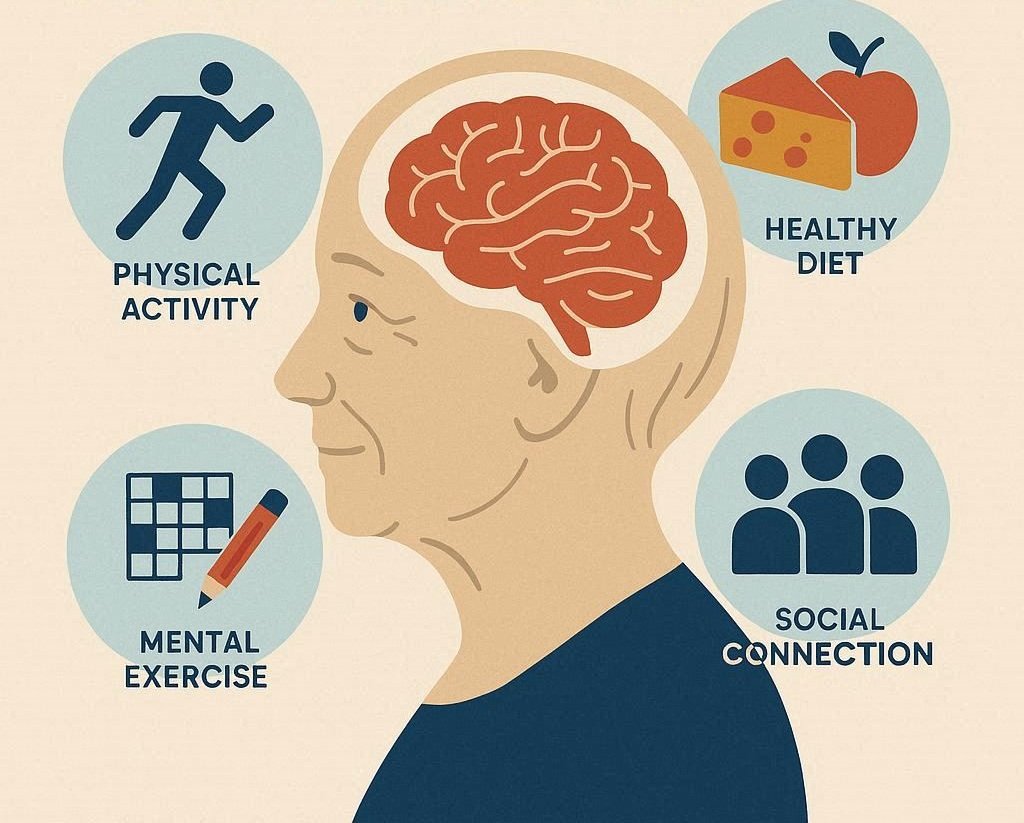
Old age is a normal aspect of life and as the body goes through the stages of life, the brain too goes through some gradual changes. Although a certain amount of cognitive change is a normal aspect of aging, it is important to comprehend the impact of aging on the brain to ensure mental acuity and longevity. Small changes can be observed by many as they age, including having to take more time to remember names, slower information processing, or difficulty multitasking. These changes may be alarming, but they do not necessarily signify serious illness.
Human brain has been one of the most complex organs in the body, which performs memory, reasoning, emotion, movement and decision-making. Age also brings about some structural and functional alterations in the brain affecting its effectiveness in undertaking these tasks. Nonetheless, studies have always indicated the cognitive deterioration is not necessarily unavoidable. The lifestyle, brain engagement, sleep, nutrition, and social interactions can all contribute significantly to maintaining a healthy brain.
This article examines the impacts of aging on the brain, the causes of memory and processing impairments, the dangers posed by neurodegenerative disorders, and scientifically proven methods of preserving cognitive ability and minimizing deterioration.
The Age-related Changes in the Brain
In order to comprehend cognitive aging, then it is first necessary to comprehend what occurs within the brain in the course of time. Physical changes in the brains of the aging brain may be gradual, such as a decrease in the total amount of brain mass, particularly in brain regions associated with learning and memory such as the hippocampus and the prefrontal cortex.
There is also the possibility that neurons which transmit information communicate less efficiently with age. Although the brain keeps forming and remaking neural paths, the rate of transmission of signals may decrease. This is among the reasons why the speed of reaction and processing of information may not be as quick as it used to be.
Age may also result in a decreased flow of blood to the brain. As the brain requires oxygen and other nutrients that are transported by the blood, decreased blood flow may impact concentration, mental sharpness, and memory.
All these changes belong to the normal aging process but the degree of these changes differs among individuals based on their genetics, health practices and the environment.
Difficulties with Recall and Changes in Memory
One of the most common concerns people have about cognitive aging is memory. It is common to simply lose a key, forget something, or take longer to remember something, or to acquire something new.
Such memory impairment is usually associated with a slow retrieval and not loss of memory. In most instances, the information still remains in the brain but is more difficult to retrieve.
There is also the potential of short-term memory and working memory declining with age. Working memory The ability to temporarily retain and utilize information, e.g. to remember a phone number long enough to dial it.
Memories developed many years ago tend to be rather well-developed long-term memory. It is interesting to note that many elderly people are able to remember whatever occurred decades ago with amazing detail and forget more recent information.
This difference assists in explaining the impact of aging on the brain in real life situations.
Slower Processing Speed
The other significant cognitive aspect that is associated with aging is slower processing speed. This implies that the brain might delay in processing information, processing it and reacting.
As an example, when complicated instructions are read, quick decisions are made, or responses to sudden events are needed, then it might take longer than usual.
A low processing speed will not automatically imply low intelligence. Instead, it is an indication of alteration in brain speed of communication.
Activities that involve divided attention or when alternating between various activities can become more challenging. The experience, better judgment, and better pattern recognition compensate it in older adults, though.
In most situations, wisdom and strategic thought are still enhanced despite a deceleration of speed.
Aging of the brain and the risk of neurodegenerative diseases
Although normal aging of the mind is normal, it is also necessary to tell it apart with neurodegenerative diseases like the Alzheimer disease and other dementia types.
Neurodegenerative disorders are characterized by an irreversible loss of brain cells beyond normal aging processes. The symptoms can include a severe loss of memory, confusion, language problems, personality and behavior changes.
One of the reasons why it is so important to learn how aging impacts the brain is the risk of such conditions increasing with age.
Genetics, chronic inflammation, cardiovascular disease, diabetes, smoking, and poor sleep are some of the risk factors.
Age is the most powerful risk factor, but healthy lifestyle practices can be used to minimize the risk of severe cognitive impairment.
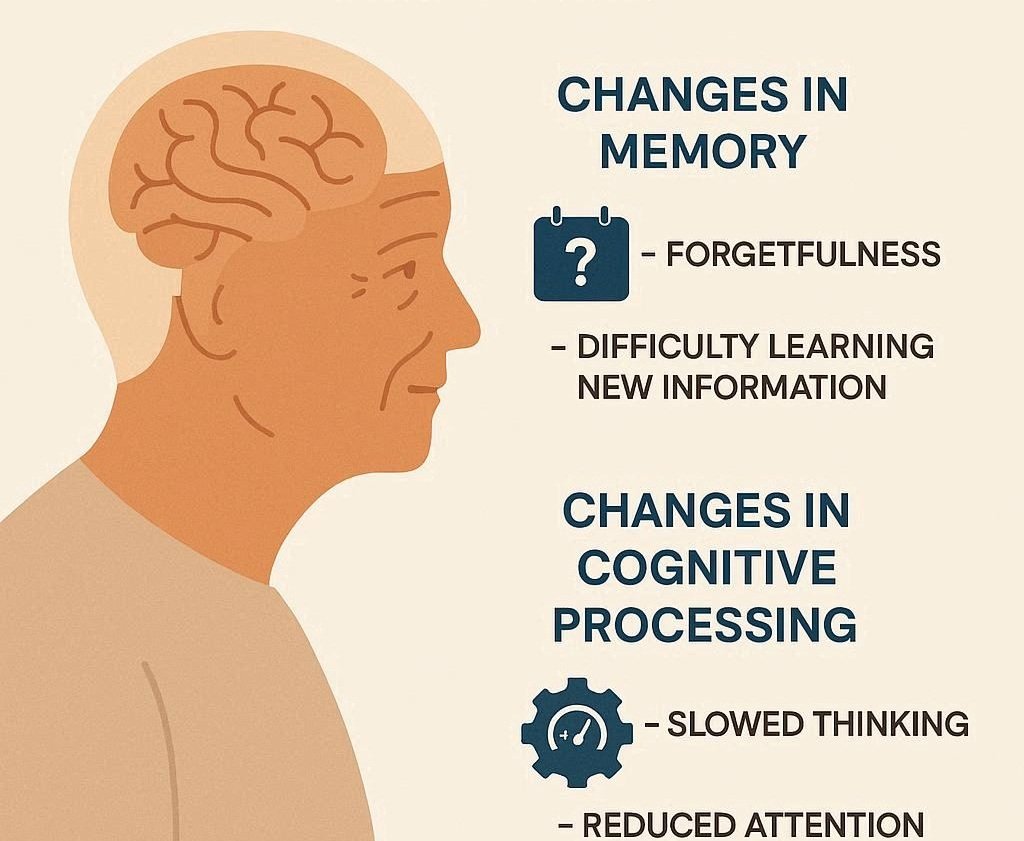
“the impacts of aging on the brain in terms of changes in memory and cognitive processing”.
The significance of Mental Stimulation
Regular mental stimulation is one of the scientifically validated methods to keep the mind active.
The brain loves to be challenged and to be new. Thinking, learning, and problem-solving activities used to strengthen neural connections and can even encourage neuroplasticity, or the ability of the brain to reconfigure itself.
Stimulating the brain is done by reading, writing, learning a new language, playing a strategy game, solving puzzles, and taking part in educational activities.
Constant learning contributes to the formation of so-called mental reserve of researchers. The reserve could assist the brain to be resistant to aging.
Mental stimulation is particularly useful when new challenges are presented, instead of using the same routine.
Healthy Brain and Food
Food is an important factor in promoting mental well-being. The brain needs the constant supply of nutrients to work effectively.
The fatty acids especially omega-3 are present in fish, walnuts, and flaxseeds and play a significant role in neuronal membranes and communication pathways.
Foods that are rich in antioxidants like berries, leafy vegetables, and nuts are useful in protecting brain cells against oxidative stress that is part of aging and degeneration.
Whole grains are a stable supply of the glucose which is the main fuel of the brain and B vitamins help in the functioning of nerves and production of neurotransmitters.
It is also important to hydrate. Mild dehydration may have adverse outcomes on focus, memory, and alertness.
One of the most viable methods of slowing down the impacts of cognitive aging is to maintain a diet rich in nutrients.
Optimization of sleep in Cognitive Processes
One of the most effective brain-sustaining tools is sleep. The brain uses sleep to consolidate memories, eliminate waste products and to restore neural function.
Low sleep quality has been closely associated with cognitive deterioration, and higher susceptibility to neurodegenerative disease.
Sleep patterns can vary as a person gets older, and there can be cases where the sleep patterns become lighter, or the duration of sleep decreases. Nevertheless, sleep hygiene is a priority.
The ability to adhere to a consistent sleeping routine, decrease the amount of time on a screen prior to sleep and establish a relaxing sleeping environment can greatly enhance cognitive functioning.
One of the most explicit instances of the way lifestyle affects the impact of aging on the brain is sleep.
Social Interaction and Feeling Good
Another effective protective factor to the brain health is social interaction. Interacting with others will promote communication skills, emotional processing and memory.
Discussions, teamwork and quality relationships are activities that demand the brain to work in a manner that isolated activities might not.
Studies indicate that loneliness and social isolation can hasten cognitive impairment and enhance the risk of dementia.
It depends on emotional well-being, as well. The chronic stress, anxiety and depression may adversely impact memory and concentration.
Having good social networks can contribute to mental and emotional health.
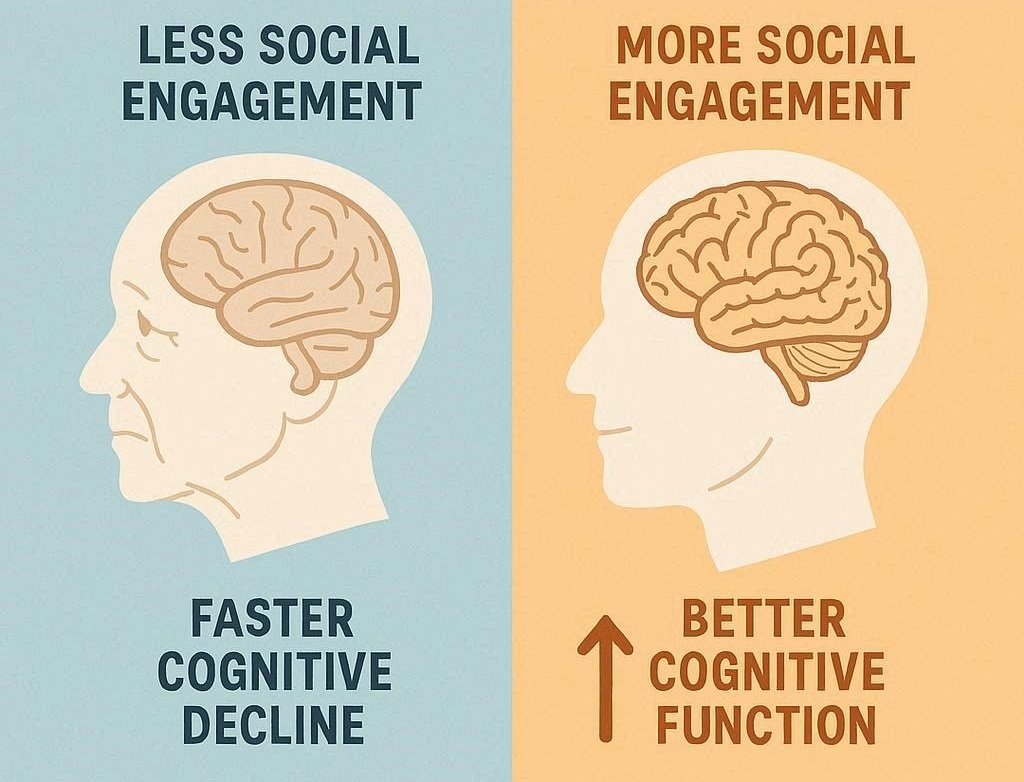
“the impact of aging on the brain and cognitive health by social engagement”.
Brain Performance and Physical Activity
The brain is as much helped by exercise as it helps the body. Exercise enhances the blood flow, which supplies brain tissue with oxygen and nutrients.
Exercise has been indicated to aid in memory, attention and speed of processing.
Walking, swimming, cycling, and strength training activities might be effective in promoting the development of new neural connections and enhancement of overall brain functions.
Exercise also minimizes stress and inflammation, which are also associated with cognitive decline.
Even moderate daily movement could be very helpful in cognitive health in the long-term.
Falling Cognitive Decline Prevention Lifestyle
Age-related cognitive decline cannot be prevented with a singular solution but instead, it has to be approached holistically.
Healthy eating, exercise, mental stimulation, sleep and social interaction are the best ingredients to brain health.
Medical checkups are also crucial and should be taken regularly and particularly to check blood pressure, blood sugar and heart conditions as they have direct influence on the brain functions.
Education at a young age and regular routines tend to yield the best in the long term.
Long-term Cognitive Care Advantages
Cognitive health protection means a lot more in enhancing quality of life than memory. It helps to be independent, make decisions, have emotional balance, and feel confident.
Being sharp will enable one to keep on learning, working, socializing, and enjoying life with ease.
The emotional burden of fear of memory loss is also minimized in healthy aging of the mind.
Conclusion
Knowing the changes that occur in the brain as a person ages will enable individuals to face the changes in the brain with awareness and not fear. A little loss of memory and slow processing are normal aspects of aging, and major decline is not inevitable.
Habits that are scientifically proven to help greatly to promote long-term cognitive health include mental stimulation, nutrition, sleep optimization, physical activity, and social interaction.
Brain is flexible during life and daily routine can be used to maintain its activity till the later years.