
Introduction
One of the most important in life and skills that students and young adults can have is financial planning, which is more or less neglected. At this age, a lot of people are financially independent, possibly, first time in their lives; they are handling allowances, part-time job earnings or student loans. Unless one is well guided, temptations to engage in habits that result in financial hardships in the long run are easy to fall into.
The thing is that you do not have to have plenty of money to spend in order to handle money. It is not what you have but what you do with it. Learning financial discipline at an early age enables you to avoid spending time and resources on useless stresses, create a stable environment and get ready to seize opportunities in the future.
This is the reason why establishing good money habits ought to be a priority. Such habits determine how you act about money and how you will make decisions in the future. It doesn’t necessarily have to be learning how to budget, save or how to avoid debt, but every little step you take helps you have a more secure financial future.
In this paper, we will discuss viable steps in financial planning for students and young adults that they can use to gain control of their finances, make better choices, and establish a strong financial base.
Understanding Your Finances
You must first have an idea of where you stand before you can make improvements in your finances. Most youths spend money in a haphazard way and they do not keep a record of such expenses hence they do not know where the money is spent.
Start by identifying:
- The sources of your income (allowance, part-time employment, gifts)
- Your usual bills (food, transportation, school supplies)
- Any liabilities or financial debts.
With this information, you will be able to see trends in your expenditure. This awareness is effective in that it enables you to determine unnecessary costs and areas that you can reduce.
Maintaining an easy account of your earnings and expenses even in a notebook can go a long way. By being aware of what is in your pocket, how much you spend, you can make better decisions.
How to handle Allowances and Income
Income is a constraint to the majority of students. This only serves to make it even more crucial to handle it prudently. Get a simple plan, rather than spend the money immediately you have it.
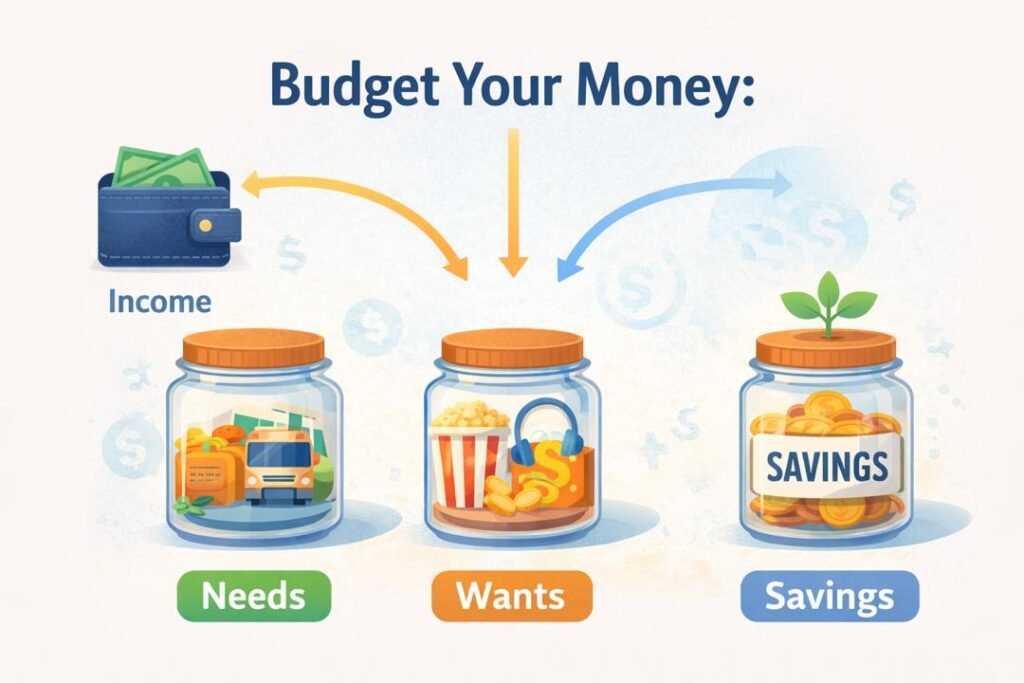
One such trick is to separate your cash into segments:
- Needs: basic needs such as food and transportation.
- Wants: shopping, entertainment and social activities.
- Savings: This is money that is saved to be used in future.
Your income may be little, but you should always have savings in your budget. This instills discipline and makes sure that you are planning towards the future.
The other tip that can be of use is not to spend impulsively. When you have temptation to purchase something, take a day or two before deciding on the purchase. This wait will assist you in deciding whether the purchase is needed as well as a mere whim.
Establishing Good Financial Practices Early
Good money habits are a great asset to be developed at a young age. These are habits that are included in your lifestyles and influence your choices as your income increases.
1. Spend with Purpose
Each buying must be caused. You should not purchase items because other people are purchasing them, but rather what is of great importance to your life.
2. Save Before Spending
Saving some of your money before using it in any other way is one of the best habits that can be effective. This will make saving a priority, rather than an afterthought.
3. Avoid Emotional Spending
Having nothing to do, feeling stressed, or under the impact of social media, many people use money. Being aware of these triggers may save you the extra costs.
4. Be Consistent
It is better to be consistent than perfect. Although you can save small amounts at a time, it will cultivate discipline and would have long-term advantages.
The Importance of Saving Early
One of the best monetary choices you can make when you are young is saving money. It puts you at ease and equips you with emergencies.
Benefits of Saving Early
- Financial independence: You are not so dependent on people.
- Emergency preparedness: You are able to cover any unexpected costs.
- Future prospects: You can afford to study, start-up or travel.
How to Start Saving
- Open a special bank savings account.
- Establish specific targets of savings.
- Keep a certain percentage of your income.
- Only touch your savings when you need to.
You may only be able to save a little but the most important thing is that you start. With time, you will increase your savings and the habit will be easier.
Avoiding Unnecessary Debt
One of the largest challenges that the youths face is debt. Most debts can be avoided even though certain types of debt (such as student loans) cannot be avoided.
Typical Causes of Debt
- Impulse buying
- Peer pressure
- Lack of budgeting
- Overuse of credit
How to remain out of Debt
- Only spend what you can afford.
- Do not borrow unnecessary things.
- Know interest rates and take loans.
- Stick to a budget
When you are already in debt, work on paying it off as soon as possible. Begin with high-interest debts and do not incur new debts.
Budgeting and Adhering to it.
A budget is a straightforward plan that can assist you in managing your finances. It makes sure that your income is spent in the best way and also in accordance with your priorities.
Budget-making Steps
- Name all your sources of income.
- Identify your expenses
- Categorize your spending
- Establish boundaries of each category.
- Monitor and check periodically.
Budgeting is not restrictiveness, but rather making a conscious decision. It puts your money in your hands and it enables you to stay out of the needless pressure.
Building an Emergency Fund
An emergency fund is a sum of money saved in case of an emergency e.g. a hospital bill or emergency repairs.
Why It’s Important
The lack of an emergency fund might mean that you will have to turn to borrowing, which can result in an indebted state.
How to Build One
- Start with a small goal
- Save consistently
- Do not put money in your regular account.
Aim to save on the basic expenses of at least one to three months in the long run.
Spending Wisely
It does not mean that you cannot enjoy life, being financially responsible. It is just a matter of being smarter.
Smart Spending Tips.
- Compare prices and then make purchases.
- Find out promotions and student offers.
- Concentrate on quality as opposed to quantity.
- Shun trends that promote extravagance.
Planning your money means that you spend your money wisely and in accordance with your objectives.
Introduction to Investing
It may appear complicated, but the sooner you learn about investing, the better.
Why It Matters
- Helps make your money increase.
- Builds long-term wealth
- Makes you fit in the future in terms of finances.
Beginner Tips
- Begin with the fundamentals.
- Do not buy into high-risk schemes.
- Consider low risk when entering.
There is no need to begin investing at this point, but it is a good idea to know.
Setting Financial Goals
Money has a purpose when you set financial goals. Without ambitions, one can simply squander money without a purpose.
Types of Goals
- Short-term: Purchase of essentials or gadgets.
- Medium-term: tuition or certifications payment.
- Long-term: starting business or purchasing a home.
How to Set Goals
- Be specific
- Set deadlines
- Track progress
Goals will keep you motivated and focused in your financial journey.
Avoiding Peer Pressure
One of the biggest causes of over spending by the youth is peer pressure. Social media has a tendency of building unrealistic expectations with regard to lifestyle and expenditure.
How to Handle Peer Pressure
- Concentrate on your priorities.
- Do not compare yourself with others.
- Keep in mind financial success is individual.
Being disciplined will make you not to get into unnecessary financial strains.
Improving Financial Literacy
To make a well-informed decision, financial literacy is required.
Ways to Learn
- Read financial articles and financial books.
- Watch educational videos
- Take online courses
- Keep to reputable financial professionals.
The greater your knowledge level, the more money you will make a good financial decision.
The Power of Consistency and Discipline
Consistency and discipline are the keys to success in financial planning. Minor efforts put in place in the long term bear fruit.
Live within your means, save and do not spend on luxury. It may seem challenging, but being consistent will be rewarded after some time.
Conclusion
Financial planning for students and young adults should be done and not delayed. Being student or a young adult, you can establish a firm foundation that will help you in the remaining part of your life.
With good planning of your income, early saving, never engaging in unnecessary debt, and making intelligent choices, you can be set up to long-term success. Habits today will determine your future in terms of finances.
Learn to develop good money habits, be disciplined and keep in mind what you want to accomplish. These will eventually develop to financial stability, independence and confidence. The decisions you take today are the first steps towards financial success.
Get more well researched information about financial planning for students and young adults here.