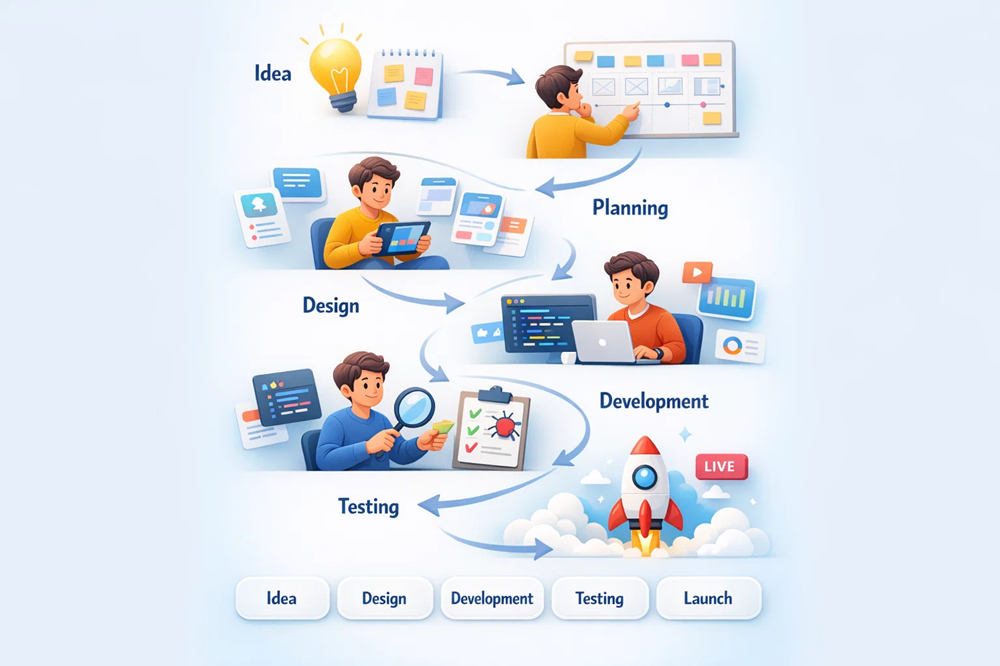
In today’s fast-paced digital world, mobile applications have become an essential part of everyday life. From ordering food to managing finances, apps provide convenience, accessibility, and a seamless user experience. But what does it take to turn a concept into a fully functioning mobile application? Understanding the mobile app development process is crucial for anyone looking to create a successful product.
Whether you’re a startup with a groundbreaking idea or an established business aiming to expand your digital presence, partnering with a reliable Mobile App Development Company can make all the difference. Such companies not only provide technical expertise but also guide you through each stage of app development, ensuring your vision becomes a reality.
1. Ideation and Conceptualization
Every great app starts with an idea. The ideation phase involves identifying a problem, defining a target audience, and conceptualizing a solution. During this stage, it’s important to answer questions like:
- What problem does the app solve?
- Who will use it, and why?
- How will it stand out from existing solutions?
Collaboration with a Mobile App Development Company at this stage can provide valuable insights. Experienced developers and business analysts help refine your concept, ensuring it’s both feasible and aligned with market needs.
2. Market Research and Analysis
Once the idea is defined, thorough market research is essential. This step involves studying competitors, analyzing user behavior, and understanding industry trends. Market research helps identify gaps and opportunities, reducing the risk of developing an app that fails to gain traction.
Custom Software Development Services often include competitive analysis and feasibility studies. These insights guide decision-making, from feature prioritization to monetization strategies, making your app more likely to succeed in a crowded marketplace.
3. Wireframing and Prototyping
Wireframing is the blueprint of your app. It outlines the structure, navigation, and functionality without diving into visual design. A well-crafted wireframe ensures that all stakeholders share a clear vision of the app’s flow.
Prototyping takes it a step further by creating an interactive model of the app. This allows you to test usability, gather feedback, and make adjustments before development begins. Many Mobile App Development Companies offer this service as part of their Custom Software Development Services, helping clients visualize the final product early in the process.
4. UI/UX Design
Design plays a pivotal role in app adoption. A user-friendly interface and seamless user experience can significantly influence an app’s success. During this phase, designers focus on:
- Visual aesthetics and branding
- Intuitive navigation and layout
- Accessibility and responsiveness
Investing in UI/UX design ensures that users not only enjoy using the app but also return to it regularly. Partnering with experienced designers through a Mobile App Development Company can transform your concept into an engaging and visually appealing experience.
5. Development and Coding
Development is where your app starts to take shape. Depending on the target platform iOS, Android, or both developers write code, integrate databases, and implement functionalities. Modern development practices often follow Agile methodologies, allowing incremental progress and regular updates.
Choosing a company that provides Custom Software Development Services ensures that your app is built using the latest technologies, adhering to best coding practices, and optimized for performance. This stage also involves regular testing to catch bugs early and ensure smooth operation.
6. Testing and Quality Assurance
Even the best app can fail if it’s riddled with bugs or usability issues. Rigorous testing is essential to deliver a polished product. QA teams test the app on multiple devices, operating systems, and network conditions to identify and fix issues.
Testing covers:
- Functional testing: Ensures all features work as intended
- Performance testing: Checks speed, responsiveness, and stability
- Security testing: Protects user data and prevents vulnerabilities
A Mobile App Development Company often includes comprehensive QA services to guarantee a flawless launch.
7. Launch and Deployment
After thorough testing, the app is ready for launch. This involves submitting it to app stores, such as Google Play or Apple App Store, and ensuring it meets all guidelines. Marketing strategies, including app store optimization (ASO) and social media promotion, are crucial for visibility and user acquisition.
8. Post-Launch Support and Maintenance
The launch is not the end of the journey. Apps require ongoing maintenance to fix bugs, update features, and stay compatible with new OS versions. Many Mobile App Development Companies offer post-launch support as part of their Custom Software Development Services, ensuring the app continues to perform optimally.
Continuous user feedback also guides future updates, helping the app evolve according to user needs and market trends.
Conclusion
Turning an idea into a successful mobile application involves careful planning, collaboration, and execution. By understanding the mobile app development process from ideation and market research to design, development, and post-launch support you can increase your chances of creating an app that resonates with users.
Partnering with a professional Mobile App Development Company that offers comprehensive Custom Software Development Services ensures that your app not only meets technical standards but also delivers an exceptional user experience. With the right team and strategy, your concept can transform into a product that makes a lasting impact in the digital world.