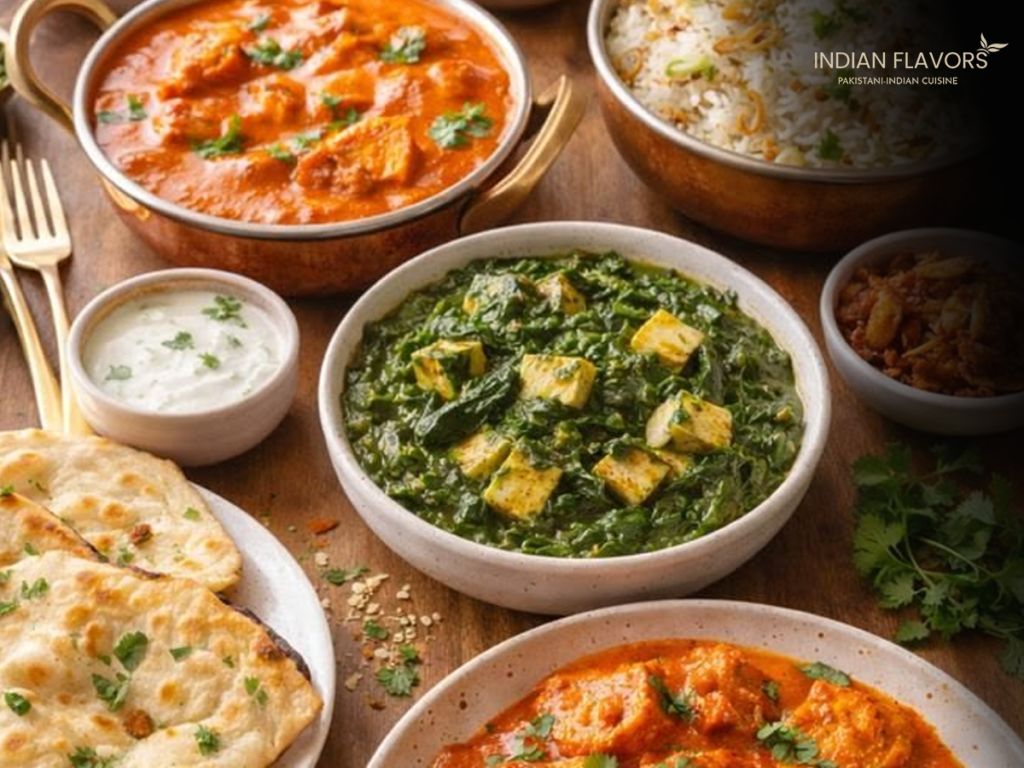
Few things in the world carry a civilization’s soul as faithfully as its street food. Indian and Pakistani street food born in the dust and color of South Asia’s most vibrant bazaars has traveled continents, crossed oceans, and transformed into one of the most beloved culinary traditions on earth.
The taste of the smoky kebab stalls of Lahore’s Food Street to the chaat carts of Mumbai’s Chowpatty Beach, this food was never meant to stay in one place. The taste was carried on the backs of migrants, dreamers, and entrepreneurs.
Indian and Pakistani street food has evolved into a globally recognized culinary phenomenon, widely represented across London’s curry districts, New York’s food halls, Dubai’s night markets, and Toronto’s diverse multicultural avenues.
The Ancient Roots of South Asian Street Food
The story of Indian and Pakistani street food begins thousands of years ago in the subcontinent’s dense urban centers cities like Lahore, Delhi, Varanasi, and Karachi where feeding large populations quickly and affordably was both a necessity and an art form. Street vendors, known as rehriwalas or thellawalas, were as integral to city life as the streets themselves.
Long before the word ‘fast food’ entered the global lexicon, South Asia had perfected the concept. The Mughal Empire’s rich culinary legacy gifted the world an extraordinary flavor palette, aromatic biryanis, slow-cooked nihari, and tender seekh kebabs became street staples in the walled cities of the Punjab and Deccan.
Meanwhile, the Hindu and Jain vegetarian traditions of western India produced an equally magnificent universe of chaat, samosas, and dosas that required no meat whatsoever but were no less spectacular in complexity and taste.
These two streams, the meat-forward Mughal tradition of what is now Pakistan and northern India, and the vegetarian-rich southern and western Indian tradition form the twin pillars of a street food culture that the world would eventually come to adore.
“Indian and Pakistani street food was never simply about sustenance. It was and remains a daily act of cultural expression, community, and identity served on a paper plate.”
Iconic Dishes of Indian and Pakistani Street Food
| Dish | Origin | Description |
| Seekh Kebab | Pakistan North India | Minced meat seasoned with ginger, garlic, and spices, grilled on iron skewers over charcoal. A Mughal legacy now found on every continent. |
| Pani Puri / Golgappa | India Pakistan | Crisp hollow spheres filled with spiced tamarind water and chickpeas. The quintessential chaat experience, explosive and utterly addictive. |
| Kati Roll | Kolkata, India | A paratha wrap stuffed with marinated kebab, onions, and chutney. |
| Nihari | Lahore Old Delhi | A slow-cooked beef shank stew simmered overnight with warming spices. Originally a Mughal breakfast dish, now a weekend ritual across the diaspora. |
| Samosa | Pan-Subcontinental | Crispy pastry triangles filled with spiced potatoes or minced meat. Perhaps the most globally recognized piece of Indian and Pakistani street food. |
| Biryani | Hyderabad Karachi | Fragrant basmati rice layered with spiced meat or vegetables. From a royal banquet dish to a street pot, biryani is the crown jewel of South Asian gastronomy. |
The Great Migration: Carrying Food Across Borders
The global spread of Indian and Pakistani street food is inseparable from the history of South Asian migration. The British colonial era set the first wave in motion. Indentured laborers carried spice blends and cooking traditions to Fiji, Trinidad, South Africa, and Mauritius in the 19th century, planting the seeds of entirely new creole food cultures rooted in the subcontinent’s flavors.
The post-independence migration waves of the 1950s through 1980s, particularly to the United Kingdom, fundamentally transformed British food culture.
Pakistani and Indian families who settled in cities like Birmingham, Bradford, Leicester, and London’s East End opened restaurants, takeaways, and later, food stalls. The ‘curry house’ became a British institution. Chicken tikka masala, a creamy adaptation of a Punjabi-inspired dish, was once declared Britain’s unofficial national dish.
The late 20th-century migration to North America, Australia, and the Gulf countries accelerated the global spread further. Cities like Toronto, Houston, Chicago, Sydney, and Dubai became new epicenters of authentic Indian and Pakistani street food, with diasporic communities recreating the food memories of their homelands with remarkable fidelity.
The Scale of South Asian Culinary Influence
35M+ – South Asian diaspora globally
£5B+ – UK Indian & Pakistani food industry value
100+ Countries with a desi street food presence
A City-by-City Transformation – Global Hotspots
What makes the journey of Indian and Pakistani street food so fascinating is how it has evolved differently in every city it has touched absorbing local influences while retaining an unmistakable South Asian soul.
In London, Southall’s ‘Little India’ and Whitechapel’s Bangladeshi-Pakistani corridor serve everything from haleem to bhel puri alongside chips and canned drinks.
In New York City, the Jackson Heights neighborhood in Queens is a dizzying celebration of South Asian street food culture, where chaat houses sit next to Pakistani karahi restaurants and Bangladeshi snack shops.
Brick Lane’s curry houses and Indian Flavors remain iconic, and the street food truck revolution has introduced gourmet samosa sliders and tikka tacos to mainstream American food culture.
Dubai deserves special mention as perhaps the world’s most concentrated arena for authentic Indian and Pakistani street food outside the subcontinent. With millions of South Asian workers and expatriates, the city supports an extraordinary density of dhabas (roadside eateries), shawarma-naan hybrids, and subcontinental sweet shops.
In Toronto, neighborhoods like Little India on Gerrard Street East and Brampton’s Punjabi corridor have become destinations for seekh kebabs, butter chicken rolls, and freshly made jalebis.
Even in unexpected places, Tokyo’s Nishi-Kasai district, Johannesburg’s Fordsburg, Nairobi’s Westlands, and Sydney’s Parramatta, Indian and Pakistani street food has carved out a permanent, cherished space.
Fusion, Reinvention & The New Wave of Indian & Pakistani Street Food
The contemporary chapter of Indian and Pakistani street food’s global journey is being written by a new generation of chefs and food entrepreneurs who are simultaneously honoring tradition and exploding its boundaries. The fusion movement has produced genuinely exciting hybrid creations that have found enthusiastic audiences worldwide.
In London, Indian and Pakistani chefs have pioneered dishes like masala fish and chips, chaat nachos, and keema pav sliders that translate South Asian flavor profiles into formats familiar to Western audiences.
In the United States, the ‘modern Indian’ restaurant movement has elevated street food recipes into fine dining while retaining their democratic, joyful spirit. Food trucks serving gourmet versions of pav bhaji, dal makhani wraps, and chai-spiced desserts have become fixtures at farmers’ markets and food festivals from Portland to Miami.
Perhaps the most remarkable reinvention has happened in the dessert sphere. Pakistani mithai (traditional sweets) and Indian chaat-inspired desserts like gulab jamun ice cream, rabri waffles, chai crème brûlée have found devoted followings on social media and in the kitchens of some of the world’s most creative pastry chefs.
More Than Food: Identity, Memory & Belonging
To understand why Indian and Pakistani street food travels so well, one must understand what it means to the people who carry it. For millions of South Asian migrants, food is not simply nourishment, it is the most portable form of home.
The smell of cumin seeds hitting hot oil, the tang of tamarind in chutney, the warmth of freshly baked naan, these are sensory memories that connect people across decades and thousands of miles to the streets where they grew up.
Anthropologists have noted that food preservation is often the last cultural practice to erode within immigrant communities. Language may shift, dress may change, but the insistence on eating the right food, the food of one’s ancestors, persists with extraordinary tenacity.
This is why second-generation Pakistani families in Manchester and third-generation Indian families in New Jersey still seek out specific spice blends, specific cooking methods, and specific street food dishes that their grandparents brought with them.
Food also serves as a bridge between cultures. The remarkable success of Indian and Pakistani street food in non-South Asian communities is a testament to the universal appeal of bold, complex, and honest flavors. It has become one of the most effective and peaceful ambassadors of subcontinental culture, generating curiosity, admiration, and intercultural dialogue one bite at a time.
The Future: Where Does This Journey Lead?
The trajectory of Indian and Pakistani street food on the world stage shows no signs of slowing. Quite the contrary. As global food culture becomes increasingly adventurous, plant-based diets gain momentum, and consumers seek deeper stories behind their meals, the rich traditions of the subcontinent are better positioned than ever.
The plant-based food revolution has been particularly kind to Indian street food, which has always boasted an extraordinary repertoire of vegetarian and vegan-friendly dishes, from aloo tikki and papdi chaat to dal bati churma and masala dosa. These dishes need virtually no modification to satisfy contemporary dietary preferences, giving them enormous mainstream appeal.
Meanwhile, Pakistani street food, long overshadowed internationally by its Indian counterpart despite equal complexity and brilliance is experiencing a well-deserved global moment. Dishes like bun kebab, sooji halwa, kata kat, and Lahori fried fish are finding new audiences in major food cities, championed by Pakistani chefs and food writers committed to telling their culinary story on the world stage.
The internet and social media have accelerated this discovery process dramatically. YouTube cooking channels, Instagram food photography, and TikTok recipe videos have introduced the sights and techniques of Indian and Pakistani street food to audiences in every corner of the planet.
Today, a person in Oslo or São Paulo can learn to make authentic pani puri water or perfect seekh kebabs from a grandmother in Karachi or a home cook in Chennai and that extraordinary knowledge exchange is reshaping what the world considers delicious.
A Journey of Pakistani & Indian street Food Without End
The cultural journey of Indian and Pakistani street food around the world is ultimately a human story, one of resilience, creativity, and the profound need to carry one’s identity across borders. From the ancient bazaars of Lahore and Delhi to the food festivals of Melbourne and the food halls of Manhattan, this food has proven that great flavor is a universal passport.
Indian and Pakistani street food does not merely feed the body. It tells stories of empires and migrations, of spice routes and partition, of grandmothers and grandchildren, of belonging and reinvention.
Every samosa sold in a London market, every biryani served in a Houston food truck, every cup of chai handed across a counter in Dubai is a small act of cultural continuity proof that some things, when they are truly great, refuse to stay in one place.