Getting back on your feet after an injury or surgery is rarely a straight path. There are good days and setbacks, moments of progress and moments of frustration. The fear of falling, re-injuring yourself, or simply not trusting your own body to hold steady is something many people in recovery quietly carry.
For older people managing age-related changes in balance and strength, that same fear is just as present and just as limiting. It shapes decisions, reduces movement, and chips away at confidence in ways that are easy to underestimate. Having the right support in place changes that experience entirely.
Walkers are among the most effective mobility aids for both recovery and long-term daily use. Let’s understand what they offer and how to choose the right one.
What is a Walker and its Types
A walker is a mobility support device that assists with balance, stability, and controlled weight distribution during movement. They are widely used by people recovering from orthopedic surgery, lower limb injuries, and procedures that temporarily affect strength or gait. As well as by older people managing balance difficulties or reduced muscle strength in daily life.
- Standard Walkers
These require the user to lift the frame forward with each step, which provides a high level of controlled, deliberate stability. They are commonly prescribed following hip or knee replacement surgery and are equally well-suited for anyone whose balance requires maximum ground contact and careful movement.
- Two-wheel Walkers
Two-wheel walkers pair front wheels with stationary rear legs, offering a smoother forward motion without requiring the user to fully lift the frame. They work well for people further along in their recovery and for older people with manageable balance concerns who need consistent support throughout the day.
- Four-wheel Walkers
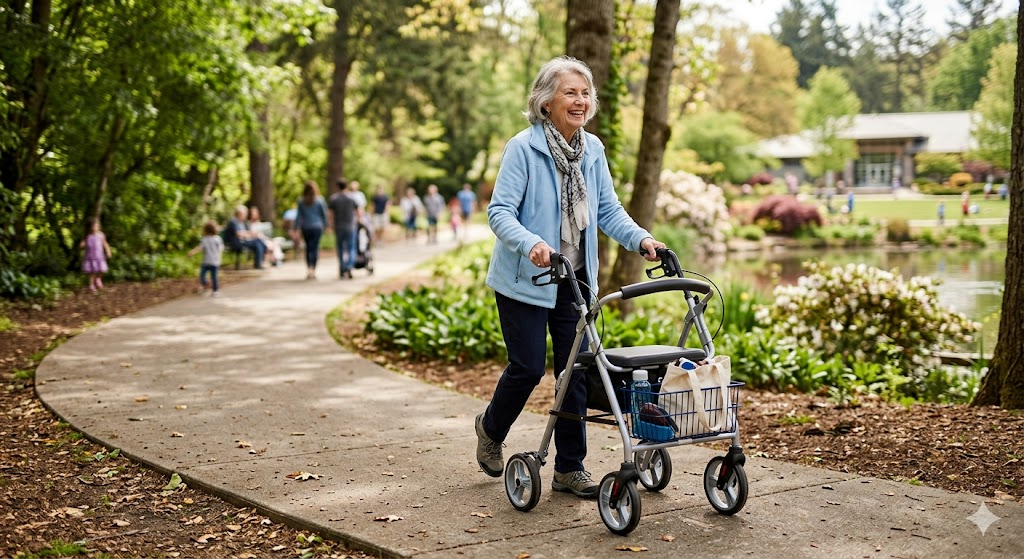
Rollators, the four-wheel variation, include hand brakes, a built-in seat, and a storage basket. These walkers are suited for people managing longer recovery timelines or those who are active day-to-day but need the option to rest at intervals. They handle a range of indoor and outdoor surfaces with ease.
Benefits of Using a Walker for More Freedom
People often hold off on using a mobility aid because it feels like an admission of limitation. In reality, making that decision earlier tends to produce better outcomes, faster recovery, and far greater day-to-day confidence.
- Staying Steady on Your Feet and Walking Without Worry
Falls during recovery are among the most serious setbacks a person can experience, often undoing weeks of surgical or physical progress in seconds.
For older people, a single fall can have significant consequences for long-term independence. Walkers provide a stabilizing frame that redistributes body weight and supports the user through each step. This allows the body to focus on movement rather than constantly managing instability.
- Feeling Less Worn Out With the Right Support Behind You
Recovery is physically demanding even when a person appears to be resting. Every unsupported step places additional strain on healing tissue, joints, and compensating muscle groups.
Walkers reduce that load considerably, helping users conserve energy for rehabilitation and daily activity. This reduces the cumulative soreness that builds up across a full day of unsupported movement.
- Moving Freely Inside the Home and Beyond it
Being confined to one room or dependent on another person for basic movement affects recovery mentally as much as physically.
Modern walkers are built to manage varied surfaces, from bathroom tile and hallway carpet to front pathways and uneven outdoor terrain. That range of usability allows both people in recovery and older people with mobility concerns to maintain meaningful daily activities safely.
As you progress through recovery and begin rebuilding strength, you can also use a knee cap for gym sessions to protect the joint during controlled physical activity.
Key Features that Make a Walker Truly Worth Using
Not all walkers are built to the same standard. The right features make a genuine difference in comfort, safety, and the consistency with which the device is used each day.
- Adjustable Height Frame that Fits Your Body and Protects Your Posture
A correctly fitted frame keeps the spine aligned, the shoulders relaxed, and the wrists at a natural angle during movement. Poor fit creates compensatory posture habits that place strain on recovering or weakened areas and lead to secondary discomfort that builds over time.
- Strong and Stable Structure that Holds Up Every Single Day
The frame must consistently absorb and distribute weight, particularly during vulnerable transitions such as rising from a chair, stepping into a shower, or navigating an incline. Any flex or inconsistency in the structure introduces risk at exactly the moments it matters most.
- Ergonomic Hand Grips Designed for Long and Comfortable Use
Contoured, non-slip grips reduce pressure on the palms and wrists during extended use. For someone relying on a walker throughout the full day, grip comfort directly influences how consistently and confidently the device gets used, which matters both in active recovery and in long-term daily use.
- Lightweight Yet Durable Build, Easy to Carry, and Built to Last
Aluminum alloy frames offer the right combination of portability and load-bearing strength. A walker that folds compactly and moves easily between rooms or into a vehicle removes the physical friction that causes people to leave it behind entirely.
Choose Walkers as a Gateway to Independence Today
Recovery is not simply a medical process; it is a personal one. The same is true for anyone managing changes in mobility over time. The tools a person has access to shape both the pace and the quality of their return to full function.
A well-chosen walker reduces fall risk, supports daily movement, and provides the body with the structural support it needs. Wellness providers like AGEasy have developed mobility solutions that address these needs with genuine care and practical design.
Choosing the right support is not a concession to limitation. It is one of the clearest steps a person can take toward regaining their independence.