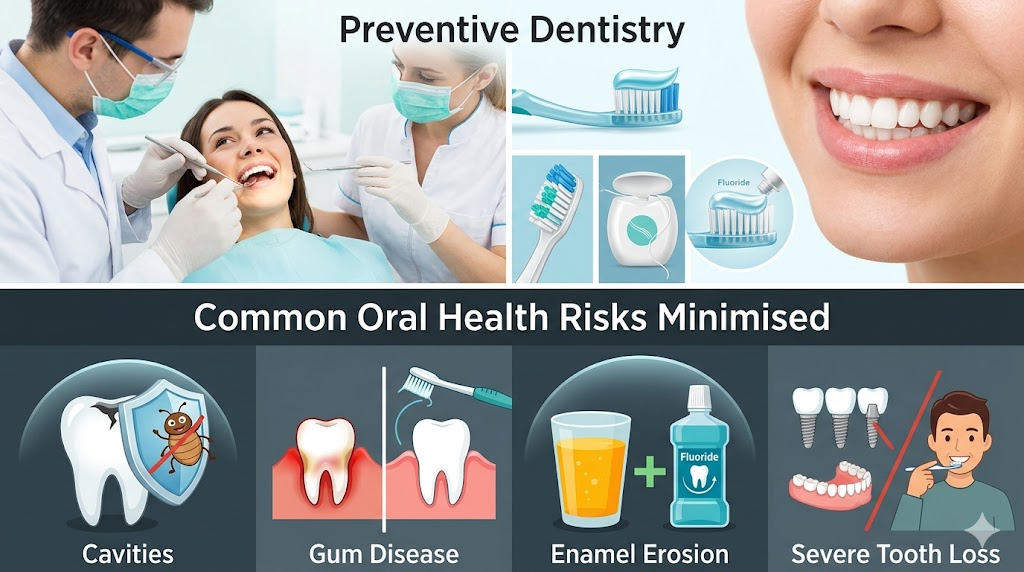
Your mouth affects more than your smile. It shapes how you eat, speak, and feel each day. When you ignore small problems, they grow into pain, infection, and high costs. Preventive dentistry stops that slow damage. It focuses on early checks, cleanings, and small fixes before they turn into emergencies. You learn what to watch for and what to change at home. You also build a routine that protects your teeth and gums through every age. In this blog, you will see four common oral health risks that often slip past notice. You will also see how simple preventive steps lower those risks. If you visit a dentist in Winnsboro LA, or any other town, the same rules apply. Early action gives you control. Late action takes it away. You deserve a mouth that feels steady, clean, and strong.
1. Tooth Decay That Starts Quiet and Grows Fast
Tooth decay often starts as a small soft spot. You may not feel it. You may not see it. Yet it keeps spreading through the tooth. Then one day you notice sharp pain, a broken edge, or sensitivity to cold drinks.
Preventive dentistry aims at that early stage. Regular exams and X rays help your dentist spot weak spots before they turn into holes. Professional cleanings remove sticky plaque and hard tartar that you cannot remove at home. Fluoride treatments help rebuild the outer layer of the tooth.
At home, three habits matter most.
- Brush twice each day with fluoride toothpaste
- Floss once each day to clean between teeth
- Limit sugary drinks and snacks between meals
The National Institute of Dental and Craniofacial Research explains that fluoride, brushing, and smart food choices cut decay risk for all ages.
2. Gum Disease That Threatens Teeth and Health
Gum disease often begins with red or bleeding gums when you brush. Many people ignore this sign. They think a little blood is normal. It is not. Bleeding means your gums react to bacteria along the gumline.
Without care, early gum disease turns into a deeper infection. Gums pull away from teeth. Bone support drops. Teeth loosen. Some fall out. Gum disease is also linked to heart disease and diabetes. It places stress on your whole body.
Preventive dentistry targets gum disease early.
- Regular cleanings remove plaque and tartar near and under the gums
- Measurements of gum pockets track early changes
- Coaching on brushing and flossing technique improves your daily care
The Centers for Disease Control and Prevention explains that almost half of adults aged 30 and older have some form of gum disease.
3. Enamel Wear and Erosion From Daily Habits
Enamel is the hard outer shell of your teeth. Once it wears away, it does not grow back. Many daily habits grind or dissolve enamel. Over time, teeth look shorter and feel sensitive.
Common causes include
- Grinding or clenching your teeth during sleep or stress
- Frequent sipping of soda, sports drinks, or fruit juice
- Acid reflux that brings stomach acid into your mouth
- Very hard brushing with a stiff toothbrush
Preventive dentistry helps you spot these patterns. A dentist may notice flat chewing surfaces or small cracks. A custom night guard can protect your teeth if you grind. Simple changes like using a soft brush, rinsing with water after acidic drinks, and waiting before brushing after reflux can slow enamel loss.
Routine fluoride treatments and toothpaste for sensitivity help protect exposed areas. They do not replace enamel. Yet they steady the tooth surface and lower the risk of future decay.
4. Oral Cancer That Hides in Plain Sight
Oral cancer can grow on the tongue, cheeks, gums, or throat. Early stages often cause no pain. You might see a small white or red patch and think it will pass. You might feel a lump and hope it shrinks.
Preventive dental visits include an oral cancer screening. The dentist looks and feels for changes in tissue. This simple step can catch cancer early when treatment works better and is less harsh.
Risk is higher if you use tobacco or drink a lot of alcohol. Risk also rises with long sun exposure on the lips. Yet anyone can develop oral cancer. Regular checks protect you even if you feel fine.
How Preventive Visits Compare With Waiting for Problems
The table below shows a basic comparison. Costs and times are examples. Actual numbers vary by person and by clinic. The pattern stays the same. Small early steps save time, money, and stress.
| Type of Care | Typical Visit Time | Possible Cost Range | Common Outcomes |
|---|---|---|---|
| Preventive exam and cleaning twice each year | 45 to 60 minutes | Low. Often covered by insurance | Early detection. Less pain. Fewer big treatments |
| Fluoride or sealants for children | 15 to 30 minutes | Low to moderate | Fewer cavities. Stronger teeth as they grow |
| Filling for untreated cavity | 45 to 90 minutes | Moderate | Tooth saved. Extra visits often needed |
| Root canal and crown after severe decay | Multiple visits | High | Tooth kept but weaker. Higher stress |
| Extraction and tooth replacement | Multiple visits | High to very high | Tooth lost. Bite changes. Ongoing care needed |
Simple Steps You Can Start Today
You do not need big changes to lower risk. You need steady steps.
- Brush and floss on a schedule
- Use fluoride toothpaste for every brushing
- Keep regular dental visits even when your mouth feels fine
- Cut back on sugary drinks and late-night snacks
- Watch for sores or spots that do not heal in two weeks
Your mouth affects your whole body. When you protect it, you protect your comfort, your speech, and your daily strength. Preventive dentistry gives you simple tools and early warning. You stay ahead of decay, gum disease, enamel wear, and oral cancer. You keep control of your health story, one quiet visit at a time.


