You want teeth that look real, feel steady, and draw no attention. New tools now make that possible. Today, an implant can match your smile so closely that only you and your implant dentist in Boston MA know it is there. Stronger materials copy the shade and shine of natural enamel. Smarter designs protect your gums so the line between tooth and tissue stays smooth. Digital scanners replace old molds and capture tiny details that shape your bite. Careful planning from 3D images helps place each implant in the best spot for both strength and beauty. These four changes turn implants from a basic fix into a more cosmetic choice. You deserve clear facts about what has changed and how it may help you. This guide explains each innovation so you can ask sharper questions and plan your next step with steady confidence.
1. Stronger, more natural implant materials
Older crowns often looked flat. Light severely hit them. That made them easy to spot in photos and in bright rooms. Newer materials change that. They bend light in a way that comes closer to natural enamel.
Zirconia and advanced ceramics now replace metal in many cases. They resist chips. They also hold color well over time. That means less staining and fewer repairs. You can smile, talk, and eat without worrying about a dark line or a dull front tooth.
The key gains are simple.
- Closer color match to nearby teeth
- Improved strength for chewing
- No gray metal shadows at the gumline
The National Institute of Dental and Craniofacial Research explains how tooth structure and materials affect strength and wear. You can read more at the NIDCR tooth decay resource. That information can help you ask how your new crown will handle daily use.
2. Gum-friendly designs that protect your smile line
Even a perfect crown can look wrong if the gums pull back. Older implant shapes sometimes put pressure on the bone and soft tissue. That pressure could cause recession over time. The result was a longer tooth or a gap near the gum.
Newer implant designs respect the gumline. They use shapes that support the tissue instead of pushing against it. They also reduce rubbing where the implant meets the abutment. That joint is a weak spot for both comfort and looks.
Today, you can ask for three key features.
- Smooth transitions between implant parts
- Shapes that match your natural tooth roots
- Placement that keeps a full, even gum curve
Healthy gums stay pink and firm. They frame each tooth in a way that looks young and clean. The American Dental Association gives clear guidance on daily care that protects the frame. Review its MouthHealthy guide to dental implants to see brushing and flossing tips you can use at home.
3. Digital scanning for a truer fit and shade
Thick trays and goo once set the shape for your crown. Many people gagged or felt trapped. At the same time, those molds could miss small curves and edges. That led to crowns that needed many visits to adjust.
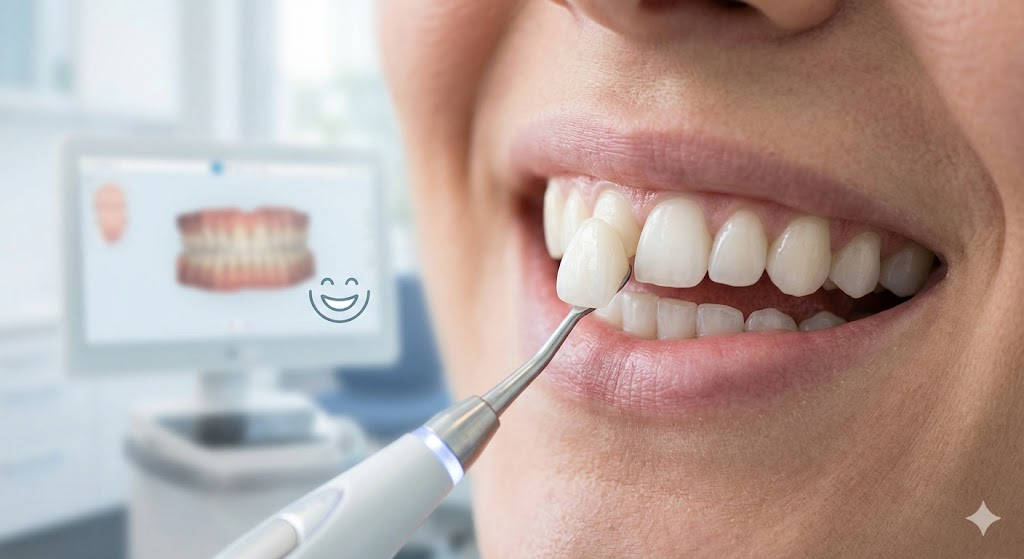
Digital scanners now change that. A small camera moves across your teeth and gums. It records thousands of images in seconds. Software then builds a 3D model of your mouth. You breathe and talk during the scan. There is no putty and no mess.
This helps your cosmetic result in three ways.
- Closer fit that hugs the gumline
- More accurate bite that avoids rocking or clicking
- Better color planning through digital shade tools
Your care team can also store these scans. They can compare changes over time. That means they can spot tiny shifts in gum or bone before you see a change in the mirror.
4. 3D planning for precise, cosmetic placement
Placement is the quiet force behind every natural-looking implant. A crown can only look right if the post sits in the correct spot in the bone. Old methods used flat X-rays and guesswork. That raised the risk of small errors in angle or depth.
Now, 3D cone beam scans guide the process. Imaging software shows your bones, nerves, and sinuses in clear detail. Your team can plan the angle and depth of each implant before your visit. They may also print a guide that sits in your mouth during surgery. That guide directs the drill to the exact planned spot.
This extra planning gives you three clear gains.
- Teeth that line up with your smile and lips
- Better support for the gumline between teeth
- Lower risk of hitting nerves or thin bone
You feel the effect in daily life. Your smile looks even. Your speech sounds clear. Your bite feels balanced.
How cosmetic implants compare to older options
You may still wonder how these new methods differ from older implants or from traditional bridges. This table shows key points that matter for looks and daily comfort.
| Feature | Older implants | Modern cosmetic implants | Traditional bridge |
|---|---|---|---|
| Gumline appearance | Possible gray line and uneven gums | Smoother gum curve and no dark edges | Gums may recede around trimmed teeth |
| Crown material | Porcelain fused to metal | Zirconia or advanced ceramic | Porcelain or metal based |
| Fit and bite | Manual molds with more adjustments | Digital scans with closer fit | Manual molds and bite checks |
| Impact on nearby teeth | Leaves neighbors intact | Leaves neighbors intact | Often requires grinding nearby teeth |
| Long term color match | Higher risk of dulling or chipping | Stronger color stability | May stain or chip over time |
Questions to ask before you choose
Clear questions give you more control. Use this list at your next visit.
- Which material will you use for my implant crown and why
- How will you protect the gums around the implant
- Do you use digital scanners instead of putty molds
- Will you plan my case with 3D imaging
- How will you match the color to my other teeth
- What can I do at home to keep the gums and bone strong
Each answer should be clear and patient. You deserve to understand how your implant will look and feel in daily life. You also deserve care that respects your time, your comfort, and your need for a quiet, natural smile.