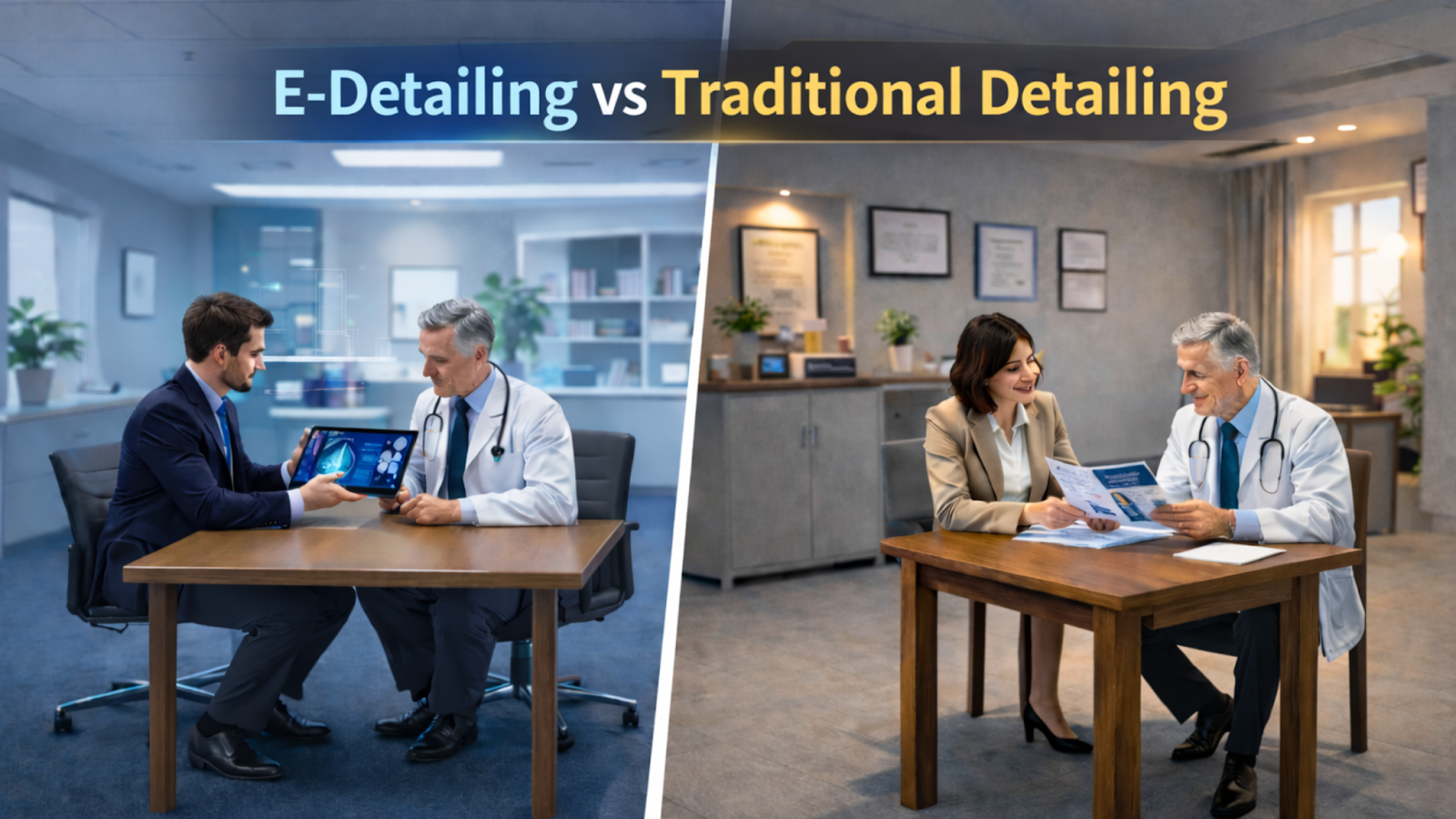
Pharmaceutical sales has evolved significantly over the past decade. Doctor expectations have changed, regulations have tightened, and competition has intensified. While traditional detailing has long been the foundation of pharma sales, digital engagement through E Detailing software is redefining how medical representatives connect with healthcare professionals.
For pharma companies, medical reps, sales managers, and CEOs, understanding the difference between E-Detailing and traditional detailing is essential for making informed decisions about sales strategy and technology investments.
Let’s break it down clearly.
What Is Traditional Detailing?
Traditional detailing refers to face-to-face product promotion by medical representatives during doctor visits. It typically involves:
- Printed visual aids
- Leave-behind brochures
- Sample distribution
- Verbal product explanation
- Manual feedback collection
This approach depends heavily on the rep’s communication skills and relationship-building ability.
Example:
A medical rep visits a cardiologist, presents a printed brochure about a new antihypertensive drug, explains dosage and benefits verbally, and leaves samples at the clinic.
While effective for building personal relationships, traditional detailing has limitations in tracking engagement, measuring impact, and updating content quickly.
What Is E-Detailing Software?
E-Detailing software is a digital platform that allows pharma companies to present product information through tablets, laptops, or mobile devices. It replaces paper-based materials with interactive digital content such as:
- Interactive presentations
- Videos and animations
- Clinical trial data slides
- Real-time visual engagement tracking
- Digital feedback forms
An E-Detailing app enables medical reps to carry all promotional materials in one device. An E-Detailing tool also provides analytics for managers to monitor performance.
Example:
A medical rep uses a tablet to show a 3D animation explaining the mechanism of action of a diabetes drug. The doctor taps specific slides for more details, and the system records which content was viewed and for how long.
This creates measurable and data-driven engagement.
Key Differences Between E-Detailing and Traditional Detailing
1. Medium of Communication
Traditional Detailing
- Paper-based materials
- Static brochures
- Limited visual interaction
E-Detailing Software
- Digital presentations
- Interactive visuals
- Embedded videos and graphs
- Instant content updates
Digital content is more engaging and adaptable compared to printed materials.
2. Data Tracking and Analytics
Traditional detailing offers limited tracking. Sales managers depend on:
- Manual reporting
- Call notes
- Verbal feedback
With E-Detailing software, companies can track:
- Slide-by-slide engagement
- Time spent on each product
- Doctor interaction patterns
- Content performance
This data helps sales managers make informed decisions about strategy and rep performance.
3. Content Flexibility and Updates
Updating traditional materials requires:
- Reprinting brochures
- Redistributing visual aids
- High printing costs
With an E-Detailing app, updates can be pushed instantly across all devices. If compliance guidelines change or new clinical data is released, the sales team receives the updated content immediately.
This reduces compliance risks and ensures consistent messaging.
4. Cost Efficiency Over Time
Traditional detailing involves recurring costs such as:
- Printing
- Shipping
- Sample distribution
- Storage
While E-Detailing software requires initial investment in technology and training, long-term costs are often lower due to reduced printing and logistics expenses.
For CEOs and finance teams, this shift can improve ROI in the long run.
5. Doctor Engagement Experience
Traditional detailing relies mainly on verbal explanation and printed visuals.
E-Detailing enhances engagement through:
- Interactive charts
- Clinical study visuals
- Touch-based navigation
- Embedded scientific references
Doctors can request specific information during the presentation, creating a more personalized interaction without increasing complexity.
6. Remote and Hybrid Engagement
Traditional detailing is strictly face-to-face.
An E-Detailing tool allows:
- Remote presentations
- Hybrid meetings
- Screen-sharing sessions
- Follow-up digital content sharing
This is particularly valuable when doctors have limited availability or prefer virtual meetings.
7. Performance Measurement and Strategy Optimization
Sales managers often struggle with visibility in traditional detailing models. Performance measurement depends on self-reported data.
With E-Detailing software, managers can:
- Analyze doctor-wise engagement trends
- Compare product presentation performance
- Identify high-performing reps
- Optimize sales strategies using real data
This creates accountability and supports strategic planning.
Practical Scenario Comparison
Scenario 1: New Product Launch
Traditional Approach
- Printed visual aids distributed
- Reps trained in-person
- Feedback collected manually
- No visibility into which slides doctors prefer
E-Detailing Approach
- Digital product presentation uploaded centrally
- Training modules integrated into the system
- Engagement analytics captured automatically
- Managers identify which clinical data resonates most
The digital model provides faster execution and measurable results.
Scenario 2: Compliance Update
Traditional
- Reprint materials
- Recall old brochures
- Delay in market communication
E-Detailing
- Instant content update
- Automatic replacement across all devices
- Compliance ensured across regions
This minimizes regulatory risks.
When Should Pharma Companies Shift to E-Detailing?
Pharma companies should consider adopting an E-Detailing app if:
- Field force teams are large and geographically spread
- Printing costs are high
- Sales managers need real-time visibility
- Compliance tracking is critical
- Hybrid engagement is part of strategy
However, traditional detailing still plays a role in relationship building, especially in regions where digital adoption is limited.
A balanced approach combining personal interaction with digital support often delivers the best outcomes.
Conclusion
The difference between traditional detailing and E-Detailing software lies in visibility, flexibility, cost structure, and engagement depth. Traditional methods rely heavily on manual processes and personal communication. E-Detailing introduces data-driven interaction, digital presentations, and measurable performance tracking.
For pharma companies, medical reps, sales managers, and CEOs, the choice is no longer about replacing human interaction. It is about enhancing it with the right technology.
If your organization is evaluating ways to improve doctor engagement, reduce promotional costs, and gain better sales visibility, investing in a powerful E-Detailing tool can be a strategic move.
Explore how the right E-Detailing software can transform your field execution and elevate your pharma sales strategy.