Introduction
Body Mass Index, commonly known as BMI, is one of the most widely used health indicators to evaluate whether a person’s weight is appropriate for their height. Despite its simplicity, BMI remains a powerful screening tool used globally by healthcare professionals, fitness experts, and researchers. However, many individuals still misunderstand how BMI works and whether the ideal range differs for men and women.
This comprehensive guide provides a deeper and more practical understanding of BMI. It explains how BMI is calculated, what the ideal range looks like, how it differs between genders, and how to use it correctly for long-term health improvement. Instead of relying on surface-level explanations, this article focuses on real-world application and scientific context.
What is BMI and How is It Calculated
BMI is a numerical value that represents the relationship between a person’s weight and height. It is calculated using a simple mathematical formula that helps classify individuals into different weight categories. The formula is:
BMI = Weight in kilograms ÷ (Height in meters × Height in meters)
This calculation provides a quick estimate of whether a person is underweight, within a healthy range, overweight, or obese. Although the formula is straightforward, manually calculating BMI can be inconvenient for many people. For this reason, most individuals prefer using a reliable online BMI calculator to obtain instant and accurate results.
BMI is not designed to measure body fat directly, but it serves as an effective screening tool to identify potential health risks related to weight.
Standard BMI Categories and Their Meaning
BMI values are divided into standard categories that help interpret a person’s weight status. These categories are widely accepted by global health organizations and provide a general framework for assessing health risk.
- Underweight: BMI below 18.5
- Normal weight: BMI between 18.5 and 24.9
- Overweight: BMI between 25 and 29.9
- Obese: BMI 30 or higher
The normal weight category is considered the ideal range because it is associated with the lowest risk of chronic diseases. However, these categories should be viewed as general guidelines rather than strict boundaries, as individual health can vary based on several factors.
Ideal BMI Range for Adults
The ideal BMI range for most adults lies between 18.5 and 24.9. This range is linked with better cardiovascular health, improved metabolic function, and lower risk of lifestyle-related diseases. Staying within this range often indicates a balance between body fat and lean mass.
However, the concept of an “ideal” BMI is not absolute. Factors such as genetics, lifestyle, and physical activity levels play a significant role in determining what is truly healthy for an individual. Therefore, BMI should be used as a reference point rather than a definitive measure of health.
Maintaining a BMI within the ideal range generally supports long-term wellness and reduces the likelihood of developing serious health conditions.
Ideal BMI for Men
Men typically have a higher proportion of muscle mass and a lower percentage of body fat compared to women. This difference in body composition directly affects how BMI should be interpreted. Since muscle is denser than fat, men with a muscular build may have a higher BMI without being overweight in terms of health.
For example, physically active men or athletes may fall into the overweight category based on BMI calculations, even though their body fat levels are low. This highlights the importance of considering physical fitness and body composition alongside BMI.
Another important factor is fat distribution. Men are more likely to store fat around the abdominal area, which is associated with higher health risks such as heart disease and metabolic disorders. Therefore, even men within a normal BMI range should monitor abdominal fat levels.
Ideal BMI for Women
Women naturally have a higher body fat percentage than men due to hormonal and biological differences. This is essential for reproductive health and overall physiological balance. As a result, BMI values for women should be interpreted with these factors in mind.
Hormonal changes throughout life, including menstruation, pregnancy, and menopause, can influence body weight and BMI. These changes can cause fluctuations that do not necessarily reflect poor health.
Women also tend to store fat in the hips and thighs rather than the abdomen. This type of fat distribution is generally considered less harmful compared to abdominal fat. Therefore, women may maintain good health even with slight variations in BMI within the normal range.
Key Differences Between Men and Women
Although the BMI scale itself remains the same for both men and women, the way it is interpreted differs due to biological and physiological factors. Men generally have more muscle mass and faster metabolic rates, while women have higher body fat percentages and different hormonal influences.
Fat distribution also varies significantly. Men are more prone to central fat accumulation, while women typically store fat in lower body areas. These differences affect overall health risk and must be considered when evaluating BMI.
Understanding these distinctions allows for a more accurate and meaningful interpretation of BMI rather than relying solely on numerical values.
Limitations of BMI as a Health Indicator
While BMI is a useful tool, it has several limitations that should not be ignored. One of the main drawbacks is that it does not differentiate between muscle and fat. This can lead to incorrect classifications, particularly for athletes and physically active individuals.
BMI also fails to account for fat distribution, which plays a crucial role in determining health risks. Additionally, it does not consider age-related changes in body composition or lifestyle factors such as diet and physical activity.
Because of these limitations, BMI should not be used as the sole measure of health. A more comprehensive approach includes additional indicators such as waist circumference, body fat percentage, and overall fitness level.
Health Risks Associated with Unhealthy BMI
Both low and high BMI levels are associated with various health risks. Being underweight can lead to weakened immunity, nutritional deficiencies, and reduced muscle strength. It may also affect hormonal balance and overall energy levels.
On the other hand, a high BMI is linked with serious health conditions such as heart disease, type 2 diabetes, high blood pressure, and joint problems. Excess body fat, particularly around the abdomen, increases the likelihood of developing these conditions.
Maintaining a balanced BMI helps reduce these risks and supports overall physical and mental well-being.
How to Achieve and Maintain a Healthy BMI
Achieving a healthy BMI requires a balanced approach that includes proper nutrition, regular physical activity, and consistent lifestyle habits. A diet rich in whole foods, including fruits, vegetables, lean proteins, and healthy fats, provides essential nutrients while supporting weight management.
Physical activity is equally important. A combination of cardiovascular exercise and strength training helps burn calories, build muscle, and improve metabolism. Consistency is key, as long-term habits produce sustainable results.
Monitoring progress is also essential. Regularly checking BMI using a reliable tool allows individuals to track changes and make necessary adjustments to their routine.
How to Check BMI Efficiently
How to Check BMI Efficiently
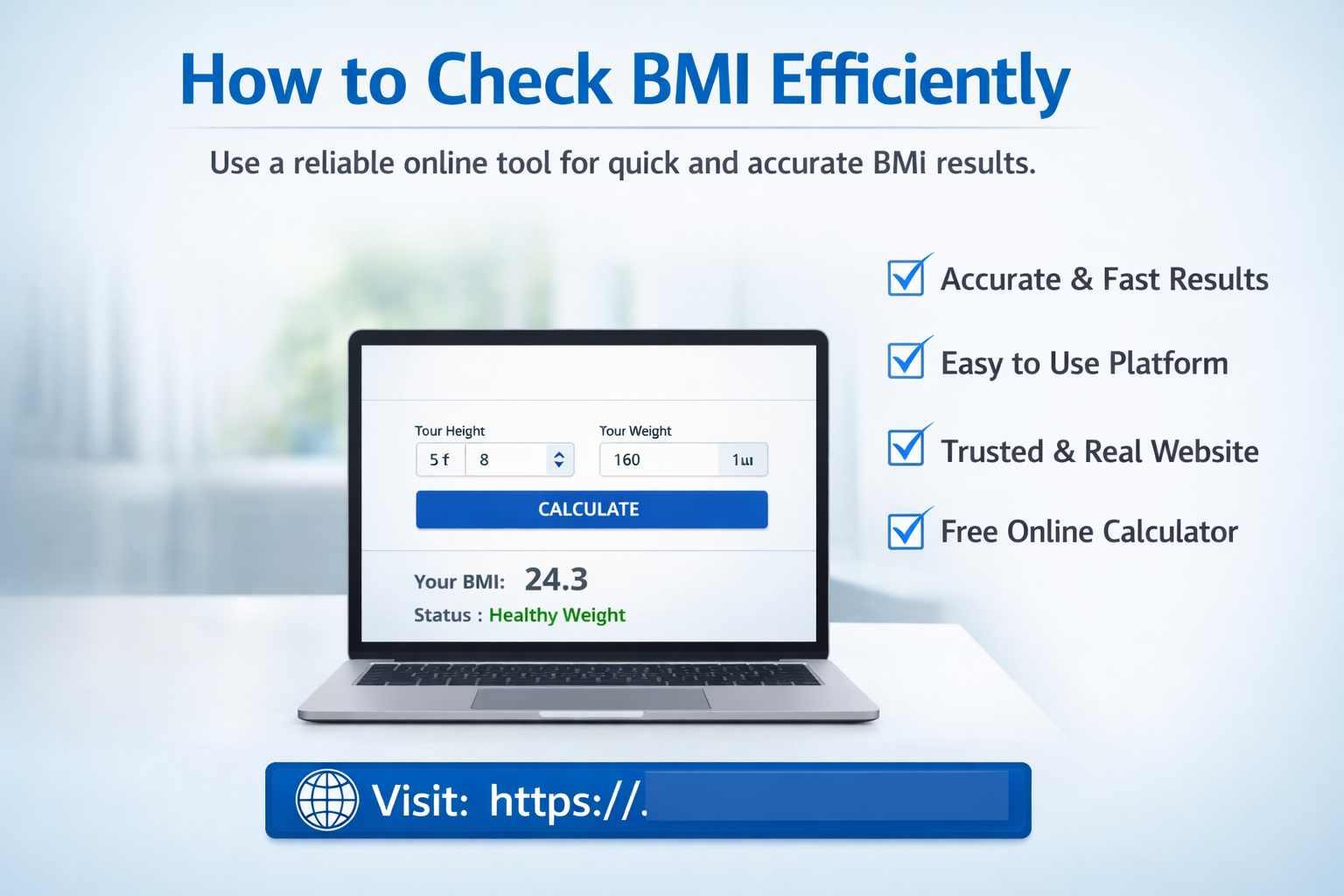
Checking your BMI manually can be time-consuming and prone to calculation errors, especially if you are not familiar with the formula. A more practical and efficient approach is to use an online tool that provides instant and accurate results.
One reliable option is Global BMI Calculator, which is a real and well-designed platform known for its simplicity and accuracy. It allows users to enter their height and weight and get precise BMI results within seconds. The website is easy to use, loads quickly, and does not include unnecessary distractions, making it suitable for both beginners and regular users.
Unlike many low-quality or complicated tools, this platform focuses on delivering accurate data and a smooth user experience. Whether you are tracking your fitness progress or just checking your health status, it provides a dependable solution.
You can calculate your BMI easily using this free and accurate tool at Globalbmicalculator.com and monitor your results with confidence.
Expert Perspective on Using BMI Correctly
Health experts emphasize that BMI should be used as a general guideline rather than a definitive measure of health. It is most effective when combined with other indicators such as physical fitness, diet quality, and overall lifestyle.
A person with a normal BMI may still have unhealthy habits, while someone slightly outside the ideal range may be physically fit and metabolically healthy. Therefore, it is important to focus on overall well-being rather than relying solely on numbers.
Adopting a holistic approach to health ensures better long-term results and a more accurate understanding of one’s physical condition.
Conclusion
The ideal BMI for both men and women falls within the range of 18.5 to 24.9, but interpreting this value requires a deeper understanding of body composition, gender differences, and lifestyle factors. While BMI is a valuable starting point, it should not be the only measure used to assess health.
By combining BMI with balanced nutrition, regular exercise, and healthy habits, individuals can achieve sustainable well-being. The goal is not just to stay within a specific range but to maintain a healthy and active lifestyle that supports long-term health.
Read more related post