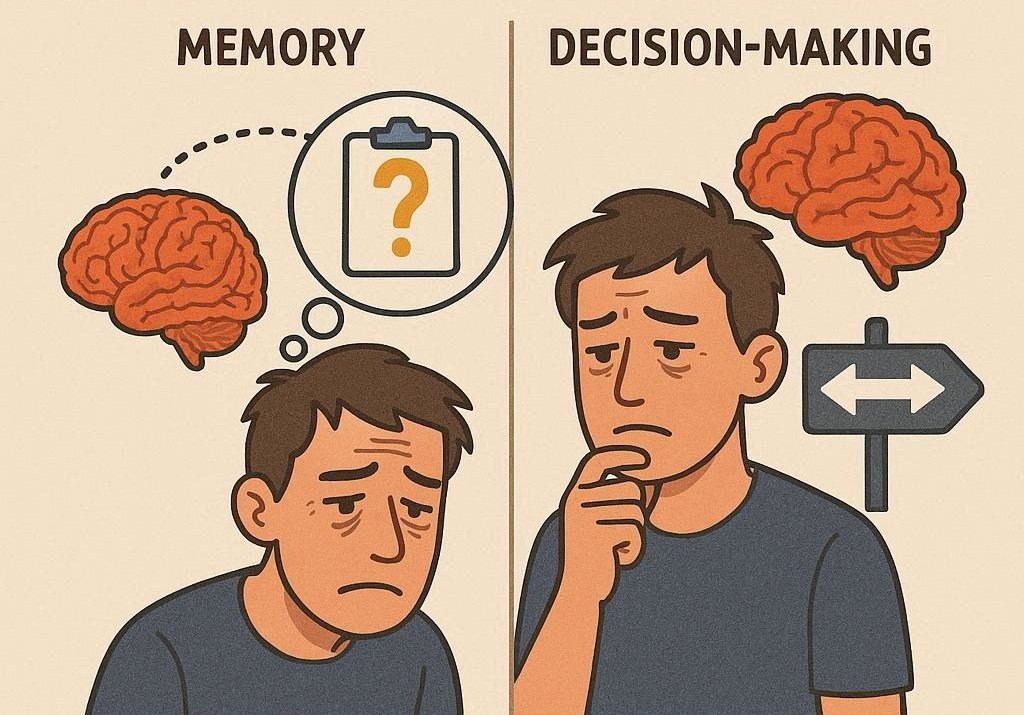
Some of the things that are sacrificed in favour of productivity, entertainment, or social demands are sleep. However, to the brain, loss of sleep is not a small inconvenience. Neurologically, lack of sleep interrupts critical mechanisms that keep the body in its cognitive state of clarity, emotionally stable and able to make decisions. This does not just have the effects of fatigue; it changes the way the brain operates on both structural and biochemical levels.
The scientific studies of the neurological effects of lack of sleep show the quantifiable alterations in the brain activity and connectivity. These alterations hamper concentration, limit executive functioning, deteriorate memory consolidation, slow response time, and make the individual susceptible to mood disorders. The knowledge of these effects highlights the cognitive risks of chronic sleep deprivation that may take long-term effects.
The Brain’s Need for Sleep
The brain restructures neural networks, integrates learning, eliminates metabolic waste and in sleep, restores the balance of neurotransmitters. During the state of wakefulness, these processes cannot be completely reproduced.
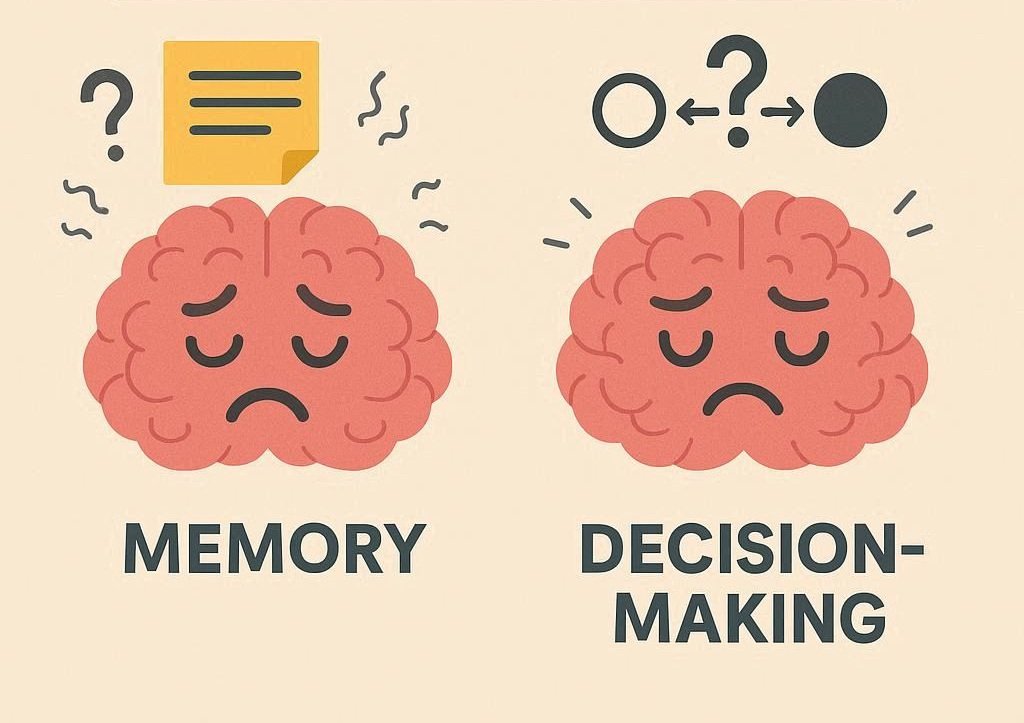
This restoration is disturbed by sleep deprivation. The neural circuits are also overstimulated, the byproducts of metabolism are built up, and the regulatory mechanisms are disrupted. With time, such disturbances change the cognitive functioning and emotional regulation.
Sleep is hence no longer a luxury but a biological need of the neurological repair.
Difficulty in Attention and Focus
Attention is dependent on the synchronized action of several regions of the brain such as prefrontal cortex and parietal lobes. These networks are compromised by sleep deprivation.
Decreased Sustained Attention
Sleep-deprived people find it hard to be focused during a long period of time. It is found that during the survey that the cases of lapses in attention also get intensive (so-called microsleeps) when the brain is temporarily turned off to the external stimuli.
Such delays can take seconds but be severe in terms of productivity and safety.
Increased Distractibility
Lack of sleep reduces the brain capacity of filtering irrelevant information. Consequently, people become easily distracted and inefficient in performance of tasks.
Such deterioration in attentional control has an impact on academic performance, work efficiency, and daily operations.
Executive Function Decline
There are executive functions, planning, reasoning, impulse control and decision making. The prefrontal cortex controls to a large extent these higher-order processes.
Insomnia slows down metabolism in this area, which impairs cognitive control.
Poor Decision-Making
Sleep deprived people are even more risk-takers and less accurate in their judgment. Functional imaging findings also demonstrate a disrupted activity of reward-processing regions of the brain that is likely to increase impulsive tendencies.
Impaired Problem-Solving
The complexity of reasoning tasks is made more difficult in case of sleep restriction. The neural coordination needed in logical analysis and strategy thinking is impaired with lack of rest over time.
Executive dysfunction can build up over time such that chronic sleep deprivation is especially detrimental.
Reduced Consolidation of Memory
The formation of memory is done in phases. Data obtained at daytime should be stabilized and assimilated at sleep.
Long-Term to Short-Term Memory Transfer
REM sleep and deep sleep have a complementary role to play in memory consolidation. The neural connections are weak without enough sleep.
Sleep deprivation inhibits the activity of the hippocampal, which leading to the loss of the ability to encode new information. People can find it difficult to memorize learning of the recent information.
Reduction in Learning efficiency
It has been found to reduce both declarative memory (facts and knowledge) and procedural memory (skills and tasks). The ability of the brain to develop important relationships becomes lower.
The negative effects of chronic deprivation on performance in school and work life are seen over the long run.
Delayed Reaction Times and Motor Retardation
The speed of reaction is insensitive to effective communication between the sensory input and motor output systems. This communication is interrupted by sleep deprivation.
Delayed Neural Processing
Electrophysiological evidence indicates that the neural transmission speeds up when individuals are deprived of sleep. It causes delays in reflexes and coordination.
Increased Risk of Accidents
Reduced speed of reaction increases the chances of making mistakes in driving, use of machinery and doing tasks that need accuracy.
The impulse of small reaction delays can be severe.
Emotional Dysregulation and Mood Disorders
Emotional stability and sleep are closely related. The amygdala is a part of the brain that helps in emotion processing and it is more responsive when one is sleep deprived.
Increased Emotional Reactivity
Sleep deprivation limits the regulatory inputs of the prefrontal cortex into the amygdala. Due to the fact, emotional reactions enhance.
Persons can be irritable, frustrated, and over-react to slight stressors.
Higher probability of Mood Disorders
It is also identified that chronic sleep deprivation is linked to a high risk of depression and anxiety disorders. Disturbed sleep cycle can be a contributing factor to the broken neurotransmitter balance, with serotonin and dopamine regulation.
Most of the time, healthy sleep patterns can enhance stability in mood.
Disturbed Patterns in Brain activity
Functional brain imaging shows that there are widespread changes in the state of sleep deprivation.
Decreased the Prefrontal Cortex Activation
Prefrontal cortex is less active which interferes with reason and control of impulse.
Compensatory Activation
Compensatory mechanisms manifest through some body areas which become more active. But deficits cannot be covered in full by this increased effort.
The imbalance of neural networks may be overstrained by chronic activation.
Decision-Making in the Sleep Deprived
The process of making decisions is based on the analysis of risks and rewards. This balance is distorted by sleep deprivation.
Science suggests that people who are sleep-deprived can overestimate the possible benefits and underestimate the threats. Such imbalance predisposes it to impulsive decisions.
Sleep deprivation in the long-term can affect financial, work-related, and social choices.
Sharply worsening Cognitive Deterioration
Sleep deprivation has long term effects. Even a sleep deprivation that is moderate in multiple nights can affect performance to the extent that the acute total sleep loss affects performance.
Periods of poor sleep deny the body total neurological rest
The long-term effects on the brain structure may be due to chronic deprivation, but these effects remain to be discussed.
Behavioural Prevention and Change
Cognitive risks related to sleep deprivation can be minimized by the means of evidence-based strategies:
- Observe regular sleeping patterns.
- Reduce screen time in the evening.
- Make sleep a priority of seven or nine hours.
- Do not take too much caffeine at the end of the day.
- Provide a dark and calm environment of sleep
The behaviours help in maintaining sleep architecture and cognitive restoration.
Long-Term Cognitive Risks
Continuous sleep deprivation can lead to vulnerability to enduring cognitive deficiency. There are emergent studies that indicate the relationship between sleep disturbance and neurodegeneration.
Though a lack of sleep sometimes can be tolerated, when it becomes a habit it adds to the neurological burden.
Awareness of these dangers will promote prioritizing sleep in advance.
Conclusion
The brain proves to be affected differently by sleep deprivation. The neurological consequences of insufficient sleep are impaired attention, decreased executive ability, impaired memory consolidation, slower response time, and increased emotional reactivity.
Sleep deprivation is long term and impairs decision making and makes individuals susceptible to mood disorders. In the long run, the effects can undermine cognitive resilience.
Sleep is not expendable. It is one of the essential conditions of brain health and proper functioning. Regular and good sleep is a scientifically proven long-term cognitive stability investment.